
Slovakia’s parliament rejected an amendment to criminal law that would have allowed top corruption suspects to escape prosecution
Extraordinary news about the turbulent political life in Slovakia stirs up the information space almost every day. One such story is the parliament’s failure to pass an amendment to the Criminal Code on “penitents”. I think this topic may be of great interest to Ukrainian and Polish readers, including members of parliament, because it cannot be ruled out that a similar situation may arise in due course in the Ukrainian Verkhovna Rada and the Polish Sejm.
So, the amendment in question would have exempted from criminal liability persons who acknowledged their guilt, repented (in Slovak, became “kajúcnik”, penitents) and cooperated with investigators. 75 MPs of the ruling coalition voted for the amendment – exactly 50%. That proved not enough: one single additional vote was needed. And it was missing…
Why did this particular amendment split the Slovak parliament down the middle and bring the governing coalition to the brink of collapse 11 months before the next election?
In brief:
- Why the current deputy speaker of Slovakia’s parliament and close associate of Robert Fico, Tibor Gašpar, was to become a “penitent”
- Hearings at the Specialised Criminal Court in Banská Bystrica, which is examining dozens of counts of criminal activity by the group to which Gašpar belonged, are still ongoing
- The vote on “penitents” showed that there is no longer a governing coalition in the Slovak parliament
- Will President Peter Pellegrini dismiss Fico’s fourth government and call early parliamentary elections
The former Slovak police president will try to prove in court that he had no part in the crimes
The changes to criminal law that stirred up parliament were put on the agenda by Prime Minister Robert Fico’s party, Smer-SD. Had they been adopted, Tibor Gašpar – the current deputy speaker of Slovakia’s parliament, deputy chairman of the ruling party and a close associate of Fico – would have become a “penitent” and been freed from criminal prosecution. After the vote failed, the senior official now genuinely faces questioning by investigators and, most likely, a trial.
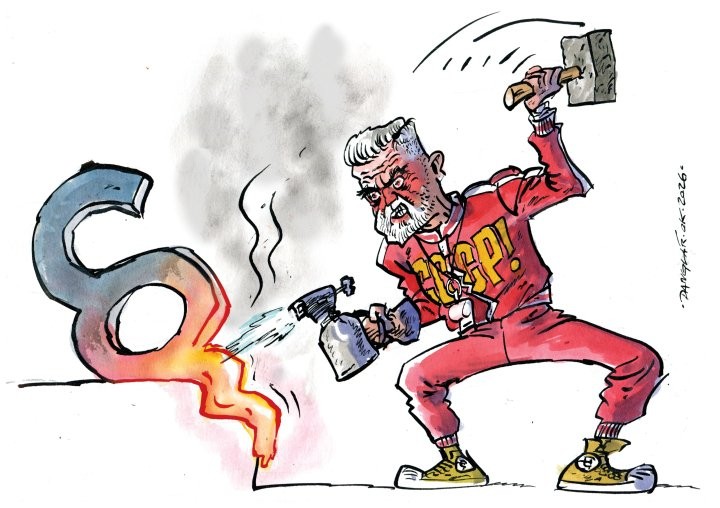
Who is this Tibor Gašpar, for whose rescue the current ruling coalition staked its very existence, risking the early resignation of the government?
From May 2012 to April 2018, while Fico was prime minister, Gašpar served as police president – the head of the Slovak police. On 21 February 2018 investigative journalist Ján Kuciak and his fiancée were murdered. Kuciak had been working on a report on the Slovak links of the Italian organised crime syndicate known as the ’Ndrangheta. Earlier he had written about organised tax fraud involving businessmen close to the ruling Smer-SD party and its leader. The crime shook Slovakia: mass demonstrations against the grip of organised crime began across the country, leading to a political crisis and the resignation of Prime Minister Robert Fico on 15 March 2018.
In April 2018, amid mass protests, police chief Tibor Gašpar was also forced to resign. In 2020 he was detained and charged as part of the anti-corruption operation “Purgatory” (Očistec) on suspicion of setting up and running a criminal group within the police, as well as corruption and abuse of office. He is one of the main defendants in the case. Hearings at the Specialised Criminal Court in Banská Bystrica, which is examining dozens of counts of the group’s criminal activity, are still ongoing.
Meanwhile, in the parliamentary election of October 2023 Gašpar was elected an MP for Smer-SD, and in June 2024 he became deputy speaker of Slovakia’s parliament. In the same year his son, Pavol Gašpar, was appointed head of the Slovak Information Service (SIS) – the counterpart of Ukraine’s SBU – which drew sharp criticism from the opposition.
As an MP and deputy speaker of the National Council of the Slovak Republic, Tibor Gašpar wields considerable personal political influence. At the same time, the government of his political ally Fico initiated controversial reforms of criminal law that affected the pace and course of many cases against former senior officials. As a result, some of the criminal counts against Gašpar were dropped or declared time-barred. In particular, in October 2026 a judge of the Specialised Criminal Court ruled to discontinue the prosecution on some counts of the “Purgatory” case because the limitation period had expired. But some of the charges against Gašpar have not been dropped, which is why it was vital to pass this amendment.
Given his party affiliation, Gašpar’s political activity can hardly be called pro-European or pro-Ukrainian. On the contrary, he is known for anti-Ukrainian statements in which he compared Ukraine to Hamas, and for pro-Russian rhetoric, including the claim that Russia was “provoked” into the war. He also opposed confiscating frozen Russian assets to finance Ukraine’s Armed Forces.
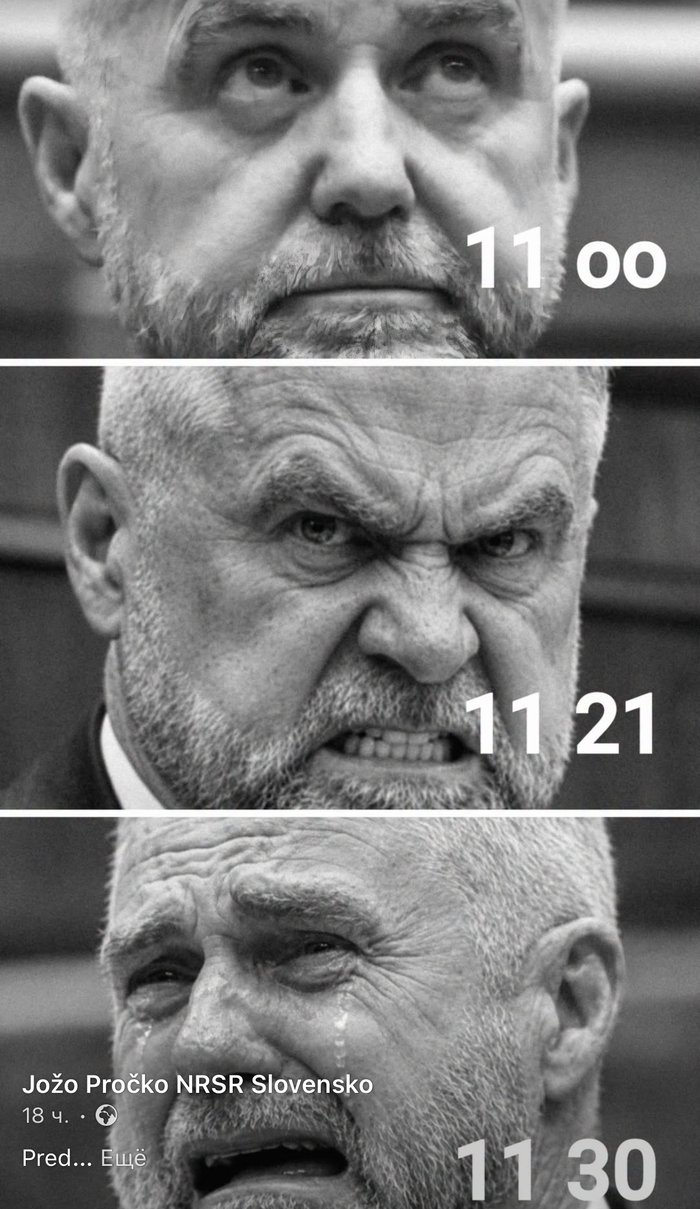
Whether all this commotion in Slovak politics will lead to new high-profile resignations and court verdicts, time will tell. For now, we note that Gašpar was not destined to become a “penitent”, but destined… to stand trial, and this week, instead of taking part in parliamentary debates, he is already giving evidence to judges.
Fico wanted to use Mečiar’s experience, but it did not work…
To be fair, Robert Fico’s attempt to save his party deputy and deputy speaker of parliament from criminal prosecution is not his own invention. Back in 1998, the then Slovak prime minister Vladimír Mečiar helped his close associate Ivan Lexa – former head of the Slovak Information Service (SIS) and an influential businessman – and others involved to escape criminal punishment by using his powers as acting president to declare a “self-amnesty”. In addition, during his premiership (1994–1998) he built an entire system of political cover for business clans close to him during the shadowy privatisation. Thanks to its full control over the Interior Ministry, the security services and the prosecutor’s office, Mečiar’s government blocked investigations into financial fraud, the embezzlement of loans and the driving of companies into bankruptcy by their new owners.
But the most notorious case of escaping justice was the abduction of the son of Slovakia’s first president, Michal Kováč, in August 1995. The SIS, headed by Ivan Lexa, kidnapped Kováč junior and took him to Austria in order to discredit the president, a political opponent of Mečiar. The case also involved the murder of former police officer Róbert Remiáš, who had been the contact of a key witness.
In March 1998 President Kováč’s term expired, and parliament failed to elect a new head of state. The president’s powers passed temporarily to Prime Minister Mečiar. Using this status, on 3 March 1998 he issued an amnesty decree halting all criminal proceedings against those involved in the abduction of Kováč junior and the thwarting of the 1997 referendum. This allowed Lexa, who after Mečiar left power became a wealthy businessman and figured in a number of corruption scandals, to avoid trial for almost two decades. Only in April 2017 did Slovakia’s parliament amend the constitution and repeal the “Mečiar amnesties”. Now Fico tried to follow the same path, but it did not work out…
Will the ruling coalition last until the next election?
But that is not all, and there is reason to believe that the stream of turbulent political news from Slovakia will not dry up any time soon. Among other things, the vote on “penitents” showed that there is no longer a governing coalition in the Slovak parliament. In October this year it was left by Tomáš Taraba – an MP from the far-right party “Kotleba – Ľudová strana Naše Slovensko” (Kotleba – People’s Party Our Slovakia), who from October 2023 to 30 September 2026 served as deputy prime minister and environment minister. On 29 September 2026 the National Council of the Slovak Republic passed a vote of no confidence in him, after which he left his ministerial post and returned to work in parliament. At the same time he announced the creation of his own political force, “Taraba – Rozvoj Slovenska” (Taraba – Development of Slovakia), which changed the balance of power in parliament and deprived Fico’s coalition of a stable majority. Under current law, President Peter Pellegrini should dismiss the current, fourth Fico government and call early parliamentary elections. Will that happen?
Vasyl Ilnytskyi