
In mid-March, the U.S. and Belarus carried out an exchange in the spirit of Trump and Lukashenko: the Belarusian dictator released 250 political prisoners, and the Trump administration lifted sanctions on Belarusian potash fertilizer exporters and financial institutions that serviced such contracts. Note that this exchange took place a couple of weeks before the anniversary of the formation of the Union State of Russia and Belarus—a post-Soviet superstructure that is still under construction but has already allowed Belarus to receive cheap Russian energy resources for a long time and to gradually align itself with the Kremlin. The final absorption of Belarus by Russia is planned for 2030. And Washington must keep this date in mind. Trump and his team seriously believe that they are somehow capable of tearing Belarus away from Russia and, by implementing this model, subsequently weakening the ties between Russia and China. A scenario that seems unlikely today. However, this does not deter the White House.
- The U.S. has partially lifted sanctions on Belarusian potash in exchange for the release of 250 political prisoners—a move that could shift the balance in the global fertilizer market.
- Belarus and Russia together controlled up to 42% of the global potash fertilizer market, but sanctions forced Minsk to sell its products at lower prices to Asian markets.
- Despite Washington’s decision, the return of Belarusian potash to Europe remains unlikely due to EU sanctions and logistical challenges.
- The key export route through the Russian port of Ust-Luga has become vulnerable due to attacks by Ukrainian drones.
- Ukraine could capitalize on the situation: offer potash transit through its ports, weaken the Russian economy, and strengthen its own position in the region.
Let’s focus on the subject of trade—potash fertilizers. Five years ago, Belarus accounted for 20% of global potash sales, and its exports brought several billion dollars into the Belarusian budget each year. Official Minsk even allowed itself to compete with Russia in the export of potash. Dmitry Gordiychuk, director of the company “Infoindustry” and an agrochemical market expert, points out that there is a global shortage of potash. At that time, 20 percent of global potash fertilizer production came from Belarus and 22 percent from Russia. “Together, they accounted for 42 percent of the global potash fertilizer market,” the expert notes.
However, in 2021, the European Union and the United States imposed sanctions on this category of Belarusian exports, forcing Belaruskali and the Belarusian Potash Company to redirect their export flows. The countries of the Global South became its main buyers.
Dmytro Hordiychuk, an agrochemical market expert, notes that the sanctions of recent years have simply pushed Belarus and Russia out of developed markets. “This is a very interesting situation because, in fact, the U.S. was buying Russian fertilizers, and there were selective sanctions. The fact that they weren’t buying Belarusian ones is another matter. That’s the first point. And second, Belarus was pushed into the Indian and Chinese markets, where they were forced to sell very cheaply. That is, they can now sell at higher prices. Everything happening in the U.S. potash fertilizer market has a very minimal impact on Ukraine. Sanctions have not been lifted in Europe. “And here, Belarus remains just as it was pushed out of the market,” says the expert.
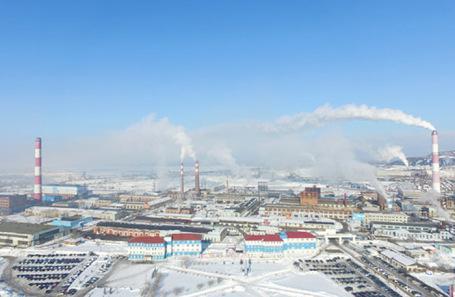
The logistics scheme has also changed—instead of Klaipėda, Lithuania, trains carrying potash fertilizers from Belarus were, until recently, heading to Ust-Luga in the Leningrad Oblast of the Russian Federation.
The U.S. decision to lift sanctions on Belarusian potash has not restored the European export route. Although the United States, which previously sourced a significant portion of its potash fertilizers for its own agricultural sector from Canada, now faces a need to diversify its supplies due to Trump’s policies, it is not easy for Belarusian potash to return to the global market. Ust-Luga, as is known, has endured several powerful attacks by Ukrainian drones on the fuel terminal, which has cast doubt on the port’s overall operational effectiveness.
“It used to be a river port, but now they’ve made it very powerful. There are, in particular, both oil and ammonia terminals there. It is very important for us to bomb Ust-Luga. And in this way, we can weaken Belarus’s position in exports. If we (Ukraine—ed.) bomb Ust-Luga, it will be very difficult for them to redirect exports to other ports,” says expert Dmytro Hordiychuk.
The Americans are trying to play the role of an “honest broker” to the end, putting pressure on the Lithuanian government to restore the route through Klaipėda. The factor of EU sanctions is habitually ignored in Washington, as if to emphasize the existing contradictions between the U.S. and the European Union. Vilnius is trying to resist, but the contradictions between Lithuanian President Gitanausas Nausėda and the motley center-left coalition that formed Inga Ruginienė’s government give the Trump team hope.
But not just them. Yevhen Mahda, director of the Institute of World Policy, believes that Ukraine could also enter into negotiations on the transit of potash fertilizers from Belarus.
“Kyiv has experience with the grain agreement that was in effect in 2022–2023 for the export of Ukrainian grain by sea; the capacity of Black Sea ports allows for the passage of Belarusian exports. Incidentally, Ukraine has not severed diplomatic relations with Belarus, although it has imposed personal sanctions against Alexander Lukashenko. Ukraine may have to reimburse the funds for the 70,000 tons of Belarusian potash fertilizers and nearly 1,500 railcars confiscated in 2025, but the game may be worth the candle,” the expert notes. Mahda believes that a “potash gesture” toward the Trump team would not be out of place in the current situation. Moreover, shifting the flow of Belarusian potash would help deprive Russia of some of the foreign exchange earnings from its transit.
“Reducing the aggressor country’s financial capabilities is in Ukraine’s interest. An additional lever of influence over Lukashenko, who views Belarus as his own state farm, would also be welcome, given that the Belarusian-Ukrainian border stretches over 1,000 kilometers and continues to resemble a front line. Fortunately—without active hostilities following the expulsion of the Russian occupiers in the spring of 2022,” the expert noted.
The active phase of the Russian-Ukrainian war has now lasted over 1,500 days. This means, among other things, the need to seek asymmetric solutions and maneuver amid geopolitical turbulence. Potash fertilizers could become not only a factor influencing Lukashenko’s regime but also a catalyst for reviving contacts within the Lublin Triangle.
Author: Svitlana Mialyk