
Three days before the first-ever summit of the leaders of the US, China and Russia in Shenzhen, Donald Trump showed in a few answers outside the White House what he is taking there with him. He “hadn’t heard” about Starlink restrictions in Ukraine, Putin, in his view, is “slowing down”, and what he will ask Xi Jinping journalists “won’t have to know”.
In brief
- On 19 November in Shenzhen, on the sidelines of the APEC summit, Donald Trump, Xi Jinping and Vladimir Putin will meet for the first time in a trilateral format.
- On 13 November a US administration official said that the war in Ukraine would not be a topic of the summit. On 16 November Trump called Ukraine his “favourite subject”.
- Ukraine reports Starlink restrictions: interceptor drones lose connection at speeds above 161 km/h. SpaceX denies it.
- On the night of 16 November Russia sent 158 drones, including 77 jet-powered ones, into Ukraine’s airspace.
- The New START treaty expired in February 2026. China refuses to take part in trilateral disarmament talks.
Connection up to 161 km/h
“Why is Starlink restricted in Ukraine again?” a reporter asked. “I don’t know if it is. I haven’t heard about it. I haven’t heard about it,” the US president replied and asked for the next question.
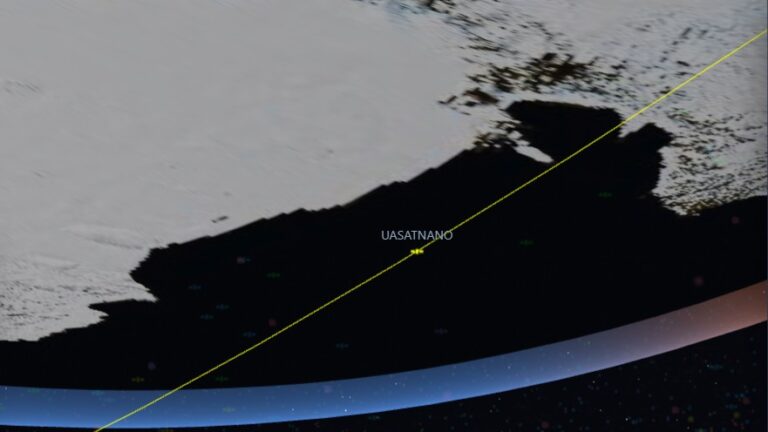
Let us check what he hasn’t heard about. For several days Volodymyr Zelensky has been talking about “systematic” restrictions along the entire front line: the connection works only at speeds below 161 km/h. So a Ukrainian interceptor drone cannot catch a jet-powered Shahed flying at up to 1,000 km/h. SpaceX denies restricting anything, but Democratic senators have demanded that Elon Musk preserve the records.
In the same conversation Trump once again “hadn’t heard”: when he was asked about intelligence findings that a woman with whom Nvidia’s chief Jensen Huang had begun a relationship is a Chinese spy. According to journalists, these findings had been passed to him by Secretary of State Marco Rubio. Trump added that “every beautiful woman who comes from China, they say she’s a spy”. In the White House, it seems, the problem is not satellite connection but reception.
“Pull back from where?”
Next question: what needs to be done for Putin to pull back. “Pull back from where?” Trump asked. From about a fifth of Ukraine, one would like to answer. The reporter put it more briefly: from the war. Then came: “I think he’s slowing down a little bit. I think he could be tougher. Frankly, I think he could be a lot tougher. I think he’s slowing down. I think he’d like to, frankly. I think he’d like to see it end.”
Six times “I think” in six sentences. Not once “I know”. And there is a lot one could know. On the night of 16 November Russia sent 158 drones, including 77 jet-powered ones, into Ukraine’s airspace. According to Ukraine’s prime minister, there may be up to 6,500 jet-powered Shaheds in November. On the same day nuclear regulators from 38 countries warned that Russian attacks on Ukraine’s energy system increase the risk of a nuclear accident this winter. We have already written on BlackSky about how Russia is striking Ukraine’s rear. If this is what Putin slowing down looks like, better not to test the “a lot tougher” version.
A favourite subject that was not supposed to be one
On 13 November a senior administration official assured that in Shenzhen Trump would talk about nuclear weapons and Iran, but not about the war in Ukraine. Three days later the president announced: “We’ll talk about my favourite subject, Ukraine.” The Kremlin was quicker. Already on 12 November Yuri Ushakov said that Putin would discuss with Trump in Shenzhen “the whole range of issues related to the settlement”. So Moscow knew the US president’s favourite subject four days before he did.
Telling, too, was what Trump added: “Ukraine is losing… Ukraine and Russia are losing 25,000 soldiers a month.” Victim and aggressor in one sentence, with one number. This is not a minor slip but a way of seeing the war as a shared problem of both sides rather than the aggression of one of them. That is my assessment, not an established fact.
Disarmament nobody wants
On nuclear weapons Trump said: “It’s a tough subject, because it’s very hard for each of us to say we’re going to get rid of atomic bombs, right?” The New START treaty expired in February 2026. Washington did not extend it because it wanted a new agreement involving China. Beijing has replied for years that the US and Russia must cut their arsenals first. The White House does not expect an agreement in Shenzhen, only “the beginning, hopefully, of a conversation”. So the president is going to a disarmament summit with the thesis that disarming is hard. On this one point all three agree.
Iran “in very good shape”
“We have Iran in very good shape,” Trump assured. On 9 November, in his words, the war with Iran was “practically over”, and on 12 November he wrote that the US does not need a deal with Tehran because “we have their money (…) and we have their strait”. The price of Brent crude rose by 3 per cent that day, to almost $96 a barrel. At that price, the Kremlin also believes Iran is in very good shape.
Asked whether he would ask Xi Jinping to have China stop buying Iranian oil, Trump replied: “I’ll ask them what I want to ask them. You won’t have to know.” A little earlier he had set out the principle: “I don’t think you want to insult China right before going.”
Who sits at the table
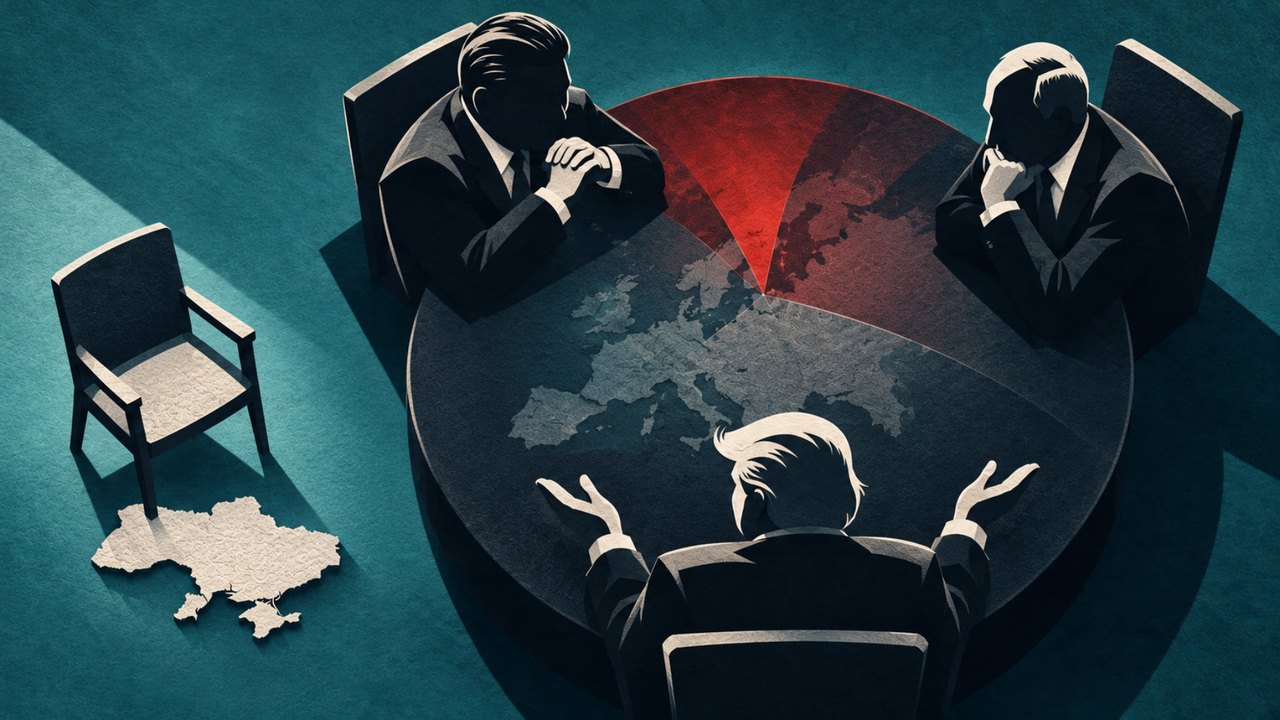
Trump suggested that in China he might also meet Kim Jong Un: “Maybe he’ll come, I don’t know. That’s up to President Xi.” So Kim may also take a seat at the table, if the host allows it. Ukraine will not be at that table, even though it is supposed to be the “favourite subject”.
Europe will not be there either. Vladimir Medinsky questioned the participation of Europeans in further negotiations already during the talks in Abu Dhabi. According to German President Frank-Walter Steinmeier, Xi reacted with irritation to the idea of discussing Ukraine in this circle and pointed out that it is a European conflict, so Europeans must also sit at the table. Zelensky warns against a repeat of Yalta and a “redistribution of spheres of influence”.
Except that at Yalta sat the leaders of a coalition that defeated Germany three months later. In Shenzhen, next to the host, will sit Putin, who after almost five years of full-scale war is still storming Mala Tokmachka, although his defence minister congratulated the troops on capturing it a year ago, and Trump, who in his own universe has “ended” eight wars, including two that never happened. For a new Yalta, that is a bit thin.
Here I must weaken my own thesis. We know about Xi’s irritation only from what Steinmeier told the ARD television channel. Analysts quoted by AFP do not believe in a new Yalta either: they expect a hotline and minor arrangements rather than a grand bargain. But a conversation about Ukraine without Ukraine does not need a grand bargain. A table at which nobody cares about its opinion is enough.
I haven’t heard
“I haven’t heard.” “You won’t have to know.” And asked about Friday’s suspension of flights across the United States, Trump added: “I take no responsibility at all.” Three sentences from one conversation with journalists. With that baggage, the US president is flying to meet two leaders who know exactly what they want.
Putin is going to Shenzhen for land, Xi for prestige, Trump for a photo. Ukraine is left with a connection up to 161 km/h.
Author: Artur Żak
Official Russian and Belarusian sources cited in this text are for informational purposes only. Content from these sources may constitute disinformation or propaganda.