
Following the Czechs, the Slovaks have also renewed their regional and local self-government. Last Saturday, 24 October, the Slovak Republic elected the heads of the self-governing regions – regional governors (župans) – (the equivalent of Ukrainian oblasts and Polish voivodeships), city mayors, heads of district, town and village municipalities, and councillors at all levels.
In brief
- All eight incumbent heads of the self-governing regions have retained their posts.
- Candidates from the governing coalition parties won in two of the eight self-governing regions.
- Independent candidates make up the largest group among the elected city mayors and heads of municipalities.
- The results point to a certain decline in support for the governing parties Smer, Hlas and SNS.
Local elections in Slovakia attract particular attention, as regional authorities in this country have considerable powers in matters of socio-economic development. They do not need to ask the capital for permission when deciding many vitally important issues. Moreover, there is no state administration in the self-governing regions, and the central government has no direct lever of influence over the regional authorities.
So what are the results of the current local elections? All eight incumbent heads of the self-governing regions have retained their posts. The Bratislava Region is once again headed by Juraj Droba, representing the opposition coalition of SaS and PS – 70.96% of the vote; the Trnava Region by Jozef Viskupič, representing the opposition coalition of PS, SaS and KDH – 54.04%; the Žilina Region by Erika Jurinová, representing a broad coalition of opposition parties – 52.06%; the Banská Bystrica Region by Ondrej Lunter, an independent candidate – 64.81%; the Prešov Region by Milan Majerský, KDH candidate – 48.77%; the Košice Region by Rastislav Trnka, an independent candidate – 32%. In two regions, candidates of the governing coalition of Smer-SSD, Hlas-SD, Republika, SNS and a number of right-wing parties won: in the Trenčín Region Jaroslav Baška – 57.44%, and in the Nitra Region Branislav Becík – 50.47%.
As we can see, the most convincing victory was won by Juraj Droba in the Bratislava Region. The hardest-won victory was that of Rastislav Trnka in the Košice Region. He edged out his main rival, Marián Porvažník, backed by the main opposition party Progresívne Slovensko (PS): 32% against 30.70%.
In the Prešov Region, the incumbent head, Milan Majerský, received 48.77% of the vote. His main rival, Milan Mazurek of the far-right Republika, won 35.18%.
In the race for the post of mayor (primátor) in the country’s main cities, the greatest attention was focused on the capital, Bratislava. Here the incumbent mayor Matúš Vallo, backed by the opposition, convincingly defeated (64.36% of the vote) the incumbent Minister of Transport Jozef Ráž, the governing coalition’s protégé. Prime Minister Robert Fico, without waiting for the vote count to finish, told journalists that Jozef Ráž had won in Bratislava and… hit the post, causing himself political embarrassment!
The other results of the mayoral elections in the main cities are as follows: Košice – Ladislav Lörinc – 39.89%, Trnava – Eva Nemčovská – 60.47%, Prešov – František Oľha – 40.69%, Trenčín – Ján Forgáč – 69.17%, Nitra – Marek Hattas – 50.66%, Žilina – Peter Fiabáne – 41.22%, Banská Bystrica – Ján Nosko – 46.78%. Among the mayors of the regional capitals there is not a single member of the governing coalition parties.
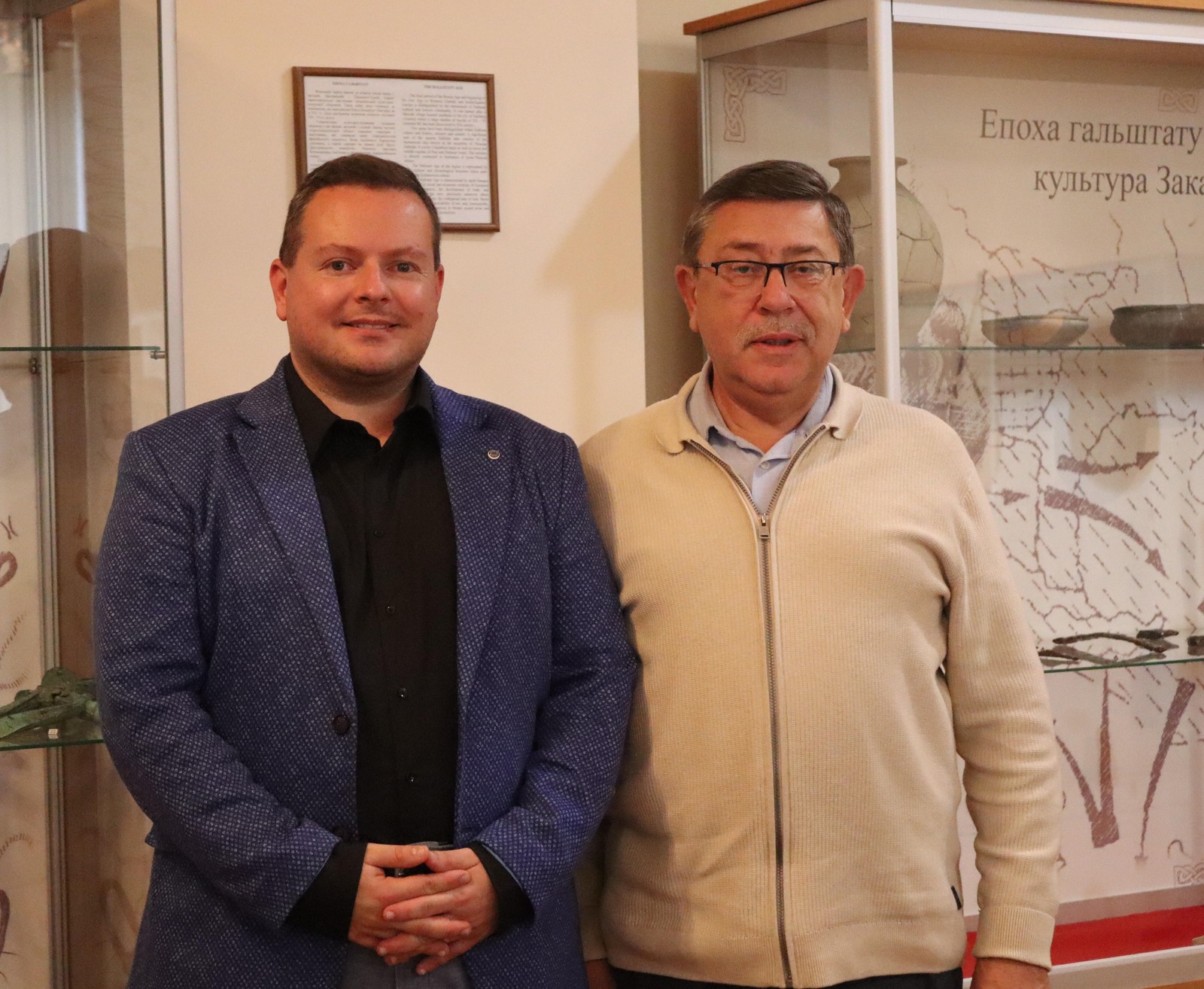
We asked political scientist Michal Cirner, associate professor and secretary of the Institute of Political Science at the Faculty of Arts of the University of Prešov (Slovakia), to comment on the results of the local elections in Slovakia.
The elections to the bodies of territorial self-government at the regional and local levels confirm long-term trends. Independent candidates make up the largest group among the elected city mayors and heads of municipalities, and their number is growing rapidly from one election to the next. This shows a gradual retreat of political parties from municipal politics. There are as many as 1,560 independent mayors and heads of municipalities out of approximately 2,930 towns and municipalities in Slovakia, i.e. more than half.
A total of 2,085,145 citizens out of 4,477,457 registered voters took part in the regional elections. Turnout was 46.56%. This is higher than in the previous regional elections in 2022, when 43.74% of voters cast their ballots.
Traditionally strong parties at the local level have always been the centre-left populist Smer-SSD of the current Prime Minister Robert Fico, KDH (Christian Democratic Movement), the Hungarian political parties, as well as the relatively new social democratic party Hlas, founded by the current President Peter Pellegrini, and the nationalist SNS (Slovak National Party). In the past, they built a broad membership base and real local and regional party structures. Today this trend is also weakening, but Smer, KDH, Hlas and Maďarská aliancia continue to dominate among the political parties. SNS, which also traditionally had a broad membership base and a large number of mayors, heads of municipalities and councillors, has suffered a significant decline.
As for the heads of the self-governing regions, colloquially known as župans, there were no surprises – all of them retained their posts. The most closely fought election across Slovakia was in the Košice Self-Governing Region, where the long-serving independent župan Trnka faced serious competition from Porvažník, the candidate of the opposition parties nominated by PS. The difference between them was only slightly more than 3,000 votes.
Rather unexpected was also the solid result of the candidate for župan of the Prešov Self-Governing Region – the convicted extremist and now Member of the European Parliament for the Republika movement, Milan Mazurek, who received more than 100,000 votes without a face-to-face election campaign, practically only thanks to videos and content on social media. This is a consequence of the fact that the coalition parties Smer, Hlas and SNS did not have a strong candidate of their own, so some of these parties’ voters backed Mazurek. This was not enough to win, but the result has certain implications in the context of the upcoming parliamentary elections, in which Republika may achieve a very good result and potentially even cooperate with Smer.
For the future of KDH, it was important that its chairman Majerský retained the post of župan, as a defeat could have weakened his position in the intra-party struggle with Viliam Karas, who is seeking the post of KDH chairman and whose views are more oriented towards possible cooperation with Smer than with PS. At the same time, his defeat would have been a serious setback for the opposition, which is preparing for the parliamentary elections.
Two of the eight župans do not belong to any political party, another four represent opposition parties, and Smer and Hlas have one župan each. But, as I have already noted, the situation remains stable and there have been no changes in the posts of the heads of the self-governing regions.
Overall, the results point to a certain decline in support for Smer, Hlas and SNS, as well as the extra-parliamentary Maďarská aliancia, but their results still remain above average compared with most other parties.
PS, which in terms of electoral support is the strongest opposition movement, is only very slowly and gradually building the image of a political force with its own councillors, mayors and heads of municipalities in the system of territorial self-government. Its results so far are not very convincing. It has one župan, in the Trnava Region, but he was for many years a member of the movement of Igor Matovič [Prime Minister of Slovakia in 2020–21 – ed.], so in fact PS gained him because he ‘switched’ to this party.
PS pinned its greatest hopes on the contest in the aforementioned Košice Self-Governing Region, where party chairman Michal Šimečka also arrived on election night. However, as I have already mentioned, victory slipped away from them literally at the last moment, and so PS had practically no opportunity to boast of any new and fundamentally important success.
Vasyl Ilnytskyi