“The more Russia tries to destabilise Germany, the more important it becomes for Ukraine not merely to preserve German aid, but to present Ukraine convincingly as part of the security system of Germany and Europe,” says Professor Ihor Todorov
September brought us alarming news from Germany: in the state parliament elections in Saxony-Anhalt, Mecklenburg-Western Pomerania and Berlin, the Christian Democratic Union (CDU) of the current Chancellor Friedrich Merz suffered a tangible defeat. Meanwhile, in Saxony-Anhalt the far-right, pro-Russian Alternative for Germany (AfD) won a historic victory with 43.8% of the vote, doubling its result from previous years (the CDU received 17.2%). In Mecklenburg-Western Pomerania the AfD came first with 38.2%. The CDU won only 4.9% of the vote and, failing to clear the 5% threshold, did not enter that state’s Landtag for the first time. In Berlin, the Left Party won the most seats in the capital’s House of Representatives with 25.7%, while the CDU came second (18.8%).
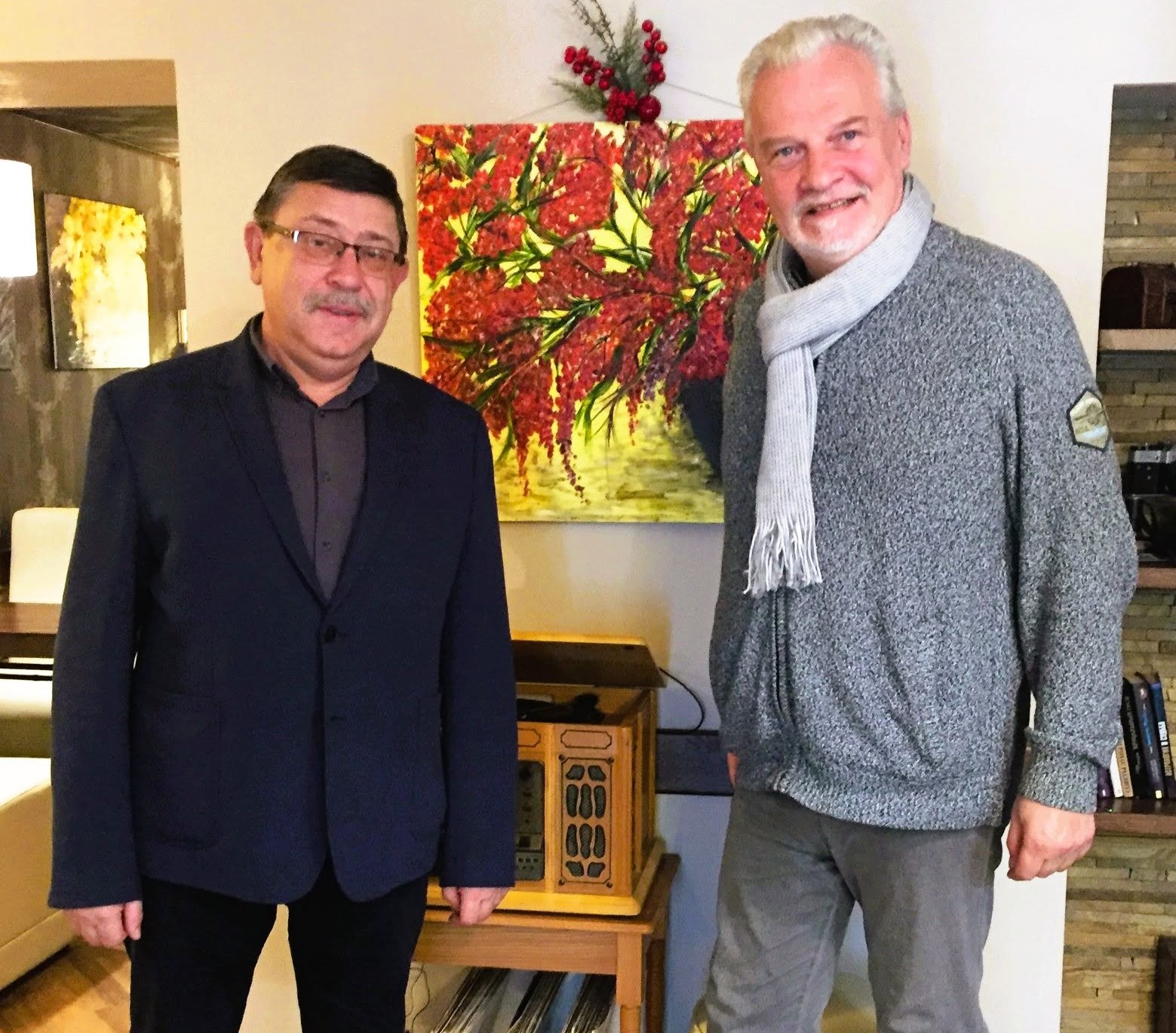
Why is the CDU losing the traditionally high trust of its voters, and what threats could a likely reshaping of Germany’s political landscape pose to continued support for Ukraine? We asked Ihor Todorov, a well-known political scientist who has long studied political processes in Germany and a professor at Uzhhorod National University, to answer these questions.
In brief:
- The CDU’s “triple crisis”
- Alternative for Germany may gradually change the structure of competition for conservative voters
- Russia’s influence strategy is aimed at undermining trust in democratic institutions, political leadership and the decision-making process itself
- The greatest danger for Kyiv is not a sudden halt to aid, but a shift from a long-term strategy to a policy of constantly reviewing aid
Mr Todorov, what is happening to Germany’s leading political force?
To answer your question as objectively as possible, a number of interrelated causes need to be singled out. The Christian Democratic Union is losing its monopoly on the role of the “party of order”. For decades the CDU/CSU was the natural political choice for a large part of the conservative, older, middle-class and business electorate. Today, however, a powerful competitor has emerged to the right of the CDU, offering a far more radical interpretation of issues such as migration, security, social policy, attitudes to the EU, energy policy, Russia’s war against Ukraine, relations with the US, and cultural and identity politics.
In other words, this is not simply general disappointment with the CDU – its traditional electorate is shifting. The federal CDU is increasingly perceived through Friedrich Merz. This is perhaps one of the most important factors in the 2026 elections. Formally, these were state elections. In practice, however, a large share of voters voted for or against the federal government. This is particularly evident in Saxony-Anhalt. According to polls, three quarters of respondents believed that Merz had hurt the result of the CDU, which found itself squeezed between the AfD on the right and the SPD and the Left on the left. In other words, the centre is being squeezed from both sides.
The “triple crisis of the CDU” is also evident: a crisis of representation – some conservative voters no longer consider the CDU conservative enough; a crisis of trust – some centrist voters do not consider the CDU effective enough in solving economic and social problems; and a crisis of federal-state identity – in state elections it is becoming ever harder to separate the CDU from Merz’s federal policy.
It is the last point that is especially important for explaining the results of September 2026. This is not a “rightward turn in Germany”, but a crisis of the traditional party system and a simultaneous polarisation of the political space in the east and in the capital. And it is the CDU that found itself at the epicentre of this transformation, since historically it occupied a large part of the political space that is now being attacked from the right and, in Berlin, from the left at the same time.
This is not a “rightward turn in Germany”, but a crisis of the traditional party system and a simultaneous polarisation of the political space in the east and in the capital.
Does the AfD’s local victory in the eastern states show that their inhabitants are still carriers of the “virus of the post-Soviet mentality” and susceptible to massive Russian propaganda?
That explanation is too simplistic. Eastern Germany has a specific socio-political context. The eastern states still have lower average incomes, a larger share of the population with little savings, an older population, a weaker industrial base, a stronger dependence on social transfers, and greater sensitivity to energy and fuel prices. The 2026 election data do give grounds to speak of a noticeable influence of pro-Russian narratives and of the specific political attitudes of part of the east German electorate, but they do not prove that the inhabitants of the eastern states are carriers of some “virus of the post-Soviet mentality”, or that Russian propaganda is the main reason for the AfD’s success. What we are dealing with is the legacy of the east German social experience, specific political attitudes, distrust of institutions, a sense of inequality between East and West, and the peculiarities of political socialisation. There is even a view there that what happened in 1990 was not the reunification of Germany, but the “occupation” of East Germany by West Germany…
Russian propaganda does indeed have influence there, and Russian interference in the information space is a documented fact. But it does not automatically follow that Russian propaganda added votes to the AfD. At the same time, one can speak of a noticeable correlation between support for the AfD and attitudes close to the Russian interpretation of the war. The AfD does not simply “broadcast Russian propaganda”, but has its own political programme, which includes restricting migration, a tougher asylum policy, criticism of EU policy, a critical attitude to sanctions against Russia, rejection of military support for Ukraine, and a concept of “peace” through ending arms deliveries to Ukraine. The facts of 2026 show that the AfD has a very broad set of domestic reasons for its support. It was not the Russians who persuaded east Germans to vote for the Alternative; rather, internal conflicts and frustrations create an environment in which external information actors gain additional opportunities for influence.
It was not the Russians who persuaded east Germans to vote for the Alternative; rather, internal conflicts and frustrations create an environment in which external information actors gain additional opportunities for influence.
Is there a danger that the far-right populists will soon significantly expand their ratings beyond the former GDR as well, where the Christian Democrats have always had the greatest influence?
The AfD has already moved beyond being a purely east German phenomenon. The best example is the 2026 state election in Baden-Württemberg. The AfD won 18.8% there, almost one vote in five. That is far from the 38–44% results in Saxony-Anhalt and Mecklenburg-Western Pomerania, but it also shows that support for the AfD is not exclusively east German. Shared themes contribute to this: migration and asylum, inflation and the cost of living, the state of the car industry, energy prices, taxes, social spending, the housing problem, distrust of the federal government, and a feeling that the traditional parties are not responding adequately to everyday problems.
“Spreading”, however, does not mean automatic dominance. Current data show the AfD’s potential for expansion, but do not allow the conclusion that it will soon achieve eastern-scale results in all the western states. Germany can be roughly divided into three concentric zones. The core of AfD support: Saxony-Anhalt, Mecklenburg-Western Pomerania, Thuringia, Saxony, Brandenburg. The zone of expansion: Baden-Württemberg, Rhineland-Palatinate, part of North Rhine-Westphalia, Berlin. The zone of more difficult expansion: Bavaria, Hesse, Schleswig-Holstein. The main threat lies not so much in the AfD “capturing the West” as in the AfD gradually changing the very structure of competition for conservative voters. The AfD’s national rating has reached around 29%, which shows that the process can no longer be explained solely by the specifics of the former GDR.
What steps might Russia take in this situation? How will it “rock” the socio-political situation in Germany?
Russia’s influence strategy, judging by operations already documented, is largely aimed at undermining trust in democratic institutions, political leadership and the decision-making process itself. Germany’s Federal Office for the Protection of the Constitution describes the Russian model of influence as a staged one: preparing the information environment, stepping up activity during the election campaign, attacking the electoral infrastructure and the legitimacy of the result, and, after the elections, attempting to influence the formation of the government. Moscow’s potential strategic formula, therefore, is not necessarily to secure the victory of a particular party; it is enough to increase conflict, distrust and the political system’s inability to reach consensus.
At the same time, Russian information operations may amplify the narrative that “the traditional parties have lost touch with society, and the AfD is the only force that tells the truth”. For the Kremlin, it is not necessary for most Germans to become supporters of Russia. It is enough for the CDU to be unable to reach agreement with the SPD, for the AfD to radicalise the debate, for the Left to mobilise its protest electorate, for society to argue about migration, for business to demand normalisation of relations with Russia, for society to argue about Ukraine, for citizens to stop trusting the media, and for voters to doubt the fairness of elections. In other words, it is not necessary to conquer the political system – it is enough to make it harder for it to function. That is precisely what ties together the AfD’s success in the east, the crisis of the traditional parties, the Ukrainian question and Russia’s hybrid strategy into a single construct.
In other words, it is not necessary to conquer the political system – it is enough to make it harder for it to function.
What threats does all this pose for Ukraine and for continued German support in its war against the Russian occupier?
This is where the consequences for Ukraine may be much broader than merely a possible reduction in German military aid. Germany’s federal policy has not changed in favour of ending support for Ukraine. The Merz government officially declares that aid will continue, and Germany remains one of Ukraine’s key bilateral partners. But there are at least seven potential risks.
1. A gradual decline in society’s willingness to support Ukraine. In September 2026, 52% of Germans considered arms deliveries to Ukraine adequate or believed they should be increased, but 42% already felt that military aid had gone too far. In the eastern states it was the second position that prevailed. Among AfD supporters, opposition to military support for Ukraine is particularly high.
2. The “Ukrainian question” may turn into a factor of domestic political polarisation. As long as support for Ukraine is seen as part of German and European security, there is a basis for a broad political consensus. But if the discourse shifts towards “Ukraine costs Germans too much”, “Germany should deal with its own problems”, “we risk being dragged into the war”, “we need to negotiate with Moscow”, then Ukraine becomes an internal German party issue. And that is already happening: the AfD openly advocates ending support for Ukraine, while the federal government continues to justify it with Germany’s security interests.
3. Pressure may arise on the principle of “helping Ukraine for as long as it takes”. The greatest danger for Kyiv is not even a sudden halt to aid, but a shift from a long-term strategy to a policy of constantly reviewing aid.
4. The risk of the discourse shifting from “Ukraine’s victory” to “ending the war as quickly as possible”. For Ukraine, a cessation of hostilities does not in itself necessarily mean a just and lasting peace. If, under Russian information influence, the formula “any peace is better than continuing the war” takes hold in Germany, Ukrainian arguments may gradually be pushed into the background. This already bears directly on the architecture of post-war European security.
5. A potentially very serious risk is a return of energy dependence on Russia. For Ukraine, this is potentially a fundamental issue.
6. The threat of weaker sanctions pressure. If the argument that “sanctions hurt us more than Russia” gains ground in Germany, political pressure may arise. For Ukraine, this is potentially more dangerous than a single cut in military aid, because sanctions are part of a comprehensive strategy of containing Russia.
7. The broadest threat: a change in the German concept of security itself. That is why the struggle over Ukraine in Germany is in fact a struggle over the answer to the question: should Germany regard Russian aggression against Ukraine as a direct challenge to its own security?
One should not create the impression that German society is already moving towards abandoning Ukraine. That would be factually wrong. In September 2026, more than half of the Germans surveyed continued to support the current level of military aid or its increase, and more than half regarded Russia as a threat to Germany’s security. Moreover, this sense of threat is stronger in the West than in the East. In addition, the federal government has not cut its support, but on the contrary confirms its long-term nature. In other words, today we are dealing not with Germany abandoning Ukraine, but with a struggle over the future model of German policy towards Ukraine and Russia.
In other words, today we are dealing not with Germany abandoning Ukraine, but with a struggle over the future model of German policy towards Ukraine and Russia.
The main danger for Ukraine is not that the AfD will come to power in Germany tomorrow. At the federal level it still remains in opposition, and the other parties are maintaining a political firewall. But the gradual transformation of the discourse, rather than the AfD suddenly coming to power, potentially poses the greatest strategic risk for Ukraine. The more Russia tries to destabilise Germany, the more important it becomes for Ukraine not merely to preserve German aid, but to present Ukraine convincingly as part of the very security system of Germany and Europe.
Thank you, Mr Todorov, for your comprehensive answers, backed as always by concrete facts.
Vasyl Ilnytskyi