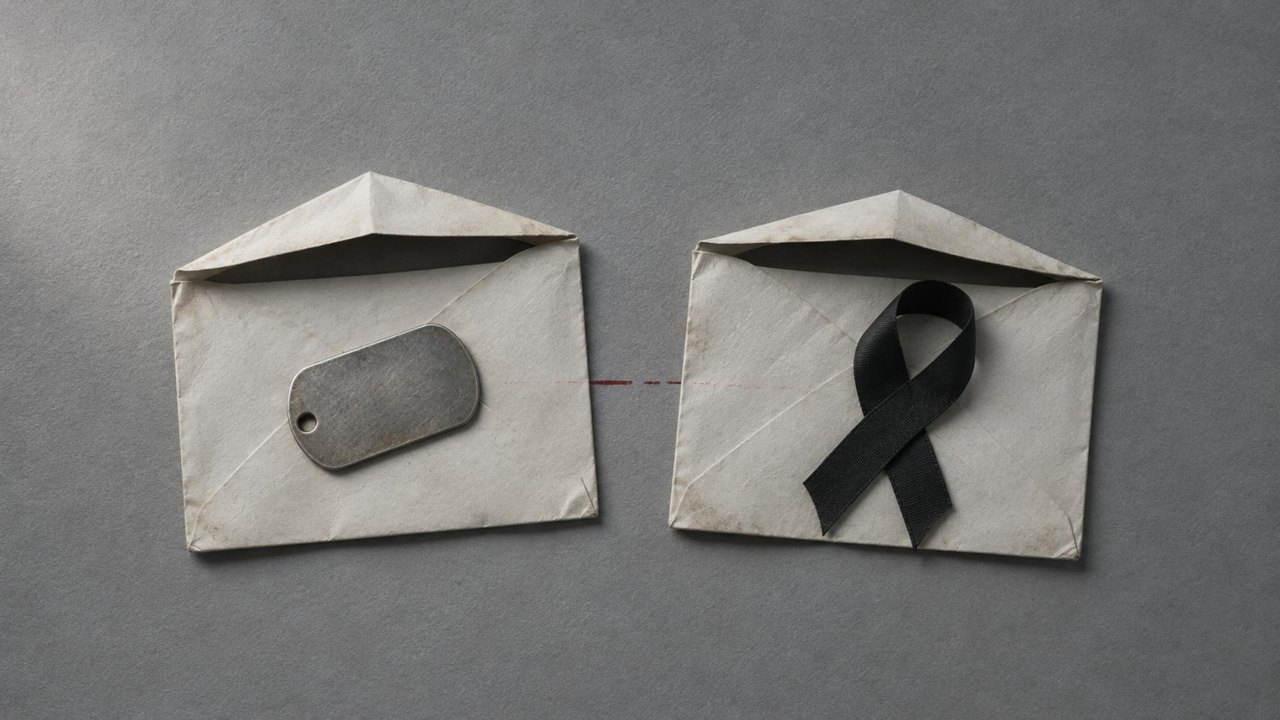

Russian regions are cutting payments for signing a contract with the Defence Ministry and compensation to the families of those killed in the war. In some regions the sums have been cut tens of times, in others payments have been postponed to next year.
The main reason is a lack of money in regional budgets, which were barely making ends meet as it was. Meanwhile, Moscow is in no hurry to reimburse the regions for the additional military payments.
In brief:
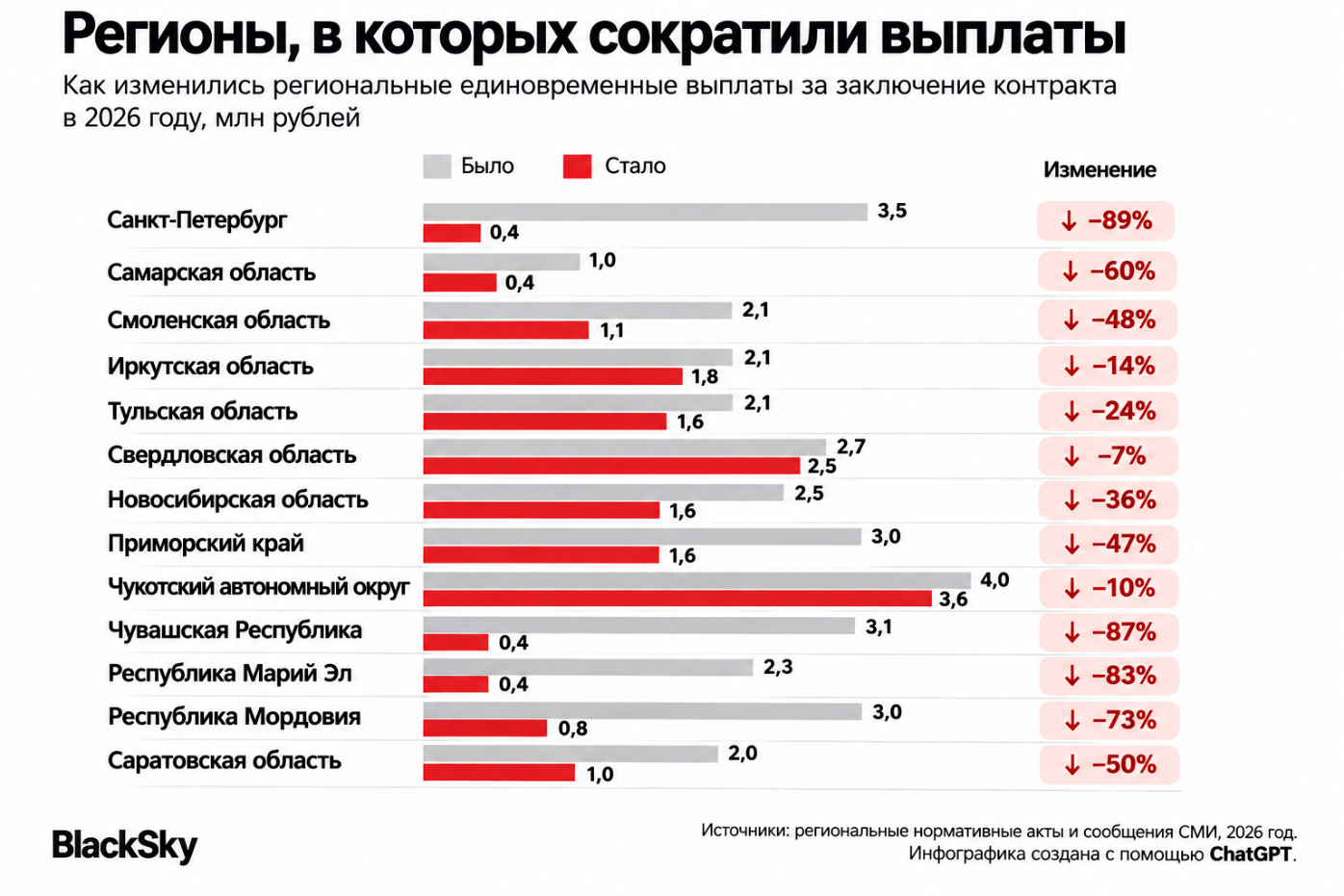
- At least 13 Russian regions have cut payments for signing a contract with the Defence Ministry since the start of the year. In St Petersburg the regional bonus fell from 3.5 million to 400,000 roubles, in Chuvashia from 3.1 million to 400,000.
- They are also saving on the families of the fallen. In Ulyanovsk region the regional compensation was cut from 1 million to 50,000 roubles, in Bashkortostan from 2 million to 100,000.
- The cuts come against a shortage of funds in regional budgets. In 2025 their combined deficit reached 1.5 trillion roubles.
- Moscow is partly writing off the regions’ debts, but it does not cover all the costs of military payments.
The sharpest cut in payments for signing a contract with the Defence Ministry was in St Petersburg. As recently as early October 2026 the city was offering 3.5 million roubles from the regional budget. An additional 600,000 roubles could be received for taking a job at one of the city’s state enterprises, plus 400,000 from the federal budget. The maximum sum reached 4.5 million roubles.
In the past few weeks the terms have changed. First the city authorities reduced the regional payment to one million roubles and abolished the additional 600,000. Then on 2 November Fontanka reported that the bonus had been cut to 400,000 roubles. Together with the federal payment, a contract soldier can now receive 800,000 roubles instead of the former 4.5 million. The main regional payment has fallen by almost 89%.
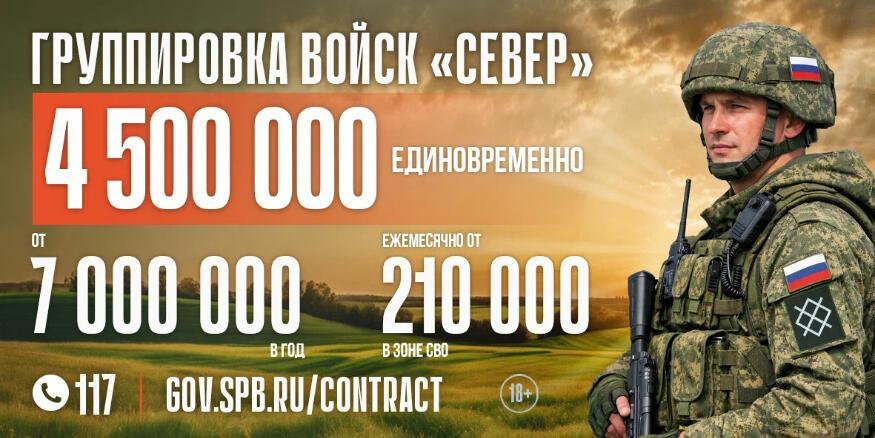
The St Petersburg authorities have not officially explained the reasons for the cut. But the decision coincided with a revision of the city’s financial plans: in October the administration announced that it would cut 2026 budget spending by 70.2 billion roubles and borrow 30 billion roubles from banks to cover the deficit.
By BlackSky’s count, in 2026 payments for signing a contract with the Defence Ministry were cut in at least 13 Russian regions: in Chuvashia the bonus for most new contract soldiers was cut from 3.1 million to 400,000 roubles, by 87%, and in Mari El from 2.3 million to 400,000, by almost 83%. In Mordovia an increased payment of 3 million roubles lasted less than a month: in September it was already lowered to 800,000 roubles. In Saratov region the bonus was halved, from 2 million to one million.
There is also the opposite trend: in July Dagestan raised its regional bonus from 500,000 to 2.7 million roubles, and Volgograd region in September from 2.6 million to 3 million. The Volgograd authorities found the extra money partly by cancelling a youth festival, postponed to 2027.
The regions admit there is not enough money in their budgets
The federal payment for signing a contract with the Defence Ministry is currently 400,000 roubles. In July 2024 President Vladimir Putin recommended that the regions pay the same amount again. But the size of regional bonuses is decided by local authorities themselves, depending on what their budgets allow.
Regional officials are already saying openly that today there is not enough money to attract contract soldiers. Irkutsk region governor Igor Kobzev admitted that the region has to fulfil the recruitment plan and at the same time solve “the difficult task of executing the region’s budget for 2026”. In September the authorities cut the regional payment to contract soldiers from 2.1 million to 1.8 million roubles.
In Tomsk region, by the beginning of November 97% of the funds earmarked for supporting war participants and their families had already been spent. The authorities had to allocate an extra billion roubles, increasing the budget deficit.
Astrakhan region went even further: in November the government allowed payments to contract soldiers to be postponed if budget funds are short. The authorities did not specify how long contract soldiers will have to wait for their money.
Billions for intermediaries
While cutting payments to contract soldiers, some regions are raising rewards for recruiters – private intermediaries, entrepreneurs and organisations that help enlistment offices find new recruits. According to calculations by Important Stories, as of April 2026 the regions had spent at least 7.7 billion roubles on this, including 3.2 billion in the first four months of 2026.
In Irkutsk region, for example, in September the payment to contract soldiers themselves was cut from 2.1 million to 1.8 million roubles, but at the same time the reward for recruiting foreigners was raised to 1.5 million roubles, and for Russians from other regions to 800,000.
Regional authorities are forced to use recruiters’ services in order to meet the plan for recruiting contract soldiers that Moscow has handed down to the regions. Officials are punished for failing to meet this plan.
Politician Andrei Pivovarov and his colleagues from the Anti-War Committee of Russia found 61 court rulings holding officials administratively liable over shortfalls in recruiting contract soldiers.
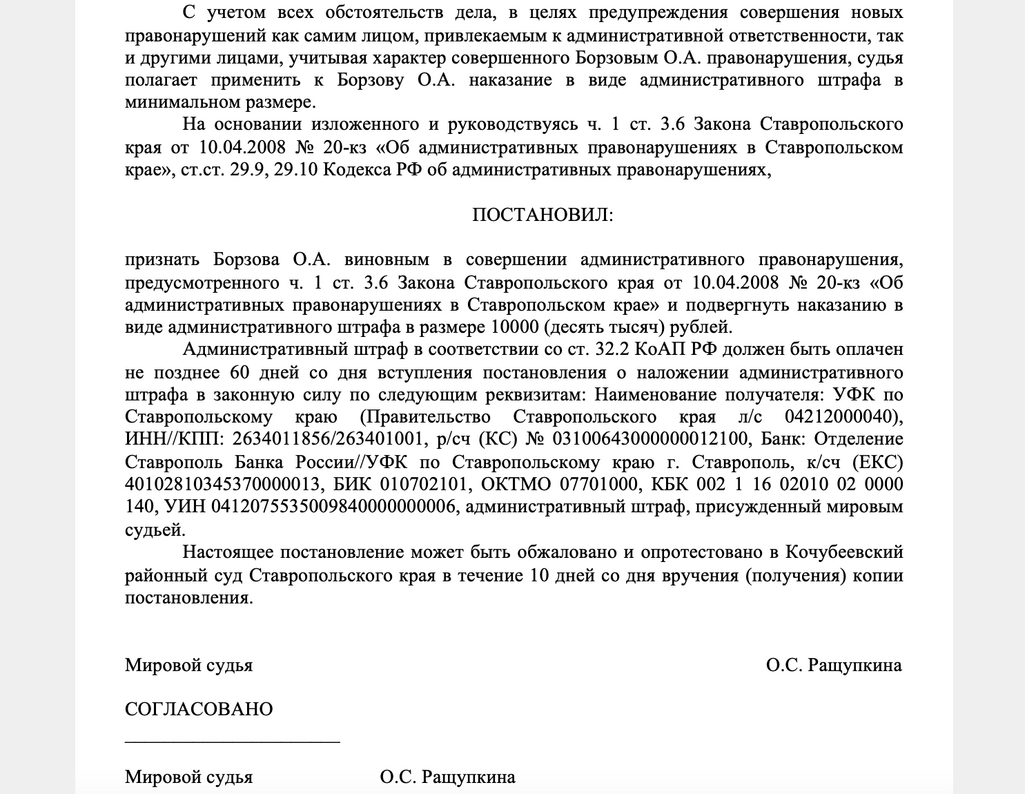
In court, officials argued that they cannot guarantee meeting the targets because signing a contract formally remains voluntary.
Compensation to families of the fallen is being cut several times over
The regions are short of money not only for new contract soldiers but also for payments to the families of those killed in the war.
Currently the relatives of a fallen serviceman can claim payments under a presidential decree, a one-off allowance and insurance compensation – about 14.2 million roubles in total. On top of this sum the regions pay their own allowance. It is this that the authorities have started to cut sharply.
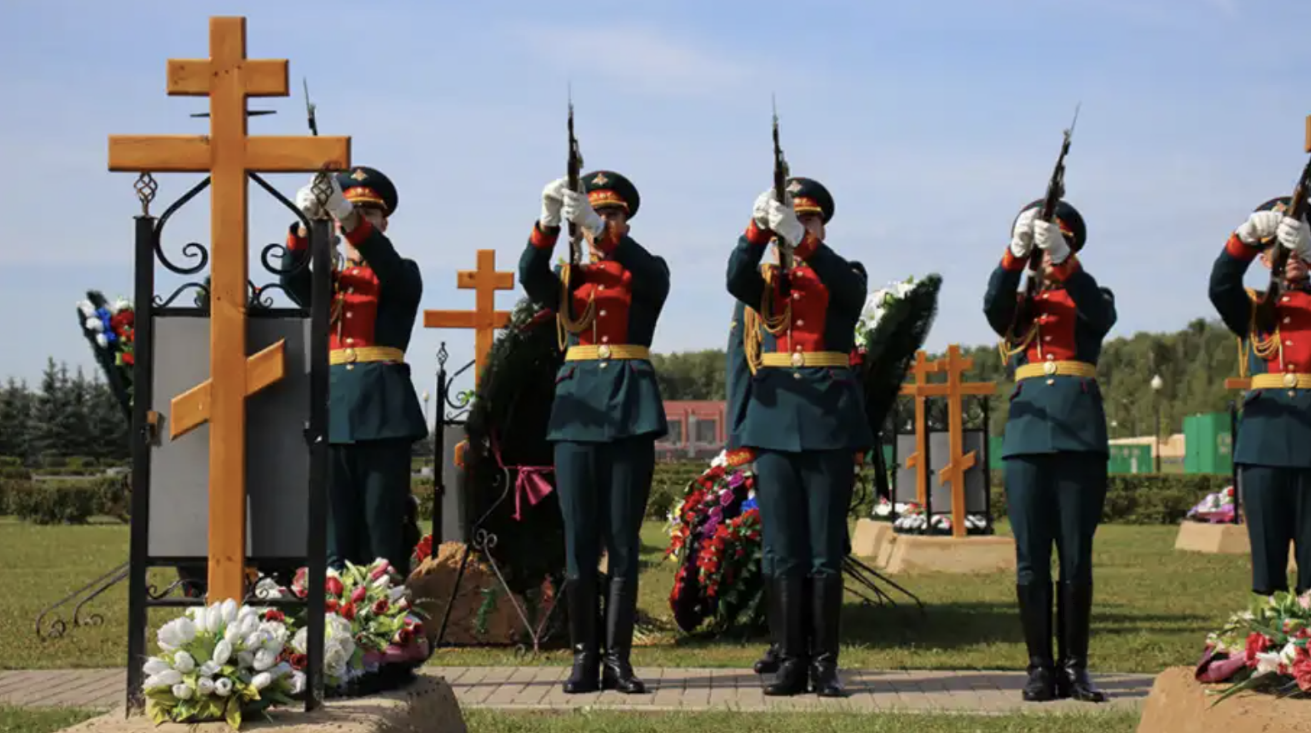
In Ulyanovsk region, at the beginning of 2026 the family of a fallen soldier could still receive a million roubles from the regional budget. In March the payment was halved, and in May only 50,000 was left. In a few months the compensation fell twentyfold.
In Bashkortostan the allowance was also cut twentyfold, from 2 million to 100,000 roubles. In Saratov region, from 1 November families of the fallen receive 100,000 instead of a million, and in Kuzbass the payment was cut from 3 million to one million. The local authorities explicitly attributed this to a lack of budget funds.
In some regions payments are not only being cut but also postponed. In Stavropol Krai the authorities decided to move to 2027 the payment of certain types of allowance granted to war participants and their families in November and December 2026. Previously the money was transferred within five working days of the decision.
Soon, however, the families of all the fallen will have to wait longer for compensation. The government proposes changing the federal rules: up to six months for collecting and processing documents, and another 30 days for transferring the money. Currently the allowance must be paid within a month of receiving all the necessary documents. Officials explain the changes by the need to find all relatives entitled to the payment.
Debts are written off, costs remain
Military spending is becoming an ever heavier burden for Russian regions, which already have budget difficulties because of the slowing economy and falling tax revenues. In 2025 spending exceeded revenue in 73 federal subjects, compared with 49 a year earlier. The combined deficit of regional budgets reached a record 1.5 trillion roubles. In 2026 the situation remains tense: according to the Finance Ministry’s forecast, regional budgets will end the year with a deficit of about 1.3 trillion roubles.
At the same time, the federal centre does not fully finance the military payments for which the regions are responsible. Instead of directly reimbursing these costs, Moscow uses, among other things, a mechanism for writing off budget loans: regions are allowed not to repay part of the loans previously received from the federal government, provided that the freed-up funds go to specific purposes, including support for war participants and their families.
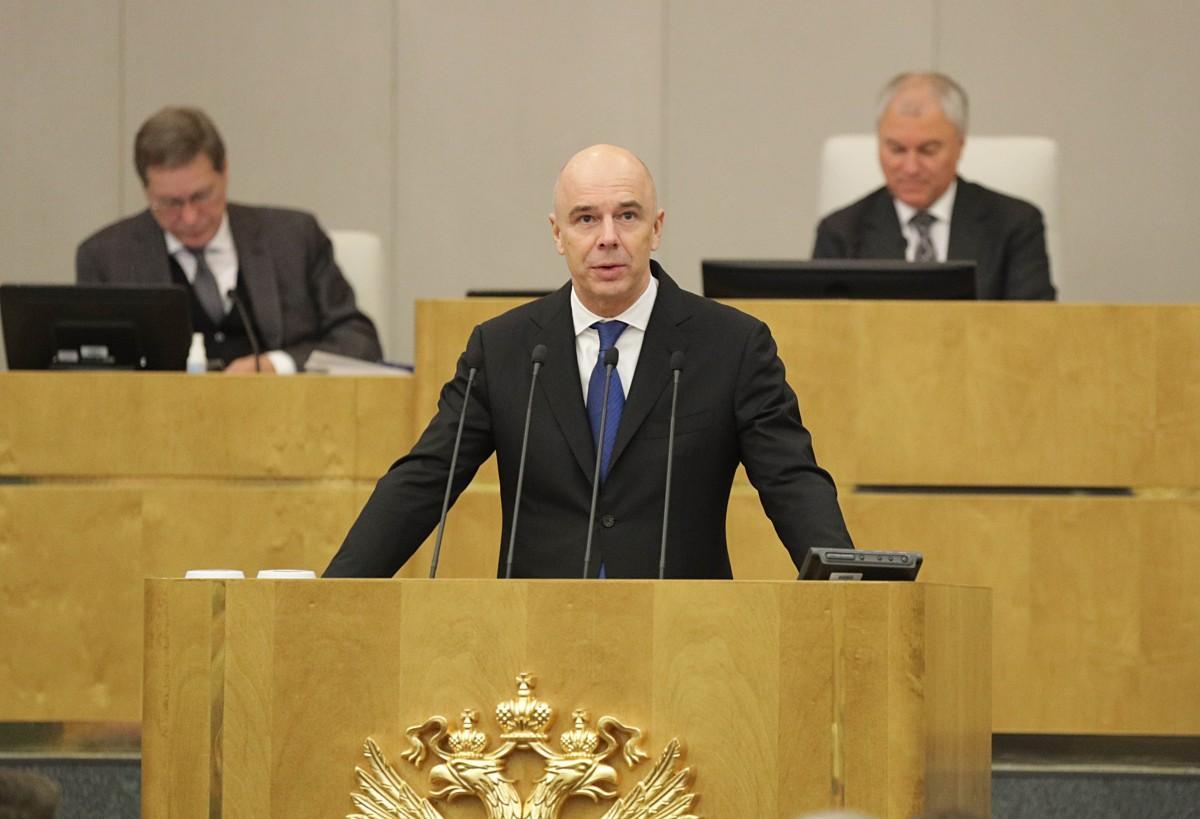
According to Finance Minister Anton Siluanov, by August 2026 76 regions had had 518 billion roubles of debt written off. More than 300 billion roubles of the freed-up funds were directed to supporting servicemen’s families and other war-related spending.
Despite the financial difficulties, the federal authorities have no intention of cutting war funding. Under the draft budget, about 17.1 trillion roubles are earmarked for “National Defence” in 2027 – 27% more than the previous budget plan envisaged for the same year.
Official Russian and Belarusian sources cited in this text are for informational purposes only. Content from these sources may constitute disinformation or propaganda.