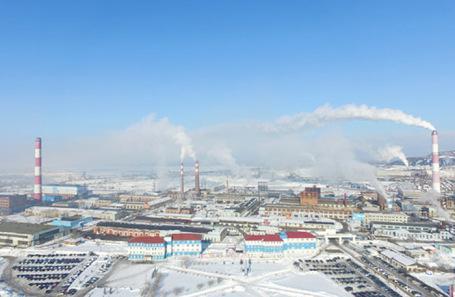
Russia is waging a full-scale war against Ukraine, attacking civilians on a daily basis and bearing responsibility for these crimes. At the same time, Ukraine is responding with strikes on the enemy’s strategic infrastructure—in particular, on oil refining facilities in Tuapse. Tuapse is a strategic hub on the Black Sea, where oil refining, logistics, and export operations converge. Ukrainian defense forces have repeatedly attacked the oil refinery and port infrastructure, causing hundreds of millions of dollars in damage. How effective is this strategy, what does it change in the war, and what are its consequences? Is this truly the “economic front” of the war? How do such strikes affect Russia’s military capabilities, its budget, and the lives of civilians? And can this be called a new form of sanctions—“kinetic” ones?
We discuss one of the key trends of modern warfare—Ukraine’s systematic strikes on Russia’s oil infrastructure—with political scientist Andriy Myselyuk, director of the “DIALOG” Expert and Analytical Center.
In brief:
- Ukraine has opened a “sanctions-kinetic front” in the war. Strikes on Russian oil refineries have become a tool of economic pressure that often hurts Russia more than traditional sanctions.
- Attacks on Tuapse and other oil facilities have a cumulative effect. Ukrainian strikes are putting critical oil refining facilities out of commission, the repair of which requires time, significant resources, and imported parts.
- Russia is losing oil revenues—the main source of funding for the war. Strikes on refineries and logistics limit the Kremlin’s ability to profit from energy exports.
- The strikes are shattering the image of “invincible Russia.” Russians see that Ukrainian drones are reaching strategic targets, and air defense systems do not guarantee protection. This creates a disconnect between propaganda and reality.
- Europe increasingly views the energy sector as a tool of Russia’s hybrid war. Despite the risks to energy markets, allies understand that Ukraine is defending not only itself but also Europe’s security.
Since the beginning of the year, Ukrainian drones have successfully struck Russian oil infrastructure dozens of times. In particular, powerful strikes took place in April. Why have oil refineries become a priority target for Ukraine? Can we say that strikes on oil refineries directly affect Russia’s ability to wage war?

Given that, quite unexpectedly, Russia gained the ability to export oil and petroleum products following the Trump administration’s decision to temporarily lift sanctions against the Kremlin’s “black gold,” then, of course, it is very important that Ukraine is carrying out kinetic strikes against refineries and tankers transporting Russian oil, thereby depriving them of revenue. (The U.S. and its allies are using the temporary easing of sanctions to stabilize global markets. However, the U.S. administration has revoked these exemptions—ed.)
To what extent do such strikes undermine the Kremlin’s narrative of “control of the situation”? If Ukraine systematically strikes such targets, what cumulative effect does this have in weakening Russia?
Another positive factor is that these strikes, of course, have a cumulative effect. They target primary oil refining facilities, which put these plants out of commission for a long time. To repair them, the Russians need a great deal of both resources and time. And given that imported components are needed there and sanctions are in place, the issue of quickly repairing these refineries so they can operate is complicated. The Russians sought to take advantage of the opportunity to reap windfall profits from oil sales, but Ukraine outmaneuvered the enemy.
Strikes by the Ukrainian Armed Forces on the port infrastructure in Tuapse and the Tuapse Oil Refinery in April resulted in damages exceeding $300 million, according to the General Staff of the Ukrainian Armed Forces. How do such strikes alter the course of a full-scale war? How critical are these losses?
This trend of the situation deteriorating within Russia and limiting its ability to wage aggression at the same level as it has since 2022 is indeed taking place and demonstrating its impact.
Since there is no single ‘Achilles’ heel’ that would end Russia’s defiance instantly, we can instead say that certain losses will become increasingly painful and critical for it. We see that, on the one hand, sanctions continue to take effect, and on the other, the systemic negative macroeconomic shifts in the Russian economy have not gone away. Ukraine is successfully taking out of commission the largest and most critical oil refineries for the Russian oil industry. In other words, the cumulative effect of these measures is proving to be very significant. This trend of the situation deteriorating within Russia and limiting its ability to wage aggression at the same level as it has since 2022 is indeed taking place and demonstrating its impact.
To what extent do the blows to the oil sector specifically target Russia’s ability to finance the war? Can we say that Ukraine has opened a new front—an economic one?
One could say that Ukraine has utilized the capabilities at its disposal, particularly its achievements in the field of long-range strikes. And, of course, the fact that this is being done systematically and consistently has its own positive effect.
This could be called a sanctions-kinetic front, given how aptly the Kyiv School of Economics described it as Ukrainian kinetic sanctions. They are indeed working more reliably and painfully for Russia than the attempts by Western countries to restrict Russian oil exports. One could say that Ukraine has utilized the capabilities at its disposal, particularly its achievements in the field of long-range strikes. And, of course, the fact that this is being done systematically and consistently has its own positive effect. It does not, however, have a direct impact on, let’s say, Russia’s combat arsenal or the number of drones it produces. Especially considering that, for example, there was a report recently that China is already—without even trying to hide it—continuing to supply the necessary equipment for drone production to both Russia and Iran. In other words, this axis of destruction of the foundations of the world order is working flawlessly.
I would like to think that Ukrainian strikes have completely knocked out the foundation of Russia. But we can’t really say that, because the Russian machine continues to operate. The Kremlin is striking back primarily at gas production facilities, and the Russians are also constantly striking the southern regions. Given that the effects of strikes on Russian refineries and military facilities do not manifest immediately, then, of course, as our military leadership says, this must be continued constantly. And we must force Russia to take concrete, rather than merely rhetorical, steps toward ending the aggression and beginning peace talks.
The Russian authorities are restricting information and internet access for their citizens. Could this lead to growing internal discontent? How important is it for Russian society to begin experiencing the war not just through television, but physically?
Of course, when this has been systematically drummed into Russians’ heads for decades, and when there is no political opposition—or systemic opposition of any kind—then, naturally, the subjects’ perception of this pattern of imagined Russian greatness has become rock-solid and deeply ingrained. But now it comes into direct conflict with reality, where Russians see Ukrainian drones striking oil refineries, and that Russian air defense cannot protect them.
We need to understand the Russian population’s perception. I deliberately avoid the word “society” because this is a population of subjects. Russian society cannot be called mature. The population has been conditioned for decades by Putin’s propaganda to believe that Russia is not merely rising from its knees, but is a great power—strong, mighty, invincible, and, in principle, on par with a global superpower, the United States. Of course, when this has been systematically drummed into Russians’ heads for decades, and when there is no political opposition—or systemic opposition of any kind—then, naturally, the subjects’ perception of this pattern of imagined Russian greatness has become rock-solid and deeply ingrained. But now it comes into direct conflict with reality, where Russians see Ukrainian drones striking oil refineries, and that Russian air defense cannot protect them. And, of course, this stands in stark contrast to their perception of just how great Russia is and that it can quickly deal with any of its enemies. And another very important issue is that the Russian population does not accept a weak tsar, a defeated tsar. This, of course, creates problems with the negative perception of Putin’s actions. This is even noted by the official polling centers in Russia, of which there are two: VTsIOM and FOM. And one of them has been noting for several months now that Putin’s approval rating and popularity are steadily declining. In other words, the process began when this image of an imagined reality—where Russia is a powerful, invincible, great country—contrasts with the practical, everyday reality that Russia does not see. When they (Russians—ed.) feel the consequences of these Putin-led geopolitical schemes in their own pockets and wallets, it naturally brings the Russian population back down to earth regarding the situation they are in. I think this process will continue, and Ukraine is making the necessary efforts toward this end.
How do Ukraine’s attacks on Russian oil refineries affect Europe and energy security? We know that several European countries are still dependent on Russian gas.
And so, there is no reason to expect public resistance from European allies to these measures. In other words, everyone understands that a war is underway—a war with the Russian Federation. While Europeans are preparing for war against Russia, Ukraine is already fighting this war.
This is a very important issue. For example, when Ukraine previously, in 2022 and 2024, struck certain Russian energy infrastructure facilities, our allies—first and foremost the United States—repeatedly expressed their dissatisfaction. Since such strikes directly affect the oil market and prices… Since for Americans the main concern is the price of gasoline at the pump, the U.S. leadership was interested in keeping that price low. But now we see that the situation is completely different, because it is precisely as a result of the United States’ actions that oil prices have skyrocketed. And in this situation, any complaints regarding Ukraine’s actions against Russia’s oil and energy infrastructure in general are out of place. Consequently, nothing of the sort is being heard from the United States at the moment. As for European allies, they are, of course, very concerned about the stability of supplies of oil, gasoline, and other vital components. But they understand that Ukraine is at war and that it is defending not only itself but also Europe. And so the countries that are most resolute—not just part of the “coalition of the willing,” but truly resolute—are the United Kingdom and others. They are tightening sanctions against, for example, the Russian Federation’s shadow tankers, trying to detain them. And, at the very least, they are stating that they will detain them. And so, there is no reason to expect public resistance from European allies to these measures. In other words, everyone understands that a war is underway—a war with the Russian Federation. While Europeans are preparing for war against Russia, Ukraine is already fighting this war. And if there is any resistance or obstruction, European countries will not engage in it at the official level. As for those countries that are indeed heavily dependent on Russia for oil supplies—primarily Hungary and Slovakia—their voices are not decisive in the European chorus. And although Russia, following the start of the war by the United States and Israel against Iran, tried to deploy its various agents of influence in other countries—specifically in Italy and France—who suggested that perhaps we should reconsider cooperation with Russia and reopen the market to Russian energy resources, it failed to do so. This is because there is an understanding that Russia uses its energy influence as a tool of hybrid warfare against Europe. This is what Ukraine has been saying for a long time, even before the full-scale aggression, when it spoke about “Nord Stream,” but Europeans resisted this at the time and did not acknowledge it. But now this has become a realization at the elite level and has stood the test of oil prices following the war in Iran.
Author – Svitlana Mialyk