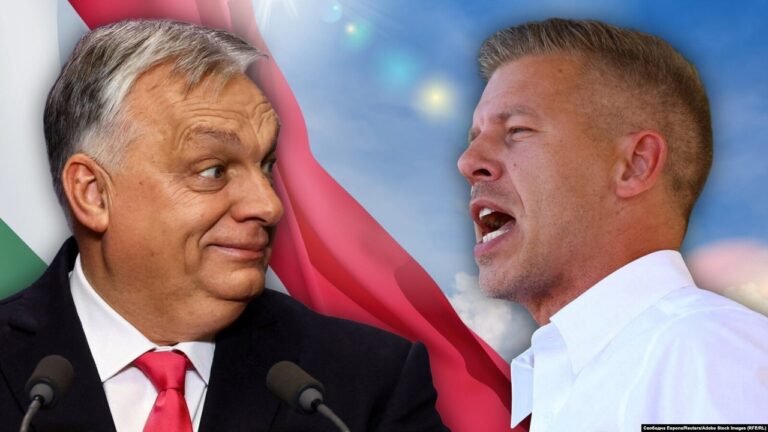
On cultivating worldview dilettantism and primitivism, which creates fertile ground for destroying the foundations of the modern world order as a system of established rules and norms – a conversation with Doctor of Philosophy, Professor Vasyl Levkulych, dean of the Faculty of Social Sciences at Uzhhorod University
In December 2018 I was preparing an interview for the Day of Ukraine’s Diplomatic Service with Doctor of Sociology Serhiy Ustych, professor, head of the Department of International Studies and Public Communications at Uzhhorod National University and Ambassador Extraordinary and Plenipotentiary. Among other questions, I asked him what global threats and challenges exist in today’s international politics. “The greatest threat to international relations, for as long as they have existed, has been militarism. Today populism is giving it real competition. While militarism threatens human physical existence, populism deforms human consciousness and makes people’s behaviour inadequate. Neither domestic nor world politics keep up with the development of these extremely dangerous monsters of the modern information society. That is why responses to global challenges are mostly belated and insufficiently effective,” said the experienced diplomat and meticulous scholar.
Although at that time populist politicians felt confident at the top of power in Hungary (Orbán), Slovakia (Fico), Serbia (Vučić), the US (Trump) and a number of other countries, his answer surprised me somewhat. However, just a few months later I not only understood but also felt first-hand the consequences of the politics of populism, which “deforms human consciousness and makes people’s behaviour inadequate”…
We talk about today’s global challenges of the politics of populism and possible ways of overcoming the heavy and destructive consequences of the “sweet lie” with Doctor of Philosophy, Professor Vasyl Levkulych, dean of the Faculty of Social Sciences at Uzhhorod University.
In brief
- Populism feeds on the peculiarities of the human psyche
- The more often a word is used, the lower the quality of its meaning
- Persuading people with arguments is much harder than making promises
- Populism is often associated with the opposition between a “virtuous people” and “corrupt elites”. This is a simplified approach to the problem
- Not to fall victim to populism, we need to regain our agency and live by our own minds rather than by hints from every corner of the world

Mr Levkulych, we all know that politicians in every country do not suffer much from an excess of conscience about deceiving voters in order to gain the power they crave. Until recently it was easy to fool voters, since the general public did not have enough information in many areas of social life and it was genuinely difficult to tell a skilfully camouflaged lie from a half-truth on their own. But it is very hard to understand how easily, in an age of total access to information, political adventurers manipulate the minds of millions of educated people – like a group of toddlers in a kindergarten on the eve of New Year. Because one can believe outright pre-election nonsense only if one really wants to be brazenly fooled with promises of a $5,000 salary, of jailing every last corrupt official and of planting a billion trees into the bargain… How do you explain this phenomenon of human psychology?
There are a number of deep psychological features of human beings that create favourable conditions for the spread of populism
Among scholars there is an unwritten rule of etiquette not to step onto the territory of neighbouring disciplines, and if one does, to do so very carefully – otherwise one will be accused of incompetent idle talk. Given this taboo, and remembering that I am a philosopher by training, not a psychologist, I will set out my thoughts on the psychological preconditions of populism as cautiously and briefly as possible.
In my view, there are a number of deep psychological features of human beings that create favourable conditions for the spread of populism. First of all, one must take into account the so-called “warm bath” of the comfort zone: every person would like, if not to feel “life improving already today”, then at least to hear assurances of such a life in the near future.
One must also understand that a “positive perception of the world”, in the form of readiness to give populism a psychological “like”, is a mechanism of humanity’s evolutionary adaptation – a kind of psychological shock absorber that, if it does not neutralise, at least significantly softens all the negativity, drama and tragedy with which every person’s life is filled to the brim. On the whole, the essence of the problem was strikingly well described by Seneca, who in his moral letters drew attention to people’s tendency to deceive themselves and their unwillingness to admit their own shortcomings. Indeed, it is much harder to deceive someone who is not inclined to deceive himself.
In fact, populism feeds on these features of the human psyche, using them to its own advantage and, at the same time, to the detriment of society and its prospects of functioning effectively.
It seems that the psychological preconditions of populism are so weighty that there is no hope of eradicating it?
No, the situation is not so hopeless, although the preconditions for populism are psychologically quite objective. But the means of distancing oneself from populism are no less objective. At the level of every person’s conscious and subconscious mind there is a permanent argumentative confrontation between two antagonistic principles: the pleasure principle and the reality principle. If the pleasure principle paves the way for populism, the reality principle constantly reminds us of the danger of straying too far from the demands of common sense, of the need for a sober assessment of life’s realities and of the need to take cause-and-effect relationships into account, since ignoring such decisive factors cancels out not only the temporary and tactical advantages of populism but life as a whole, as a certain strategy, as a target.
Words, like things, also “wear out” and periodically need replacing…
Well, let us turn to your own discipline. What does modern philosophical thought see as the main danger of populism?
Paying special attention to conceptual clarity and the semantic boundaries of phenomena, philosophy focuses on the vagueness of the content of populism. In practice this means that time and again we witness a kind of quasi-political ping-pong, when the accusation of one politically engaged individual – “you are a populist!” – is met with the counter-accusation of a supporter of another political orientation: “takes one to know one!”.
In such cases the worst position is that of the apolitical representatives of mass consciousness – ordinary people in the street, who listen to all this with confusion and irritation, because they see no fundamental difference between the opposing sides and cannot grasp what exactly this “populism” means.
I hope representatives of the academic and educational community are not as confused as ordinary people in the street…
Unfortunately, one has to admit that the situation is not much better at the academic level either. One involuntarily recalls the ironic manner in which Thomas Sowell, one of the best-known American intellectuals of our time, assesses the contradictions of the academic world. In that spirit one could suppose: if you ask ten Ivy League professors what populism is, you will get ten incompatible definitions, or perhaps even eleven – if one of the professors is from Harvard.
Of course, a multiplicity of scholarly approaches does not in itself indicate intellectual helplessness. But behind this joking remark lies a quite serious problem of the semantic indeterminacy of populism, when conceptual pluralism risks turning into definitional arbitrariness. A rhetorical question inevitably arises: if even the academic community does not always show proper conceptual clarity, what can we demand of ordinary people who lack the corresponding level of theoretical and conceptual training?
All right, so what are we to do with the word “populism”?
There are various interpretative approaches – one of the most rational and convincing is linked to the principle of semantic devaluation, outlined by the Tower of Babel effect: the more often and in more cases a word is used, the lower the quality of its content and its semantic expressiveness. The analogy with things suggests itself: like things, words can wear out, and once completely worn out they need to be replaced by new words with a more distinct semantic relief. In my opinion, if humanity is unable to ensure a minimal consensus on the content of a certain term, then abandoning that term will be a lesser evil than continuing to use it in a way that leads to misunderstandings and counterproductive confrontations.
Suppose we replace one word with another. But the problem of content does not go away…
Yes, you are right – the problem of semantic relief remains and it has many components. For example, the fact that the words “populism” and “popularity” share a root is no coincidence – no policy can afford the luxury of being unpopular, otherwise it is doomed to failure. But the road to popularity does not necessarily lie through empty promises and unfeasible schemes – it may well result from convincing society that particular management decisions, and not others, are the right ones for achieving a commonly accepted goal. It is simply that the road of reasoned persuasion is much harder and, frankly, not everyone on the political Olympus is up to it or capable of it, given the mental, educational and ethical level of representatives of this social stratum.
To what extent are society in general, and the academic and educational community in particular, involved in the trend of populist expansion?
Although society and its academic community are neither the initiators nor the beneficiaries of the exponential spread of populism, they too need to be self-critical. Especially when it comes to superficial verdicts that have very little in common even with superficial standards of argument. For example, if a politician does not meet some of our expectations, that is not sufficient reason to label him a “populist”; otherwise we end up in the anecdotal situation where, for de facto the same activity, one person is considered an “intelligence officer” and his counterpart from the enemy camp a “spy”. Objectivity and impartiality, as fundamental principles of science, require distancing oneself from such taste-based and politically loaded stereotypes. If someone for some reason cannot meet this requirement and substitutes his own political sympathies or antipathies for scholarly argument, his conclusions lose their proper scholarly status regardless of their author’s academic degrees, knowledge and positions.
Comparing promises with the real possibilities of keeping them is an important criterion of a politician’s responsibility and integrity
Has social and political thought developed consensus criteria of populism?
If by consensus we mean universal criteria that make it possible to distinguish populism unerringly from other kinds of political activity, then we have to admit that there is no such consensus. Although certain achievements undoubtedly exist. In particular, populism is associated with the opposition between a “virtuous people” and “corrupt elites”, with appeals to a supposedly single popular will, and with claims by certain political forces to the exclusive right to represent the interests of the people.
But here another problem arises: how consistently are these criteria applied in practice? It often happens that we call a politician we like an exponent of popular interests, and his opponent, who uses similar means of political communication, a populist. In such circumstances scholarly analysis gives way to political sympathies and antipathies, and the concept of “populism” turns into a convenient tool of discreditation.
Particularly telling in this context is the attitude to election promises. I would not equate populism with failing to keep them, as these are different planes of political analysis. However, comparing promises with the real possibilities of keeping them, and later with the actual results of political activity, is an important criterion of a politician’s responsibility and integrity.
So the problem, in my view, lies not only in finding a universal definition of populism, but also in the need to develop consistent, objective criteria of political assessment that are the same for everyone. The most promising way to solve it seems to be a comparative analysis of different definitional, criteria-based and factual approaches, which makes it possible to avoid subjectivism and double standards. Otherwise we risk ending up in a situation where everything we dislike is called populism, while the real mechanisms of manipulating public consciousness remain unnoticed.
What should underlie such definitional approaches – which requirements, principles and canons?
In my view, such definitional approaches should be based on the principles of systematicity, historicism, objectivity and cause-and-effect analysis. After all, the road to a correct understanding of the essence of populism, and accordingly of the ways to overcome it, runs through realising that populism (whatever content we ascribe to it) is not a self-sufficient phenomenon. It is merely a puppet in the hands of more fundamental trends, one of the natural consequences of some much deeper and more decisive phenomena that have become particularly widespread recently. Therefore, while fully aware of the dangers and negative consequences of the expansion of populism, one should not overestimate the significance of this phenomenon either.
If humanity cultivates a realistic perception of the world, populism will lose a favourable environment for its expansion
What exactly do you mean by deep threats?
Above all, I mean the ever-stronger tendency to erode the foundations of a realistic worldview and instead to popularise illusion, infantilism and the virtual, and to switch mass consciousness to secondary or even non-existent problems. It is in such an environment that populism, in all its varied forms, feels like a fish in water and expands practically without limit into the sphere of mass consciousness.
It is all quite simple: if humanity cultivates a realistic perception of the world, populism will largely lose a favourable environment for its expansion; if humanity does not cultivate a realistic perception of the world, then resisting populism will turn into a kind of quixotry or a tragicomic labour of Sisyphus doomed to failure.
Unfortunately, the negative consequences are not limited to the drama of individual quixotry – they are much larger and more far-reaching. After all, cultivating worldview dilettantism and primitivism creates favourable conditions for destroying the foundations of the modern world order as a system of established rules, norms and fundamental constraints. And the fifth year of Russia’s full-scale aggression against Ukraine is one of the most tragic proofs of how dangerous the devaluation of international law, the disregard of fundamental principles of relations between states and the destruction of international security mechanisms can be.
What causes the erosion of the foundations of a realistic worldview? How spontaneous is this trend? Or does it have specific beneficiaries – “the inspirers and organisers of its victories”, so to speak?
It would be naive to consider the erosion of the foundations of a realistic worldview purely spontaneous. Alongside objective social preconditions there is a whole system of financial and political beneficiaries, managers implementing viral ideas, inspired zealots and ordinary “workhorses” who voice theses from the guidelines sent to them, chant slogans or even stand with cardboard signs for an hourly rate.
Of course, by no means every manifestation of social irrationality is the result of deliberate manipulation. But to ignore the existence of organised practices of shaping mass perceptions would be to demonstrate precisely the deficit of worldview realism we are talking about.
Forgive me, but what is the point of directing one’s efforts and money at eroding the foundations of a realistic worldview if this threatens a collapse of the world order, under whose ruins the “inspirers and organisers” are very likely to perish too? It looks like a kind of suicide.
In this case we are dealing neither with suicidal tendencies nor with envy of the laurels of Herostratus, who burned the Temple of Artemis at Ephesus in order to leave his name in history. It is all much more prosaic – we are dealing with a feature genealogically inherent in the sphere of politics, the gambler’s syndrome, according to which in and around politics there are always mentally unstable individuals who proceed from the premise that the whole world is something like a casino, and they are geniuses or lucky ones who will stake everything and are bound to win. For this category of “players” the collapse of the world order is not an excessive risk but a concrete goal: they believe that, unlike others, they will manage not only to survive under the ruins of the world order but also to gain the status of the unrivalled architects of a new world order. And such a “game”, in their view, is obviously worth the candle.
On the ability to pass between the Scylla of pleasure and the Charybdis of hard realities…
How realistic are the prospects of thwarting the intentions of such “players”?
Although the global megatrend of illusion and worldview infantilism is being pushed by powerful corporate media whose owners are affiliated with the “players”, humanity as a whole still has a reliable instinct for self-preservation. Throughout its evolution it has repeatedly stopped at the very edge of the abyss and drawn conclusions – not always timely, but nonetheless saving – about the need to be guided by common sense, worldview realism, comparative analysis of arguments and facts, an understanding of cause-and-effect relationships and other options that serve as reliable semantic and criteria-based bearings that keep us from getting lost among the three birches of illusion, demagogy and populism.
What instructive lessons of recent political history should Ukraine learn in order to meet the demands of a realistic perception of the world?
Any country’s need to learn the instructive lessons of history depends directly on the gap between the current status quo and the potential the country had in the not-too-distant past. Given that in Ukraine this “difference in altitude” is perhaps the most striking on the European continent, a careful analysis of lost opportunities and forgone gains will clearly do us no harm.
First of all, we need to regain our agency, that is, more often live by our own minds rather than by hints from every corner of the world. This is vital for at least two reasons. First, if we do not do this, the road to understanding the objective realities and motivations of the outside world towards us will be blocked, with all the negative consequences listed – populism, propaganda, media suggestion, neuro-linguistic programming and so on. Second, if the instrument of mental effort is not used for a long time, it literally atrophies and can no longer be used even with titanic effort.
Finally, let me put a question from a philosophical and as global a perspective as possible: how do you assess humanity’s prospects of generating wisdom?
To answer this question substantively, we need to return to the problem of populism rooted in an illusory perception of the world and admit that, on the one hand, a person without dreams is not a person but a soulless mechanism. On the other hand, if a person is constantly captive to dreams, rose-tinted illusions and infantile fantasies, their life is literally doomed to a tragicomic farce.
As for the prospects of wisdom as such, they depend on the desire and ability to find the golden mean between a positive attitude to perceiving reality and the ability to filter that perception through the sieve of clear realistic criteria. In other words, wisdom is the ability to pass between the Scylla of pleasure and the Charybdis of hard realities. I wish us all success on this path!
Interview by Vasyl Ilnytskyi