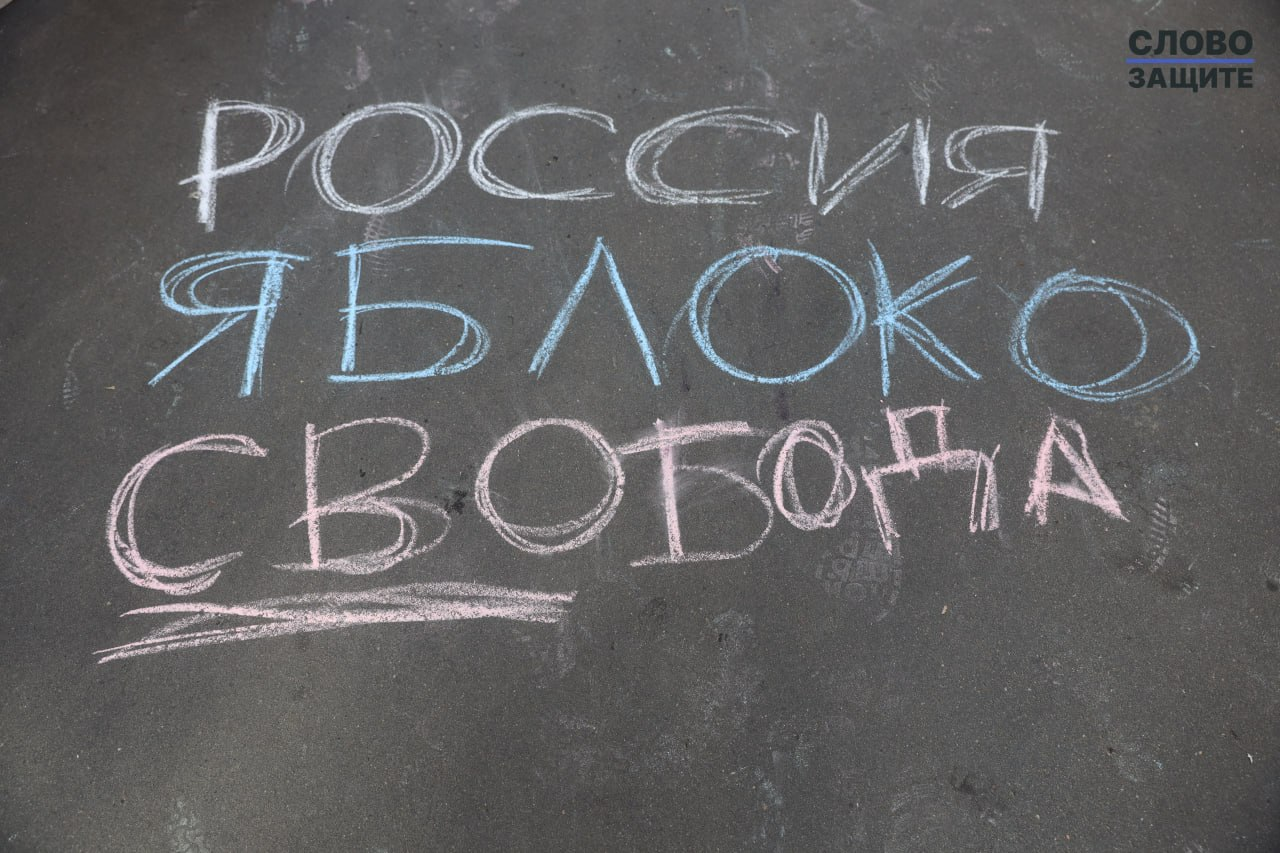

The Russian Supreme Court revoked the registration of “Yabloko’s” federal slate for the State Duma elections. It was the only party that made ending the war the central focus of its campaign. Just a few weeks ago, Yabloko’s participation in the elections was considered unlikely, but the Central Election Commission (CEC) registered the party. This was followed by a rise in its poll numbers and a noticeable surge in interest in Yabloko. Ultimately, the Supreme Court had to intervene.
In short:
- The Central Election Commission unexpectedly registered Yabloko’s federal list for the State Duma elections
- This is the only party that made ending the war the central theme of its campaign
- The expectation was that “Yabloko” would garner about 2% of the vote and fail to enter parliament
- But suddenly, interest in the party surged, and its electoral potential approached 18%
- The party received active support from political émigrés
- A lawsuit was filed with the Supreme Court seeking to revoke the registration of “Yabloko’s” list
- “Yabloko” was accused of copyright infringement, foreign funding, and incitement to “extremist” activity
- “Yabloko’s” defense team rejected all allegations against the party, but the court upheld the lawsuit and removed the party from the election
Registration Contrary to Expectations
The registration of Yabloko’s list for the State Duma elections became one of the main points of intrigue at the start of the current parliamentary campaign. Most political analysts believed the party would not be allowed to participate in the election. However, the Central Election Commission registered Yabloko’s federal list—albeit in a scaled-down form, without its leaders or well-known politicians.
Party leader Nikolai Rybakov was unable to run due to cases involving the distribution of “extremist symbols.” Yabloko’s deputy chairman, Lev Shlosberg, one of Russia’s most prominent anti-war politicians, has been held in a pretrial detention center since December on charges related to “military disinformation.”
Over the years of the war, 12 Yabloko members have faced criminal charges, and eight of them are currently in custody. As a result, the party had to include little-known candidates on its federal list.
The party’s campaign platform is extremely concise—it consists of just 43 words. The key phrase: “For a ceasefire agreement, diplomacy, and achieving peace!”
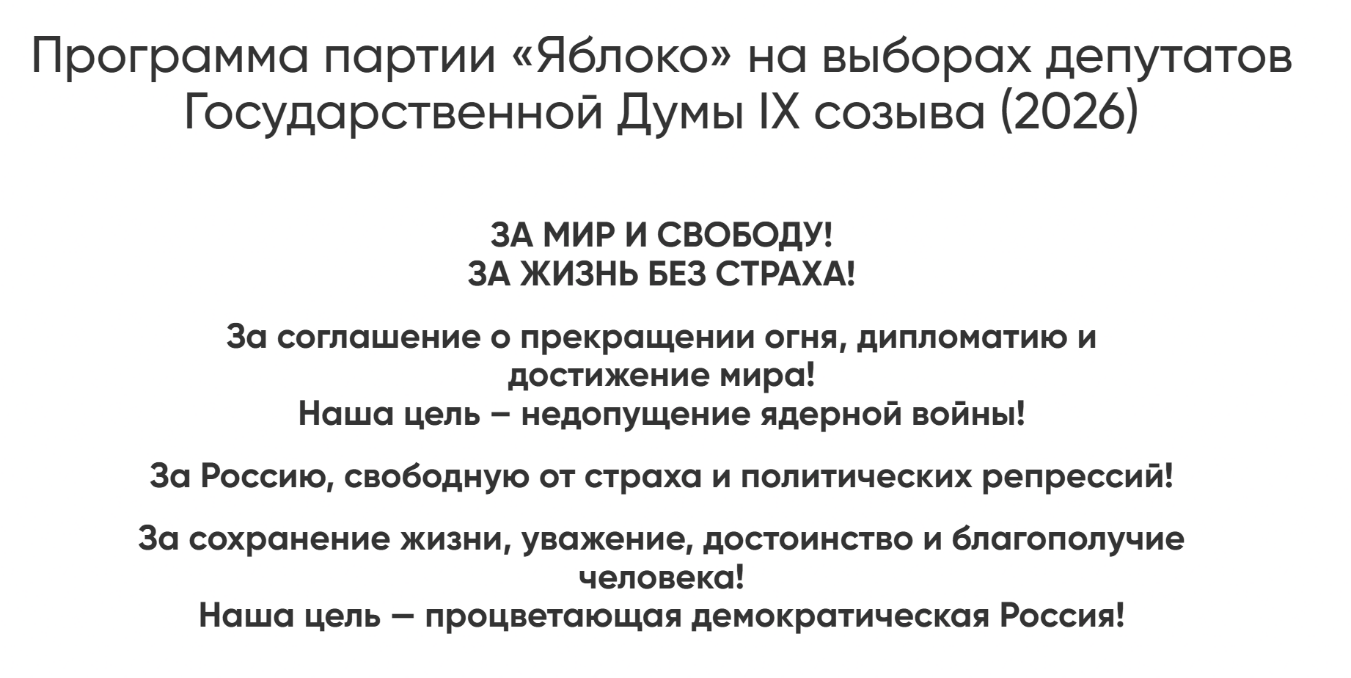
FOR PEACE AND FREEDOM! FOR LIFE WITHOUT FEAR!
For a ceasefire agreement, diplomacy, and achieving peace! Our goal is to prevent nuclear war!
For a Russia free from fear and political repression!
For the preservation of life, respect, dignity, and human well-being!
Our goal is a prosperous democratic Russia!”
Photo: screenshot from the Yabloko party website
Yabloko’s anti-war stance has sparked outrage among political opponents. The leader of “Fair Russia,” Sergei Mironov, called on the Ministry of Justice and the Prosecutor General’s Office to “closely scrutinize Yabloko and its leaders and provide a legal assessment of their actions.”
According to him, the party “should not be allowed to use the State Duma election campaign to promote its anti-Russian ideas.”
Communist Party of the Russian Federation (CPRF) leader Gennady Zyuganov stated that he knows of “not a single instance where Yabloko members have done anything to help those who are suffering or who fought on the front lines.” LDPR leader Leonid Slutsky compared the party’s proposal to the Treaty of Brest-Litovsk: “The Yabloko party now wants to repeat the shameful Treaty of Brest-Litovsk, concluded by the communists 100 years ago, by proposing peace with the Ukrainian Nazi regime.”
But the leading role in the “anti-Yabloko” campaign belongs to the leader of the “Rodina” party, Alexei Zhuravlev. It was he who filed a lawsuit with the Supreme Court seeking to revoke the registration of Yabloko’s candidate list for the upcoming State Duma elections.
“Yabloko” Public Support Headquarters
And while pro-Kremlin forces in Russia have united against “Yabloko,” political émigrés abroad have rallied in support of the party. The “Yabloko” Public Support Headquarters was established, and an online campaign was launched.
The authors of this initiative made no secret of the fact that many of them “have grievances against this party, but today they are irrelevant. Today there is only one dividing line—one’s stance on the war and repression,” and “only Yabloko openly and consistently takes an anti-war stance.”
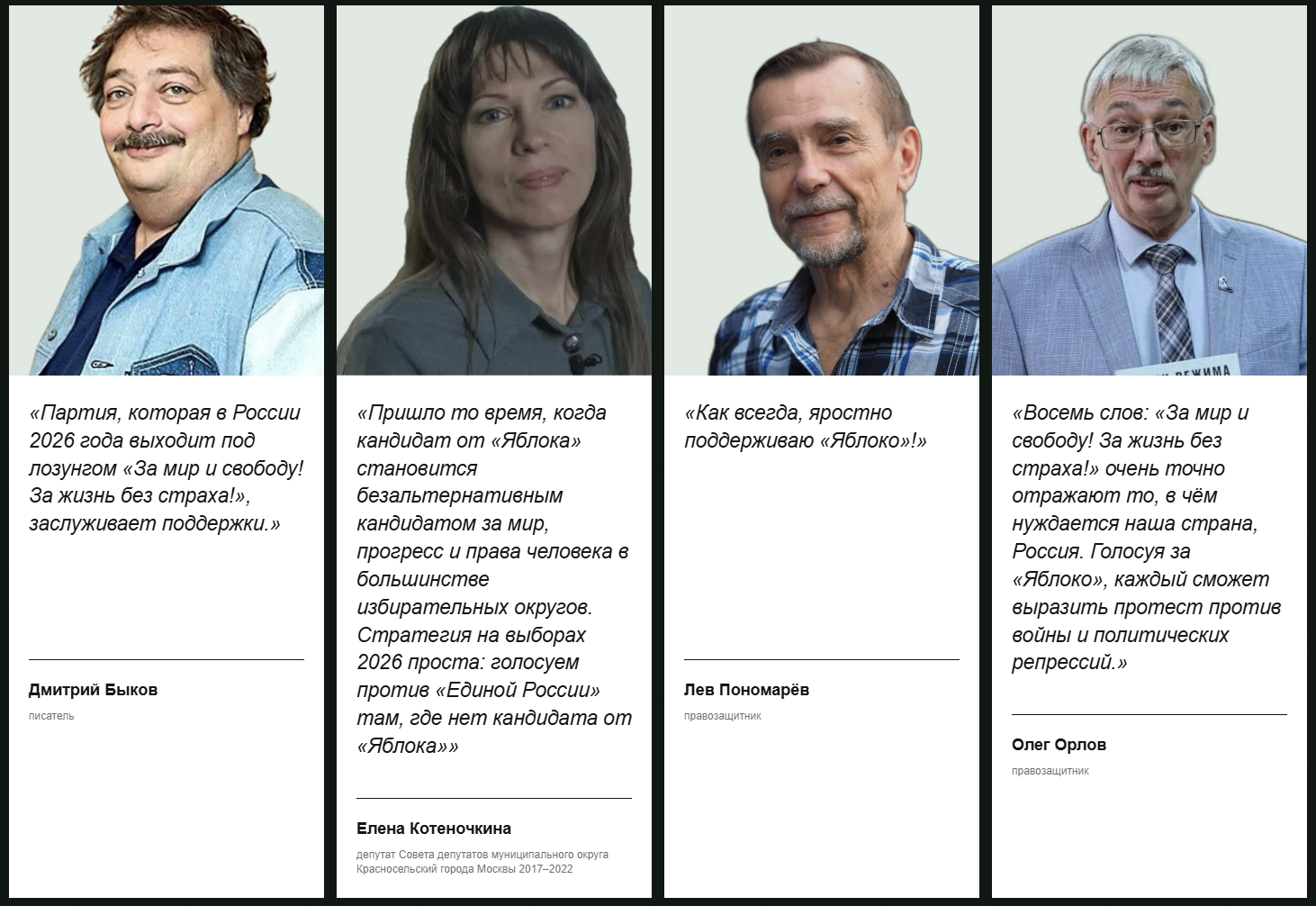
Among the organizers of the Headquarters are politicians Andrei Pivovarov, Vladimir Kara-Murza, Maksim Reznik, human rights activist Oleg Orlov, and writer Dmitry Bykov.
The widow of Russian opposition figure Alexei Navalny, Yulia Navalnaya, has also joined in the support. She posted a video message in which she called on all concerned Russians to support “Yabloko” when voting for party lists, and to follow the recommendations of so-called “smart voting” in single-member districts.
Yabloko’s leadership was quick to distance itself from this support coming from abroad. They stated that the party categorically has no foreign sources of funding, maintains no relations with organizations deemed undesirable in Russia, and does not consider statements, appeals, or events organized by anyone abroad to be part of its election campaign.
They miscalculated
Sources speaking to “Versta” told the publication that the decision on Yabloko’s admission was delayed until the very last moment; the arguments in favor of registration were simple: Yabloko would garner its usual 1–2% in the election, and “the anti-war message would be dismissed as marginal.” According to the Kremlin-aligned Public Opinion Foundation, as of July 31, Yabloko’s electoral rating stood at 2%, with the threshold for entering the State Duma set at 5%.
However, shortly thereafter, signs emerged that the initial assessment might not hold true. According to data from *Nezavisimaya Gazeta*, Yabloko’s rating stood at 9.38% in late July. VTsIOM estimated the party’s electoral potential—that is, the number of people who, in principle, would consider voting for it—at 18%.
Data from the “Election Atlas” project also pointed to growing interest in Yabloko. Over the past few weeks, the party’s key metrics have risen sharply. In particular, engagement on social media—the total number of reactions, comments, and reposts—has increased 4.5-fold.
Thus, for election organizers—who had clearly planned to run a low-key campaign—there was an obvious risk that the situation could spiral out of control.
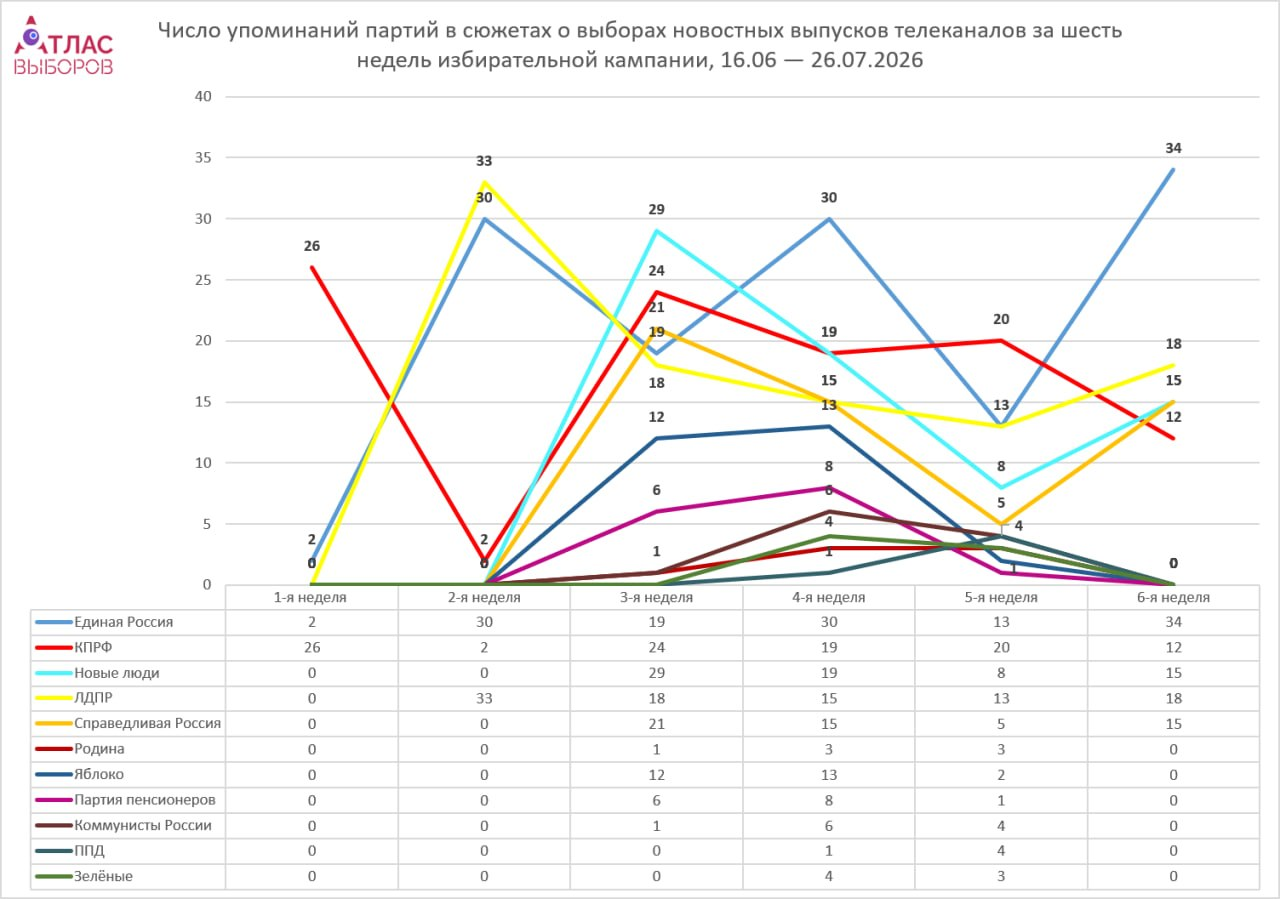
Russian television virtually ignored Yabloko. However, starting August 22, the party was supposed to receive free airtime on federal TV and radio channels as part of its election campaign. This meant that its anti-war stance could be heard nationwide for the first time.
The Russian authorities could not allow this to happen.
As politician Ilya Yashin noted, “it became clear that in these elections, the Kremlin had every chance of experiencing a ‘Tikhanovskaya effect’—Lukashenko allowed her to run for office for roughly the same reasons, and then effectively lost the vote to her.”
“It’s clear that the decision will not be made by the court, of course, but by Putin. And there’s no doubt that the security services have already presented him with the relevant dossier explaining the advisability of such a decision.”
The Court
The Supreme Court hearing on the lawsuit against “Yabloko” was scheduled for August 10.
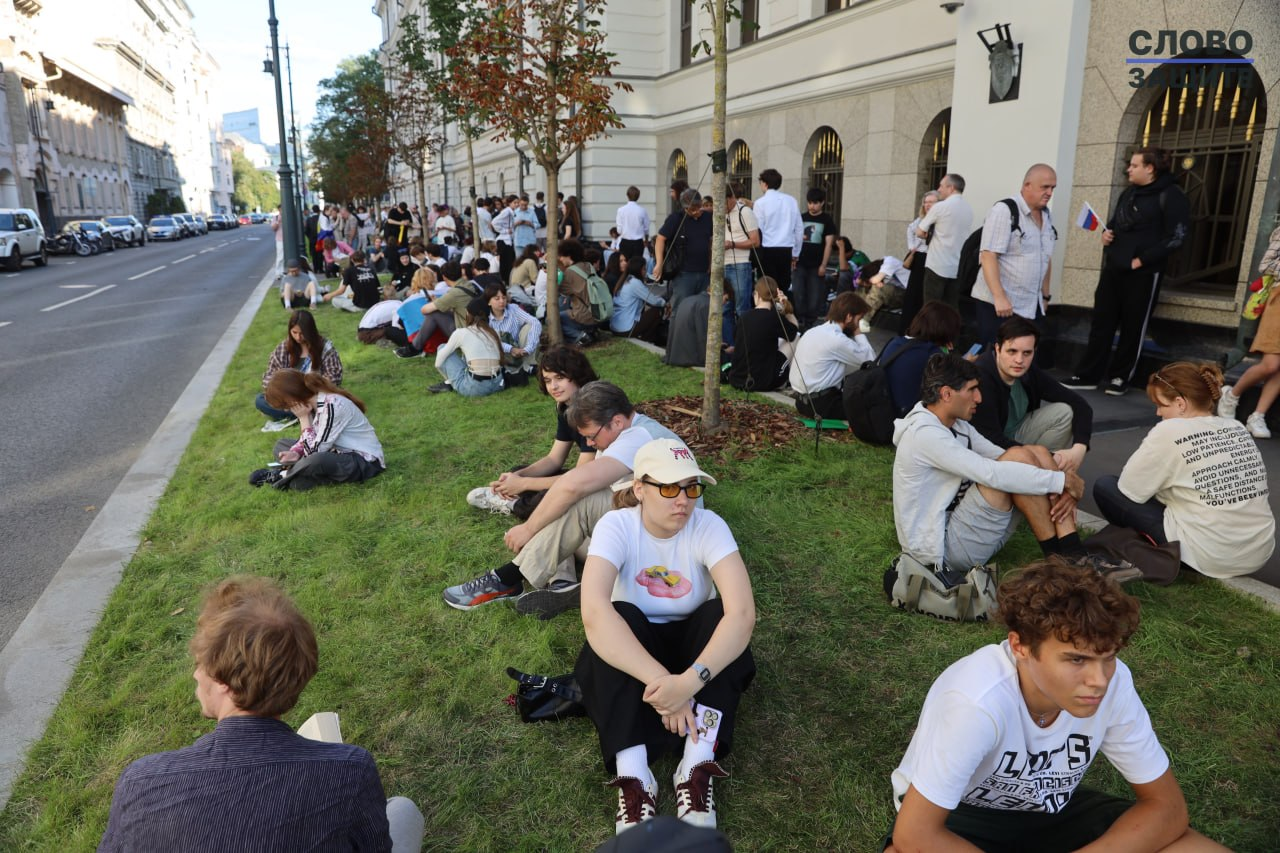
From early morning, a line of people hoping to attend the trial began to form outside the courthouse in Moscow. Not everyone was allowed into the courtroom, even though there were many empty seats. Several hundred people spent the entire day on the street awaiting the verdict.
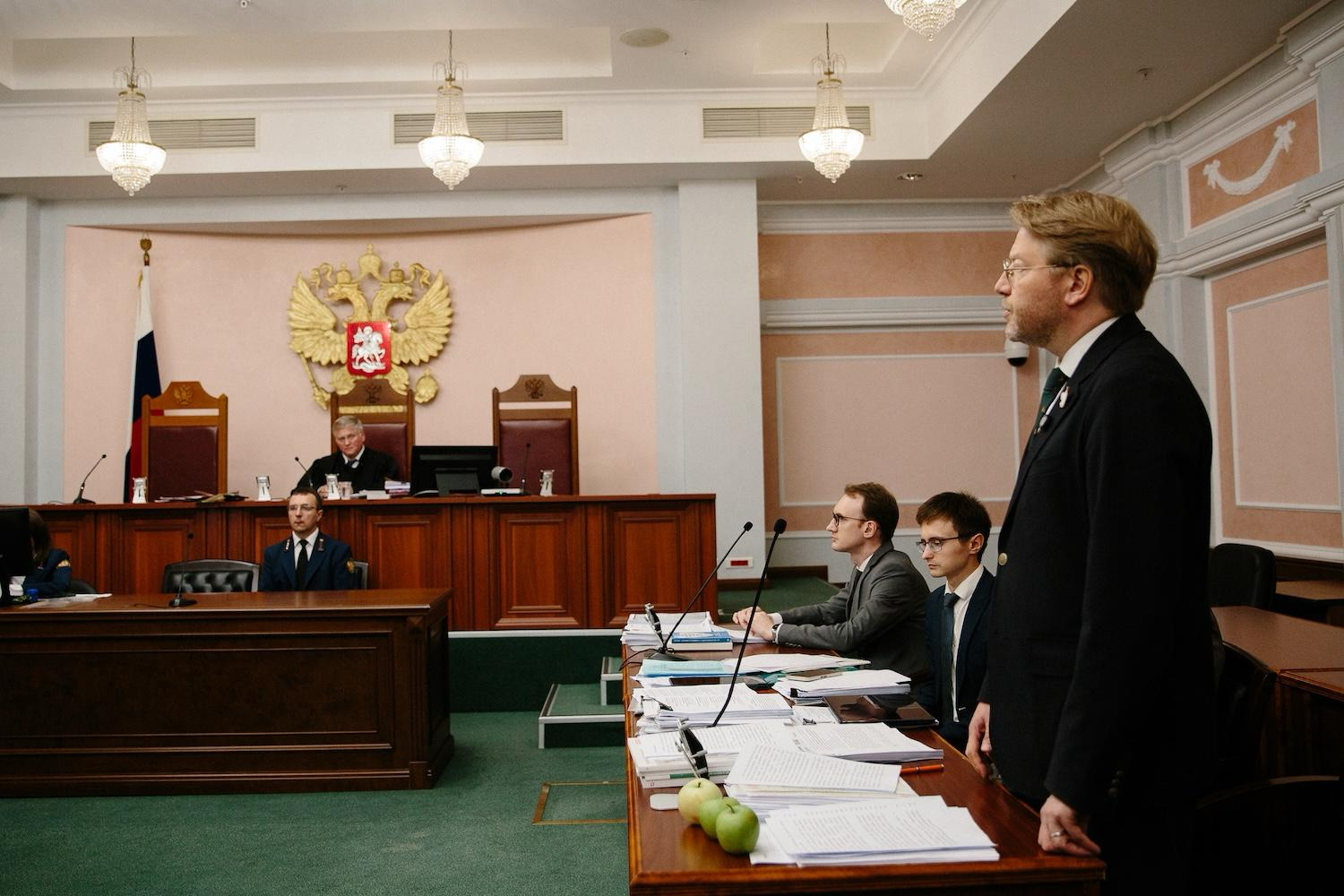
The case was heard by Judge Vyacheslav Kirillov, who had previously participated in a number of high-profile political trials. For example, in 2022, he presided over the case to shut down “Novaya Gazeta” as a media outlet, and in April 2026, he granted the Ministry of Justice’s request to designate the international “Memorial” movement as extremist. The plaintiff—Alexei Zhuravlev, leader of the “Rodina” party and a member of the LDPR faction in the State Duma—did not appear in court, instructing his lawyers to present his position.
Representatives of “Rodina” and a representative of the Central Election Commission who joined them accused “Yabloko” of copyright infringement, foreign funding, calls for “extremist” activity, and violating Russia’s territorial integrity.
At times, the situation reached absurd levels. For about ten minutes, the Supreme Court examined a photograph from *Kommersant*—a tank among sunflowers—which had been used to illustrate a banner on the homepage of Yabloko’s website. Superimposed on the image was the slogan: “For peace and freedom! For a ceasefire agreement!”
Representatives of the plaintiff claimed that the photographer’s name was not credited when the photo was published, meaning that “Yabloko” had infringed on his copyright. However, court staff saved the image to a computer and zoomed in on it. It turned out that the photographer’s name was, in fact, present in the photo. Applause broke out in the courtroom.
A representative of Russia’s Central Election Commission insisted that in the interview “How to Vote for a Ceasefire”, Grigory Yavlinsky used lyrics from the song “May the Sun Always Shine” without permission. Right in the middle of the hearing, Nikolai Rybakov announced that the son of composer Arkady Ostrovsky had granted “Yabloko” permission to use the song. But the party’s opponents insisted that no such permission had been granted at the time the interview was published.
During the proceedings, the judge read out details from a cover letter from Rosfinmonitoring. The letter stated that 12 candidates on Yabloko’s list for the 2021–2024 term had received a total of approximately 1 million rubles from abroad, while 72 of the party’s contractors had received an additional 8 million rubles, specifically from the United States, Germany, Israel, and the United Kingdom.
Yabloko’s defense team explained that, in the case of the candidates, the funds were not related to campaign financing but rather to proceeds from the mandatory sale of foreign shares prior to the election. At the same time, according to party representatives, only 16,900 rubles in donations were directly deposited into the party’s account, while suspicious and anonymous transfers were returned to the senders.
After a seven-hour hearing, the Supreme Court upheld the “Rodina” party’s lawsuit and revoked the registration of Yabloko’s federal list for the State Duma elections. The party itself disagrees with the Supreme Court’s decision and intends to appeal it within five days. In addition, the party plans to file a lawsuit against “Rodina” to protect its business reputation.
Yabloko founder Grigory Yavlinsky stated that “excluding the party from the elections means refusing to engage in dialogue with people who ask questions that are uncomfortable for those in power. This is not about the fate of Yabloko—it is about the fate of Russia.”
Official Russian sources cited in this text are for informational purposes only. Content from these sources may constitute disinformation or propaganda.