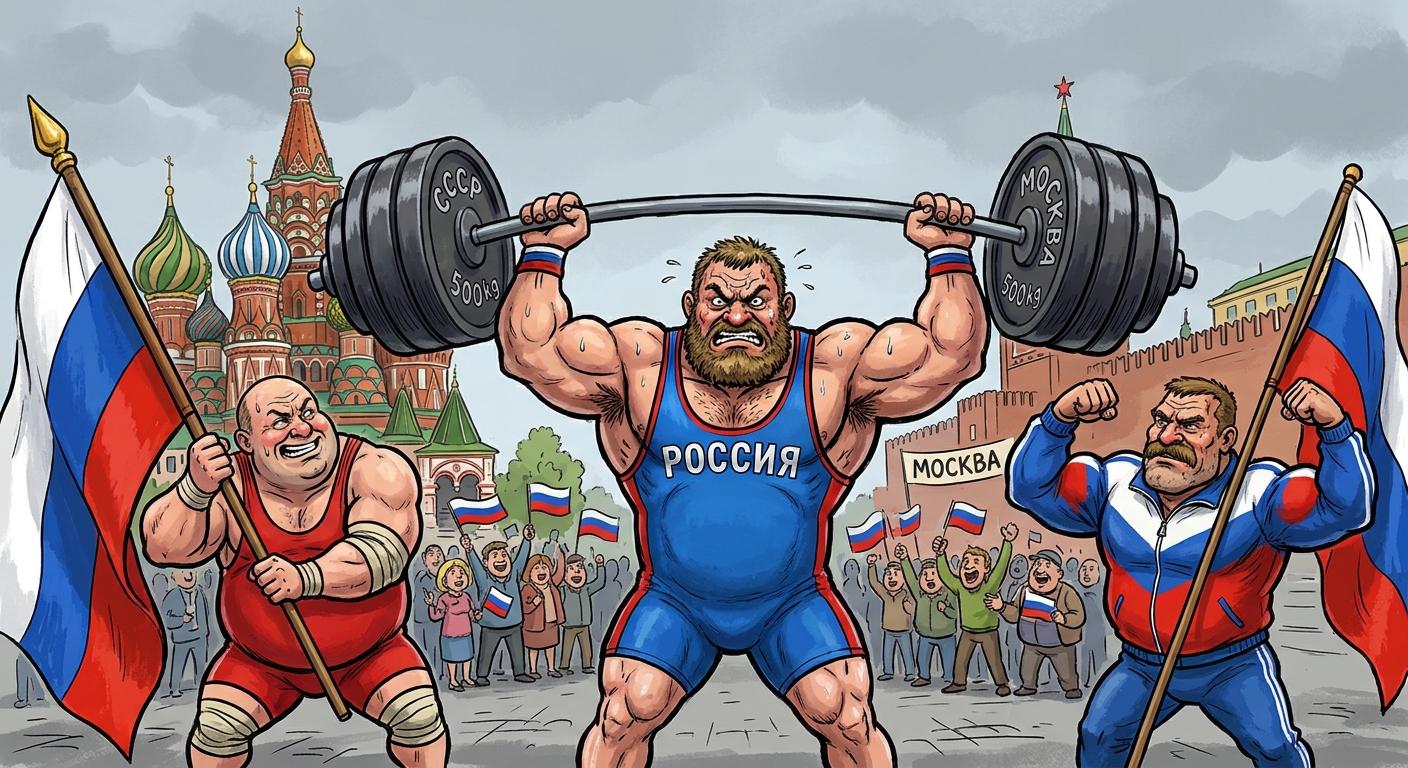

Since the beginning of the year, fourteen international sports federations have lifted restrictions on Russian national teams competing in international events under the Russian flag. The vast majority of these decisions were taken after the International Olympic Committee published its recommendations on 7 July 2026, yet the IOC insists that the question of Russia’s use of national symbols at the 2028 Olympic Games is still under consideration. Meanwhile, the 2030 World Weightlifting Championships are planned to be held in Moscow.
In brief:
- Since the beginning of the year, international sports federations have begun lifting restrictions on Russian and Belarusian athletes’ participation in international competitions en masse.
- In June 2026, amendments were made to the Olympic Charter that emphasised a strengthening of the principle of political neutrality. In July, the IOC issued recommendations on lifting restrictions on Russian and Belarusian athletes in international competitions.
- Fourteen international sports federations have already lifted restrictions on athletes from Russia and Belarus since the beginning of the year.
- Poland, Estonia, Norway and Sweden will not host world championships because Russian and Belarusian athletes are taking part in the competitions.
- The 2030 World Weightlifting Championships are planned to be held in Moscow. Ukraine has announced its intention to challenge this decision.
Why the IOC is lifting restrictions on Russians
On 24 June 2026, amendments were made to the Olympic Charter that emphasised a strengthening of the principle of political neutrality. The IOC stated that sport must be free from any political, governmental or social influence.
On 7 July, the International Olympic Committee (IOC) issued recommendations on lifting the previous restrictions on Russian athletes’ participation in international competitions, which had been in force since 2023.
The restrictions were introduced after Russia incorporated into its organisation the Olympic councils of the self-proclaimed “DPR” and “LPR”, as well as of the annexed Zaporizhzhia and Kherson regions.
According to the IOC, the decision was taken following a thorough analysis by its legal affairs commission. At the same time, Russia was required to ensure that the Russian Olympic Committee (ROC) no longer includes sports organisations located in territories under the jurisdiction of the National Olympic Committee of Ukraine.
With its decision, the IOC revoked all previous recommendations on admitting Russian athletes only with neutral status, as well as the “protective measures” concerning them. The organisation noted that no decision has yet been taken on the use of the Russian flag, anthem, national colours and other symbols at the Olympic Games. At the same time, the IOC added that it will not hold its own events in Russia or invite Russian officials to events held under its auspices.
Meanwhile, the 2030 World Weightlifting Championships have already been scheduled to take place in Moscow.
Which international sports federations have allowed Russians to compete under their own flag
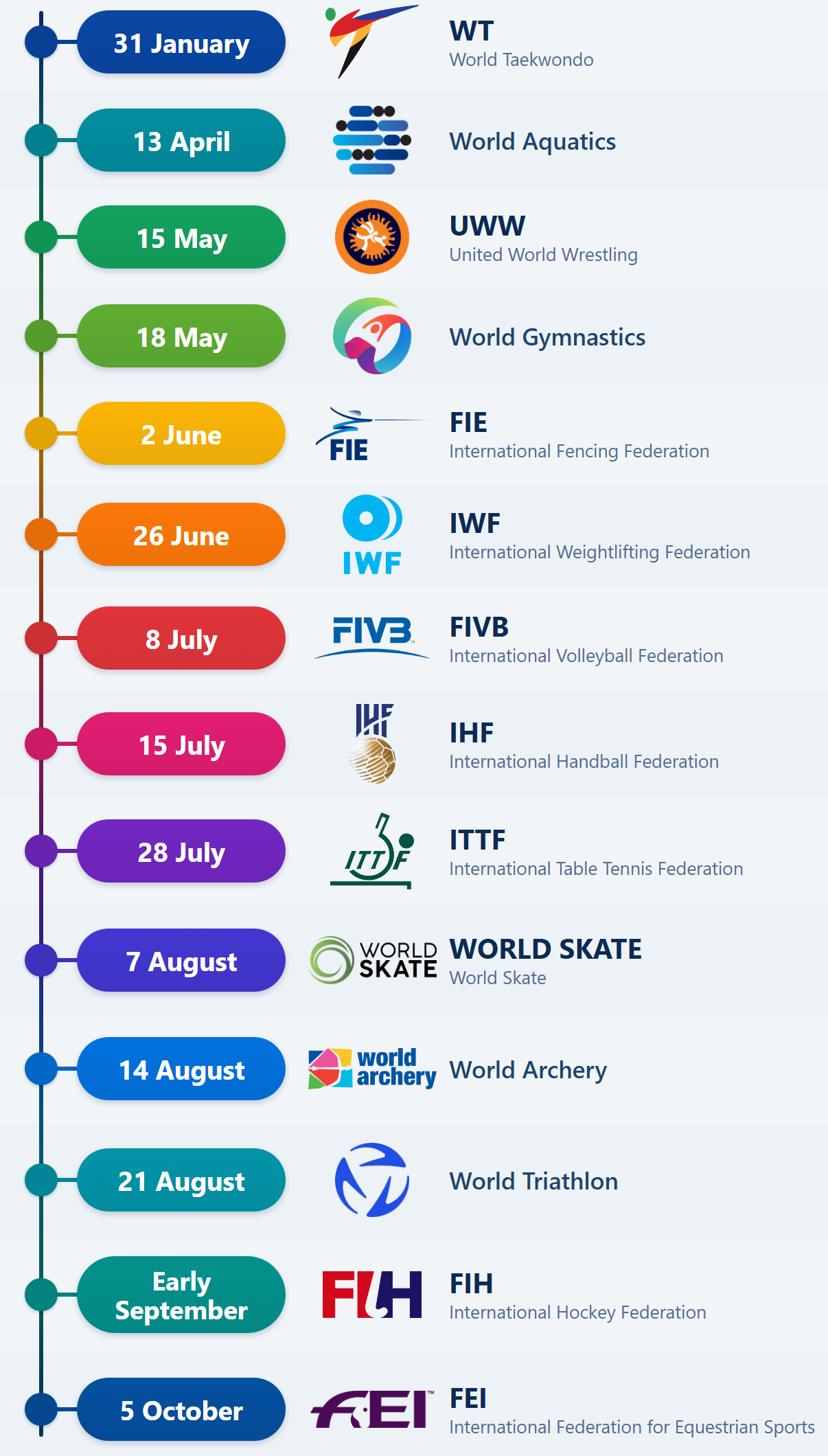
The first to do so this year, on 31 January, was World Taekwondo, which allowed Russians and Belarusians to compete using national symbols. In particular, Russian and Belarusian athletes competed under their own flags at the World Junior Championships in Tashkent, the Grand Prix in Rome, the European Championships, the Türkiye Open in Antalya and the Para Taekwondo Grand Prix in Paris.
World Taekwondo justifies its decision by arguing that sport should remain outside politics.
The first wave of decisions came in the second half of spring:
- 13 April – World Aquatics
- 15 May – United World Wrestling
- 18 May – World Gymnastics
- 2 June – International Fencing Federation (FIE)
On 26 June, following the amendments to the Olympic Charter, the International Weightlifting Federation (IWF) also announced the lifting of restrictions on Russian and Belarusian athletes.
However, the phenomenon became widespread after the IOC published its official recommendations on lifting restrictions on Russian and Belarusian athletes’ participation in international competitions. Despite the uncertainty of the IOC’s position on the use of Russian symbols at the Olympic Games, the federations that lifted restrictions on athletes from Russia and Belarus also allowed them to compete with national symbols.
The following have already announced their decision to bring Russian and Belarusian flags back to sports arenas:
- 8 July – International Volleyball Federation (FIVB)
- 15 July – International Handball Federation (IHF)
- 28 July – International Table Tennis Federation (ITTF)
- 7 August – World Skate
- 14 August – World Archery
- 21 August – World Triathlon
- Early September – International Hockey Federation (FIH)
- 5 October – International Federation for Equestrian Sports (FEI)
In which countries the Russian flag will not be raised
Despite the decisions of international and world federations to admit Russian and Belarusian athletes to competitions with their symbols, not all countries have agreed to host them.
For example, Poland did not provide the European Weightlifting Federation with guarantees that Russian and Belarusian athletes would be able to obtain visas and travel to the tournament. As a result, Poland was stripped of the right to host the World Junior and Under-23 Championships, which had been scheduled for September 2026. The competition had to be held in October in Durrës, Albania.
The Polish Swimming Federation has also already announced that it will not admit Russian and Belarusian athletes to the 2027 World Championships. The statement came in response to the international federation lifting its restrictions in April this year.
Poland had previously refused visas to two Russian ski jumpers, even though they had been cleared to take part in Olympic qualifying competitions. The competitions took place without the Russians.
Estonia refused to guarantee entry to Russian and Belarusian athletes regardless of their citizenship and military status, as a result of which the International Fencing Federation moved the 2026 European Championships from Tallinn to the French town of Antony.
The Estonian authorities stated that they would not issue visas to athletes from aggressor states and would make no exceptions. As a result, the country lost the right to host the tournament.
For the same reason, the European Air Gun Championships scheduled for 2027 were also relocated. The tournament was moved to Granada, Spain.
On 21 April, the Norwegian Swimming Federation announced that it would not host international championships as long as Russian and Belarusian athletes are allowed to compete under their own flags and anthems. Meanwhile, the president of the Norwegian Swimming Federation, Cato Bratbakk, stated that the organisation would seek to bring other Scandinavian countries on board with this position.
The Swedish government, the Swedish Ski Association and the Swedish Sports Confederation have opposed the participation of Russian and Belarusian athletes if it would contribute to normalising Russian aggression against Ukraine. The issue of granting visas to Russian athletes remains under consideration by the Swedish government in connection with the World Ski Championships, scheduled to take place in Falun in February–March 2027.
Will athletes travel to Russia?
The International Weightlifting Federation has announced that the 2030 World Weightlifting Championships will be held in Moscow.
Ukraine’s Ministry of Youth and Sports has announced that it is preparing an appeal to the International Weightlifting Federation and the International Olympic Committee regarding the decision to grant Russia the right to host the 2030 World Championships. The Ukrainian Weightlifting Federation had previously announced its intention to boycott the World Championships if the competition were held in Russia.
Poland and Norway have also spoken out against holding the competition in Moscow. In the EU, holding competitions in Russia was criticised by the European Commissioner for Sport, Glenn Micallef, who warned of possible problems with EU sanctions.
In Russia, by contrast, the news was received positively. Kremlin spokesperson Dmitry Peskov welcomed the international federation’s decision. He called it a step towards the “depoliticisation of sport” and stated that Russia should return to the global sporting community as a full-fledged member.
However, the international federation’s decision may still be challenged.
Yulia Derdiuk
Official Russian and Belarusian sources cited in this text are for informational purposes only. Content from these sources may constitute disinformation or propaganda.