
Estonia has asked the European Union to exclude the Solikamsk Magnesium Plant, and an individual connected with it – the company’s chief executive Ruslan Dimukhamedov – from the 22nd package of sanctions against Russia. The reason was the Estonian company NPM Silmet’s dependence on supplies of Russian raw material of strategic importance to European industry. At the same time, the Estonian authorities said that in 2027 they intend to return to the question of sanctions against the plant, once NPM Silmet has found alternative suppliers.
In brief:
- At Estonia’s request, the Solikamsk Magnesium Plant has been excluded from the 22nd package of sanctions against Russia. Not only the Estonian company NPM Silmet but other European manufacturers as well depend on its supplies
- The Estonian company is currently looking for alternative suppliers; as soon as it finds them, the Russian producer may be added to the sanctions list
- In Estonia itself, the decision was described as “contrary to the country’s foreign policy course”
- Estonia is not the first EU country to ask for Russian companies to be left off the list. Hungary, Slovakia and Bulgaria have made similar requests before
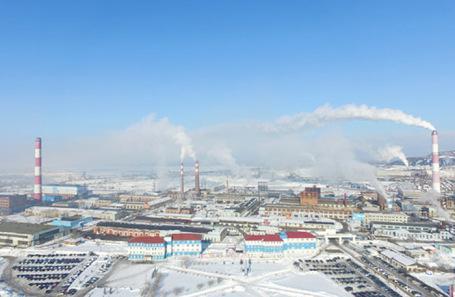
The Solikamsk Magnesium Plant (SMZ) is located in Perm Krai in Russia and is part of the state corporation Rosatom. It produces magnesium, rare earth metal compounds and products based on niobium and tantalum, which are used in high-technology industries.
One of the main foreign buyers of the plant’s output is NPM Silmet, based in the Estonian town of Sillamäe. The Russian company supplies it with rare earth carbonates, which are then processed for further use in European industry, including the manufacture of electronics, electric vehicles, wind turbines and aviation equipment.
According to data from the investigative project Systema, between 2022 and 2024 SMZ supplied the Estonian company with products worth more than 50 million dollars.

NPM Silmet’s markets in the European Union include Germany, France, Austria and Spain. According to the company’s financial statements, in 2025 alone its sales to Germany came to about 8.5 million euros, to France almost 900,000 euros and to Austria 1.2 million euros. The largest market within the EU, however, was Estonia itself, with sales of about 10.6 million euros.
Keeping the Estonian buyer matters for the Russian plant too. In its accounts, SMZ admits that sanctions have cost it customers in “unfriendly countries” for most of the product types exported there. In 2025, sales to countries beyond the former Soviet Union fell by almost 30% – from 2.7 to 1.9 billion roubles – and the company’s net loss reached 3.2 billion roubles.
The plant is now under the control of the Russian state. In 2022 it was nationalised following a lawsuit by the Prosecutor General’s Office, which challenged its privatisation in the 1990s, and in 2024 the controlling stake was handed over to the state corporation Rosatom.
SMZ has been headed since January 2023 by Ruslan Dimukhamedov, who previously served as business development director in Rosatom’s mining division. He also chairs the Association of Producers and Consumers of Rare and Rare Earth Metals. At Estonia’s request, Dimukhamedov was likewise left off the EU sanctions list.
A request that “contradicts the country’s foreign policy course”
The decision to make an exception for the Russian company has raised questions in Estonia itself. Prime Minister Kristen Michal did not deny the obvious: leaving the Russian supplier off the sanctions list runs counter to the country’s foreign policy course.

As Kerli Veski, Undersecretary at the Ministry of Foreign Affairs, noted, the decision was taken because it is not only Estonia that depends on the Estonian plant’s output, and EU industry would have been hit had the sanctions been imposed.
We have already discussed with NPM Silmet how to reduce the current critical dependence on raw material supplies from Russia. The company then committed itself to finding alternative solutions. We are now waiting for the moment when the European Union and various industries stop depending on Russian raw materials. Then we will be able to return to the question of adding these companies to the sanctions list.
Not everyone was satisfied with this approach, however. At a meeting of the parliamentary foreign affairs committee on 9 October, members described the removal of the Russian plant from the draft sanctions list as “a very unpleasant political precedent”. The committee’s chairman, Marko Mihkelson, demanded greater transparency about the dependence of Estonian business on Russia.
Notably, the decision to preserve supplies of Russian raw material coincided with another series of tough statements by the Estonian authorities directed at Moscow.
On 8 October, when the removal of SMZ from the draft sanctions list became known, Estonian Foreign Minister Margus Tsahkna, speaking in London, said that no concessions to Russia would bring peace to Europe, and called for reliable security guarantees for Ukraine.
On 9 October, Estonia, together with Latvia and Lithuania, put forward an initiative to ban the transit of Russian grain through the territory of the European Union altogether.
When economic interests have parted ways with political principles
Estonia is by no means the first EU country for which anti-Russian sanctions have proved too costly once its own economic interests were at stake. There is no shortage of precedents.
In 2024, Hungary secured special exemptions from the sanctions regime for the construction of the Paks II nuclear power plant – a project of Russia’s Rosatom. Budapest made it clear that the country’s energy security mattered more than breaking off cooperation with Moscow.
Earlier still, in 2022, Hungary and Slovakia insisted on maintaining supplies of Russian oil through the Druzhba pipeline, despite the EU oil embargo. The argument was purely practical – local refineries depend on Russian crude and there is nothing to replace it with quickly.
Bulgaria was granted an exemption for the same reason. Brussels allowed it to continue importing Russian oil by sea until the end of 2024. Sofia explained this by the need to keep its refinery running and to prevent a sharp rise in fuel prices. Bulgaria later gave up the concession ahead of schedule.
When sanctions reached the metals industry, exemptions were made for Russian steel. In December 2023, the EU extended until September 2028 the transition period for imports of certain types of Russian semi-finished steel products. Among the interested parties were companies in Belgium, including ones linked to the Russian group NLMK.
In 2024, French President Emmanuel Macron, according to information obtained by Reuters, pressed Canada to ease sanctions on Russian titanium. The interests of Airbus and Safran, which used the Russian metal in production, were at stake. In the end the companies obtained the permits they needed to continue supplies. In this case, though, Paris had to negotiate with Ottawa rather than Brussels.
Author: Olga Siamashko