
At the end of April, Ukraine and the world are paying special attention to Chernobyl. April 26 marks the 40th anniversary of the accident at the Chernobyl Nuclear Power Plant, which became the greatest man-made disaster of the 20th century.
Amid the full-scale war waged by Russia against Ukraine, now in its fifth year, the Chernobyl zone has once again come into the spotlight due to risks to nuclear safety in Ukraine and serious threats to European security. On Chernobyl during the war, nuclear risks, and new challenges for Ukraine’s nuclear energy sector—read on for a conversation with Olga Kosharna, an expert on nuclear safety and nuclear energy.
IN SHORT:
- Chernobyl is once again under threat due to the war—the occupation of the Chernobyl Nuclear Power Plant in 2022 and drone and missile attacks have created a new level of nuclear risks for Ukraine and Europe.
- The main danger is radioactive dust—about 4.5 tons of hazardous materials remain under the “Shelter,” which could spread beyond the exclusion zone if it is destroyed.
- Russia is using nuclear facilities as a tool for blackmail—from Chernobyl to the Zaporizhzhia NPP, where a military base has been established and there is a risk of a nuclear accident.
- International mechanisms are powerless—the IAEA documents violations but lacks real tools for influence, while Russia avoids tough sanctions in the nuclear sphere.
Ms. Olga, 40 years have passed since the Chernobyl accident. At the start of the full-scale war, the plant was occupied by Russian invaders. What is the current state of the nuclear power plant?
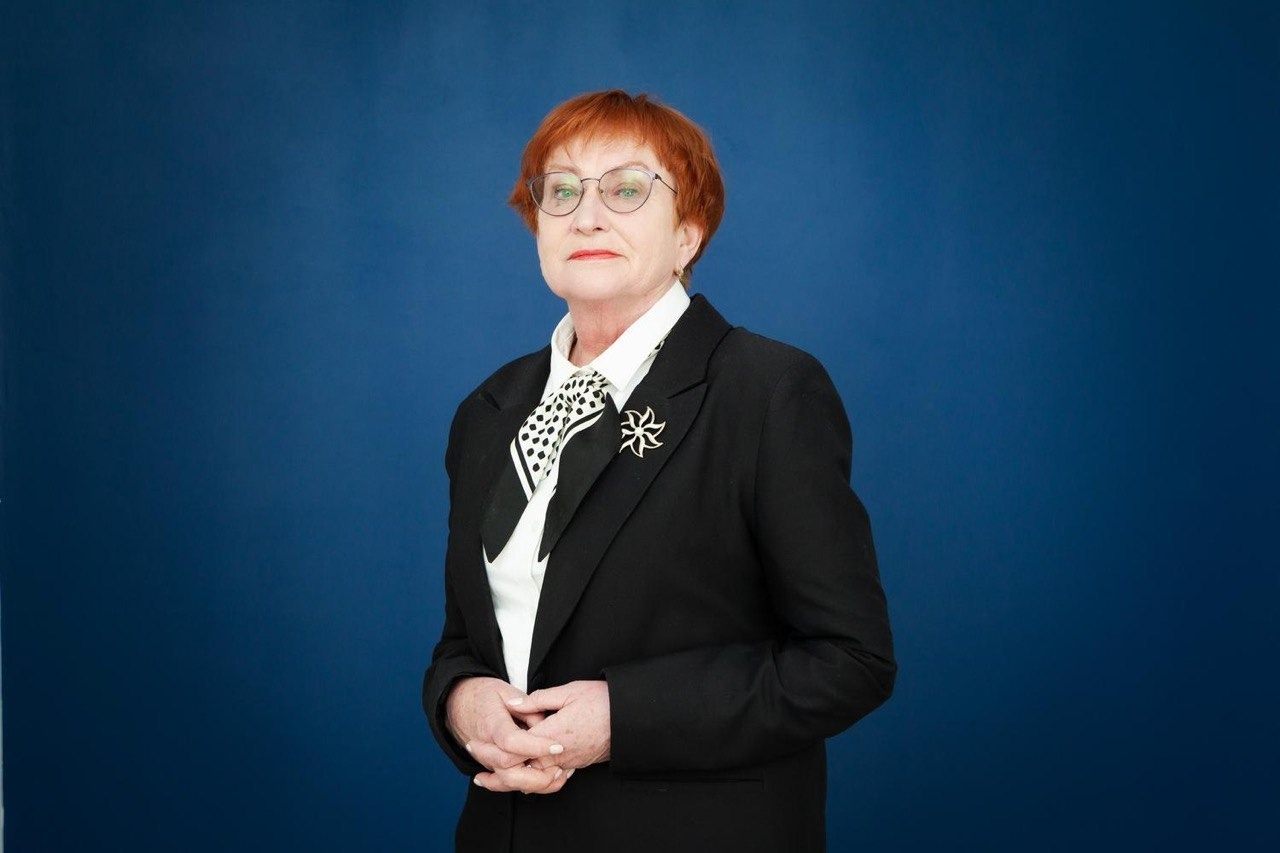
The power units are currently in the decommissioning phase; work has already begun. That is, there is no nuclear fuel at the Chernobyl NPP; everything was transported to a storage facility before the invasion. This is a dry storage facility for spent nuclear fuel, which was built in 2016 using Holtek International technology. Some of the spent fuel is located in the pool of the old, wet-type storage facility. The New Safe Confinement is under the jurisdiction of the Chernobyl plant.
This is the structure currently built over the old “Shelter” facility, which journalists incorrectly refer to as a sarcophagus. There is the “Shelter” facility, which was built in 1986 and commissioned, but was constructed without adhering to building codes. Due to very high radiation levels, beams and other structural elements were installed remotely. Therefore, the planned service life of the “Shelter” facility was 30 years. However, 40 years have already passed… And it is clear that even 20 years ago, the structural elements were already unstable. They were reinforced; there was corrosion of the roof. Since I was, at the time, the head of security for the Shelter Object department at the State Nuclear Regulatory Administration, which was part of the Ministry of Ecology and Nuclear Safety at the time. The minister at the time was Yuriy Kostenko. That’s when this Shelter Implementation Plan project began. The ultimate goal is to build the New Safe Confinement. So all of this has been going on since 1998. A long time, so many years…
So, how safe is the existing “Shelter” now? You say it was designed to last 30 years, but 40 years have already passed?
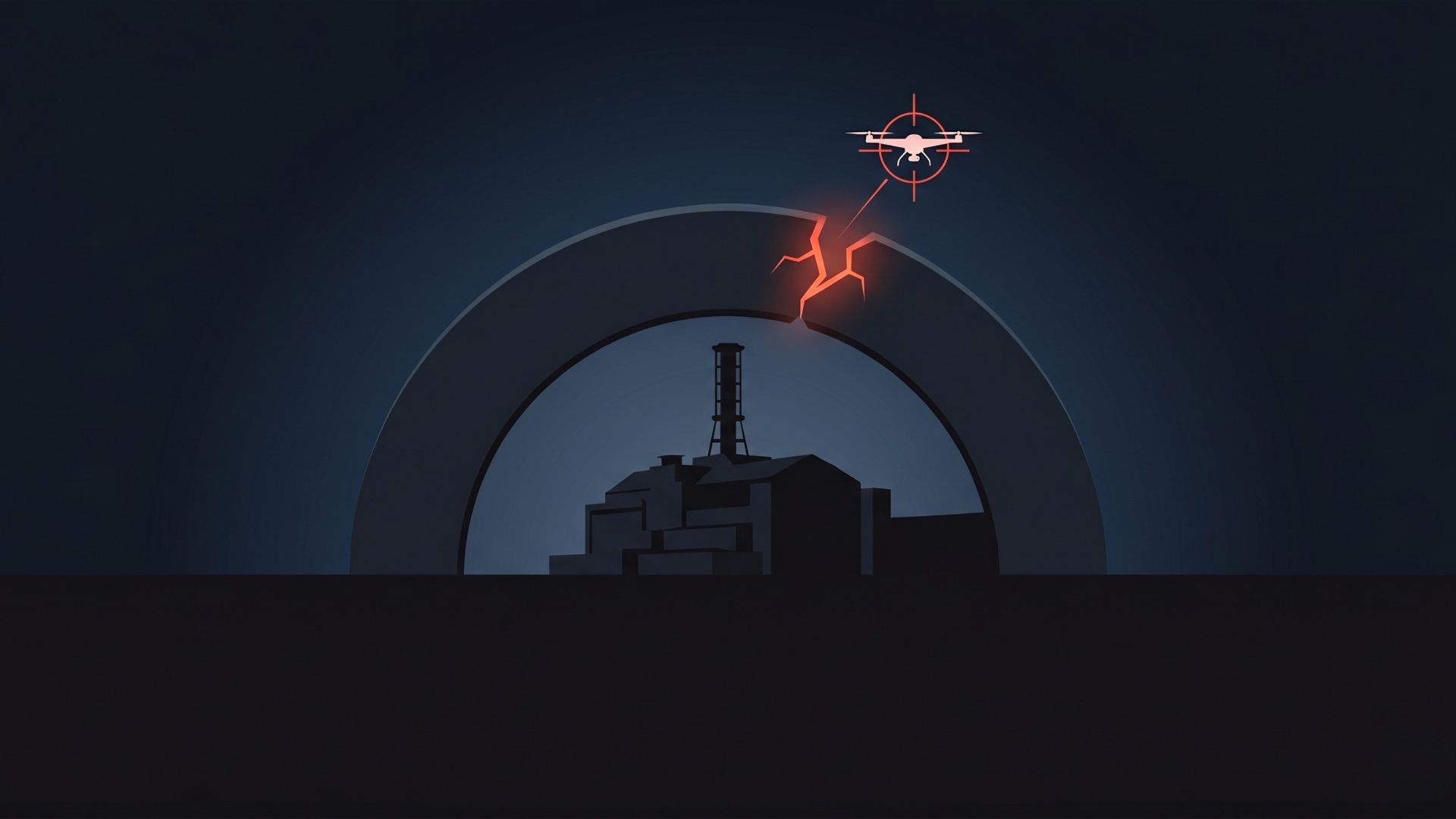
The old concrete structure, with the arch of the New Safe Confinement above it. That’s the situation. The New Safe Confinement. The purpose of building it was to dismantle this “Shelter” facility, remove all this highly radioactive waste that’s there—the fuel-laden masses—where the nuclear fuel melted and fused with the rebar, concrete, and so on… This dangerous mass is located beneath the old “Shelter” facility. The plan was to dismantle it and, in accordance with regulations, dispose of these highly radioactive masses. That’s why there’s ventilation, climate control, and airtightness. Because in the old “Shelter” structure on the roof—and I was on the roof in 1998—the roof joints were destroyed due to corrosion. And obviously, precipitation got in there, and every year they pumped out water—huge volumes of it. And it wasn’t just water anymore; precipitation got in there, and they were pumping out liquid radioactive waste. Plus, since these masses were molten, over time, under the influence of this precipitation and other factors, they turned into dust. And this dust is very dangerous. It contains alpha-radionuclides, which, if inhaled into the lungs, can lead to cancer. That’s why such routine maintenance work was carried out periodically, and it was sprayed with a special solution. But there are now 4.5 tons of dust there, containing uranium, plutonium, and the entire periodic table, with the half-lives of these transuranic elements ranging from 2,500 to 3,000 years. That is extremely dangerous.
And when that cheap drone hit the roof on February 14 (2025—ed.), the “Shelter” facility was designed to withstand a 6.0 magnitude earthquake on the Richter scale. It wasn’t designed to withstand explosives. And when the drone hit, it created a hole right through it. And the roof is like a sandwich: a metal sheet, then a polymer membrane, then insulation, and then another polymer sheet. And warm air circulated through this roof to prevent condensation from forming due to the temperature difference between outside and inside. Which, by the way, was the case in the old “Shelter” facility. And now, when the fire started, it turned out that the smoldering spread through the membrane. So they made another 200 holes to put it out. They flooded the whole thing with water. And as an engineer, I had a question: would the structure withstand that much water? This is the biggest hole—15 square meters. And another 200 smaller holes like that. So, what did the Chernobyl plant do? They covered it with a metal sheet. This is a temporary solution. This was in October–November 2025. But in order to dismantle these unstable structures so they don’t collapse, their functions must be restored. And this was estimated at 500 million euros. The designers there will be the NOVARKA consortium and some others… That is, 40 or more countries contributed funds to this project. Together with the Shelter Implementation Plan and construction, the total exceeded 2 billion euros. Twenty-five countries participated, supplying and designing equipment and materials. Turkey, by the way, manufactured metal plates for the roof. A lot of them. And this cheap drone, these efforts, this unique facility, worth 1.6 billion, was damaged. For so many years, everyone there put in so much effort…
What are the dangers now?
It’s non-functional. As for radiation levels, there were no emissions. But missiles and UAVs fly over the area every night. If a missile falls and explodes nearby, the impact will be like an earthquake with a higher magnitude than the “Shelter” facility was designed to withstand. And this threatens the collapse and destruction of the old “Shelter” facility.
What else could this lead to?
Then, first of all, I hope that the new safe confinement will hold up, but the staff will have to work in very high radiation fields. That is, you can’t just leave it like that; it needs to be dismantled. And if there was a plan for how to dismantle it, how to bury it, then when it all collapses, I can’t imagine how the staff will do that…
Is Russia effectively using nuclear facilities as a means of pressure?..
Absolutely. And they hit it on purpose. On purpose. Because Russia—it can’t build anything; it only destroys everything.
So, as I understand it, could there be realistic scenarios involving provocations or sabotage on the Chernobyl site?
They are possible. And a missile strike is possible. If, for example, that drone had hit the other end of that arch, there, above the “Shelter” facility, the consequences would have been worse. But now it’s where the crane is, on the other side. So yes, you can expect anything from Russia.
The Zaporizhzhia Nuclear Power Plant is occupied, isn’t it?..
There’s a military base there. A separate unit of “Energoatom” is currently based at the Khmelnytskyi NPP. And the people who stayed there—Ukrainian citizens who signed contracts and were forced to obtain Russian passports… Well, that’s the situation. There’s no control there, and there’s nothing. Moreover, it’s a military base where these drunken Russian soldiers are firing from automatic weapons out of the windows on the site, moving around there. Where the reactor block shield is—this is recent. They’re also launching drones from the site toward Nikopol and Marganets. They’re firing anti-aircraft missiles at the opposite bank, setting them up right next to the site. Our side isn’t firing back, of course, because they understand…
The Russians are deliberately firing from those locations so that Ukraine won’t retaliate, because they understand that if, for example, a weapon hits such a nuclear power plant, it would be a disaster, right?
The IAEA has been conducting rotations through the temporarily occupied territory for a year now. And our side (Ukraine—ed.) has silently “swallowed” this. And this is a violation of sovereignty. Second, the IAEA’s last two reports are completely uninformative. What is happening at the Zaporizhzhia NPP is unknown. They only mention the loss of external power supply, because twice last week the backup line was down. The main 750-kW line, which is connected to the Ukrainian power grid, was damaged by the Russians. In other words, they plan to connect it to the Russian power grid, as was already the case in September 2025, when the ZNPP operated on diesel generators for a month, they were carrying out work, but our guys hit their transformers on the new line that Russia had built, forcing them to restore the 750 kW line to the Ukrainian power grid. This is a matter of principle, because if they connect it, they will be able to manipulate… And we cannot allow the Russians to bring even a single ZNPP power unit up to minimum controlled power. Right now there is no chain reaction there, and the dangerous radionuclides have already decayed. But minimum controlled power means starting a chain reaction. Then these dangerous radionuclides will be produced. At the same time, no electricity is generated. This is already a dangerous situation. And they will use this as leverage. Because if the external power supply is lost and the diesel generators fail, that is the worst-case scenario. A process like the one at Fukushima will begin.
Without reactor cooling, core meltdown will begin. Currently in cold shutdown, if, for example, we imagine that nothing is working and water isn’t circulating, well, it would take 24 days. But if at minimum controlled power, the loss of such cooling—well, that’s 8 hours, and core meltdown begins.
We were talking about the Zaporizhzhia NPP just now. But if we’re talking about the Chernobyl NPP and international oversight—how the IAEA operates—are there any real tools for influence?
The IAEA has absolutely none. They’re just observers, you see? Observers… They record, write things down, and that’s it. I mean, Russia is a member of the IAEA Board of Governors. No restrictions on Russia’s rights or privileges regarding terrorism. There is the International Convention for the Suppression of Acts of Nuclear Terrorism, which, by the way, was initiated by Russia. There is Article 2. Everything it has done in Ukraine falls under Article 2—crimes, nuclear terrorism. But it’s unclear under whose jurisdiction. There’s the International Criminal Court in The Hague, and there’s also the UN Court. And I hope that this convention on nuclear terrorism will fall under the jurisdiction of the special tribunal currently being established. So at Chernobyl, the IAEA is just documenting. Russia continues. Sanctions in Europe—none against Rosatom. The only ones imposing sanctions are Canada, Ukraine, the U.S., and the U.K. These include both personal sanctions and sanctions against specific Rosatom enterprises. And there are more than 450 enterprises united under Rosatom. And they successfully import chips for missiles under the Rosatom umbrella. And they’re developing projects abroad. 39 reactors at various stages. And this cements Russia’s lifelong influence in the countries where they’re building. Because of nuclear fuel supplies. This includes, for example, Egypt, Bangladesh, and Africa. They’re still trying there. By the way, in Hungary, “Paks-2.” In other words, Rosatom hasn’t suffered at all. No punishment whatsoever. Moreover, the IAEA is funding seminars in Obninsk, Russia, out of its budget. This is such cynicism and mockery. Physical protection of nuclear material. In Russia, in Obninsk. Regional seminars are being funded. I once wrote about and researched these events, noting that funding is taking place on Russian territory using IAEA funds. That is, we (Ukraine—ed.) tried to suspend membership, but the Biden administration was still in power at the time and did not support it. Although, this fact did exist. In the 1970s, South Africa—the only country in Africa operating a nuclear power plant—had its membership in the IAEA Board of Governors suspended due to apartheid. That is, for political reasons. But now there is no political will. Do you understand?
But generally speaking, has the world’s attitude toward nuclear safety changed at all since Russia launched a full-scale war in Ukraine? Is there support for Ukraine?
Well, for example, funds are being raised again at the European Bank for Reconstruction and Development to restore the “Shelter” facilities. 35 million euros have been allocated for additional surveys and some initial design work. Second, the IAEA is also delivering some equipment there. And various countries are contributing to this. This is outside the IAEA’s budget. The area was looted. Unique instruments were taken away, along with fire trucks. The laboratory was ransacked.
When was that, during the occupation?
Yes, yes. At the beginning. There was a nuclear magnetic resonance spectrometer there. Europe had donated it for several million euros. They took everything away. That’s why they’re helping.
What can Ukraine and the international community do now to minimize the risks?
Well, first of all, countries that have nuclear power plants need to think about this too. The Chernobyl accident was the impetus for creating several international conventions, with the IAEA serving as the depositary. And two of them were adopted as early as 1986. In other words, it was the Chernobyl accident that prompted the global nuclear community to think about this—about early warning in the event of nuclear accidents and radiation incidents. The first Convention was adopted in 1986. And the second is the Convention on Assistance in the Event of a Nuclear Accident or Radiological Emergency. Then the Convention on Nuclear Safety was adopted in 1994, along with other documents. These standards need to be reviewed. It is clear that Russia has violated everything. But in these specialized conventions, well, it never occurred to anyone that a military attack on such a facility was possible. So they need to be revised. The international community must review all these conventions to ensure there are instruments to punish violators. Second, the Convention on the Physical Protection of Nuclear Material and Nuclear Facilities. We need to move from physical protection to an understanding of defense and physical protection. There is a concept in this convention called a “design basis threat to a nuclear power plant.” A design basis threat refers to documents developed at the state level based on intelligence information. It was developed for peacetime. Now the situation is different. Now we must consider the “beyond-design-basis threat,” that is, a military attack. And then other entities will be integrated into the state system of physical protection. For example, the National Guard guards nuclear power plants. But it should be the Armed Forces of Ukraine, for instance. The design basis threat in Ukraine was adopted in 2012 under Yanukovych, by the way. And it was adopted at that time by the National Security and Defense Council of Ukraine. And after that, every nuclear power plant had air defense systems. And civilian aircraft were prohibited; routes were laid outside the territory of the nuclear power plants. That was in peacetime. But now the situation is different.
So war creates a new type of threat, a wartime nuclear danger. And do we need to take all of this into account?
But I don’t see any movement in this direction. I’ve already written about this. And to the Cabinet of Ministers. I understand that the Convention on Physical Protection is difficult to amend, because it requires a diplomatic conference, consensus, and all that. But Ukraine has its own laws. They haven’t even revised the “design basis threat” during this time. What can I say…
Ms. Olga, please tell us finally about the main risks for the Chernobyl Nuclear Power Plant this year and in the coming years? Because the full-scale war has been going on for five years now.
The main risks are missiles hitting the New Safe Confinement or the centralized spent nuclear fuel storage facility. Or the storage facility, the dry storage facility… In other words, there are risks of missiles or drones striking nuclear facilities within the zone.
And then, God forbid, would that lead to a catastrophe?
It wouldn’t be a Chernobyl-level catastrophe. But it would be a serious radioactive accident. For example, if a missile hits the New Safe Confinement where the old “Shelter” facility used to be, about 4,500 kilograms of radioactive dust could be released, and then the wind direction would determine where it all blows. It could blow outside the zone. We’d be lucky if it went toward Russia.
Author – Svitlana Myalik