
Russian intelligence services are actively using hybrid methods against Ukrainians who fled the war. They act with particular cynicism, often focusing their destructive influence on teenagers with Ukrainian passports. Many of their traps were tried out in previous years inside Ukraine.
In brief:
- Young people are a recruitment target. Russian intelligence services exploit teenagers’ financial difficulties, confusion and lack of support, especially among Ukrainians in forced emigration.
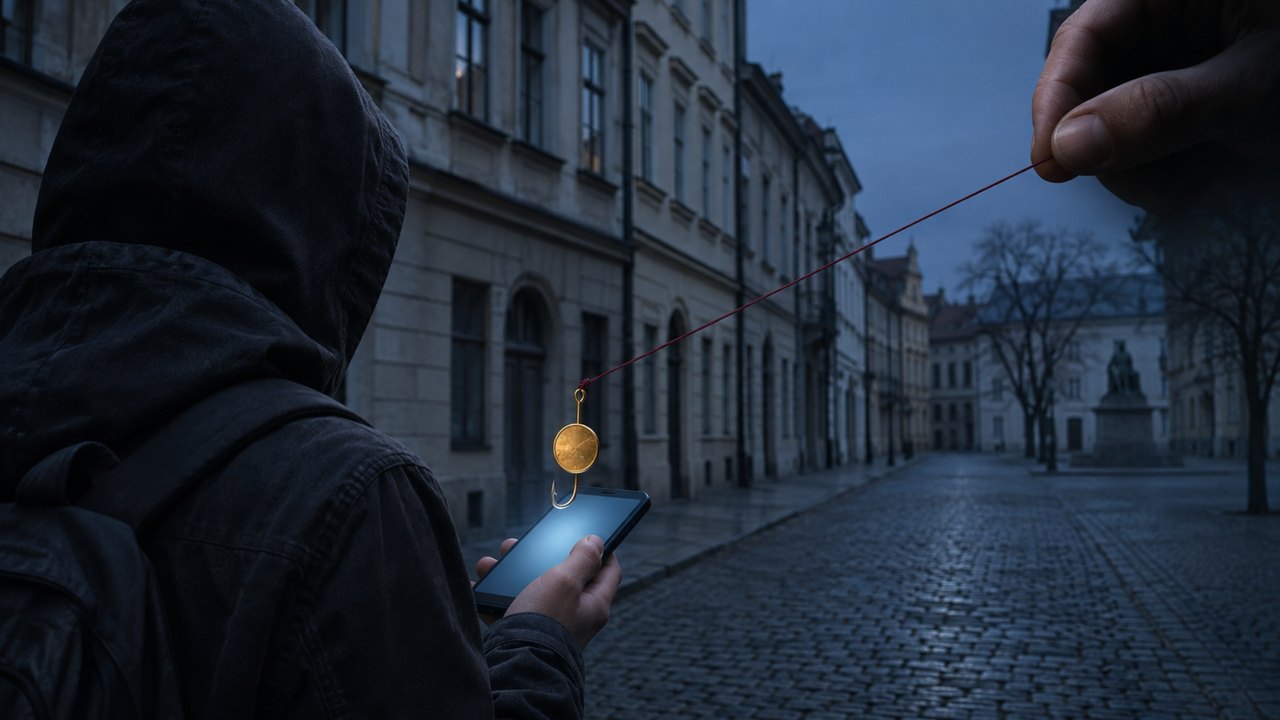
- The “easy money” trap. Through social media, Telegram in particular, recruiters offer money for supposedly simple tasks, promise anonymity and insist there will be no serious consequences.
- From graffiti on monuments to sabotage. Young people can be drawn into provocations, arson, surveillance of military sites and other dangerous actions.
- The aim is to undermine trust in Ukrainians and weaken support for Ukraine in the world. Provocations under Ukrainian slogans can be used to stir up hostility in the countries that have taken Ukrainians in.
- Protection starts with trust and awareness. It is important to support families and teachers, explain the threats clearly, provide information about legal part-time work and about how to contact law enforcement if someone tries to recruit them.
In recent days Polish law enforcement detained a 17-year-old with a Ukrainian passport who is charged with painting the words “Slawa UPA” on monuments in Gdańsk and Gdynia. The provocation was carried out on the eve of Poland’s Independence Day; after 11 November the words “Slava UPA” appeared on the Tomb of the Unknown Soldier and the Monument to the Ghetto Heroes in central Warsaw. Note that the inscriptions are spelled differently, so they were very probably made by different people.
These visual provocations are a vivid example of the actions of Russian intelligence services in EU countries aimed at using war migrants from Ukraine to destabilise the countries that have given them temporary protection. The Kremlin is not trying to “sell” love and respect for Putin; instead it is trying to undermine trust in Ukrainians. That is why the priority of Russia’s chekists is to destabilise the situation in the countries of Central Europe and the Baltics that have taken in large numbers of Ukrainian citizens. The Russian FSB and the Belarusian KGB are also keeping an eye on Belarusian emigrants forced to leave their country after the mass protests of 2020.
Many remember how a good ten years ago the “Blue Whale” game spread across social media in the post-Soviet space, criminally manipulating teenagers’ minds. It is highly likely that this was how Russian chekists experimented with controlling the minds of young people, and more than one child fell victim to it. This kind of “criminal romanticism” is widespread in Russia and is deliberately spread wherever Russian is used in Europe. Incidentally, it is one of the key tools for gaining teenagers’ trust.
Although Ukrainian security services constantly warn about the Russians’ insidious actions, they continue to use cynical methods of influence. The Kremlin and its henchmen skilfully play on the vulnerabilities of young people for whom Russia’s aggression has become the main ordeal of their lives. Because of the loss or weakening of parental control, life in a foreign country, poverty or the problems of growing up, young Ukrainians become easy prey for skilled manipulators. In the Ukrainian rear they are asked to photograph a military facility or to set fire to a vehicle of Ukraine’s Defence Forces or a railway relay cabinet. Those who have earned trust may even be used for attacks on soldiers or for setting up dead drops. Young people wandering around a city attract less attention, and the liability, according to the recruiters, may be minimal even if they are caught.
The arsenal for exploiting young people’s expectations is traditionally vast. Many Russian recruiters have a whole set of personas they use when “working on a client”. Add modern technology (the possibility of being paid in cryptocurrency, just like adults) and it becomes clear that the temptation will be very real. At the same time, many teenagers sincerely want to help their parents in the difficult conditions of forced emigration or life under the harsh realities of martial law. That is why Russian intelligence services skilfully use various levers – from playing on patriotic feelings to cynical blackmail – to destabilise the Ukrainian rear and the situation in Ukraine’s allied countries.
The traditional hunting ground for young souls is Telegram, the use of which sometimes looks like a badge of belonging to the post-Soviet community. Russian intelligence services actively exploit this false virtual internationalism for their own ends. By offering conspicuously easy money and the illusion of anonymity, Russian operatives gain broad opportunities to carry out their insidious plans.
What can be offered in this situation to teenagers and their parents, wherever they live? Parents and relatives should keep reminding them, ideally together with teachers, of the danger of “offers you can’t refuse”. Both the Ukrainian state and Ukrainian organisations abroad should focus on creating part-time job offers for minors and on preparing special FAQ guides (an FAQ guide is a systematic list of frequently asked questions with ready, comprehensive answers on a given topic, product or service – ed.) on existing threats, to be shared on Instagram and TikTok. But the most important thing, it seems, is to explain that turning to law enforcement in Ukraine or abroad – depending on where one lives – is neither shameful nor cowardly.
Author: Svitlana Mialyk