The European Union has agreed to remove the Russian billionaires Alisher Usmanov and Mikhail Fridman from the personal sanctions list they had been on since 2022. France and Slovakia pushed for the restrictions on Usmanov to be lifted and Luxembourg for those on Fridman, while Latvia was opposed.
In the end Riga agreed not to block the EU decision, and then announced an understanding with Paris to open talks on Latvia’s participation in the French nuclear deterrence initiative and to strengthen the French military presence in the country, air defence in particular.
In brief:
- Slovakia and France are pushing for Usmanov’s removal from the sanctions list. According to media reports, Paris’s position is linked to approaches from Azerbaijan and to the fate of two French citizens detained there
- Fridman’s removal is being sought by Luxembourg, which fears the sanctions will weaken its position in a $16 billion dispute with the billionaire
- Extending the sanctions requires the agreement of all 27 EU member states
- Latvia opposed removing Usmanov and Fridman from the sanctions list, but in the end agreed not to block the decision
- Latvia’s prime minister then reported that Macron had agreed to open talks on the country’s participation in the French nuclear deterrence initiative and to strengthen the French military presence, air defence in particular
- Other Russian billionaires are also seeking removal from the sanctions list, among them Roman Abramovich and Dmitry Mazepin
The EU blacklist
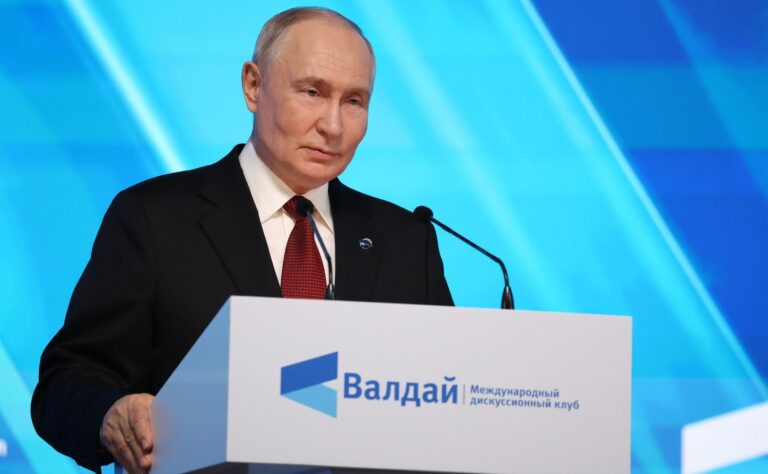
The EU’s personal sanctions list, argued over intensely for several days, appeared in 2014 after the annexation of Crimea, and after the start of Russia’s full-scale invasion of Ukraine it was constantly expanded. At first it consisted mainly of people connected with events in Crimea and the Donbas. Around 3,000 individuals and entities are currently under sanctions. They include Vladimir Putin, Russian officials and deputies, military and security personnel, major businessmen, figures from the defence industry, and people and organisations the EU links to propaganda, sanctions evasion, the “shadow fleet” and the deportation of Ukrainian children.
For individuals the sanctions mean frozen assets in the EU and a ban on entry and transit. European citizens and companies are forbidden to provide those on the list with money or other economic resources.
Until now the sanctions have been extended every six months, which required the agreement of all 27 EU states. In March 2026 the restrictions were extended for another six months, and on 15 September, because of disagreements between EU states, for one more week, until 22 September.
At the centre of the current dispute are the Russian billionaires Alisher Usmanov and Mikhail Fridman, under EU sanctions since 2022. France and Slovakia demanded that Usmanov be taken off the list, and Luxembourg that Fridman be. The compromise proposed was to lift the restrictions on both businessmen and to extend the sanctions on everyone else for three years at once.
Latvia initially opposed the deal, but on 22 September Riga agreed to abstain in the vote. As a result the EU ambassadors approved the removal of Usmanov and Fridman and extended the restrictions on the rest for three years. The decision still has to go through formal approval.
Alisher Usmanov

Alisher Usmanov is a Russian-Uzbek billionaire and the largest shareholder in the USM holding, whose assets the EU lists as Metalloinvest, Udokan Copper, Akkermann Cement and MegaFon. At the start of 2026 his fortune was estimated at around $18.8 billion.
The EU added Usmanov to the sanctions list on 28 February 2022, four days after the start of the full-scale Russian invasion of Ukraine. The Council of the EU called him a “pro-Kremlin oligarch” with particularly close ties to Vladimir Putin and stated that he had provided material or financial support to the Russian authorities responsible for the annexation of Crimea and the destabilisation of Ukraine. The EU later also justified the sanctions on the grounds that Usmanov is a leading businessman operating in sectors of the economy that provide substantial revenue to the Russian state.
Usmanov tried to challenge the sanctions. In 2022 he brought a case against the Council of the EU, but in February 2024 the General Court of the EU dismissed his claims. In April of the same year the billionaire appealed that ruling to the Court of Justice of the EU.
Two of Usmanov’s sisters also fell under EU sanctions, but both were later removed from the list. Saodat Narzieva was added in April 2022: the Council of the EU stated that assets and bank accounts connected with her brother had been registered in her name. By September of that year the sanctions against her were not renewed.
Gulbakhor Ismailova was also sanctioned in April 2022. The EU linked her to structures to which Usmanov had transferred assets, in particular the yacht Dilbar and property. Ismailova tried to challenge the restrictions, but in May 2024 the General Court of the EU dismissed her case. In March 2025, however, she was taken off the list after Hungary threatened to block the extension of the entire personal sanctions regime unless the EU lifted restrictions on a number of those listed.
Mikhail Fridman

Mikhail Fridman is a Russian billionaire born in Lviv and one of the founders of Alfa Group. His business interests lie in banking, retail, insurance and investment. Fridman is one of the main shareholders in ABH Holdings and a shareholder in the international investment company LetterOne. After the sanctions were imposed he and his partner Petr Aven left LetterOne’s board of directors, and their stakes were frozen.
The EU added Fridman to the personal sanctions list on 28 February 2022, the same day as Usmanov. The Council of the EU cited his ties to the Russian leadership and stated that the businessman had benefited from connections with state structures and had provided material or financial support to those responsible for the annexation of Crimea and the destabilisation of Ukraine. The EU later also justified the sanctions on the grounds that Fridman is a leading businessman operating in sectors of the economy that provide substantial revenue to the Russian state.
Fridman began challenging the sanctions almost immediately, and succeeded. On 10 April 2024 the General Court of the EU annulled the original sanctions decisions against him, ruling that the Council of the EU had not provided sufficient evidence to justify the restrictions. The businessman nevertheless remained under sanctions, because the EU had managed to extend the restrictions against him through new decisions and on other grounds.
Slovakia and France for Usmanov, Luxembourg for Fridman, Riga against
The current dispute over extending the EU’s personal sanctions began with the demand that Alisher Usmanov be taken off the list. Slovakia, which had raised the question before, argued for lifting the restrictions on the Russian billionaire. In September 2026 France joined it. According to Euronews, the authorities of Uzbekistan and France reached a behind-the-scenes understanding under which Usmanov would be removed from the list in exchange for Azerbaijan releasing two French citizens from prison.
After Usmanov the question of Mikhail Fridman arose. His removal from the sanctions list was demanded by Luxembourg, which is in an arbitration dispute with the billionaire. Fridman is claiming around $16 billion in compensation from the country, arguing that the freezing of his assets breached the investment protection agreement between Russia and Luxembourg. According to Reuters, Luxembourg feared that lifting sanctions on Usmanov while keeping them on Fridman could weaken the country’s position in the arbitration.
In the end a package compromise emerged: take Usmanov and Fridman off the list and extend the sanctions on everyone else for three years at once. Latvia, however, opposed that decision.
“As long as Russia continues the war, Europe’s pressure must become stronger, not more convenient for the Kremlin,” Latvia’s prime minister Andris Kulbergs said in a video published late on Monday evening.
Riga ultimately abstained from the vote, which allowed the other EU states to approve the deal. Latvia’s government then reported that the French president Emmanuel Macron had agreed to open talks on the country’s participation in the French nuclear deterrence initiative. Paris also promised to strengthen the French military presence in Latvia, air defence in particular. At the same time the Latvian government is preparing to impose national sanctions on Usmanov and Fridman.
Not the first and, perhaps, not the last
Usmanov and Fridman will be far from the first Russian oligarchs the EU has removed from its personal sanctions list.
In September 2023 the sanctions were not extended for three Russian businessmen: Farkhad Akhmedov, Grigory Berezkin and the former head of Ozon, Alexander Shulgin. The EU doubted that the legal grounds for keeping the restrictions would survive a court challenge. In Shulgin’s case those fears were borne out: the General Court of the EU ruled that after he left Ozon the Council of the EU had not provided sufficient grounds for keeping him on the sanctions list.
In March 2024 the co-founder of Yandex, Arkady Volozh, was removed from the list. By then he had publicly called the Russian invasion of Ukraine “barbaric” and distanced himself from Yandex’s Russian business.
Some precedents concerned the relatives of sanctioned Russians. The General Court of the EU annulled the restrictions on Nikita Mazepin, son of the owner of Uralchem Dmitry Mazepin, and on Violetta Prigozhina, mother of the founder of the Wagner private military company Yevgeny Prigozhin. In both cases the court found that a family tie alone was not enough to keep the restrictions in place.
Other Russian billionaires are also challenging EU sanctions in European courts, among them Roman Abramovich, Dmitry Pumpyansky and Dmitry Mazepin. In May 2026 Tatiana Navka, the wife of Russian presidential spokesman Dmitry Peskov, also brought a case against the Council of the EU.
Author: Olha Siamashko