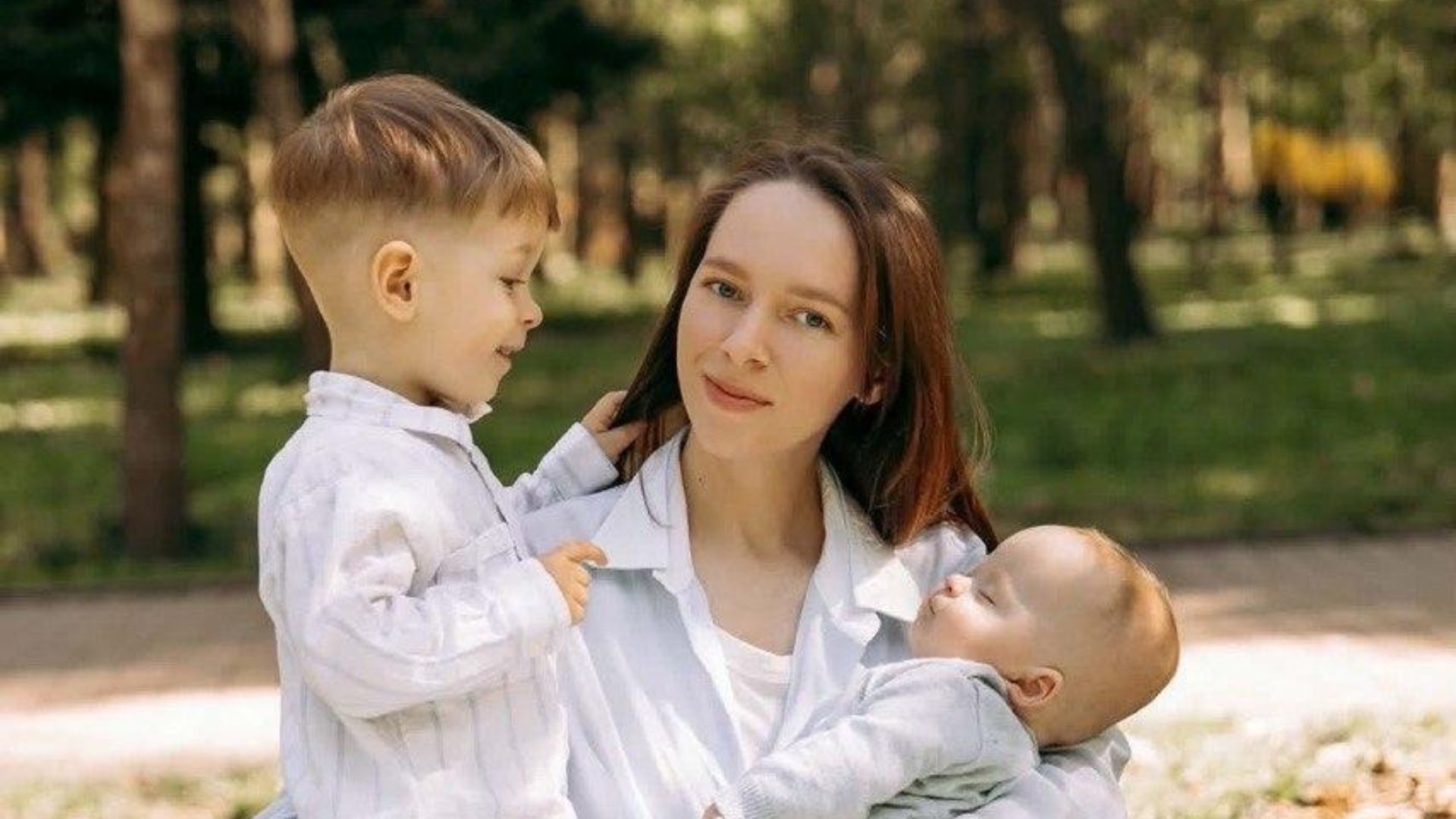

Ukrainian and international media have reported on the story of little Nazar, who was born after a Russian strike on an apartment building in Kyiv’s Sviatoshynskyi district. During the attack by a Russian drone, his 24-year-old mother, who was seven months pregnant, suffered severe injuries and burns. Doctors performed an emergency C-section to save the baby. They continued to fight for the woman’s life for more than two weeks. The boy’s father suffered severe burns but survived. Nazar himself has been fighting for his life since birth, having undergone numerous surgeries and months of treatment.
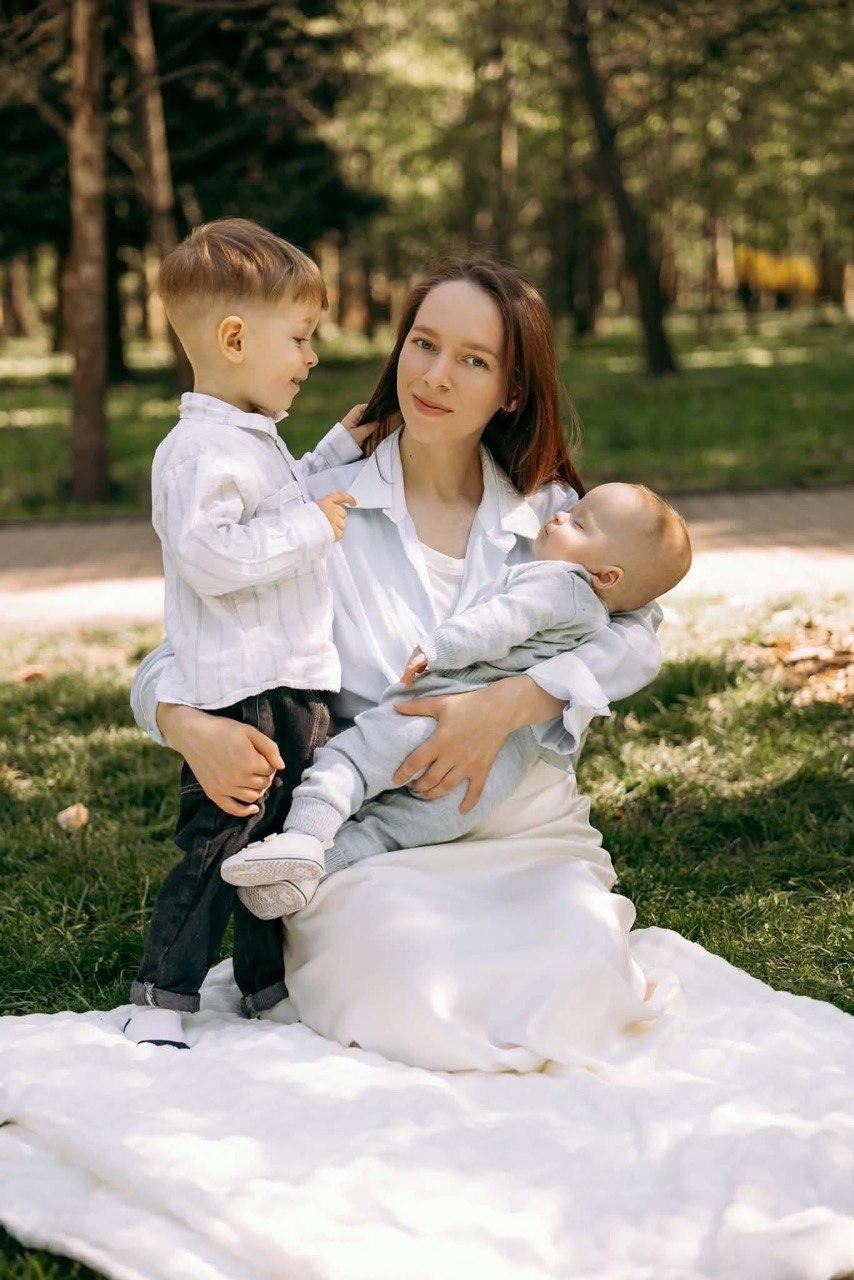
Now his aunt, 27-year-old Oksana Bohdan, who has taken custody of the boy, has come to Poland with her own three-year-old son to save the children from the war. However, instead of quickly receiving temporary protection, the family ran into a bureaucratic hurdle: for nearly a month now, they have been unable to obtain PESEL UKR status, even though they declared their intention to seek protection from the war when crossing the border.
In an interview, Oksana Bohdan talks about her family’s tragedy, the fight for Nazar’s life, and the difficulties faced today by Ukrainians arriving in Poland to escape the war.
In brief:
- The reason Oksana Bohdan and her children left Ukraine was a tragedy that occurred on September 7, 2025, in Kyiv.
- Due to a premature birth, the child suffered severe complications. After the mother’s death, Oksana became her nephew’s guardian.
- Despite meeting all requirements when crossing the border, due to a verification error, the family was unable to obtain PESEL UKR status for a long time. The woman had almost lost hope and was considering returning to Ukraine.
- However, thanks to confirmation from the Korczowa border crossing, the error was corrected, and on July 29, the family successfully completed all the paperwork.
- Now the family is staying in Poland, and Oksana has already signed a declaration with a pediatrician and scheduled appointments for the boy to continue his treatment.
— Ms. Oksana, please tell us why you decided to come to Poland. What happened to your family?
— First and foremost, I came to Poland to ensure my children’s safety. Unfortunately, on September 7, 2025, a terrible tragedy struck our family. A Russian drone struck the house where my brother lived with his pregnant wife. She was seven months pregnant.
The doctors had to perform an emergency C-section to save the baby. Tanya fought for her life for over two weeks. She suffered burns over 90% of her body, and, sadly, her injuries were life-threatening.
My brother also suffered severe burns—over 80% of his body. Fortunately, he survived, but he is still undergoing rehabilitation and has serious health problems.
Most importantly, we managed to save little Nazar. Every day, he proves that he wants to live.
Due to premature birth, he suffered two brain hemorrhages and later developed hydrocephalus. In his ten months of life, he has already undergone five brain surgeries, countless anesthesias, and spent over three months in hospitals—one and a half months of which were in the intensive care unit.
Due to premature birth, he suffered two brain hemorrhages and later developed hydrocephalus. In his ten months of life, he has already undergone five brain surgeries, countless anesthesias, and spent over three months in hospitals—one and a half months of which were in the intensive care unit. Every day he fought for his life. And he proved that he is strong.
After the tragedy, our family decided that I would be the one to take care of Nazar. His mother was an orphan herself and had raised his younger sister on her own. My parents would not have been physically able to care for a child who requires constant medical care and rehabilitation.
— Is Nazarchik your nephew?
— Yes, he’s my little nephew. After the tragedy that occurred in Kyiv, we lived in Ivano-Frankivsk for over 10 months. But, unfortunately, there’s no peace there either. Because there are also air raid alerts, power outages, and drone strikes. The last one hit a house on the street next to ours. So we made a joint decision as a family that we needed to go abroad—we had to get the children out of there. Because the situation isn’t getting any better.
— So you decided to go to Poland with the children?
— Yes. I entered Poland with my three-year-old son Mark and my nephew Nazar.
— Please tell us how you crossed the border. Were you aware of the new rules stating that people arriving in Poland with the intention of seeking temporary protection must inform border guards that they are fleeing the war and being evacuated? Did you mention this at the border? Which border crossing did you use?
— Before leaving, I had already seen information stating that at the border, you must declare that you are evacuating due to the war.
During border control, I clearly stated three things: that we were fleeing the war, that we wanted to seek temporary protection in Poland, and that we were victims of the war.
We crossed the border through the Krakivets–Korczowa border crossing. The border guard didn’t ask any additional questions. He just asked where we were from.
During the full-scale war, we lived in various cities across Ukraine. My son was born in Odesa, Nazar was born in Kyiv, and my official residence is registered in the Kirovohrad region. However, I hadn’t actually lived there since the war began.
— After the border guard asked where you were from, what happened next?
— The day after we arrived, we went to the local office because we knew we needed to get our PESEL UKR as soon as possible so that all our documents would be in order.
However, they told us there that our data hadn’t been verified or activated yet—in other words, we weren’t in the database.
However, they told us there that our data hadn’t been verified or activated yet—in other words, we weren’t in the database. They advised us to wait a week, explaining that the information might not have been updated yet. When we returned a week later, the situation hadn’t changed. We were again told that there was no data in the system, and we were advised to contact the Polish Border Guard to request that our entry status be changed to “evacuation.”
— So that’s when you contacted the Border Guard?
— Yes. Through the ePUAP system, we sent a request to the Border Guard unit through which we had crossed the border. We asked them to change the status of our entry to “evacuation.”
In the request, we also explained our situation in detail: that I was traveling with a child who had been injured in a Russian missile strike and required constant medical supervision and treatment. That is why we urgently requested that our status be changed as soon as possible.
— What were the consequences of not being able to obtain a PESEL UKR right away?
— Just four days after our arrival, Nazarchik and I ended up in the hospital. He developed an infection that required hospitalization. However, at that point we still didn’t have any official status, so we were forced to pay for the treatment out of our own pocket. If we had been issued a PESEL UKR right away, medical care for the child would have been free.
— You mentioned that you applied to the Border Guard via the online system.
— Yes, we submitted our application through the ePUAP system. If you arrive here and don’t know anyone with a “Trusted Profile” (Profil Zaufany), it will be even harder, and you’ll have to send a letter by regular mail. And those letters take even longer to process.
— Where do you live now?
— We’re renting an apartment near Katowice. It was a deliberate decision, because I spoke with parents of children with hydrocephalus, and they recommended this city specifically because of its excellent neurosurgeons. That’s why we decided to settle here. And we really like the city.
During this time, while we’ve been trying to obtain a PESEL UKR, we’ve repeatedly contacted the Border Guard—both in writing and in person. Unfortunately, it hasn’t helped so far.
— What other steps have you taken to resolve the issue?
— We’re constantly trying to reach the Border Guard by phone to speed up the processing of our request. We’ve also sought advice, called the consulate, and looked for help from organizations that support Ukrainians.
At the city administration, we were advised to contact an organization that helps Ukrainians, located near the Uzhend. But even there, we were told that, unfortunately, many people are currently facing this problem, and the only thing we can do is wait for a decision from the Border Guard Service.
— What is the Border Guard Service telling you now? Have you sent several appeals?
— No, we’ve submitted only one appeal and are constantly checking what stage the review is at. When we managed to get through on the phone, we were told that the appeal had been received and forwarded for further review. They also asked us not to send duplicate letters, as this could only delay processing due to their heavy workload. So we’re waiting and really hoping that our entry status will be changed and we’ll be able to get a PESEL UKR.
— If that doesn’t happen, what options are you considering?
— For now, we’re hoping for a positive decision.
If not, we’ll likely stay in Poland on our biometric passports for the permitted 90 days. We’ll also have to get paid health insurance for Nazar or even consider moving to another country. We haven’t ruled out returning to Ukraine, but for now we’ll wait for a response from the Border Guard Service.
— How are the children doing now?
— My son Mark is three years old. The move was very stressful for him, but now he’s gradually adapting. He likes that there are lots of playgrounds here, and he finds it exciting to discover new things.
Nazar is also coping better with the changes now. Overall, everything is going well, and we really hope that Mark will soon be able to attend preschool, and that Nazar will be able to receive the necessary rehabilitation on a regular basis.
— Is Mark not attending preschool yet?
— No. We still need to get the paperwork sorted out for that.
— Without a valid PESEL UKR, even preschool isn’t an option?
— Yes. Even a private preschool won’t accept a child without the proper documents.
— After everything you’ve been through, where do you find the strength? You lost a loved one, took on the care of a nephew who needs constant medical attention, and are raising your own little son… That’s a huge responsibility.
— It really is very hard. I devote all my energy to this. But first and foremost, I think about the children. They’re the ones who give me the strength and motivation to keep moving forward.
Practically every minute is devoted to the children: either Nazarchik or Mark. It’s thanks to the children that I’m holding on.
I simply don’t have time to sit around and think about how bad things are. I understand that I need to take action, solve problems, and constantly be thinking about something. Practically every minute is devoted to the children: either Nazarchik or Mark. It’s thanks to the children that I’m holding on.
— How old are you?
— I’m 27 years old.
— What’s your educational background?
— I majored in preschool education.
— So working with children was your calling even before the war?
— Yes.
— Thank you for this candid conversation. We’ll continue to follow your story. Additionally, if necessary, our editorial team will contact the Polish Border Guard with a request regarding the reasons for the delay in granting PESEL UKR status to Ukrainians arriving in Poland to escape the war, despite their compliance with the procedures required by law.
Editor’s Note:
After this interview was recorded, Oksana Bohdan’s story took a positive turn. She reported that after several weeks of waiting and corresponding with Polish authorities, the issue was resolved.
According to Oksana, she had almost lost hope and had even begun to consider returning to Ukraine.
“After I received a letter from the Korczowa border crossing, confirming that the purpose of our entry had been correctly stated when we crossed the border and that our information had been forwarded to the Border Guard Service Headquarters for correction, another week passed. All that time, the verification status remained negative, and time was running out.
Then suddenly, on the morning of July 29, an employee from the office called me and said that we had successfully passed verification and could apply for a PESEL UKR. She was very happy for us herself, because she knew our story and had been worried. Within an hour, we had all the paperwork sorted out—for me and for the children.”
Now the family is staying in Poland. Oksana has already signed a declaration with a pediatrician and made appointments for Nazar with the necessary doctors so he can continue his treatment.
This family’s story shows that even if bureaucratic difficulties arise during the process of obtaining temporary protection, they can be resolved. At the same time, it demonstrates how important prompt cooperation among government agencies and a compassionate approach toward those fleeing the war truly are.
Author: Svitlana Mialyk