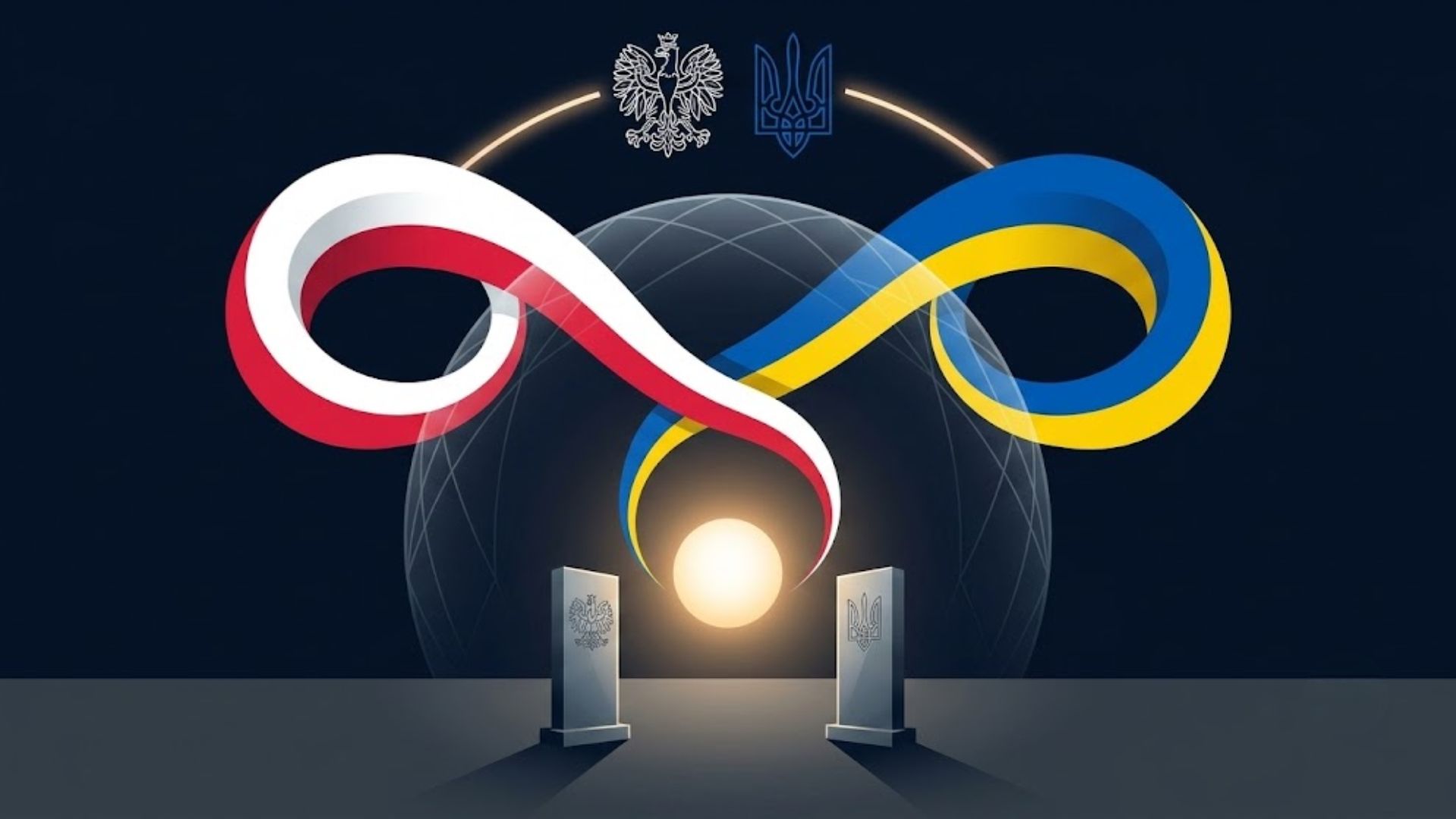

From Shared Historical Values to a Shared Understanding and Joint Efforts to Address Contemporary Global Security Challenges and Threats
Unlike its neighbors, Galicia and Volhynia, Ukraine’s westernmost region has not had particularly close or systematic contacts with Polish lands throughout its centuries-long history, as the territory of present-day Transcarpathia was part of other political entities. Thus, such large-scale tragic chapters in relations between Ukrainians and Poles—such as the pacification of Galicia during the interwar period, the Volhynia tragedy during World War II, the postwar Operation Vistula, and the mutual mass deportations of indigenous populations from their ancestral lands carried out by communist regimes —did not directly affect the lives of the people of Transcarpathia. Although there are shared chapters in our history, and they, too, are written in blood.
In short:
- A vivid example of Ukrainian-Polish good neighborliness and a respectful attitude toward our shared historical heritage.
- Our shared history is not a source of discord, but rather a subject for reflection and for building civilized relations for the future to confront current security challenges.
- The greatest guarantee of Poland’s security is a strong, independent Ukraine, and the greatest guarantee of Ukraine’s security is a strategic alliance with Poland within the framework of the European and Euro-Atlantic security architecture.
- The guiding principle is not to forget the past, but to recognize that responsibility for a shared future carries greater political weight than disputes over historical memory.
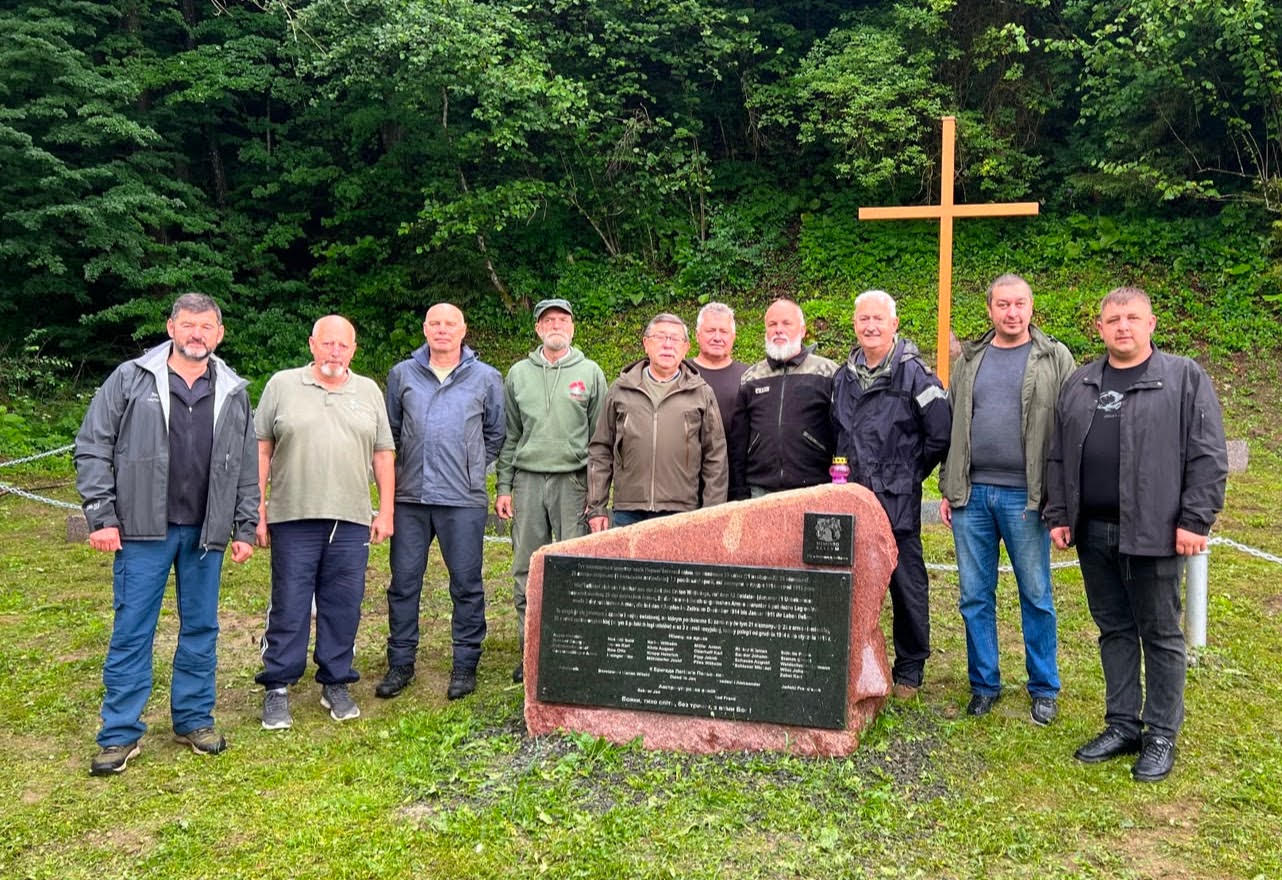
During World War I, tens of thousands of Transcarpathians were mobilized into units of the Austro-Hungarian Army, including the Ungvár, Berez, and Maramures Infantry Regiments, as well as the Honvéd self-defense units. They fought and died from bullets, shrapnel, and shells, and froze in snow-covered trenches in the mountain ranges on various fronts of that war, including the Polish Bieszczady Mountains, during the defense of Mount Manilova and the repulsion of the Gorlice breakthrough. In turn, the soldiers of the Polish Legions—who were also soldiers of the Austro-Hungarian Army—after fierce and bloody battles with units of the Russian Imperial Army, found their final resting place in military cemeteries in what is now Transcarpathia, specifically in Tyushka, Brustury, at the Legions Pass, and on the mountain peaks of the Ukrainian Carpathians.
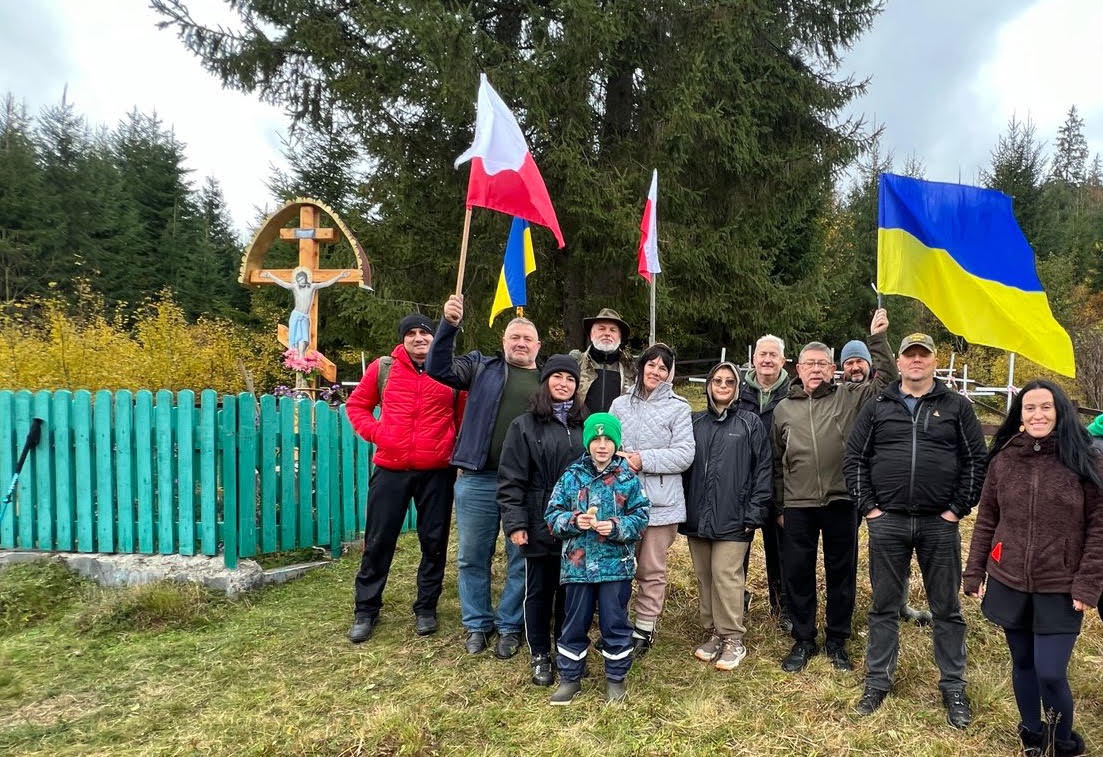
More than a century after those tragic events, guided by the principles of humanism and human morality, civic activists—united in local military memorial organizations—tend to the graves of fallen Transcarpathian soldiers on Polish soil. The World War I military cemeteries in Transcarpathia, where Polish legionnaires are laid to rest, have been under the careful care of the “Memento bellum” Center for Military-Historical Research and local communities in recent years. This striking example of good neighborliness and mutual respect for our shared historical heritage should serve to strengthen friendly relations amid today’s global geopolitical security challenges.
There have also been openly hostile and tragic events in the history of our relations on the eve of World War II, when, as part of Operation “Lom,” Polish terrorist groups, in collusion with Hungarian occupiers, carried out armed attacks on the territory of Carpathian Ukraine, blew up bridges, destroyed schools and post offices, and killed its defenders and civilians.
Today I recall this not at all because I wish to reopen a long-healed wound in the history of our relations, but only so that current generations of Ukrainians and Poles may gain the wisdom to finally realize that the enemy of Ukrainians is not in Warsaw or Krakow, and the enemy of Poles is not in Kyiv or Lviv. A very long time ago, fate destined us—in the best sense of the word—to be neighbors, so we have a solemn duty to ensure not only cultural and mutual respect, economic cooperation, but also shared security, because when a neighbor’s house or barn is on fire, the flames will spread to yours in a matter of minutes—and they won’t care what language you speak, in which church you pray, or whom you consider your national hero…
How can we build good-neighborly relations today and tomorrow? How can we rid ourselves of the historical stereotypes of hostility and animosity imposed by Muscovy over the centuries? What actions should responsible politicians, public figures, and ordinary citizens of both states take to counter the ideological influence of our common enemy? We addressed this question to Igor Todorov, a political scientist well-known in Europe, Doctor of Historical Sciences, and professor at Uzhhorod National University.
“Historical disputes must cease to be the primary factor in bilateral relations and give way to shared responsibility for common security.”
In an exclusive commentary for “Black Sky,” Mr. Todorov emphasized that the current Ukrainian-Polish standoff is not a conflict of strategic interests, but rather a conflict of historical memory unfolding against the backdrop of unprecedented unity in the security sphere. The paradox lies in the fact that these states, which share a common existential adversary in Russia and have aligned key security interests, remain divided by differing interpretations of certain tragic chapters of their shared history. The main contradiction in contemporary Ukrainian-Polish relations lies in the discrepancy between the high level of strategic partnership in the security sphere and the persistence of deep differences in historical memory policy.
Thus, the current Ukrainian-Polish confrontation is not geopolitical in nature, but rather one of historical memory and politics. Unlike most interstate conflicts, its subject is not territory, resources, or foreign policy orientation, but rather competing national narratives regarding the historical past. At the same time, the shared security interests of Ukraine and Poland create objective conditions for transforming this confrontation into a model of “security reconciliation,” in which historical differences are not eliminated but cease to define the strategic nature of bilateral relations.
It is worth distinguishing between two levels of relations: at the geopolitical level, Ukraine and Poland are strategic partners, as they share a common vision of the main threat and the future architecture of European security; at the level of memory politics, they remain bearers of different historical narratives, which periodically become the subject of political mobilization and domestic political competition.
It is precisely this asymmetry between strategic unity and historical divergence that, in my view, constitutes the main feature of contemporary Ukrainian-Polish relations. Objectively speaking, today the greatest guarantee of Poland’s security is a strong, independent Ukraine, and the greatest guarantee of Ukraine’s security is a strategic alliance with Poland within the framework of the European and Euro-Atlantic security architecture. That is precisely why historical controversies should be the subject of joint academic research and public dialogue, rather than a tool of contemporary politics.
In my view, the concept of “security reconciliation” should become the central idea for building Ukrainian-Polish relations. It holds that modern international relations are increasingly defined not only by a shared history but also by shared future threats. Russia’s aggression against Ukraine has shown that the security of Poland and Ukraine is interdependent. In this context, historical conflicts should not be swept under the rug, but neither can they become an obstacle to a strategic partnership.
The term “security reconciliation” has not yet become firmly established. Traditionally, historical reconciliation is viewed as a process of overcoming the consequences of past conflicts through the acknowledgment of historical facts, mutual forgiveness, preserving the memory of victims, and fostering humanitarian dialogue. This approach was successfully implemented in relations between France and Germany after World War II and later became one of the foundations of European integration.
However, the contemporary international environment reveals a different pattern. In the 21st century, reconciliation is increasingly shaped not only by a reevaluation of the past but also by an awareness of shared challenges for the future. It is precisely this that allows us to speak of the phenomenon of security reconciliation as a process of transforming historically conflictual relations between states under the influence of an awareness of shared existential threats, which prompts the parties to move from historical competition to strategic cooperation in the security sphere.
Russia has threatened not only the very existence of Ukrainian statehood but also the entire security architecture of Central and Eastern Europe. It has become clear to Poland that an independent Ukraine serves as a strategic security barrier between Russia and NATO’s eastern flank. At the same time, for Ukraine, Poland has become one of its key partners in the military, political, humanitarian, and diplomatic spheres.
This does not mean that historical issues have disappeared or that their study has been abandoned. On the contrary, historical memory remains an important element of the national identity of both nations. However, it no longer defines the nature of the modern political partnership. This is the fundamental difference between security-based reconciliation and a policy of historical amnesia. This is not about abandoning memory, but about changing its political function. History must cease to be an instrument of mutual political pressure and gradually become the subject of academic dialogue and public reflection.
In the case of Ukraine and Poland the catalyst for this process was not a change in historical assessments, but the emergence of a common strategic adversary that equally denies Ukraine’s sovereignty, threatens Poland’s security, and seeks to undermine the European security order. Under these conditions, historical disputes must cease to be the primary factor in bilateral relations and give way to shared responsibility for common security.
The concept of security reconciliation also explains why Russia systematically uses historical issues to destabilize Ukrainian-Polish relations. Information operations, manipulations surrounding the tragic chapters of the past, and attempts to radicalize public discourse are aimed not so much at altering historical memory as at undermining the current security solidarity between the two states. Thus, safeguarding historical dialogue becomes part of a broader policy to counter hybrid threats.
In practical terms, security reconciliation involves establishing robust institutions of cooperation that reduce the influence of political expediency and historical disputes on strategic decisions. Such mechanisms include deepening defense cooperation, coordinating foreign policy, jointly countering disinformation, cooperating in the field of cybersecurity, developing border infrastructure, supporting academic dialogue among historians, and implementing joint memorial projects. In this model, historical dialogue does not disappear, but it ceases to determine the level of political trust between states.
Thus, security-based reconciliation can be viewed as a new type of international partnership that emerges amid high-intensity external threats. Its guiding principle is not to forget the past, but to recognize that responsibility for a shared future carries greater political weight than disputes over historical memory. For Ukraine and Poland, this model opens up the possibility of transforming a historically complex neighborly relationship into a long-term strategic alliance capable of strengthening the security not only of the two states but of all of Central and Eastern Europe, believes Professor Ihor Todorov.
… At the end of his term in 2010, President Viktor Yushchenko awarded the title of Hero of Ukraine to Stepan Bandera and Roman Shukhevych. At the time, there was no noticeable negative reaction from Poland, particularly from its president, Lech Kaczyński, or leading politicians. But now, as Polish society prepares for the upcoming parliamentary elections, his brother, PiS leader Jarosław Kaczyński, is frightening Poles with the terrifying ideology of “Banderaism.” It seems that this has nothing to do with historical memory…
Vasyl Ilnytskyi