The EU’s foreign policy chief, Kaya Kallas, has promised to unveil, in autumn 2026, the most far-reaching package of economic sanctions against Russia since its large-scale invasion of Ukraine. Let’s try to suggest some truly interesting options to her in this regard.
In brief:
- The EU is preparing a new, large-scale package of sanctions against Russia. Kaja Kallas has promised to intensify sanctions pressure in autumn 2026 and to increase the number of Russian individuals and companies subject to sanctions by around a third.
- Despite the sanctions, Russia continues to profit from its cooperation with the West. In particular, EU countries purchase Russian metallurgical products worth around €2 billion every year, whilst Russian oligarchs are finding ways to circumvent the restrictions.
- There remain significant loopholes in the sanctions regime. Among the most telling examples are Roscosmos and Rosatom, which continue to possess considerable financial and technological capabilities, with Rosatom also involved in large-scale international projects.
- The Russian nuclear and space sectors remain an important source of resources and prestige for the Kremlin. Ukraine is calling for tougher sanctions against ‘Rosatom’ and ‘Roscosmos’.
- The key question for the West is: values or profits? The Kremlin uses economic ties and threats to confiscate Western assets as a means of exerting pressure. It is therefore impossible to effectively counter Russia without affecting its economic interests.
Consequently, the head of European diplomacy is convinced that, should the sanctions package be approved, the number of Russian citizens, companies and organisations subject to sanctions will increase by a third immediately. ‘For the autumn, I propose the most extensive package of sanctions since the start of the war. Once adopted, they will immediately increase the total number of Russian legal entities and individuals subject to sanctions by a third. The pressure must be stepped up until Moscow ends its war,” emphasised Kaja Kallas.
Back on 23 July, the Council of the EU finally adopted a new package of sanctions against Russia, which, as stated, “will deal a powerful blow to Russia’s energy sector, financial services and cryptocurrencies”. This came after its adoption had been blocked by certain countries for various reasons, the latest of which was Greece. As is well known, on 7 August the European Union approved new sanctions lists against Russia in response to the recent massive strikes on Ukraine.
For the US, the EU, the UK, Canada and Japan, economic sanctions against Russia are an opportunity to demonstrate their stance on Russian aggression, to try to influence the Kremlin and to force its leader to consider ceasing hostilities. This is a tool of pressure used by countries that consider themselves part of the civilised world.
But it is worth remembering that sanctions are a two-way street; it is simply impossible to restrict trade with the aggressor without suffering losses ourselves. And this must be understood as clearly as possible.
It is also important to realise that the Western world is built on the principles of competition and the pursuit of its own interests and the well-being of its citizens. The Kremlin is well aware of this, which is why it tries to find loopholes in the sanctions regime and, at the first opportunity, to torpedo yet another sanctions ‘ship’. A particularly telling example is the case of Péter Szijjártó, the former Hungarian Minister of Foreign Affairs and Trade, who, at the request of his Russian counterpart Sergey Lavrov, attempted to have the sister of pro-Kremlin oligarch Alisher Usmanov, amongst others, removed from the list of individuals subject to personal sanctions.
It can be argued that, although the European Union’s sanctions against Russia have, according to Kai Kallas, caused losses of over 1 trillion euros, there remains scope for them to increase further. There are still many sectors in Russia that are wholly or partly outside the scope of attention of EU representatives.
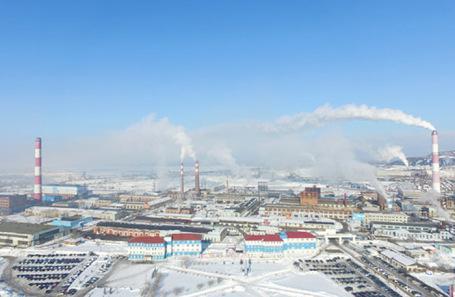
Let us begin with a well-known fact: despite the sanctions in place, EU countries purchased products from Russian steelmakers in 2024 and 2025 to the tune of around 2 billion euros each year. This may not be a staggering sum on the scale of the Russian Federation, but the precedent itself is significant and telling. Even the high-profile imposition of sanctions does not prevent profits from being made at the expense of EU countries. The reason for this is simple: a number of steelworks across Europe are owned by Russian oligarchs, who devise schemes to sell their products whilst circumventing sanctions.
The existence of the Roscosmos corporation (officially loss-making following the imposition of Western sanctions in 2022) should be viewed as a matter of prestige for the Kremlin. It was even headed at one time by Dmitry Rogozin – a controversial politician with imperialist ambitions, who later set off to seek a better fate on the front lines of the Russia-Ukraine war. In this case, the EU and US sanctions have been effective, as Roscosmos has been largely deprived of the ability to carry out commercial rocket launches or purchase the necessary electronics. However, it should not be forgotten that the corporation’s scientific potential continues to be utilised for the production of various types of rockets for the needs of the Russian army. This is precisely why the Ukrainian Ministry of Foreign Affairs repeatedly calls for increased sanctions pressure on the ‘Roscosmos’ corporation, the creation of which resulted from the appropriation of the Soviet legacy in the field of space exploration. In particular, at a recent meeting of the EU Foreign Affairs Council in Brussels, Ukraine’s Minister for Foreign Affairs Andrii Sybiha called for sanctions to be imposed against ‘Rosatom’ and ‘Roscosmos’, as well as for Russia’s ‘Gazprombank’ to be disconnected from the SWIFT system. ‘Russia has not ceased its aggression. Russia has not withdrawn its troops from Ukraine. Russia has not returned to compliance with international law. So why should its isolation be eased?”, emphasised the head of the Ukrainian Foreign Ministry.
Rosatom’s total profit in 2025 amounted to around 50 billion dollars, making it one of the main contributors to the Russian Federation’s budget. The situation surrounding the construction of the Akkuyu nuclear power plant in Turkey and Paks-2 in Hungary continues to develop in a manner favourable to Russia. These multi-billion projects continue to be used not only to generate profits, but also to demonstrate Russia’s false grandeur.
The conclusion, therefore, is simple: it is impossible to counter Russia with kid gloves. It is entirely plausible that Western countries have received threats from the Kremlin to confiscate their property on Russian territory should sanctions pressure on the aggressor be stepped up. And here the choice is actually simple: between values and profits, between honour and disgrace. And this choice will have to be made by Western political leaders.
Author: Svitlana Mialyk