Russian fuel deliveries to the US have still not begun, despite the agreements between Trump and Putin. Tankers that were supposed to head for American ports are changing routes. Buyers in the US fear legal consequences: Congress has already warned banks and ports that they may be held liable for such deals. Meanwhile, Washington has changed its rhetoric. It now says the main thing is not to deliver diesel to the US but to increase its supply to the world market. In October Russian exports did indeed almost double. But this has not brought world diesel prices down noticeably: fuel still costs much more than at the beginning of the year.
In brief:
- Trump and Putin agreed to increase deliveries of Russian diesel to the American and world markets. The US temporarily allowed imports of this fuel.
- Four tankers have been linked to alleged deliveries to the US, but none of them has unloaded in an American port.
- The ships are changing routes: some are heading towards Brazil, others remain in the Atlantic or the Mediterranean.
- American buyers fear legal consequences. Lawmakers have warned banks and ports of liability for illegal imports of Russian fuel.
- The US authorities now say the main thing is to increase the supply of diesel on the world market, even if the fuel does not reach American ports.
- Russian diesel exports almost doubled in October, but world prices remain high. Analysts believe the promised deliveries are not enough to change the situation significantly.
In early October US President Donald Trump announced an agreement with Russian President Vladimir Putin on deliveries of Russian diesel to the American and world markets. Washington hoped this would curb the sharp rise in fuel prices in the US. By October the average price of diesel had reached about $6.18 per gallon, compared with $3.48 at the beginning of the year. Prices rose against the background of the war with Iran, disruptions to oil supplies through the Strait of Hormuz and damage to refining capacity in the Middle East. Additional pressure on the world market for petroleum products came from reduced output at Russian refineries after Ukrainian strikes.
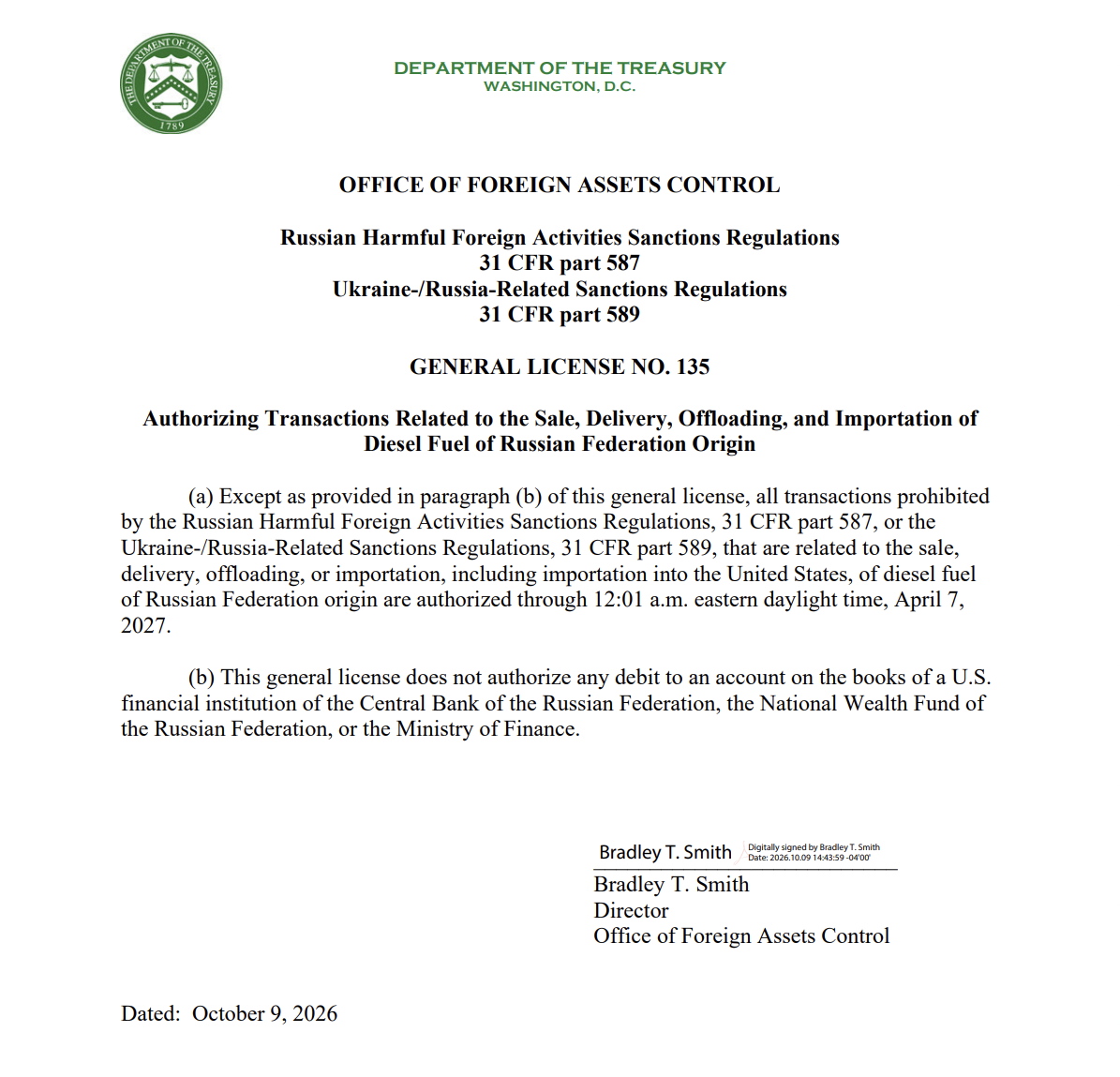
On 9 October the US Treasury issued General License No. 135, which authorised a range of transactions involving Russian diesel until 7 April 2027. In particular, the document allowed its sale, transport, offloading and import, including directly into the United States.
The next day, 10 October, the Russian government partially lifted the ban on diesel exports that it had earlier introduced because of the threat of shortages on the domestic market.

Under the plan announced by Trump, Russia was to deliver immediately more than 300,000 tonnes of diesel to the American and world markets, another 500,000 tonnes in November and then an additional million tonnes. A further three million tonnes were to be exported if Russian refineries had the capacity. The total declared volume of deliveries thus exceeded 4.8 million tonnes. However, the Kremlin did not publicly confirm specific volumes, and the American administration did not specify what share of the fuel was intended for the US itself.
In the second half of October at least four tankers carrying diesel left Russian ports and were linked to the alleged deliveries to the US. However, none of these cargoes has so far been delivered to American ports: the ships changed routes or are still waiting for instructions on where to unload.
Which tankers are these and where are they now?
The first of the tankers linked to deliveries of Russian diesel to the US was Leruo. It left Primorsk on 16 October 2026 with a cargo of Russian diesel, Reuters reported, citing LSEG data. The ship initially gave the Atlantic coast as its destination, but on 2 November changed it to “Brazil for order”, that is, waiting for instructions. As of 12 November the tanker was in the Atlantic off the northern coast of Brazil.
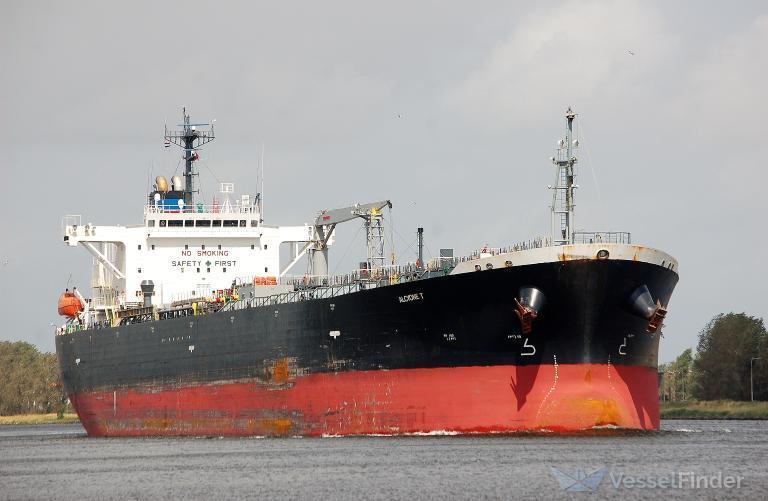
Leruo sails under the flag of Sierra Leone. Its registered owner and commercial manager is the Hong Kong company Nexaryn Bluewater Ltd, while safety management is handled by the Azerbaijani company Navigenix Shipmanagement LLC.
On 21 October the tanker Talisman left Primorsk, also carrying Russian diesel, according to AFP data. The ship initially gave its destination in the AIS system as “Atlantic Coast For Orders”, which allowed for a voyage to the US coast. Later, however, the tanker changed course and headed for the Mediterranean. As of 12 November Talisman was off the coast of Egypt, near Alexandria, where it had been standing still for several days.
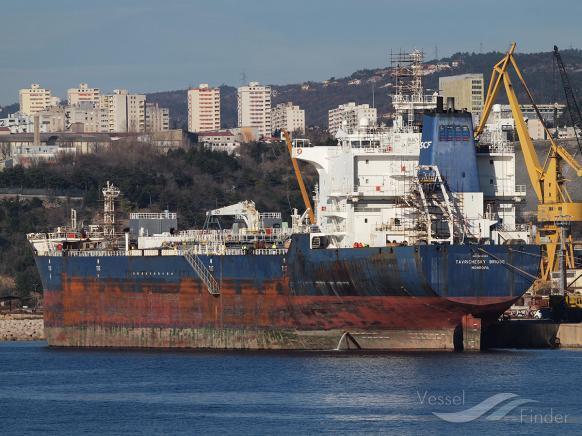
Talisman sails under the Russian flag. Its registered owner is Ametrine Navigation Inc, and its commercial and safety management is carried out by North Fleet Ltd. Both companies are listed in maritime registers as Russian.
On 22 October about 40,000 tonnes of Russian diesel were loaded onto the tanker Agioi Fanendes in Primorsk. According to Reuters data citing LSEG, the ship was initially heading for New York, where it was due to arrive on 7 November. Later, however, its destination in the AIS system changed to “For Orders”. By 10 November the tanker had stopped in the Atlantic off the US East Coast without reaching New York. The Greek management company EASTMED told Reuters that the port of discharge had not been determined.
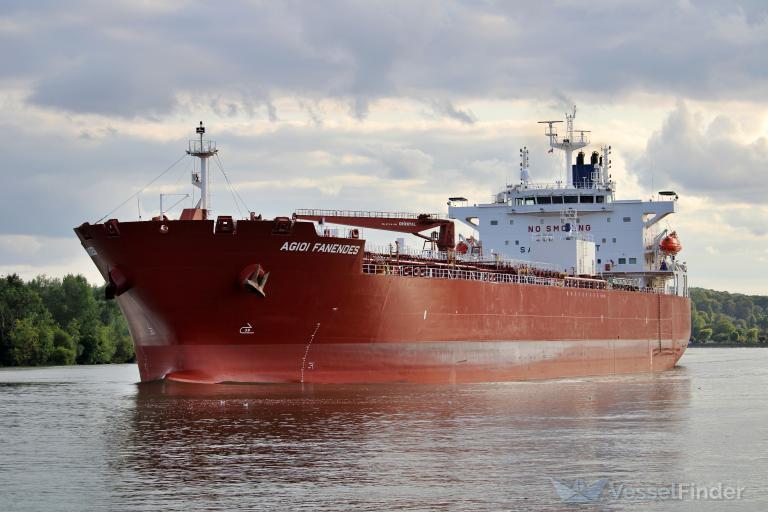
Agioi Fanendes sails under the flag of Malta. Its registered owner is the Greek company Maltatankers Shipping Ltd. Since April 2019 its commercial and safety management has been carried out by the Athens-based Eastern Mediterranean Maritime Ltd (EASTMED).
The fourth ship linked to Russian diesel for the US, according to Financial Times data, was the tanker Beast. It loaded in Primorsk on 27 October, although AIS records it leaving Ust-Luga on 30 October. The ship sails under the flag of Sierra Leone. The tanker initially gave “Atlantic” as its destination, later changing it to “Brazil for order”. As of 13 November Beast is in the Atlantic west of Portugal.
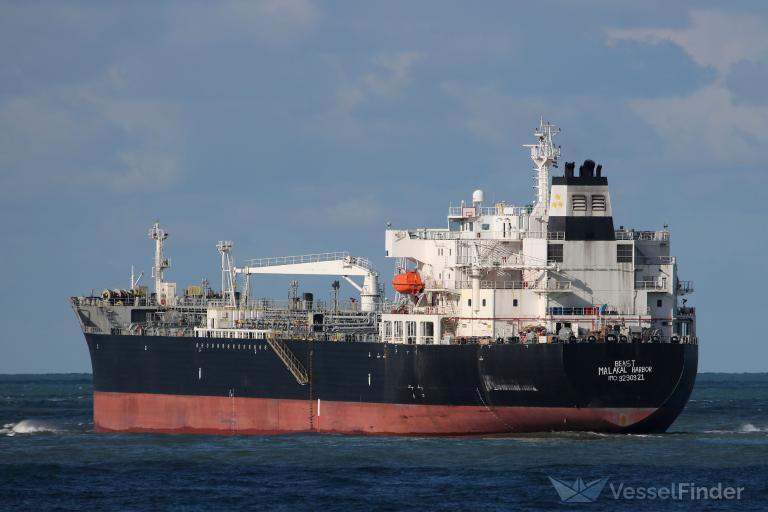
All these tankers had previously carried Russian oil and petroleum products. Three of them, all except Agioi Fanendes, have been sanctioned by Western countries as vessels of Russia’s “shadow fleet”.
American companies want nothing to do with Russian fuel
Despite the loud political statements by Trump and Putin, American companies are in no hurry to buy Russian diesel, even at significant discounts. As The Washington Sun reported, citing industry representatives and analysts, Trump administration officials unofficially urged American companies to accept cargoes that were already on their way across the Atlantic.
One of the main obstacles for American buyers has been legal risk. The General License No. 135 issued by the US Treasury on 9 October authorised certain transactions involving Russian diesel until April 2027. However, lawmakers insisted that the licence does not override the ban on imports of Russian energy imposed by federal law in 2022. This creates legal uncertainty for potential parties to such deals.
On 26 October a bipartisan group of congressmen and senators warned the largest American banks, including JPMorgan Chase, Bank of America and Citigroup, as well as the port authorities of New York, Houston and other cities, of possible civil and criminal liability for illegal imports of Russian fuel. The lawmakers demanded that documents related to potential deals be preserved.
Amid these disagreements in the US, tankers carrying Russian diesel began to change routes. On 10 November US Energy Secretary Chris Wright said he was not concerned about Agioi Fanendes stopping off the American coast: in his words, the ship could unload in another port, because Washington’s main goal is to increase the supply of diesel on the world market.
Russian exports are growing, but diesel remains expensive
Brazil was named as one of the alternative destinations for tankers carrying Russian diesel. But there, too, there were problems finding buyers.
As Bloomberg reported on 11 November, Russian exporters offered Brazilian distributors at least four diesel cargoes for delivery in November.
Brazilian traders confirmed that they had received such offers during the past week, but called the prices unattractive compared with fuel supplied from the US. According to estimates by S&P Global Platts, on 9 November American diesel delivered to Brazilian ports cost about $1,320–1,330 per tonne. The prices offered by Russian exporters have not been disclosed.
At the same time, total exports of Russian diesel to world markets have indeed risen markedly. As the Financial Times reported on 12 November, citing Kpler, in October volumes roughly doubled, from 135,000 to 271,000 barrels per day. Russian fuel continued to flow to Brazil and Turkey, among others.
Despite the increase in Russian exports, wholesale diesel prices in Europe and the US remain high. According to the ICE exchange, the price of diesel futures has more than doubled since the beginning of 2026. In September quotations rose to about $1,500 per tonne, and by mid-November they had fallen to $1,283.

In the assessment of Kpler analysts, the deliveries promised by Russia are not enough to bring world diesel prices down noticeably. For that, the market needs an additional 400,000 barrels per day. The first Russian cargo of 300,000 tonnes, spread over a month, would provide only about 73,000 barrels per day – less than a fifth of the required volume. The International Energy Agency also warns that the diesel shortage may persist into 2027.
Official Russian and Belarusian sources cited in this text are for informational purposes only. Content from these sources may constitute disinformation or propaganda.