
Russia is waging a hybrid war in an attempt to make the West think about its own security, believes Ruslan Bortnik, head of the Ukrainian Institute of Politics.
On 25 September the Russian news agency RIA Novosti published an article headlined “Russia faces another SVO. It will be very short”. The next day the publication was deleted, which the outlet explained by the information’s “inconsistency with the outlet’s policy and the policy of the Russian Federation”. NATO, however, takes the threat from Russia entirely seriously.
In brief:
- The Russian news agency RIA Novosti published a story about Russia’s plans to extend the “special military operation” to the Baltic states.
- NATO is reviewing its defence strategies because of the growing number of Russian provocations in Europe.
- Lithuania is considering allowing NATO bases and weapons of mass destruction on its territory.
- Russia is outraged by the possible deployment of NATO’s nuclear arsenal in Lithuania and threatens that the country will become a “nuclear target of the Russian Federation”.
- The Alliance has begun naval exercises in the Baltic Sea, which prompted nuclear threats from Russia.
- Russia sent NATO an unofficial letter stating its readiness to use all necessary capabilities to defend its own territory in the event that Alliance forces blockade Kaliningrad.
Where the rumours of an expanded “special military operation” come from
On 25 September the RIA Novosti website publishes a story headlined “Russia faces another SVO. It will be very short”.
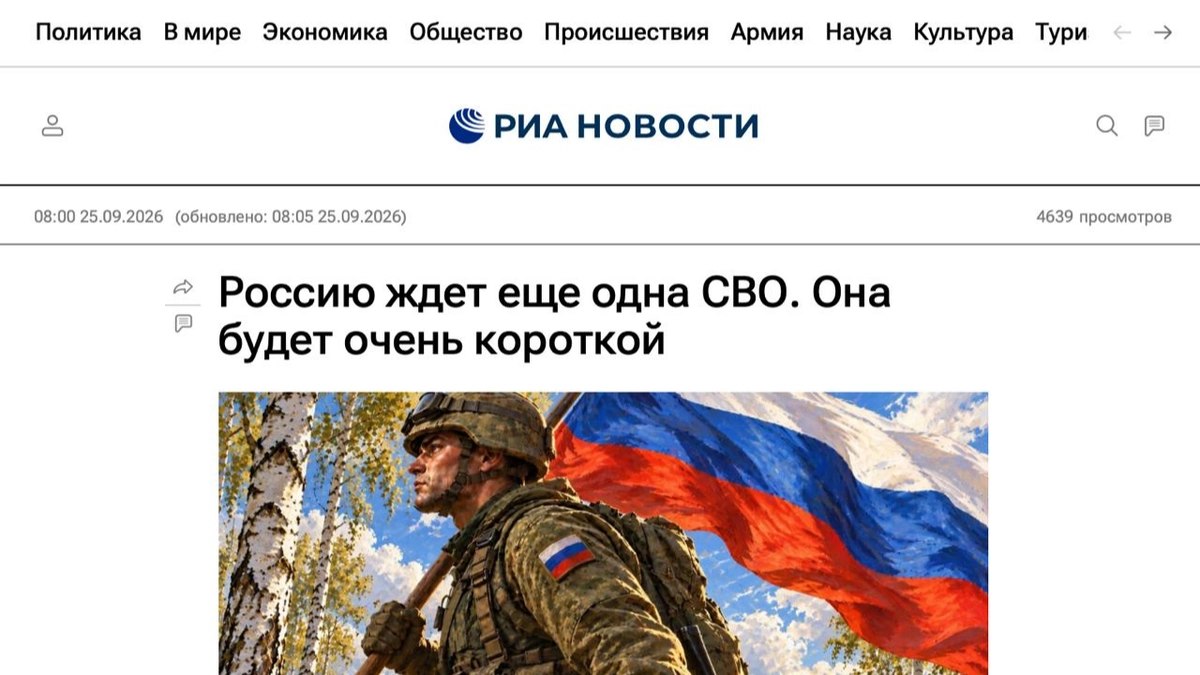
The same day the material was taken down from the site with the note: “The article by external author Aleksandr Nosov has been removed from the site as it does not reflect the opinion of the editorial board, the editorial policy or the state policy of the Russian Federation.” Two days later Dmitry Kiselyov published a justification on his Telegram channel, calling the material on the news site mistaken and groundless.
In the deleted publication the author describes a plan to expand Russia’s “special military operation” and regards Lithuania as the primary target.
The same day, speaking to journalists, Vladimir Putin called the statements about expanding the “special military operation” a “provocation” and said there were no grounds for Russia to attack European states. At the same time, however, the Russian ruler mentioned “violations of the rights of the Russian-speaking population” in Lithuania, Latvia and Estonia. Similar narratives were constantly voiced from the Russian leader’s podium in relation to Ukraine as well.
The news text, however, only added fuel to a fire that was already gathering strength. Because of Russia’s numerous provocations, the Alliance is already reviewing its own security decisions. For example, on 24 September, the day before the scandalous story, Reuters reported a statement by US Air Force General Alexus Grynkewich, commander of US European Command and NATO’s Supreme Allied Commander Europe, on expanding intelligence sharing within the Alliance because of the persistent threat from Russia.
Are there grounds to prepare for an expansion of Russian aggression
Sweden and Denmark warned of hybrid attacks as early as June. Because of the worsening situation on the Ukrainian-Russian front, Russia is resorting to provocations inside Europe.
The outlet NV tallied the number of incidents in Europe in which a Russian trail has been noticed: an average of 15 cases a month, with the trend rising in August.
Ruslan Bortnik, head of the Ukrainian Institute of Politics, believes that the Ukrainian forces’ local success at the front is only one of the reasons for possible Russian aggression against NATO countries:
“Moscow may be pursuing several goals at once: to put pressure on Ukraine through its partners, to destroy NATO and to show its domestic audience that it can stand up to the West – or simply to be afraid after Sweden and Finland joined NATO. And fear is one of the key causes of aggression,” Ruslan Bortnik notes.
On 24 September Danish intelligence reported the possibility of an increase in Russian hybrid attacks on European countries. The head of the service, Thomas Ahrenkiel, told journalists that Russian hybrid attacks are potentially expected to intensify, but that a limited military offensive would be a desperate step for Russia. Denmark’s Defence Ministry also noted that isolated attacks with long-range weapons or false-flag operations could be expected.
Why the Baltic states are in Russia’s sights
On 21 September Deividas Matulionis, chief national security adviser to the President of Lithuania, said NATO was ready to strengthen Lithuania’s defence capabilities if Russia continued its provocations.
On 22 September members of Lithuania’s Seimas backed a proposal to remove from the country’s Constitution the provisions that prohibited the stationing of foreign military bases and weapons of mass destruction in the country. The decision was a reaction to the growing number of provocations inside the country.
In mid-September a Russian drone was shot down by NATO fighter pilots over Lithuanian territory. Meanwhile, at Lithuania’s main airport in the capital, Vilnius, flights were disrupted by what the airport operator called a “hybrid attack by Belarus”, involving objects resembling balloons, the BBC reported.
Lithuania’s prime minister said the country is preparing for any scenario and is ready to fight back. As an example, the prime minister cited an already developed plan for the “smooth” evacuation of elderly people from cities. In Lithuania this was received calmly, with people saying the country became Russia’s target long ago – when it joined the Alliance.
“In my view, Russia’s potential goals may be broader than territorial seizure: to limit the West’s military presence near Russia’s borders, to secure free communication with Kaliningrad, and to impose restrictions on its neighbours’ security policies,” believes Ruslan Bortnik.
How the Baltic states are preparing for a possible conflict
In 2026 the countries are actively increasing defence spending. Defence budgets for 2026 provide for 5.4% of GDP in Estonia, 5.38% in Lithuania and 4.91% in Latvia.
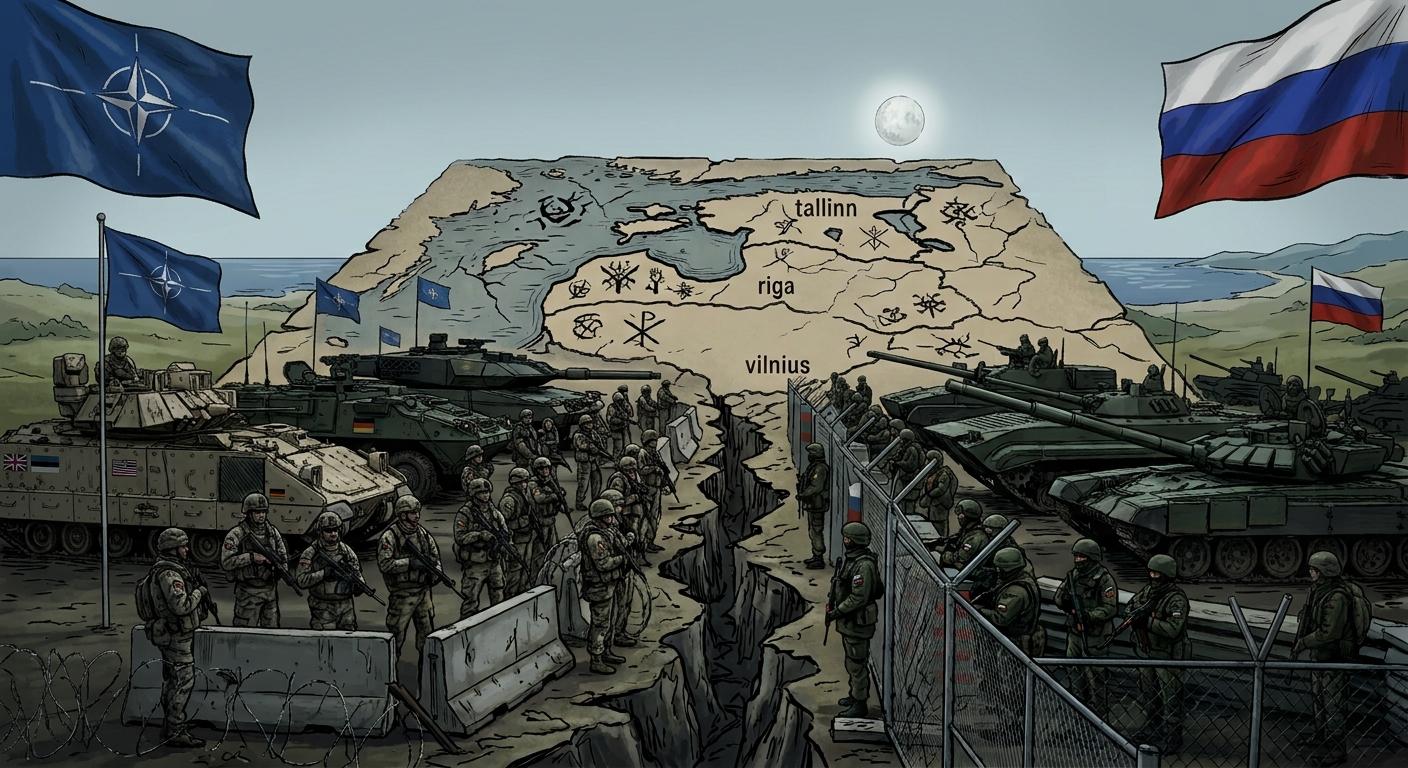
Ruslan Bortnik notes that the region already hosts a British-French battlegroup in Estonia, a multinational brigade under Canadian command in Latvia and units of a German brigade in Lithuania. The Canadian presence in Latvia amounts to about 2,000 troops, the British component in Estonia to about 800. Full deployment of the German brigade of about 5,000 troops and civilian staff is planned by the end of 2027. The ground presence is complemented by American rotations and allied air power.
“The Baltic states’ defence model relies on a trained reserve, territorial defence and integration with allied forces. Their own resources are not sufficient for a prolonged independent war against Russia. Their task is to buy time, provide initial resistance, maintain command and control and the ability to receive reinforcements from NATO countries. Air defence, ammunition, infrastructure protection and the speed of allied deployment will be decisive,” says Ruslan Bortnik.
Is Russia really ready to enter a conflict with NATO?
On 30 September the Russian Foreign Ministry sent an unofficial letter to NATO, threatening the Alliance with nuclear weapons if a threat to Kaliningrad’s security were created. The letter was sent in response to NATO naval exercises in the Baltic Sea, which Russia regards as an attempt to cut Kaliningrad off from the rest of Russia.
The Alliance, for its part, considers the accusations groundless, while the exercises are conducted for purely defensive purposes, NATO explains.
For Russia, Kaliningrad is a strategic territory because of its geographical position between Poland and Lithuania and its open access to the Baltic Sea, which is why Russia is actively militarising the region. In 2022, according to various estimates, there were between 12,000 and 30,000 Russian troops there, but in 2024 Ukraine reported that Russia had mobilised some of the troops from Kaliningrad to take part in the war against Ukraine.
“I assess the likelihood of a large-scale invasion in the near term as low – up to 20% by 2028. Russia continues to spend significant resources in Ukraine, and opening a front against NATO would sharply increase the military and political cost of the war and the expenditure of military resources. At the same time, a limited forceful provocation requires far fewer resources and may have a different goal – pressure on the countries of the region and on NATO as a whole,” believes Ruslan Bortnik.
Russia, meanwhile, plans to spend 17.1 trillion roubles ($202.58 billion) on defence in 2027, 27% more than the 13.5 trillion roubles provided for in the original budget, Reuters reports.
Ruslan Bortnik notes that the greatest possible political gain for the Kremlin would be to create a situation in which NATO proves unable to defend one of its members. That would call American guarantees into question and force other European states to revisit their own security calculations.
For such an outcome, Moscow does not necessarily need to seek the occupation of the entire Baltic region. It may count on obtaining concessions through threats and limited pressure.
Yulia Derdiuk