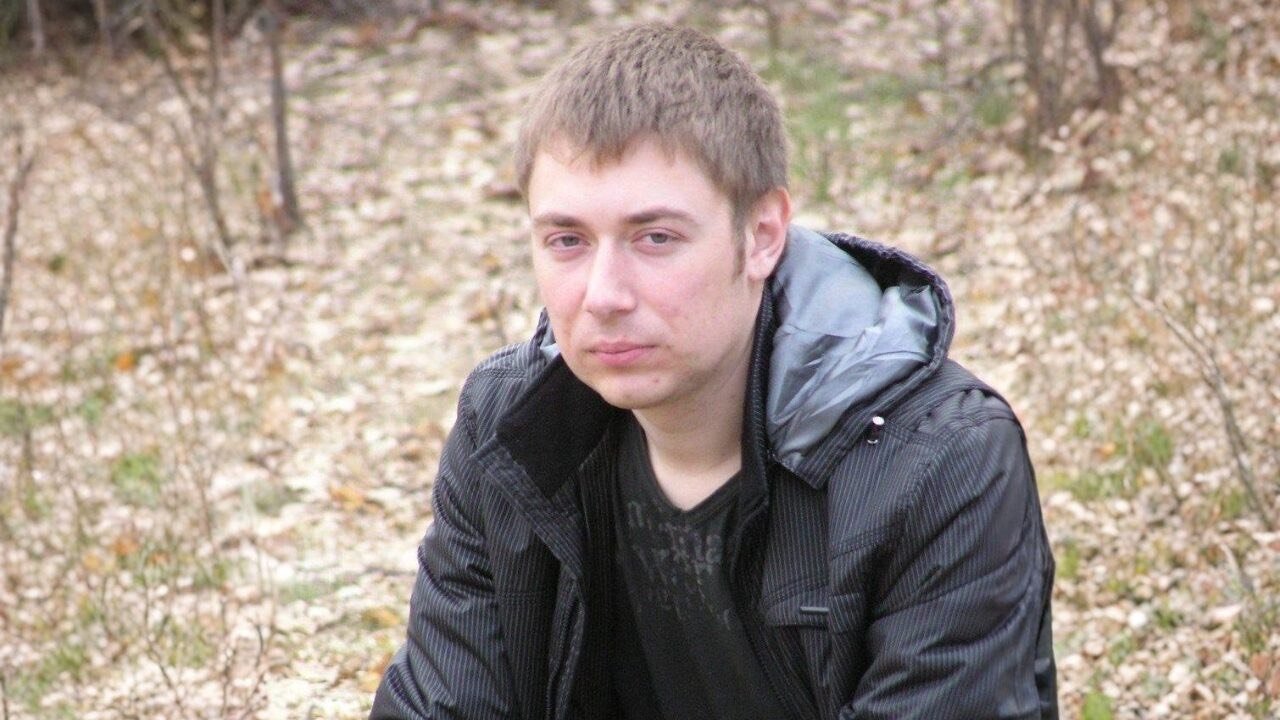
Valentyn Vyhivskyi, a Ukrainian citizen and ethnic Pole, has served the full 11-year prison sentence handed down to him in Russia on charges of “espionage”. Yet he has still not returned home. In September 2025, instead of being released, he was transferred to a temporary detention centre for foreign nationals in Kirov. Since then, a Russian court has extended his detention every three months. His father, Petro Vyhivskyi, has turned to journalists, asking them to publicise his son’s story. The family, which waited for years for the prison term to end, is once again living in uncertainty: the sentence is over, but there is no freedom.
Valentyn Vyhivskyi was detained by FSB officers in occupied Crimea in September 2014. As he himself told the media, he was lured to the peninsula by an acquaintance on the pretext of helping a sick relative. After his arrest, he was taken to Moscow, tortured and forced to sign a confession. He was initially accused of possessing confidential information, but a few days later the charge was changed to espionage. A Russian court sentenced him to 11 years in a strict-regime penal colony. According to Valentyn, he spent eight years in solitary confinement. For almost his entire time in the colony, he was held in a punishment cell or under special conditions of detention that differed little from it. He expressed his pro-Ukrainian position and refused to perform certain work, and for this he was constantly kept in harsh conditions.
In Ukraine, Valentyn Vyhivskyi’s parents and son are waiting for him. His father, Petro Vyhivskyi, talks about Valentyn’s state after the latest ruling by a Russian court, the family’s efforts and the hope for his return.
In brief
- 11 years in prison without release. Valentyn Vyhivskyi’s sentence ended on 17 September 2025, but instead of returning home he was transferred to a temporary detention centre for foreign nationals in Kirov.
- A Russian court extends his detention every three months. According to his father, the Russian side explains that deportation is impossible because there is no safe place for a handover at the border and there are no Ukrainian diplomatic missions in Russia.
- Conditions have become easier, but there is no freedom. Valentyn shares a cell with two other people, has a television and outdoor walks, but remains under guard and is taken to court in handcuffs.
- The latest extension of his detention has taken a toll on his mental state. After the court ruling in early October, Valentyn went through a period of anxiety. The decision to turn to the press has given him new hope.
- The family has been seeking his return for years. His parents have appealed to Ukrainian and Russian authorities and written to and phoned the colony. They now hope that publicity will help step up efforts to secure his release.
- Imprisonment has become an ordeal for the whole family. “It’s not you doing time – we’re all doing time, the whole family,” says Petro Vyhivskyi. Despite everything he has been through, Valentyn holds on to the awareness that he is alive, and so there is still hope.
– How did Valentyn cope with the latest extension of his detention? After all, his prison term ended long ago.
– His mental state is not very good at the moment, let’s put it that way. There was, after all, some hope that at least something would change. There were some hints that we might finally make some headway. And then – another three months again.
For a few days he was in a state that was not critical, but worrying for me. We have now talked a little, and he decided to involve the press. And it seems some hope has appeared. How effective it will be, and for how long, I don’t know, I can’t say. Time will tell. But there is always hope that something will change for the better. He has waited so many years, and now freedom was so close, yet they won’t let him have it.
– You said there is a Russian court ruling under which Valentyn must leave Russian territory. Yet at the same time they won’t let him leave?
– There is a Russian court ruling that he must leave Russia without fail, because he is especially dangerous to Russia. And also that he may not stay in Russia for several years. At the same time, they won’t let him leave Russia, where he has no right to remain for a single extra day. It is a baffling, paradoxical situation.
– Could you remind us when Valentyn’s prison term ended?
– Last year, on 17 September. But instead of sending him home, they transferred him to a temporary detention centre for foreign citizens. I call it a deportation prison.
Yes, it is no longer a colony, and the conditions are less harsh. But it is still cells, bars on the windows, guards. When they take him to court hearings, it is in handcuffs, under escort.
There are outdoor walks, and the food is better than in the colony. Conditions are better than in the punishment cell: the bed is no longer taken away for the day, and there is a television. The cell is not a solitary one – there are three people in it.
We hoped that a few months would pass and everything would be resolved. But he is now into his second year there. And so far there are no prospects in sight.
– How does the Russian side justify Valentyn’s continued detention? His sentence is over – on what grounds is he still behind bars?
– Every three months there is a court hearing on extending his stay in this deportation centre. In the rulings, they explain why he is not being deported.
They cite the fact that there is no safe place at the border where he could be handed over to the Ukrainian side. And that there is no Ukrainian consulate or embassy in Russia, so they have no way of carrying out the handover.
Even though we can see that prisoners of war are being exchanged and civilians are also being sent home. But that is how they explain it.
– The latest hearing took place on 9 October. What was decided? Did Valentyn have an opportunity to speak? Did a lawyer take part?
– Yes, on 9 October. Valentyn expressed his view. But these decisions are, as a rule, standard. From the first court hearing to the latest one, the wording has been identical – only the dates above the signatures change. I have already told you how they justify not releasing him.
At first, a lawyer took part in these proceedings. But nobody there is interested in his opinion; he cannot decide anything. In my view, there is some standard instruction – and this is the result.
– You have decided to turn to journalists again. What are you hoping for?
– We would like to prompt our authorities (Ukrainian – ed.) to act a little more intensively as well. I understand that there is a war on and that the authorities have a lot of work. But still, many people are being held in such conditions that their children have already grown up, and nothing has changed.
– Over the years, you have appealed to many institutions. What has the family done to secure Valentyn’s return?
– We are doing everything we can. Lately we have gone a bit quiet. But before, every two or three months – all sorts of appeals. Everything that could possibly be done. We wrote to all the authorities, Ukrainian and Russian. We received replies.
We phoned the colony and wrote to it, we wrote to everyone. We have a pile of all sorts of formulaic brush-off replies from the authorities, both Ukrainian and Russian. We did all of this. And not only us – probably everyone who has been in a similar situation. They have been holding him for a long time now. How much longer they will – nobody knows.
– This is a hard ordeal for your whole family…
– I once told Valentyn: “It’s not you doing time – we’re all doing time, the whole family.” It’s true. Because it is such terrible anguish…
– Despite everything, he keeps holding on. What does he tell you?
– His cousin Yan Damanskyi, also an ethnic Pole, was killed near Savur-Mohyla in 2014. Valentyn and I were once exchanging letters, and he said then: “Of course my situation is better, much better than Yan’s. Because Yan was killed, and I am still alive.”
Author: Svitlana Mialyk