Americans are regaining the God-given gift of clear sight
The latest significant events in world politics give very cautious hope that the heady wine of rampant populism, with which irresponsible politicians in practically every country of the civilised world have so generously plied their voters in recent decades, is little by little beginning to wear off in society’s brutally deceived minds. This is only to be expected, since populism by definition cannot be a path to progress and development – only to decline and disappointment. The preliminary results of the US midterm congressional elections held on 3 November this year also give grounds for such assumptions. They were won convincingly by the Democrats, for whom Ukraine’s Euro-optimists and the Euro-Atlanticists of the entire European community were, beyond any doubt, rooting.
In brief
- The Republicans’ defeat was the result of the current US president’s anti-systemic, anti-allied foreign policy and his flirting with dictatorial regimes, which is unacceptable for a country that for decades served as an outpost of world democracy
- The new Congress will immediately start setting up investigative committees that will lay the groundwork for impeachment
- Trump has three options on the table. The first is a quick victorious war in Iran. The second is to force Ukraine into peace. The third is to seize Cuba.
- Europeans should prepare for an intensification of hybrid attacks across the EU
- The Republicans’ defeat is an electoral signal to the US president that society disagrees with the current course: right-wing populist rhetoric, tariff wars and economic pressure
- Democratic control of both chambers of Congress creates more favourable ground for aid to Ukraine, as it is Congress that decides on budget appropriations
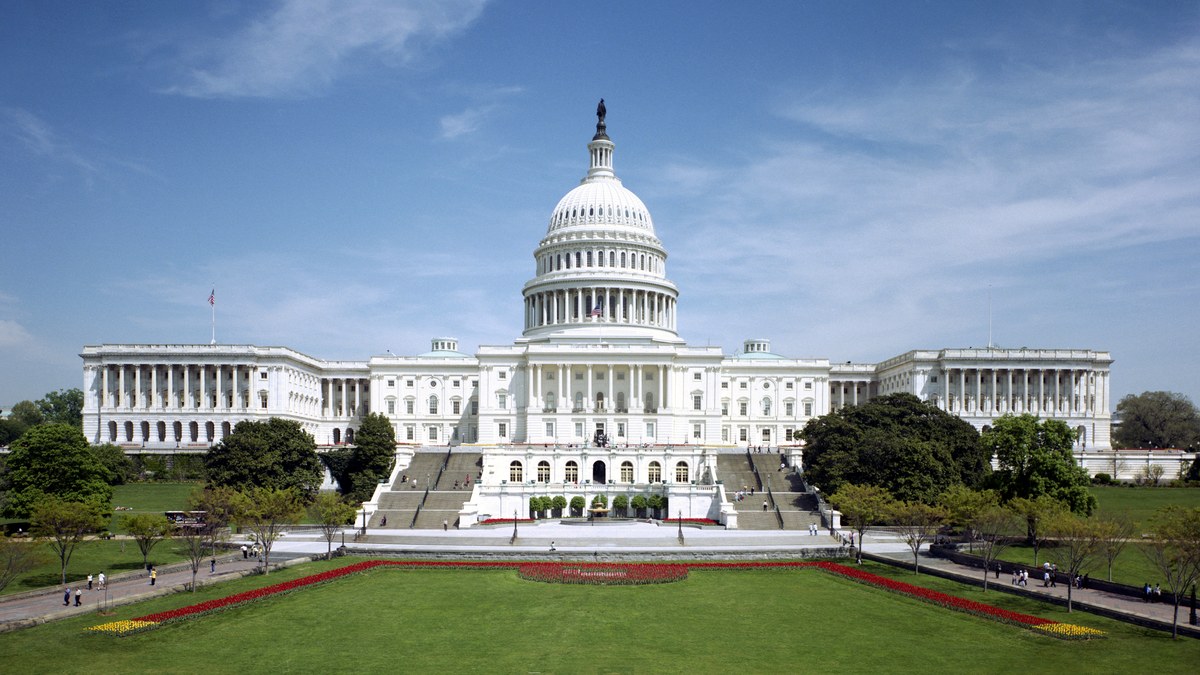
At the time of writing, the results of this year’s election race in the US (excluding the votes still being counted in Mississippi and Alaska) are as follows:
- Senate (upper chamber): the Democrats are securing at least 54 seats, while the Republicans lose their majority with 44 seats; a majority requires at least 51 of the 100 seats.
- House of Representatives (lower chamber): the Democratic Party is winning more than 228 seats (a majority requires 218 of 435), securing control of the lower chamber as well.
Republican Victoria Spartz, a native of the Chernihiv region who is well known in Ukraine, lost her race. Meanwhile, Eugene Vindman, a Kyiv-born politician of Ukrainian origin who played an important role in the first attempt to impeach Trump, was elected to the House of Representatives from Virginia. He won 59.7% of the vote, ahead of Republican Doug Ollivant (37.75%).
Eugene Vindman is 51. He is a retired US Army lieutenant colonel, a lawyer and a politician, and the twin brother of another American political figure, Alexander Vindman. The brothers were born in Kyiv in 1975 and grew up in Brooklyn, a New York neighbourhood popular with Ukrainians.
The Vindman name first came to prominence in connection with the impeachment of US President Donald Trump. The brothers held senior posts on the US National Security Council during Trump’s first term and became whistleblowers against him. Alexander was the first to report Trump’s 2019 phone call with President Volodymyr Zelensky and the pressure to open an investigation into Burisma, the company linked to Joe Biden’s son Hunter, and Eugene confirmed it. That is what set the impeachment procedure in motion. The brothers were later dismissed from their posts. But in November 2024 Eugene Vindman won the election to the House of Representatives in Virginia and entered big politics.
Reacting to the results of the midterm elections, in which the Republican Party lost control of both the Senate and the House of Representatives, President Donald Trump declared in his usual manner that the Republicans would have won by a landslide if his name had been on the ballot. In reality, it is exactly the other way round: the Republicans’ crushing defeat was the result of the current US president’s anti-systemic, anti-allied foreign policy and his flirting with dictatorial regimes, which is unnatural and unacceptable for a country that for decades served as an outpost of world democracy.
“The Republican Party’s defeat in the US midterm congressional elections marks the end of the Donald Trump era. Citizens have made it clear to the president that they are unhappy with his second term and have voted decisively to limit his powers,” writes Guardian columnist Moira Donegan. “The death knell of Trumpism has finally sounded.” From now on, with a majority in the Senate, the Democrats will be able to investigate the activities of Trump and members of his cabinet, draw public attention to the issues on their agenda, defend Congress’s constitutional prerogatives and block judicial appointments by the Republicans.
Ukrainian journalist and political scientist Vadym Denysenko believes that Trump has lost both chambers. The main intrigue of the coming days is now whether he will dare to continue the military operation in Iran and how much he will step up pressure on Ukraine in the weeks ahead. He set out his views in a post on his social media page:
“– The Republicans’ defeat may trigger a major debate within the party about its future. And the main battle is the one between MAGA and the old party. The outcome of this battle will determine not only who the next presidential candidate will be but, in the most radical scenario, even whether some Republicans might vote to impeach Trump himself;
– Congress will hold its first session in its new composition on 3 January. Trump now badly needs some kind of victory so that he can go into that first session holding strong cards. The point is that the new Congress, once it has elected its speaker, will immediately start setting up investigative committees that will lay the groundwork for impeachment. And Trump needs to be able to drown out this topic in the media – and, ideally, to try to go on the offensive;
– Trump now has three options on the table. I will say straight away that all three are doubtful. The first is a quick victorious war in Iran. The second is to force Ukraine into peace. The third is to seize Cuba. I believe all three goals are almost unrealistic, but following Trump’s logic, he may start moving in these directions. That is why we need to prepare for increased pressure;
– Against this background, it is highly likely that Russia will start winding down the so-called Dmitriev track, realising that Trump’s room for manoeuvre is becoming more limited. Consequently, for now it cannot count on Trump forcing Europe to lift sanctions. That is precisely why Europeans should apparently prepare for an intensification of hybrid attacks across the EU;
– As for our negotiations, they have no chance of success (Medinsky as chief negotiator says it all). The negotiating window of opportunity closed a month ago. What is happening now is merely an imitation.”
And here is the view of Anatoliy Holovka, leading researcher at the Western Region Research Sector of the National Institute for Strategic Studies and chair of the board of the Centre for Regional Risk Analysis (Uzhhorod):
“American media described the results of the 3 November 2026 midterm elections as a ‘blue tsunami’. In American political discourse, the term ‘tsunami’ denotes a sharp shift in voter preferences, when one of the two dominant parties wins a landslide. In this case, the phrase may even be too mild.
Admittedly, an opposition victory in midterm elections is not exactly unique in the US. The ruling party rarely manages to hold on to its majority in such circumstances (this is one of the peculiar and key features of the American system of checks and balances). This time, however, it is the scale that is striking!
It seems that even the Democrats themselves did not expect such success, fearing a Republican comeback until the very end and nervously relying on polls that might have been wrong. The pollsters were indeed wrong – but in that they significantly underestimated the real level of support for the Democratic Party, or rather of non-support for the Republicans and for Trump personally.
What are the Democrats’ main successes? The list is substantial, so let us focus on the most telling shifts in the US political landscape.
First and foremost, the Democrats won majorities in both chambers of Congress – the House of Representatives and the Senate. Republican ‘outposts’ also fell, especially in the south of the country. The biggest political upheaval was the Democrats’ victory in traditionally conservative Southern states. Above all, this means Texas, where the Democratic Party had not won elections at this level for decades. Democratic candidate James Talarico won the race for a Senate seat, and Gina Hinojosa won the governor’s race, defeating Greg Abbott, who had led the state for more than ten years. Alongside Texas, the Democrats’ success in Ohio, Iowa and South Carolina was no less telling.
Political consequences. The results of these elections stand in particularly sharp contrast to the Democrats’ disastrous 2024 campaign: this time they have taken convincing revenge. Success in traditionally Republican states is a serious bid for the 2028 presidential campaign. The Democrats’ gains in Republican states, notably Texas (which carries 40 Electoral College votes), break the Republicans’ classic electoral arithmetic: given the winner-takes-all principle, a possible loss of Texas in 2028 would deprive the Republican Party of one of its main ‘reserves’.
This is a clear electoral signal to the current US administration that society disagrees with its course: right-wing populist rhetoric, escalation in the Middle East, tariff wars and economic pressure on citizens, in particular rising fuel prices, which have accelerated inflation and hit farmers, Trump’s traditional base.
The president and his entourage, who invested significant media and political resources in the campaign, seem to be assessing the situation soberly. This is at least suggested by the pointedly restrained post-election rhetoric: no accusations of ‘fraud’ and no conspiracy theories, but instead acceptance of the results and statements of readiness to cooperate with the Democrats.
For the Republican Party, this defeat will be an occasion for a deep rethink of its political strategy. Above all, it will mark the beginning of a gradual move away from the concept of a ‘Trump party’ and a weakening of his personal influence, which was supposedly based on his support among voters.
What does this mean for the world and for Ukraine? First of all, the Democratic majority in Congress will gain levers of control over the budget and legislative initiatives. This will shift the focus of the Trump administration, which will have to spend time and resources on domestic political compromises, reducing the room for the unilateral foreign-policy moves that were typical before the midterms.
The loss of its monopoly position may become a stabilising factor and force the Republicans to seek cross-party consensus. This will probably return US foreign policy to a more predictable framework. Democratic control of both chambers of Congress also creates more favourable ground (compared with the period of Republican dominance) for aid programmes for Ukraine, as it is Congress that decides on budget appropriations.”
The assessment of the American elections “in the swamps” – that is, in Russia – is telling. Officially, the Kremlin neither welcomes nor condemns the Democrats’ victory and continues to speak of Trump as a mediator. At the same time, influential pro-Kremlin authors write that agreements with Trump are now losing their weight.
Which of these scenarios becomes reality will become clear in the near future, when post-election emotions subside and give way to pragmatic political decisions. But the most important and irrefutable result of the race is the evidence that Americans are regaining the God-given gift of clear sight. It would be good if Europe received it too. Together with Ukraine, of course.
Vasyl Ilnytskyi