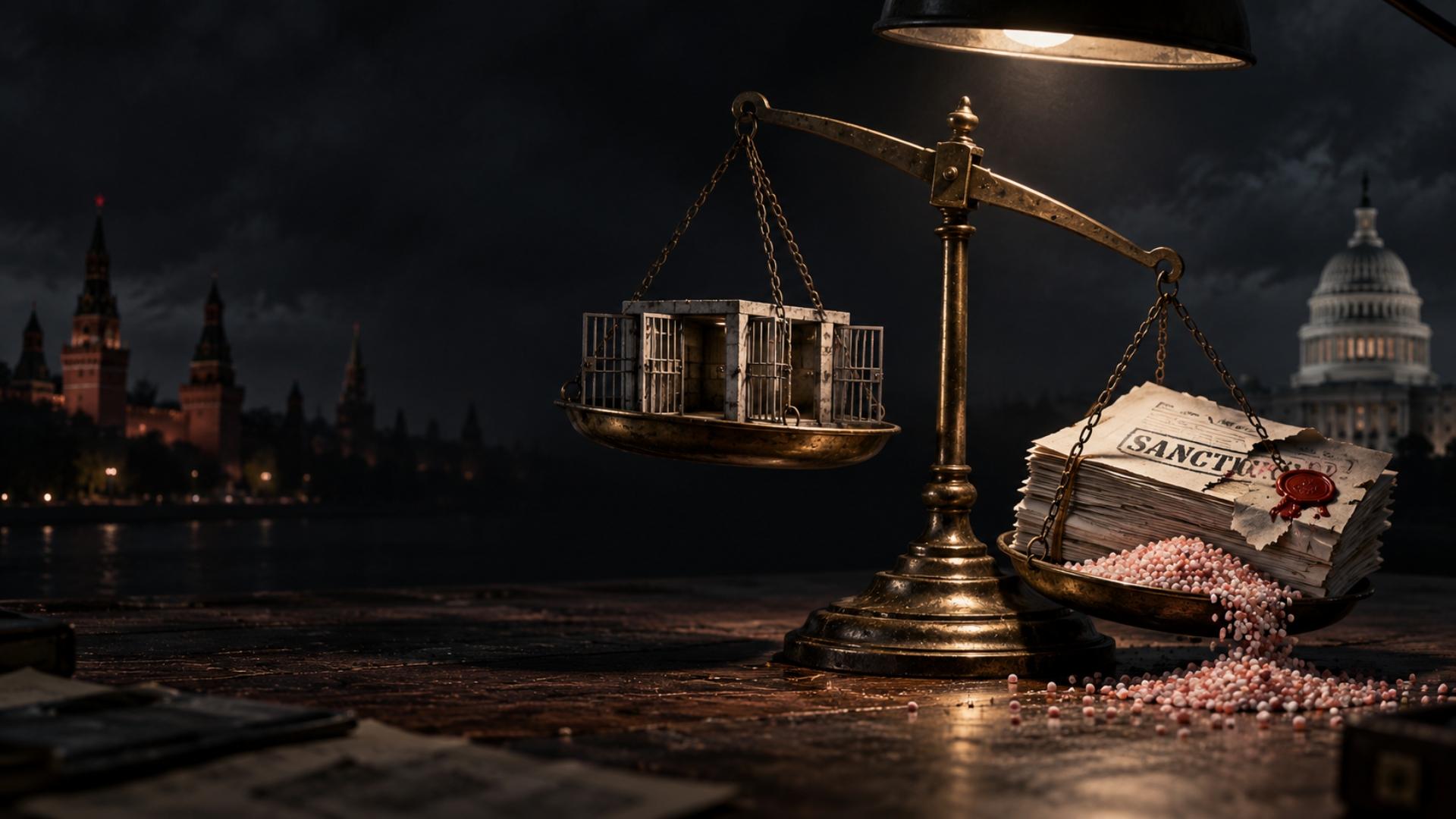

Washington has found a way to bring Russia back into the family of nations. The Kremlin releases a few political prisoners, America eases sanctions, and peace arrives by itself, ideally in a package with oil, diesel and rare earth metals. According to The Atlantic, the idea’s promoter, Trump’s special envoy for Belarus John Coale, already has the president’s blessing for it. The trouble is that Russia is not Belarus, and Putin is not Gorbachev. Political prisoners do not get in the way of the Kremlin’s trade, because they are the merchandise.
In brief
- On 29 September The Atlantic described a plan: the release of political prisoners in Russia in exchange for a partial easing of sanctions and a gradual return to doing business with Moscow.
- According to the author of the piece, Simon Shuster, Trump backed the idea, but the initiative is at an early stage. It has opponents in the administration who believe there is nothing to talk about without a ceasefire.
- The idea of applying the “Belarusian model” to the Kremlin was suggested to Coale by Dmitry Muratov. Together they drew up a list of Russian political prisoners, but neither the names nor possible US concessions have been disclosed.
- Belarus is meant to serve as the template: around 500 people released in exchange for, among other things, lifting sanctions on Belarusian potash.
- Volodymyr Zelenskyy says he will do everything to block the lifting of sanctions on Russia before the war ends.
- The same week, the White House nominated Coale as the president’s special envoy for hostage affairs. It would be hard to find a more fitting appointment: responsibility for hostages goes to a man who already has a ransom price list ready.
The Belarusian model is not a success, but a carousel
Lukashenko released around 500 people, yet human rights defenders still count nearly 900 political prisoners in Belarus. The cells do not empty; they rotate. Minsk has discovered that a person behind bars is the best-yielding deposit in the region: you arrest for free and sell for potash. Now the same business plan is to be handed to Putin, who in hostage-taking is a professor, not an intern.
Putin is not Gorbachev, and Trump is not Reagan
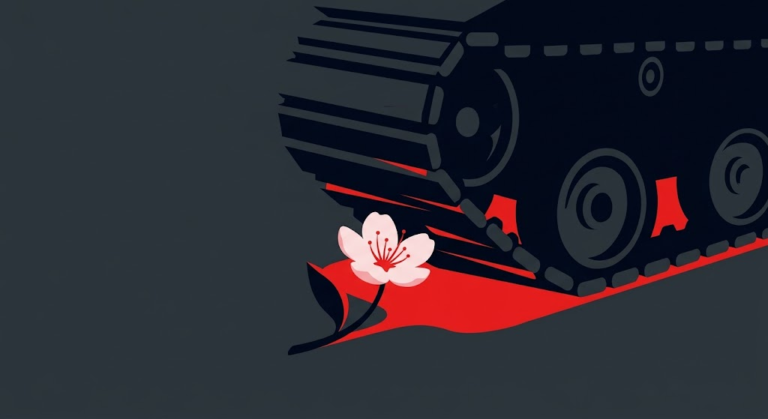
Coale recalls the days when Reagan handed Gorbachev lists of dissidents, and Gorbachev invariably released them. A lovely story, except that it is cut out of context. Gorbachev released prisoners from an empire that was sinking economically and needed the West to survive. And Reagan was not easing pressure at the time, but tightening it. Besides, even that “humanitarian” Gorbachev sent tanks into Vilnius in January 1991.
Gorbachev sought détente; Putin seeks escalation. That story was the tail end of the Cold War. We are at the beginning of the next one, and no one guarantees that this time it will pass without a hot phase.
“Family of nations”, or a question worth zero points
Coale argues that it is good when people talk, even about potash, because then countries can return to the family of nations. So let us ask the simplest question: if Putin misses the family of nations so much, why did he leave it?
No one pushed him out. He sat in the G8, traded with the whole world and held Europe by the throat with gas. He signed himself out: with the annexation of Crimea in 2014, for which he was suspended from the G8, and with the full-scale invasion in 2022. Putin did not lose his way home. Putin set that home on fire.
Kim was supposed to come back too
In Singapore in 2018 the same philosophy prevailed: let us talk, and everything will work out. Kim Jong Un did indeed come back, only not to the family of nations, but to Putin’s family. He supplies Russia with artillery shells, ballistic missiles and soldiers who fought in the Kursk region. An impressive record for the diplomacy of talking.
The last “humanitarian” deal with the Kremlin
In August 2024 the West got back, among others, Evan Gershkovich and Vladimir Kara-Murza. Putin got back Vadim Krasikov, an FSB assassin convicted of murder in Berlin’s Tiergarten. The Kremlin took one lesson from that exchange: hostages pay. Now it is to receive confirmation of that lesson in writing, with a sanctions discount thrown in for free.
Will it go through?
For now it is a concept, not an agreement. There are opponents in the administration, Kyiv has announced a blockade, and the congressional elections take place on 3 November. If the Democrats take both chambers, pushing through sanctions relief will become even costlier for the White House. Panic would be premature. Vigilance is not, because ideas that sound foolish have a surprisingly long shelf life in this administration.
Finally, a note for a man born in 1946 who watched the entire Cold War live: this is not humanitarian diplomacy, but a hostage market. Whoever pays the ransom orders the next ones.
Author: Artur Żak