

For four years Russian agencies have been explaining to their audience that biological death would arrive from Ukraine – on the wings of mosquitoes, bats and migratory birds tuned to a “specific Russian genotype”. On the night of 2 October 2026 a 28-year-old laboratory assistant at the Irkutsk anti-plague institute died of plague in Shelekhov. Five thousand kilometres from Kyiv. Without a single mosquito. The best documented element of this story is not the test tube, but what she did for a living.
In brief
- Confirmed: a death from plague in Shelekhov (Irkutsk region); the closure of the inpatient wing of the district hospital from 1 October; an emergency meeting of the sanitary and anti-epidemic commission attended in person by Anna Popova, head of Rospotrebnadzor, Russia’s federal consumer watchdog; around 200 contacts, in whom no symptoms had been recorded as of 2 October.
- A single-source claim: the independent outlet Lyudi Baikala named the woman who died – Darya Shipilova, a laboratory assistant at the anti-plague institute – and reported that on 25 September she had broken a test tube containing the pathogen in the laboratory. The Russian authorities have never publicly confirmed this version.
- A primary document: the programme of the XVIII Pokrovsky congress of infectious disease specialists (Moscow, 30 March – 1 April 2026) lists a paper on the susceptibility of Yersinia pestis from the natural plague foci of Siberia to antibacterial drugs. Among the co-authors – “Shipilova D. N.”.
- Unknown: which strain was in the allegedly broken test tube. The isolate number, the incident report and the typing results are not publicly available.
- A media error: attributing to the dead woman research on the organoselenium compound 974zh in mice. Her name does not appear in the author lists of those papers.
The “combat mosquito” is a genre, not intelligence
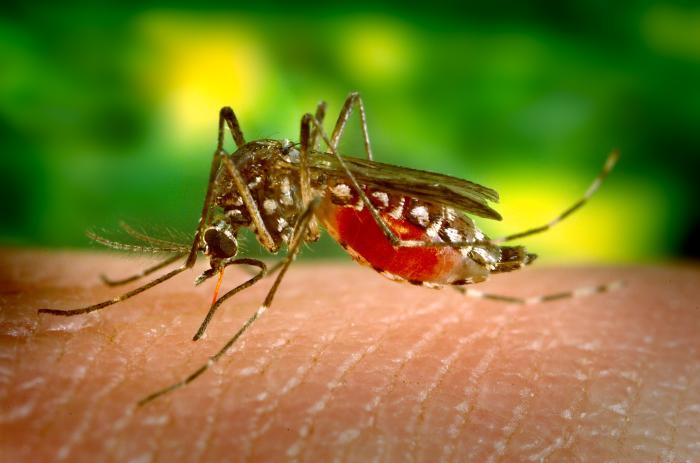
Since 2022 the Russian audience has been living in a biological thriller of its own making. First came the “combat mosquitoes”. Then bats. Then migratory geese and pigeons – winged Pentagon drones, released from “secret biolabs” and programmed to recognise the “specific Russian genotype”.
Picture that mosquito. It flies over the Urals, opens a haplogroup database, checks documents. The Buryat it waves through. The Tatar it waves through. It lands exclusively on an ethnic Russian – preferably one with a residence registration. A technology next to which “Novichok” looks like a slingshot.
This is not analysis. It is a genre – with its own dramaturgy, its own spokespeople and its own calendar of premieres, timed to diplomatic dates. The genre has one technical flaw: it requires the threat to be external.
The quarantine nobody called a quarantine
On the night of 2 October 2026 a young woman died in the hospital in Shelekhov, near Irkutsk. Of plague. From 1 October the inpatient wing of the district hospital was closed: admissions and discharges were halted in some departments and the laboratory was shut down. Governor Igor Kobzev convened an emergency sanitary and anti-epidemic commission, to which Anna Popova, head of the federal Rospotrebnadzor, flew in person. The official wording that day was more cautious than reality: “suspicion of a particularly dangerous infection”.
Meanwhile, according to Lyudi Baikala, from 1 October the ambulances used to transport contacts were escorted by FSB units. Residents of Shelekhov saw people in protective suits on the streets. Masks were handed out in nurseries. In Irkutsk the city clean-up day was cancelled – because of the “infection in the Shelekhov hospital”.
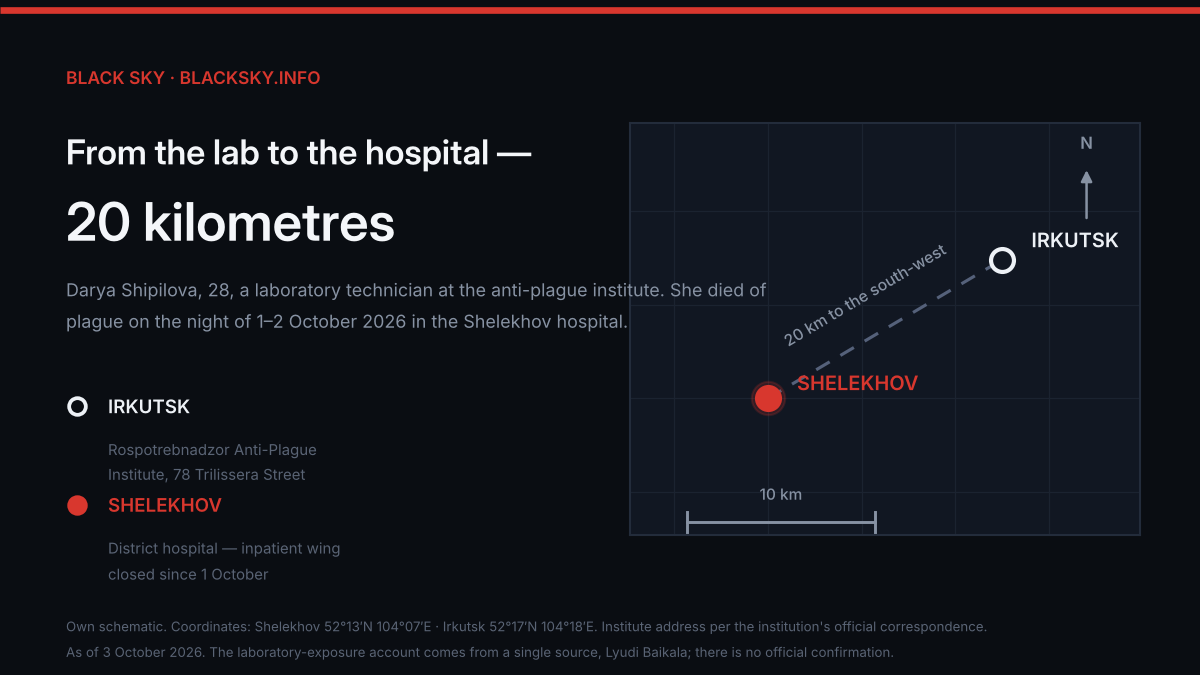
The contacts were counted at 197, of whom 189 were hospitalised as a precaution. And here is the detail that says more than all the bulletins put together: 114 people were placed in one facility, 63 in a second, and twelve in the anti-plague institute itself. Not in a hospital. In the institute.
A quarantine regime of this level is imposed in Russia for only a handful of infections – and plague is on the list. The head of Buryatia, Alexei Tsydenov, wrote plainly about the woman “who died of plague”, rejected the version that she had been infected in Buryatia, since she had never been there at all, and pointed to “other circumstances”. After which he edited the post, adding the word “possibly”. Three paragraphs, three degrees of certainty, one dead woman.
The test tube is a version. The congress is a document
Lyudi Baikala gave the name: Darya Shipilova, 28, a laboratory assistant at the Irkutsk Research Anti-Plague Institute of Rospotrebnadzor. Two years ago she graduated with distinction from a residency at the Irkutsk medical university, specialising in “clinical laboratory diagnostics”. From there the story travelled on – Mediazona, TV Rain, The Insider, DW. The channel Ostorozhno, Novosti added that a criminal case had been opened over sanitary violations resulting in death.
All of this is media reporting. Not an accident investigation report. As of 3 October, no statement by the Investigative Committee carrying a case number and a legal classification could be found.
There is, however, a trace firmer than the test tube. The programme of the XVIII annual congress on infectious diseases named after Academician Pokrovsky, held in Moscow from 30 March to 1 April 2026, lists a paper on the susceptibility of Yersinia pestis from the natural plague foci of Siberia to antibacterial drugs. The lead author is Svetlana Vityazeva, head of the plague microbiology department at that same institute. Among the co-authors – “Shipilova D. N.”. The study material: strains from the Gorno-Altai high-mountain and the Tuva mountain plague foci. Six months before the incident.
Those same two foci were described as active by Rospotrebnadzor itself in its review of March 2026: plague-infected animals were detected in three of Russia’s eleven natural foci, among them the Gorno-Altai and the Tuva, with a forecast of local epizootics for the current year. The institute that maps the threat turned out to be its shortest route to a human being.
What nobody knows
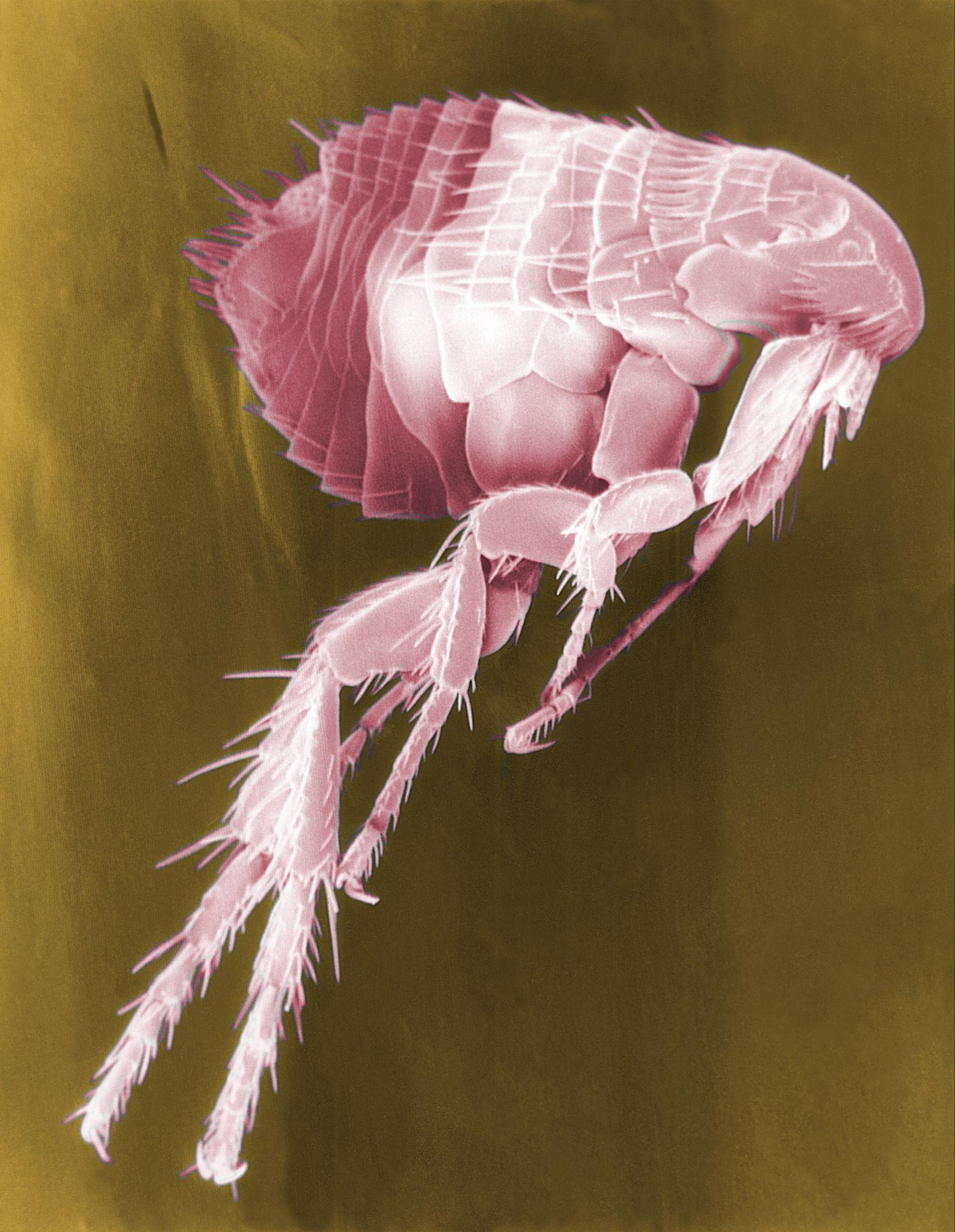
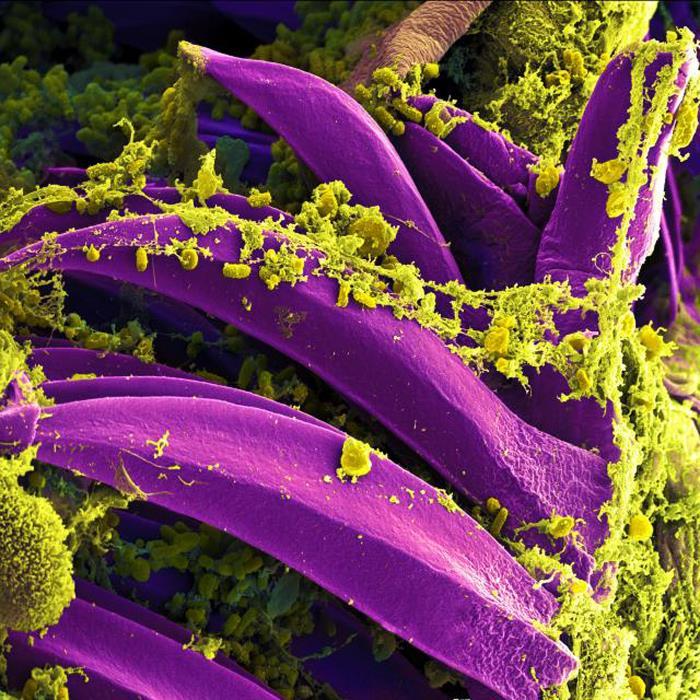
Incidentally, the media formula “a test tube containing the pathogen of pneumonic plague” is a linguistic label, not a description of the sample. Y. pestis does not divide into “pneumonic” and “bubonic” strains: the pneumonic form describes the course of the disease, not the writing on a test tube.
And one more thing, so as not to slide into propaganda of our own: laboratory infection with plague is rare, but not uniquely Russian. In 2009 a University of Chicago researcher died from an attenuated strain. The difference is not that the incident happened. The difference is who reports it – an investigative body or a Telegram channel.
Where the media cut corners
Some Russian websites began writing that Shipilova “studied the immune response” and took part in experiments with the organoselenium compound 974zh, the vaccine strain Y. pestis EV and laboratory animals. A check of the bibliography does not bear this out: the author lists of those papers name Dubrovina, Yurieva, Starovoitova, Pyatidesyatnikova, Korytov and Balakhonov – and there is no Shipilova.
Research on 974zh was indeed carried out at her institute. But an institute is not the personal record of the woman who died. The first publications simply conflated the two. The denial issued by the Irkutsk Institute of Epidemiology and Microbiology – that the woman had not worked there and that they do not deal with plague – is entirely truthful and entirely irrelevant: that is a different organisation.
Who is poisoning whom here
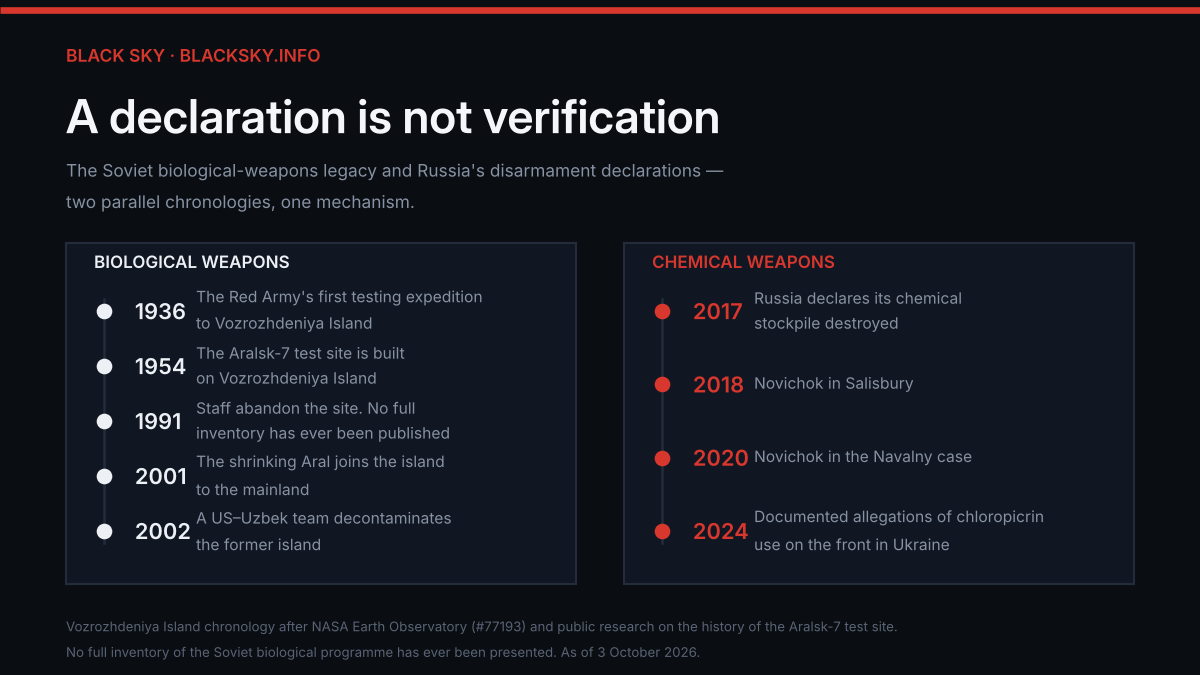
The country that has spent four years telling stories about Ukrainian mosquitoes with an ethnic aim inherited from the USSR the largest biological weapons programme in history. Biopreparat, tens of thousands of people, the test site on Vozrozhdeniya Island in the middle of the Aral Sea – a full inventory of that legacy has never been presented to the world. The network of anti-plague institutes, today subordinate to Rospotrebnadzor, is the direct successor to that infrastructure, along with its collections of live strains.
With chemical weapons the story is similar: the declared stockpiles were destroyed in 2017, after which the world saw “Novichok” in Salisbury and in the Navalny case, and from 2024 documented accusations of the use of chloropicrin and tear agents at the front in Ukraine. A declaration submitted to the OPCW is not verification. It is a promise that somebody ought to be checking.
Nobody in Shelekhov needed an American pigeon.
Instead of a conclusion
This text was not written against a 28-year-old laboratory assistant. She is the victim here: of a system that cultivates the world’s most dangerous pathogens and at the same time cultivates the narrative that the danger is somebody else. She turned up for work with a first-class diploma and was dead within a week.
The question is not whether Russia has a biosafety problem. The question is how many more times we shall have to learn about it from Telegram rather than from an official statement. And how much effort will go into ensuring that next time the guilty party turns out to be a mosquito again.
The threat to Russians was not a mosquito from Kyiv. It was a test tube from Irkutsk.
Author: Artur Żak
As of 3 October 2026. The version about the broken test tube is reported as a claim by a single source; there was no official confirmation at the time of publication.
Official Russian and Belarusian sources cited in this text are for informational purposes only. Content from these sources may constitute disinformation or propaganda.