
What turns the head of the Slovak government from a politician into a comedian?
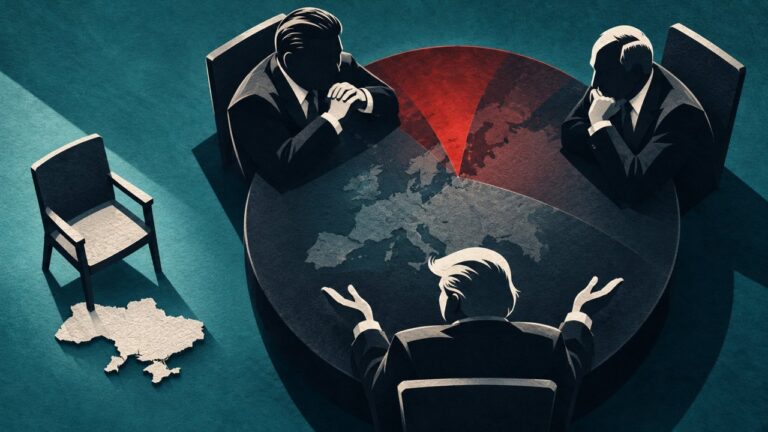
You do not need to be a great prophet or a Carpathian molfar to understand that the road to the most important goal of Putin’s rule – restoring the greatness of the “sub-empire” he runs – leads through the break-up of the European Union, the bastion of democracy and of its fundamental social and universal human values. It is precisely the European community that, after the temporary “understanding” between the leader of the orcs and Trump, is now almost the only obstacle to the aggressive designs of the current dictator of Muscovy.
But achieving this morbid goal also requires collaborators from among Europe’s failed politicians – especially those who have kept remnants of a Soviet mentality, constantly fed by media that spread Kremlin propaganda in Europe 24/7 for Moscow’s petrodollars.
Until recently, Hungarian Prime Minister Viktor Orbán served for years as Putin’s battering ram against European unity. But in April this year Hungarians exposed this populist, and the post of the EU’s permanent critic briefly fell vacant. Before Polish President Karol Nawrocki could gain the experience and influence needed to take it over, the role was assumed by another populist outsider, Slovak Prime Minister Robert Fico, who is now once again on the verge of losing his post early because of squabbles over jobs within the governing coalition. In recent months his behaviour and public statements have shown that this experienced politician is far better suited to the role of a comedian than to that of head of government. Understandably so: it is much easier to make the news with comic performances than to run a government successfully, create conditions for economic growth and find difficult solutions to improve the everyday lives of one’s compatriots…
In brief
- Why did Robert Fico claim that the 2003 referendum on Slovakia’s accession to the European Union was rigged?
- The lie that Slovaks did not want to join the EU is refuted not only by official data but also by the testimony of contemporaries
- Fico’s visits to Moscow do not give him the right to import Moscow’s notions of elections and of how to treat history
- “Beer-hall rhetoric” has become the Slovak prime minister’s trademark and is aimed above all at a domestic audience
In its time in office, the current Slovak government has not kept a single one of its loud election promises
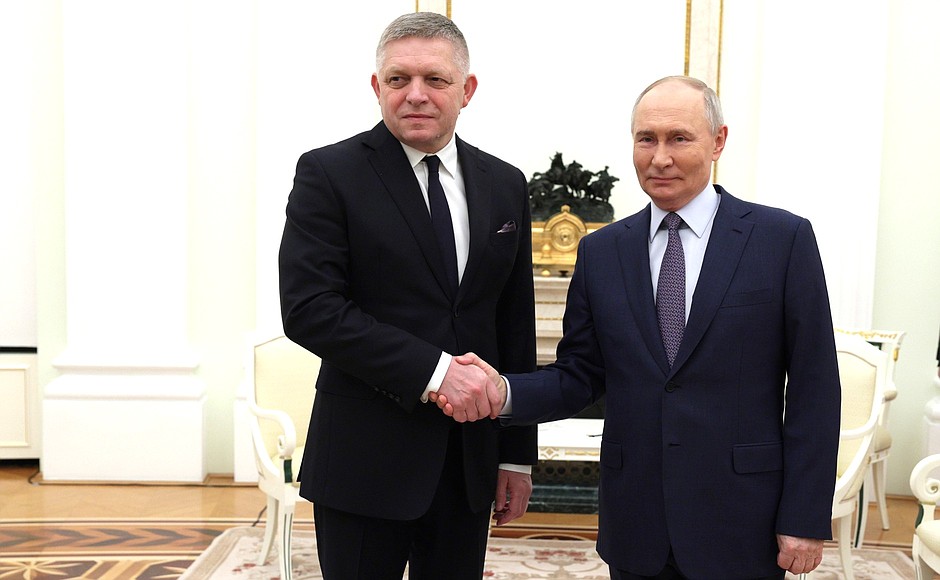
Robert Fico now faces an extremely important task: to stay in office after the next parliamentary elections, due in autumn 2027, and to avoid criminal proceedings. To keep the support of the electorate, he resorts to various propaganda manipulations. Alexander Duleba, an experienced expert, professor at the University of Prešov and senior research fellow at the Research Centre of the Slovak Foreign Policy Association (RC SFPA), believes that this behaviour by Fico and his political entourage stems from the fact that in its time in office the current Slovak government has not kept a single one of its loud election promises, while the far-right Republika party is gradually gaining support at the expense of his Smer-SD.
Duleba stresses that “on his way to power in 2023, Robert Fico promised voters a law on non-governmental organisations – ‘Soros agents’; Slovakia’s withdrawal from the bilateral defence agreement with the United States under which Americans can use military bases on Slovak territory; criminal proceedings against former defence minister Jaroslav Naď for handing weapons to Ukraine; and much more. Not one of these loud promises has been kept! What is more, a court reinstated police officers fired by the current government who, during his previous term, had investigated corruption in Fico’s entourage, and his ‘firm’ pre-election guarantee not to supply Ukraine with a single artillery shell has led to Slovakia now supplying Ukraine, on a commercial basis, with a record number of artillery shells! Given all this, Fico has to show anti-system voters how close his ties with Russia are, because that is how it works.
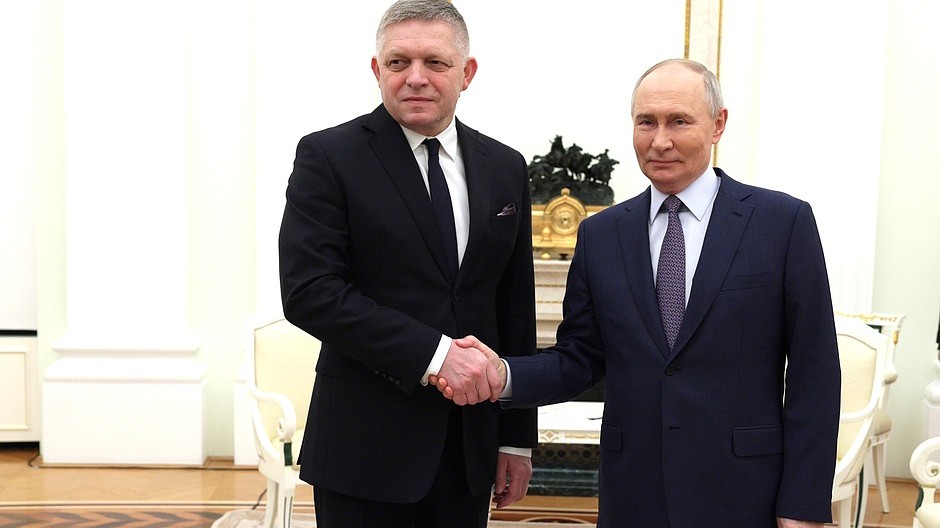
That is precisely why a statue of Soviet Marshal Ivan Konev, who drowned the anti-communist Hungarian uprising of 1956 in blood, was recently erected near the Dukla Pass; that is precisely why Slovak Foreign Minister Juraj Blanár flew to Moscow at the end of October to have his picture taken with Lavrov; that is precisely why the Slovak prime minister himself all but embraced Putin by the Kremlin wall on 9 May. I am convinced that as the elections approach, there will be even more such gestures,” Alexander Duleba told me two weeks ago. He was spot on!
Robert Fico claimed without any evidence that the 2003 referendum on Slovakia’s EU accession was rigged
Speaking in Prague on 7 November at the opening of the “School of Social Democracy” organised by Smer-SD, Robert Fico claimed without any evidence that the 2003 referendum on Slovakia’s accession to the European Union had been rigged! “We held a referendum that, had it not been rigged, would not have succeeded. The results were so close that certain ‘corrections’ were made so that they matched expectations, and the Slovak Republic was allowed to join this organisation. Had the opposition at the time, in particular Smer and Mr Mečiar, not said, ‘Let us join the European Union’, I guarantee you the referendum would not have succeeded,” he declared, sitting next to Václav Klaus, the second president of the Czech Republic (2003–2013), who was stunned by the statement.
Of course, Fico lied brazenly once again, because the official results of the nationwide referendum of May 2003 differ radically from the prime minister’s baseless words. And this is not a matter of a few percentage points between the officially recorded result and the margin assumed by Eurosceptics. According to Slovakia’s statistical authorities, turnout in the 2003 plebiscite was 52.15%, and almost 93.71% of those who voted backed Slovakia’s accession to the EU! Not a “shaky” 51 or an unconvincing 55, not a telling 60 or a decisive 70 per cent, but a crushing 93.71%! Not even Ukraine’s Central Election Commission in the days of Kivalov could have afforded fraud on that scale! Incidentally, that vote remains the only successful referendum in the country’s history, since all the other attempts failed because turnout fell below the required 50%.
Slovakia’s EU accession referendum: the memories of contemporaries
Robert Fico’s lie that Slovaks did not want to join the European Union is refuted not only by official data but also by the accounts of contemporaries, including people I spoke to at the time while preparing articles.
As is well known, one of the demands of the Orange Maidan of 2004–2005 was Ukraine’s Euro-Atlantic integration. Tens of millions of Ukrainians watched, not without envy, as just a year earlier the states of Central Europe – yesterday’s sisters in the “socialist camp” – had successfully freed themselves from Moscow’s suffocating embrace and become full members of the family of free European nations.
Very soon a lively debate began in Ukrainian society about the concrete benefits of EU membership. Larysa Ivshyna, editor-in-chief of the all-Ukrainian newspaper Den (with which I collaborated), asked me to prepare reports from Hungary and Slovakia on how life in those countries had changed after they joined the EU. I gladly accepted, since I myself had been following and describing these processes in the Transcarpathian regional newspaper “FEST”, which I edited.
In October 2008 Den published one of the articles in this series – “The ‘Euro-renovation’ of society: the experience of our nearest neighbours” – from which I would now like to quote a few paragraphs.
“…The head of the Bardejov town office, Juraj Popjak, says that preparing for accession, and then his country’s accession to the European Union itself, forced Slovaks to assess their own situation more critically and to compare it with EU standards. After all, on most counts – economic development, the state of the environment, communications and utilities, the work of the authorities – they lagged far behind Western Europeans. They also realised that most fundamental problems could not be solved on their own, without profound social change, better legislation and a change in citizens’ mentality. ‘Of course, if we lived like the Swiss, maybe we would not need the Union,’ says Mr Juraj.
Joining the European community gave the town the opportunity to attract badly needed funds both for restoring architectural monuments and for developing urban infrastructure. Over these years, a whole range of projects has been carried out with EU grants – from completing the thorough renovation of the historic Town Hall Square (repairs to buildings, water, sewage, electricity, gas and telecommunications networks, and new paving) to building a public toilet. All projects decided in Brussels are financed as follows: 75% from EU funds, 20% from the state budget and 5% from the town budget. The results of this cooperation are already visible: a town centre restored like an Easter egg, partly rebuilt walls and towers of the old fortress, and a newly built town amphitheatre and public toilet.
That is the material side of the benefits of membership in the European community. But young people can also study at a university in a European city of their choice. Many young people from Bardejov now study in Prague, Munich, Vienna, Berlin and Rome. Older people, such as retired teachers Peter and Helena Kuzmišin, have time in retirement to look after their ‘summer residence’ in the nearby village of Šarišské Čierne, and every summer they can afford a holiday in Poland, Italy or Croatia…
…Deputy Mayor of Prešov Katarína Ďurčanská says that Slovakia’s accession to the European Union is already bringing positive results. Above all, during the preparations for accession, pre-accession funds made it possible to ‘pull up’ the main areas of urban life to the level required by the EU. The four pillars on which the European community rests are the free movement of citizens, capital, labour and goods. Since accession, foreign investors have shown more interest in the city. This year alone, five large companies started operating in Prešov – two British, one French, one German and one American. That means new jobs for residents (the city needs about 1,500), budget revenue and solutions to municipal and social problems. On the other hand, Slovaks can now legally go to Austria, Poland, Germany and other European countries to work and study, and to strengthen cultural, family and personal ties with their inhabitants…”
I may boast that this article of mine hung on the notice board of the Ukrainian embassy in Budapest for more than six months, as it also described radical changes in the life of Debrecen, Hungary’s second-largest city; later I wrote an article about the thorough transformation of the small town of Kisvárda, next to Ukraine.
We saw accession to the European Union as an extremely important life chance and confirmation that the country was heading towards freedom and democracy
I asked Alexander Mušinka, a cultural anthropologist at the University of Prešov respected in both Slovakia and Ukraine, to share his personal memories of this turning point for Slovaks. I quote them verbatim.
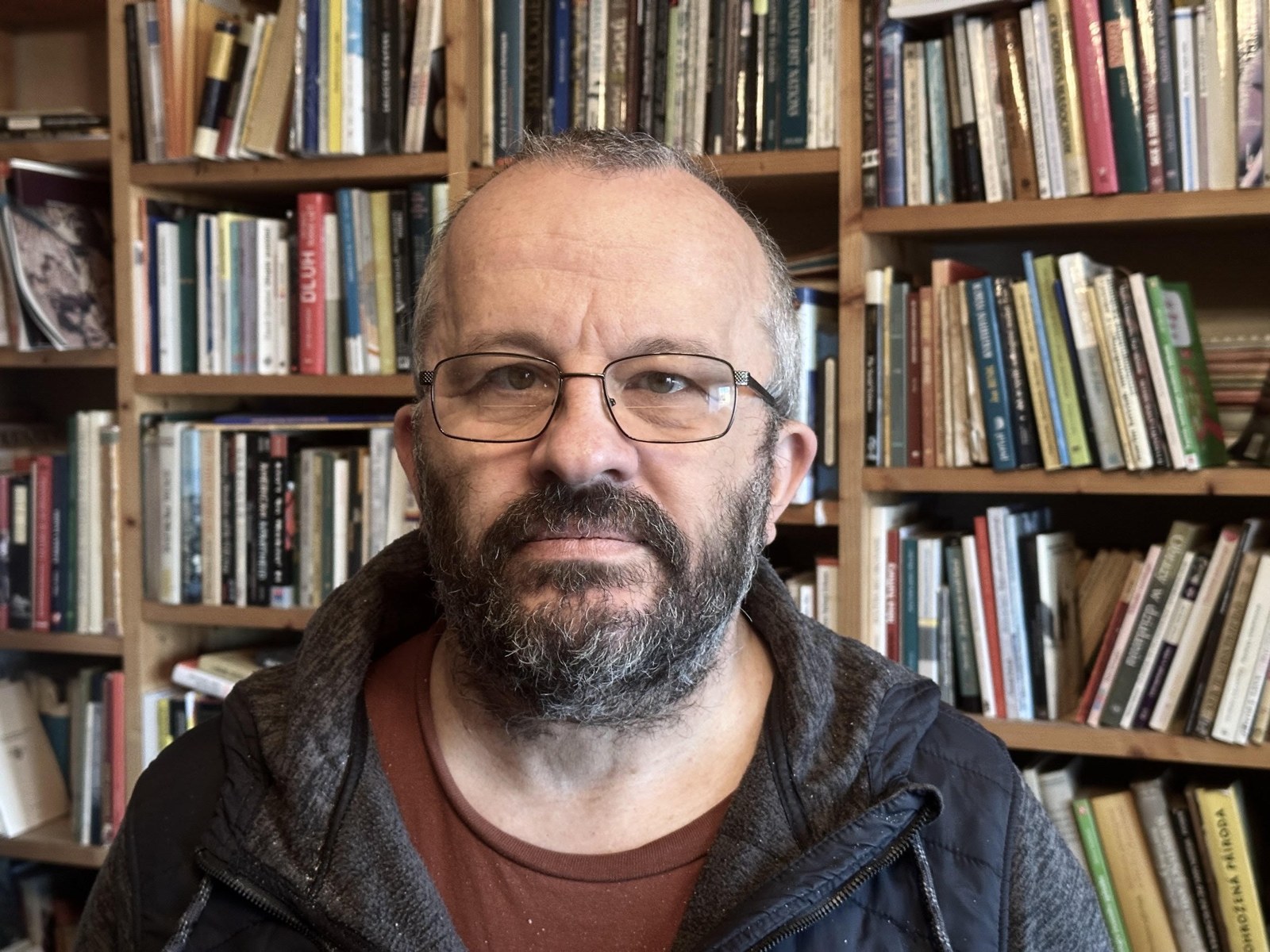
“I see my memories of the 2003 referendum on Slovakia’s accession to the EU on two interconnected levels: as my own memories and, at the same time, as memories of how my late father, academician Mikuláš Mušinka, experienced that period. In essence they are very similar, because on these questions we both thought very, very much alike.
Unfortunately, my father is no longer alive, and I found no note in his archive about the vote itself. At the time he was absorbed above all in preparing an international conference marking the 200th anniversary of the birth of Alexander Dukhnovych, held in Prešov a few weeks later, on 20–21 June 2003. We were also busy preparing a gathering of the Mušinka family in his native village of Kurov. Nevertheless, I am convinced that he took part in the referendum. My father considered taking part in elections and referendums his civic duty and voted regularly. Even later, when he could no longer walk on his own, we drove him to vote.
Much more clearly than the referendum day itself, I remember our views at the time. My father was a staunch opponent of communist ideology and of any authoritarian rule. He took the period of Prime Minister Vladimír Mečiar’s government, when Slovakia was heading towards isolation, very hard. Our family feared that the country would be left on the sidelines of Europe’s democratic transformation. That is why we greeted Mikuláš Dzurinda’s rise to power and his pro-European policy with great relief and hope. When I tell my Ukrainian friends about this today, I compare that hope with the feelings later brought by the Orange Revolution. We expected a return to normal life, a strengthening of democracy and a more open future. We also hoped that after Slovakia it would be Ukraine’s turn and that it too would soon become part of the European Union. I clearly remember that my family and friends were very, very pro-European. We saw accession to the European Union as an extremely important life chance and confirmation that the country was heading towards freedom and democracy.
That is precisely why I am outraged by Slovak Prime Minister Robert Fico’s current words about a ‘rigged referendum’. I consider them a shameless and false denial of the will expressed by citizens. According to the official results, more than two million people voted for accession. If someone claimed that turnout had in fact not exceeded the required threshold of half of the eligible voters, then, with the same number of voters on the rolls, they would have to question almost a hundred thousand ballots. That is not a minor discrepancy but a serious accusation that requires concrete evidence. In my view, Robert Fico’s visits to Moscow do not give him the right to transfer Moscow’s notions of elections and of how to treat history onto the decision taken by Slovak citizens in 2003.
It also outrages me for another reason: more than two million Slovak citizens voted for EU accession. Neither Robert Fico nor his party Smer has ever won that many votes in any election. In 2002 Smer won just under 390,000 votes, in 2006 about 671,000, and it achieved its best result in 2012 with about 1.13 million votes. Fico himself won just under 900,000 votes in the second round of the 2014 presidential election – less than half the number of votes cast for Slovakia’s accession to the EU. Of course, these are different kinds of votes. But the figures clearly show the scale of support for Slovakia’s European path. That is precisely why I consider his current attempts to call that decision into question outrageous.”
PS. The fog around Robert Fico’s words about a “rigged referendum” had not yet lifted when he made headlines with a new statement at a joint press conference with his Czech counterpart Andrej Babiš on 10 November. Asked by journalists about German Chancellor Friedrich Merz’s announcement that he would block the EU budget for 2028–2034 unless all member states took part in covering Ukraine’s funding gap for 2027, the Slovak prime minister replied: “Keď chcú niečo Nemci… tak sa nepokakáme” (“If the Germans want something… we won’t soil ourselves”). Literally: we won’t wet our pants. Czech Prime Minister Babiš joked that the press might not understand the word, to which Fico replied that everyone understood it perfectly well.
The crude language in a diplomatic context sparked a heated debate on social media and in the press. Observers note that such “beer-hall rhetoric” has become Robert Fico’s trademark and is aimed above all at a domestic audience. Which once again confirms that the experienced political scientist Alexander Duleba read the Slovak prime minister correctly.
Vasyl Ilnytskyi