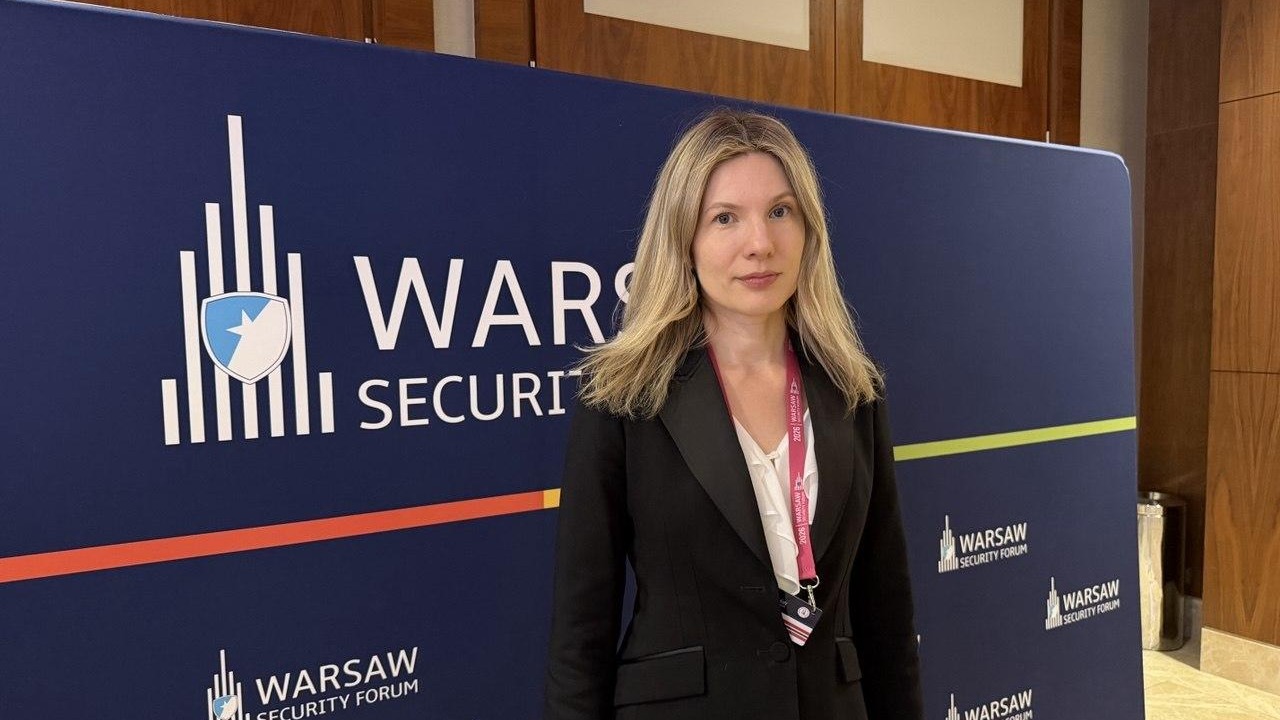

Why has sanctions pressure on Russia not been as tough as Ukraine expected? Can Europe tighten restrictions under Donald Trump’s current policy? And why is cutting off Russia’s access to Western technology a matter of security for the European countries themselves? Svitlana Mialyk discussed these questions with Olena Tregub, Executive Director of the Independent Anti-Corruption Commission (NAKO), at the Warsaw Security Forum, which took place in the Polish capital not long ago.
In brief
- Why the sanctions did not become “hellish”. Olena Tregub, Executive Director of the Independent Anti-Corruption Commission (NAKO), believes that Western partners introduced restrictions too gradually and failed to extend them to the entire Russian defence and banking system. In her view, the main problem is a lack of political will, which prevents tough statements from being turned into corresponding decisions.
- Why Ukraine should rely more on Europe. Tregub calls on European countries to be more independent in their sanctions policy. At the same time, Ukraine needs to demonstrate its own capacity to act and explain to its partners that weakening Russia’s military industry directly concerns the security of Europe itself.
- How Western components help Russia produce weapons. According to Tregub, foreign microelectronics remain critically important for Russian strike drones. Tighter controls on the supply of these components could slow down production, reduce its volume and make weapons more expensive for the aggressor.
- Which sanctions may remain even after the war ends. Tregub predicts that Europe will continue to increase pressure on Russia. She suggests that some restrictions may be reviewed in the future, but sanctions that hinder weapons production will remain in place for a long time because of the threat of renewed aggression.
- Why military and technological cooperation between authoritarian states is dangerous. Russia, China and North Korea exchange technologies, draw on the experience of the war against Ukraine and work together to circumvent sanctions, Tregub notes. Sanctions policy must therefore take into account the international supply and cooperation networks that strengthen these countries’ military potential.
Warsaw hosted its annual security forum, which brought together representatives of more than 90 countries. The main topics included Russia’s war against Ukraine, the future of NATO, transatlantic relations, energy and economic security, cyber threats and the modernisation of armed forces.
One of the discussions was devoted to sanctions and export controls: why Western technologies continue to end up in Russian weapons and how to cut off these supplies. Participants in the panel, moderated by Olena Tregub, included former US Presidential Special Envoy for Ukraine Keith Kellogg, EU Special Envoy for Sanctions David O’Sullivan, former US Ambassador to the OSCE Michael Carpenter, former UK Defence Secretary Ben Wallace and the Ukrainian President’s Commissioner for Sanctions Policy Vladyslav Vlasiuk.
At the forum, NAKO also displayed a Russian Geran-2 strike drone and Western microelectronics found in downed Russian drones. The exhibits were intended to show international partners how foreign components become part of the weapons Russia uses to attack Ukraine.
After the panel, Svitlana Mialyk asked Olena Tregub about the gap between sanctions promises and decisions, the role of Europe and the danger posed by military and technological cooperation between authoritarian states.
– You moderated a very important panel. What impression did the discussion leave you with? Many people were saying: “Do they really not understand Ukraine and what is happening? Real sanctions need to be introduced, because right now the real sanctions are the Armed Forces of Ukraine.”
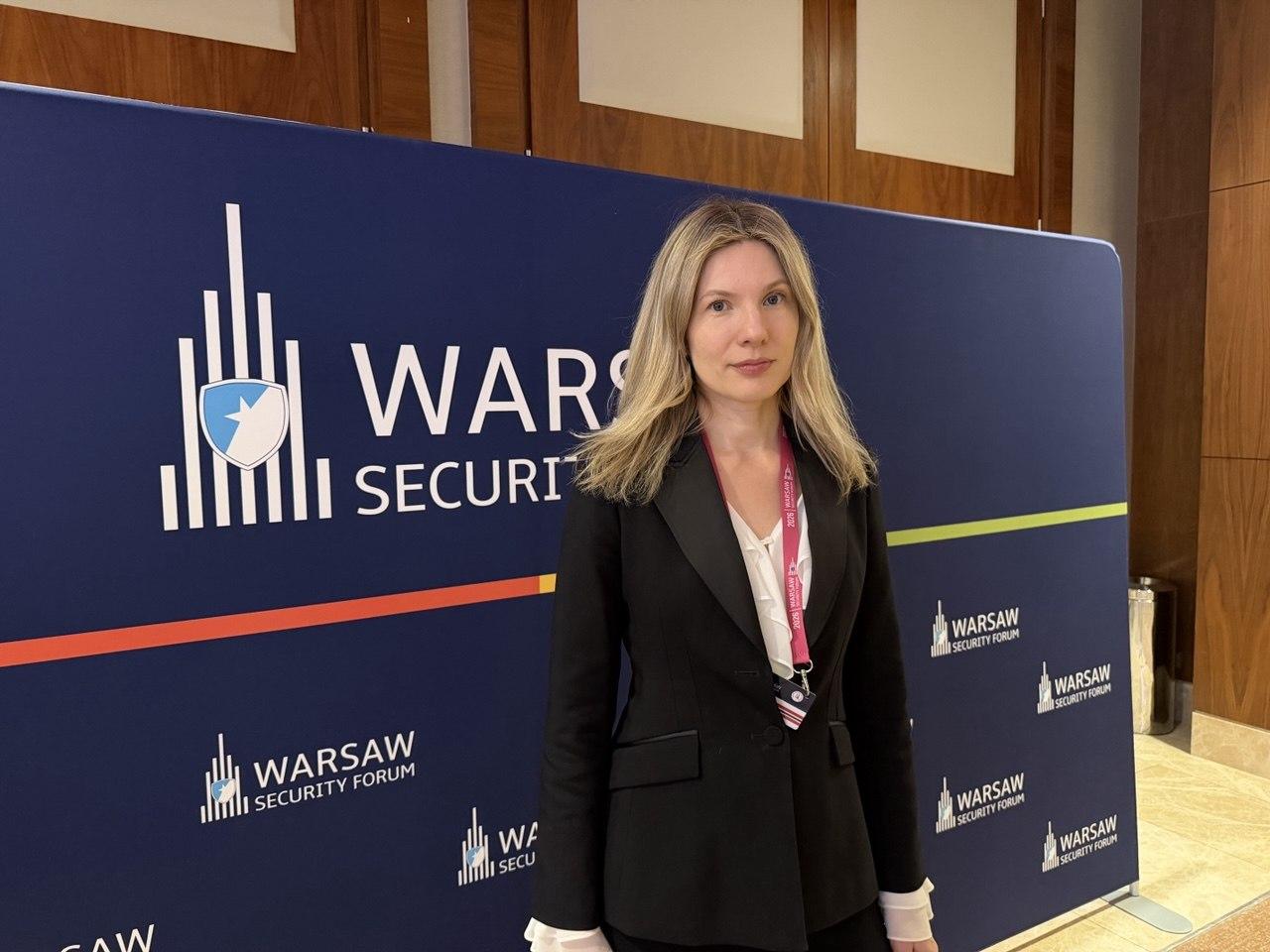
– Of course, as a Ukrainian, I was left with that feeling too. The panel included, for example, people who had previously worked in the Biden administration and were responsible for the fact that these sanctions were not hellish, as Biden promised us at the start of the invasion. Instead, they began to be introduced gradually.
Russia has more than a hundred banks, yet sanctions were imposed on only seven, for example. Why? Likewise, Russia has tens of thousands of defence companies, but 30% or 20% of them were sanctioned. Why not all of them?
And now these people, once they leave government, are calling for everything to be sanctioned and for everything to be done quickly. When you listen to this, you realise that it is just rhetoric. But when it comes to action, there is no political will to do it.
And now you realise that, in essence, the Western coalition is led by Donald Trump – a man who lifts sanctions, does not believe in them and, on the contrary, thinks that Russian diesel should be bought. This despite the fact that his own country has passed legislation prohibiting the United States of America from buying Russian energy resources.
In other words, he will go against his own sanctions legislation. And that, of course, sets a bad example for other countries.
– How should Ukraine act in this situation? It needs to rely more on Europe, but how exactly?
– We really do need to rely more on Europe, so that it becomes more independent in its decision-making.
And the fact that we are applying these kinetic sanctions is actually very good. Perhaps Europe tried to sanction those who spread Russian disinformation, but we went ahead and reduced the number of these bot farms by bombing data centres. I think that was really great of us. It should have been done earlier.
But we need to show Ukraine’s agency in order to give Europe more confidence in us as partners. We also need to show that these sanctions are not just about the survival of Ukrainians – they are about Europe. That is exactly why we brought the Russian Shahed, or Geran, here.
– Was it standing at the entrance to the forum?
– Yes, at the entrance. And we showed that 80% of its components are Western, mostly from America, Switzerland and the Netherlands.
What we want to say is that this Shahed does not just kill Ukrainians – it will be used against the very countries that supplied these microcomponents. And this has already happened: it was used against American troops during Trump’s war with Iran.
Likewise, it cannot be ruled out that these Shaheds will next be used against NATO territory, against European territory. That is why they need to understand this, to see what kind of weapon it is, that it is cheap and what it is made of.
And to understand that Russia can produce a lot of these weapons, and very quickly. It will use their technologies to do so, because without them it cannot make these weapons – they will not fly.
They may even be 90% Chinese, Russian and so on, but without Western microelectronics, which are the brain of all these weapons, they still do not fly.
That is why they can make more effort to ensure that Russia produces these weapons in smaller quantities and more slowly, and that it costs Russia more.
We insist that this is a matter of national security, a matter of geopolitics, and not some secondary issue. For them, it should be a top priority if they want to protect Europe from aggression and help Ukraine hold out.
– How will sanctions policy develop? We were waiting for the promised “hellish” sanctions, but never saw them in action. Is a return to such intensified pressure on the aggressor possible?
– I think there will be sanctions. Europe will certainly not lift them. It will gradually tighten them – and it is continuing to do so.
I think that, whatever the scenario for ending the war, it has already become clear to everyone that sanctions may be lifted from Russia’s civil aviation and may be lifted from the Russian energy sector. But as for the sanctions that prevent Russia from producing weapons, I have the impression that they will never be lifted.
Because everyone has seen that this is a dangerous, aggressive country. Just as sanctions against Iran were in force for decades, the same will happen with Russia.
If more wars break out in the world, then obviously there will be other sanctions. In my opinion, the entire export control regime will then be reviewed: everything will become very tightly regulated, and people will be afraid to sell technology to countries that might attack. In my view, that is where everything is heading.
– During the panel, China, North Korea and Iran were mentioned. Many people say that the Third World War is already under way. In particular, Ukraine’s first Ambassador to the United States, Yuri Shcherbak, has been saying this for several years. What do you think? Were such assessments voiced among the forum participants?
– I would not say that most people at this conference believe the Third World War is already under way. I think many are living with a premonition of war, believing that we are on its threshold.
But people cannot foresee this, because they live in safety in Europe. Even Europeans do not pay much attention to the hybrid war being waged against them. One moment there is a plan to blow up a plane at an airport in Germany, the next railway tracks are blown up, and then arms production facilities in Britain are set on fire.
All of this is part of these actions, but people do not pay much attention to them. They do not consider it the beginning of a war yet; they do not yet regard it as war. At least that is what I see here.
I think it is important to explain that the countries of the authoritarian axis – Russia, China and North Korea – are not an alliance. They do not have shared values, as in the European Union, that would bind them together in the long term. But they are a situational coalition working to strengthen their military potential.
They actively exchange technologies, take Russia’s experience of the war against Ukraine and improve their weapons in the light of that experience. Russia gives them technologies, they give technologies to Russia, and together they work on circumventing sanctions. And this is dangerous cooperation.
Some say that this cooperation is precisely the result of sanctions policy. The argument goes that we pushed Russia to the point where it has no one left to work with except China and North Korea. But on the other hand, we need to keep an eye on the fact that this cooperation may make it more dangerous.
In fact, sanctions can also slow down this cooperation if they are introduced properly and take into account that international networks are already being created. This is not just about Russia.
That, in fact, is also an issue we discussed here, and in particular touched on during the panel.
Author: Svitlana Mialyk