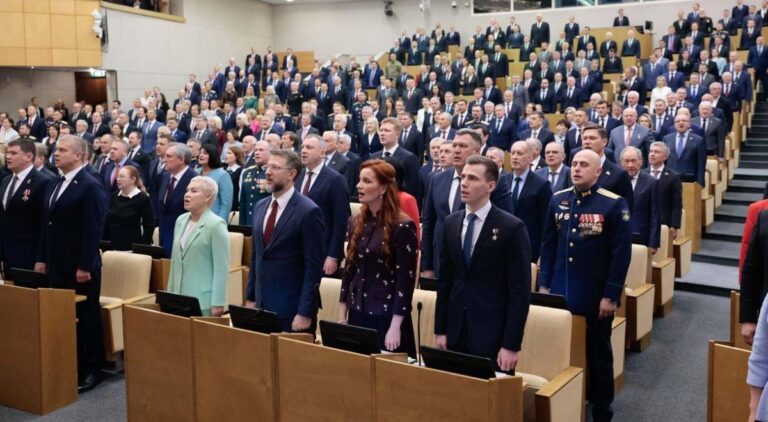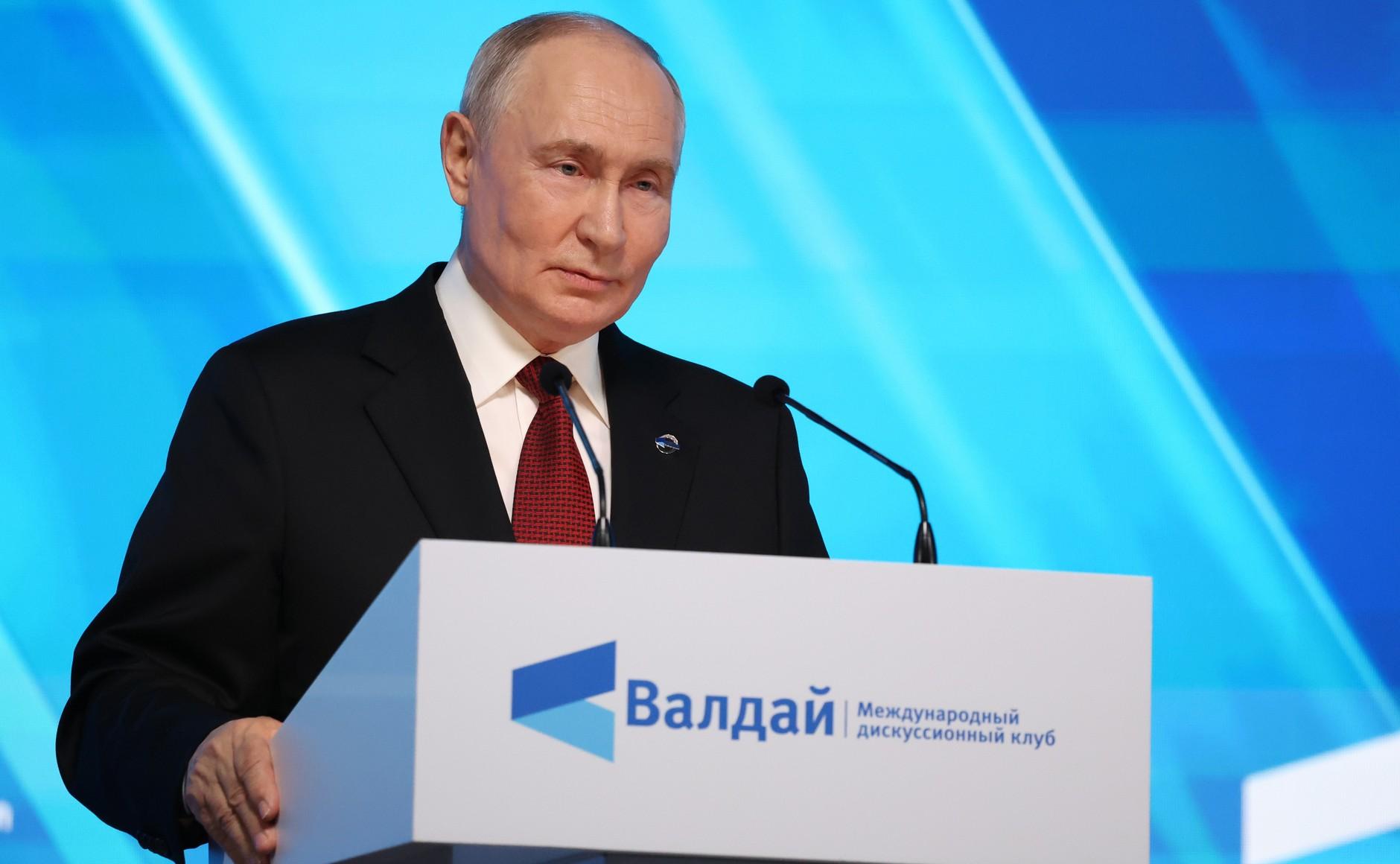

At the Valdai Club meeting Vladimir Putin talked about Ukraine again. Except that in this speech Ukraine was the scenery, not the addressee. The addressee was you – the societies of the West, which elect governments, fund defence and have spent more than four years wondering whether this war is really their business. Putin no longer explains his war to the West. He presents it with the bill. And he attaches the rules: what should not have been done, what must not be done today, and what will happen if you do not listen.
At the Valdai Club plenary session, Putin declared that it was not Russia that started the war, but that a war was started against Russia. And then he read out a list:
They should have refrained from encouraging aggressive nationalism and Russophobia in Ukraine so as to turn it into a tool for fighting Russia. NATO should not have embarked on an effort to make our historical territories part of its military space in its own interests and should not have planned setting up its bases there. Radicals in Kiev should not have been pushed to a government coup while the de facto illegal regime should not have been pumped full of all kinds of offensive weapons after that. Plans for setting up concentration camps for the people from Donbass and Crimea should not have been drafted. (…) The list of these do-nots goes on.
Language like this explains nothing; it lodges a claim. Whoever says “should not have” about the decisions of sovereign states assumes he had the right to approve them.
The mechanism is old, and that is why it works: it is enough to reverse cause and effect. Aggression becomes a reaction. Ukraine ceases to be an actor and becomes a tool. Admitting a state that asks for membership itself turns into “making our historical territories part of its military space”. Aid to the victim becomes war on Russia, and sanctions an attack, although they are a consequence. In this version of history the attacker turns out to be the victim. Very convenient. The neighbour, apparently, should have been more careful about where he lives.
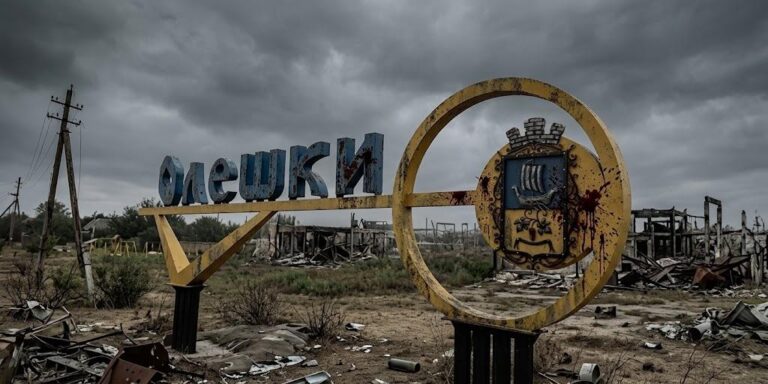
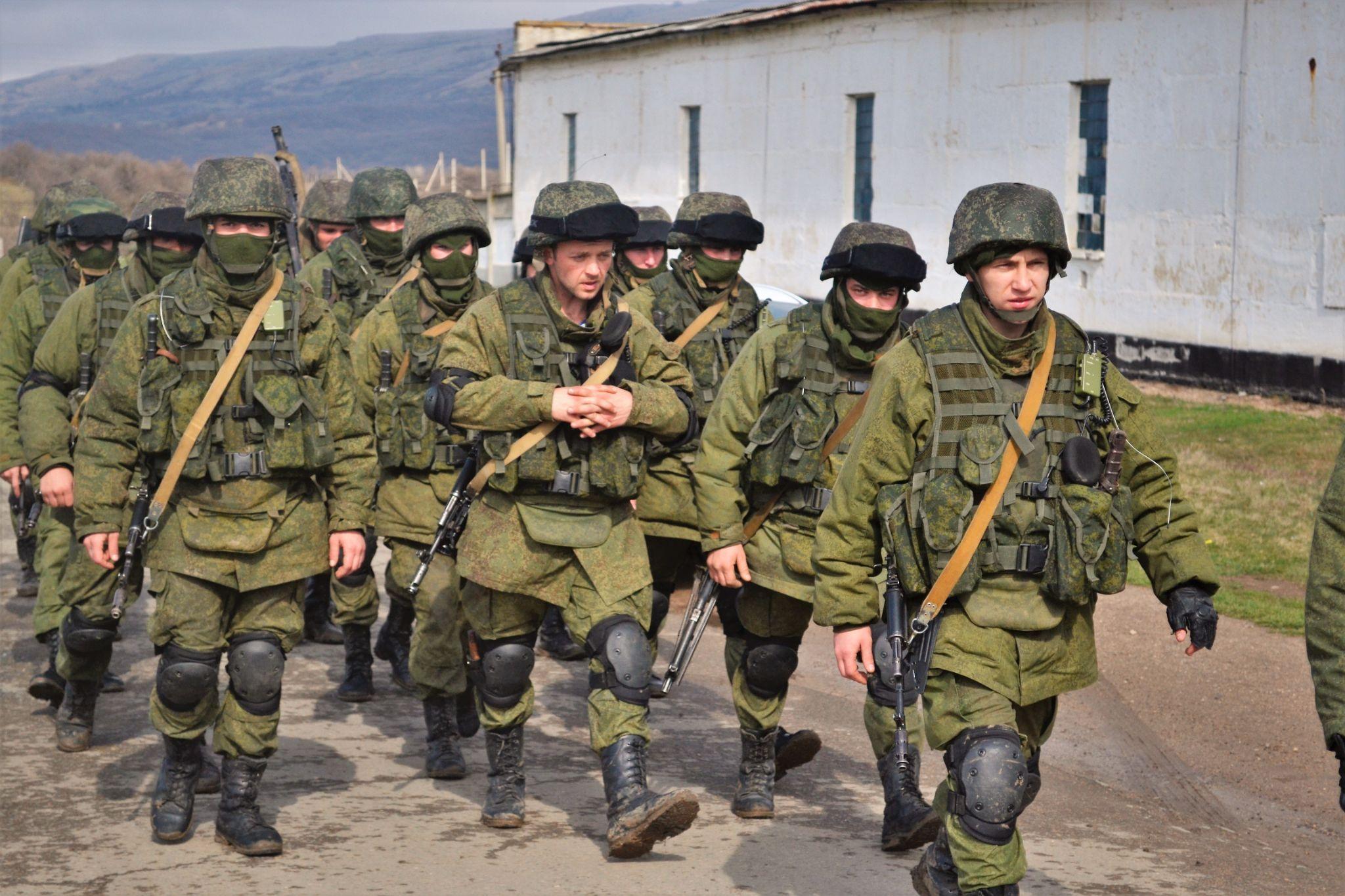
The war did not begin on 24 February 2022. It began in February 2014, when soldiers without insignia seized the buildings of the Crimean parliament. Putin told the story himself: in a film broadcast in March 2015 he recalled how, in the early hours of 23 February 2014, he told his colleagues: “We will have to start work to return Crimea to Russia.” Then came Donbas, the Russian soldiers “on leave”, Ilovaisk and Debaltseve. Then the full-scale invasion. None of these dates requires interpretation. A calendar is enough.
And the “instigating” West? According to the transcript of the meeting of Ukraine’s National Security and Defence Council on 28 February 2014, foreign partners asked Kyiv not to make any moves. Oleksandr Turchynov recalled phone calls asking for mobilisation to be called off, because Ukraine was supposedly “provoking Russia”.
Ukraine, when it was attacked in 2014, had a non-aligned status written into law, adopted in 2010 under Yanukovych. Parliament abandoned it in December 2014, and the course towards NATO was written into the constitution in 2019. First came the annexation, then NATO, not the other way round. At the meeting, Putin invoked the 1990 declaration of sovereignty, in which Ukraine announced its neutrality. He left out a small detail: Russia attacked a neutral Ukraine.
NATO? Ukraine did not receive a Membership Action Plan either in Bucharest in 2008 (it was blocked by Germany and France) or ever afterwards. No administration in Washington, from Obama through Trump to Biden, pushed a fast track. Formally there was an “open door”; in practice it was a waiting room with no date. The thesis about “historical territories” presupposes something that is not in any treaty: a Russian right of veto over its neighbours’ policies. Russia signed documents saying exactly the opposite, from the Budapest Memorandum of 1994 to the OSCE’s Istanbul Charter for European Security of 1999, which guarantees every state the freedom to choose its alliances. Once again Moscow is informing sovereign states how they ought to use their sovereignty.
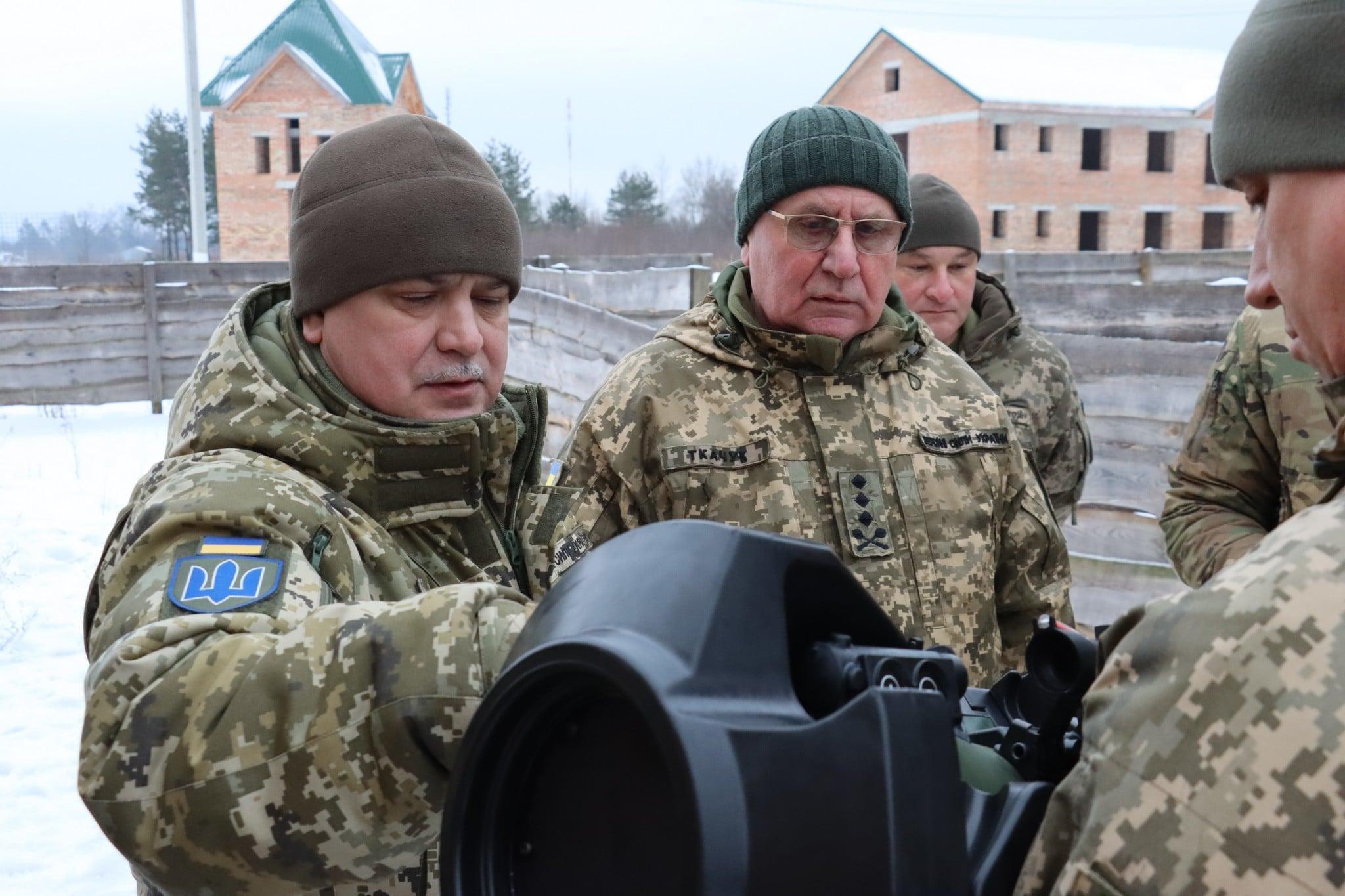
“Offensive weapons”? Before 24 February 2022, Western deliveries consisted above all of American Javelins, supplied from 2018 (the Obama administration had refused lethal weapons). Then came British NLAWs and Stingers from the Baltic states, which arrived at the turn of January and February 2022, when Russian divisions were already standing at the border. Germany offered 5,000 helmets at the time. The West agreed to Western-designed tanks only in January 2023, after months of tug-of-war. For a years-long conspiracy preparing an offensive on Moscow, it contains a surprising number of weapons for stopping tanks and shooting down aircraft.
“Aggressive nationalism”? In 2019 Ukrainians gave 73 per cent of the vote to a Russian-speaking comedian from Kryvyi Rih, from a Jewish family, who promised to end the war. Zelenskyy unblocked the Normandy format and prisoner exchanges, and brought about the disengagement of forces near Zolote and Petrivske. He also agreed to the Steinmeier formula, although it provoked protests in Kyiv and beyond. Three years later Russian television made him the face of a “Nazi regime”. Russophobia that elects a Russian-speaking peace candidate is a truly peculiar variety of Russophobia.
Donbas: numbers versus literature
Putin talks of tanks, missiles, aircraft and people burnt alive. The UN data are less literary. The Office of the UN High Commissioner for Human Rights (OHCHR) recorded 25 civilians killed in 2021, the lowest figure of the entire conflict. That figure covers both sides of the line of contact, including victims of mines and unexploded ordnance. In total, in 2014–2021 the OHCHR recorded 3,106 civilian deaths, the vast majority of them in 2014–2015, when Russia was setting that war alight.
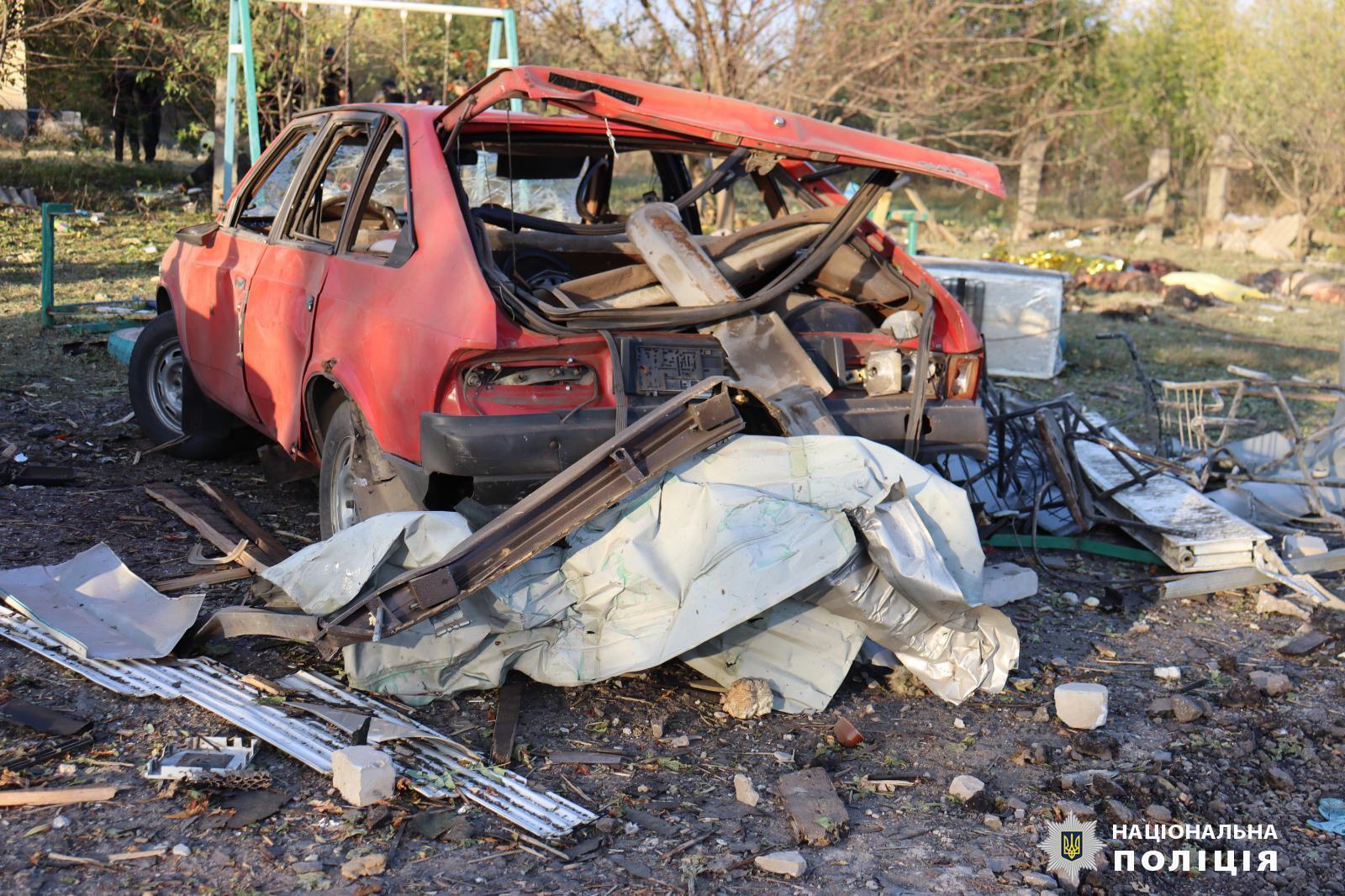
Each of those deaths is a tragedy, and there is no reason to play it down. But genocide looks different. Since 24 February 2022 the UN has verified more than 17,000 civilians killed and itself stresses.pdf) that the real figure is higher. In Hroza, in October 2023, a single missile killed 59 people gathered at a wake. In Sumy, on Palm Sunday 2025, two ballistic missiles killed 35 people. An army which, according to Putin, was never the first to attack civilian facilities can exceed Donbas’s 2021 annual toll with a single strike.
And the “concentration camps”? At the Valdai Club meetings, or anywhere else, no document, order or location has been presented. Not for years, either. What is well documented, on the other hand, is a different system: Russian “filtration”. Yale University’s Humanitarian Research Lab identified in 2022 at least 21 sites in and around Donetsk region where Russia and forces under its control screened and detained Ukrainians. On one side, an accusation without evidence; on the other, evidence. Classic projection.
Minsk: which point, Mr Putin?
The most interesting passage came on the Minsk agreements. Putin claimed that the gist of some of the provisions came down to the south-east’s right to break away if Ukraine joined NATO. He admitted that this was a very blunt way of putting it and referred to Article 9.
Let us check! The Package of Measures of 12 February 2015, endorsed by UN Security Council Resolution 2202, has 13 points. The word “NATO” does not appear in it once. Point 9 concerns the restoration of full control of the state border to the government of Ukraine throughout the conflict zone. Point 11 concerns constitutional reform with decentralisation and a permanent law on the special status of certain districts. A footnote lists, among other things, an amnesty, language issues, a “people’s militia” and cross-border cooperation with regions of Russia. There is no right of secession. There is no NATO clause. There is, however, a declaration by the leaders attached to the package, endorsed by Putin as well, which reaffirmed full respect for Ukraine’s sovereignty and territorial integrity.
In fairness, it should be added that in Kyiv the special status was regarded as a Trojan horse: a mechanism through which Moscow-controlled enclaves could brake the course of the whole state. That was presumably what Russian hopes rested on. But a hope is not a provision. If that was the meaning of the agreements, in which point was it written down? In the document Russia signed, point 9 gives the border to Ukraine.
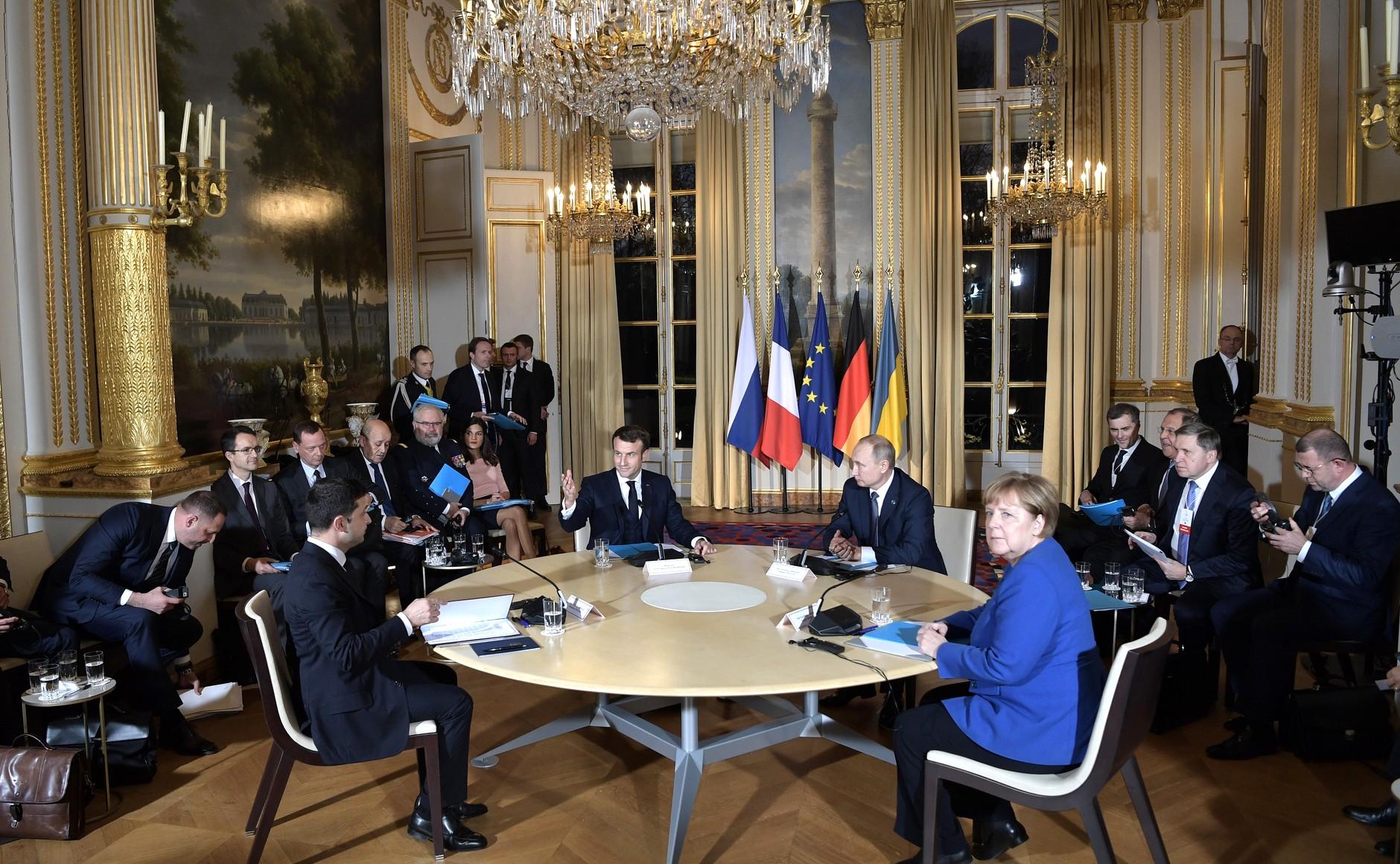
The conclusions of the Normandy summit in Paris on 9 December 2019, also published on the Kremlin’s website, speak of special status and of writing the Steinmeier formula into Ukrainian law. There is not a word about NATO. Zelenskyy put it plainly: no elections at gunpoint. Security, troop withdrawal and the border first. The Minsk process was finally buried by Moscow’s decision of 21 February 2022 to recognise the “DPR” and “LPR”, three days before the invasion. According to Putin, the agreements were thrown in the bin by Kyiv and its “Western sponsors”. Except that the bin stood in the Kremlin.
What is this whole construction for? In my view, not for Ukrainians, because they know who is shooting at them. It is meant for Europeans and Americans, who are supposed to believe three things. That the war is a reaction, not a decision. That support for Ukraine is complicity. And that the bill for this complicity may arrive at their door personally.
The same evening Putin said that Ukraine “cannot exist on its own”, and that its neutrality remains one of Russia’s goals. Russia accuses the West of wanting its “strategic defeat” and in the same breath denies its neighbour the right to an independent existence. It was not Kyiv that wrote an essay in July 2021 about the “historical unity” of two nations. It was Putin. Half a year later he sent an army to enforce that “unity”.
Russophobia “should not be turned into state ideology while striving to inflict a strategic defeat on Russia”, and then: “If we want to live – and who does not? – (…) let us live in friendship.” Note the form: “we”, not “you”. Putin made a point of adding that everyone wants to live. This quotation by itself is not a nuclear threat. It is a sentence about a shared fate, only spoken by a man who decides about one side of that fate.
A day earlier, Reuters described an informal document (non-paper) that Russia had handed to NATO. According to the agency, in it Moscow declares its readiness to use its entire arsenal, including nuclear weapons, if the Alliance tries to isolate the Kaliningrad region, as well as to strike the decision-making centres of member states from the start of a conflict. NATO confirmed receiving the document and replied that it is a defensive alliance and that none of its exercises threatens Russia. The Russian embassy in Ireland, quoted by TASS, put it publicly: the entire arsenal, including nuclear weapons, and the risk of early strikes on the Alliance’s decision-making centres.
In his speech, Putin insisted that the Foreign Ministry’s statement and the letters sent out were “not intimidation; it is a response to attempts to intimidate us”, and that they do not mention nuclear weapons. He predicted that the West would “seize on it and exploit this argument”. He added: “We are not threatening anyone. We are simply stating that we do not have all that many means of defending ourselves.” A moment later he said that in the event of a direct attack on Russia (“in this case, Kaliningrad, although it could potentially involve other territories as well”), “the question of Russia using all the weapons at its disposal would inevitably and immediately arise”. And: “no one else possesses the kinds of strike capabilities that Russia has today”. Not many tools, but unique ones.
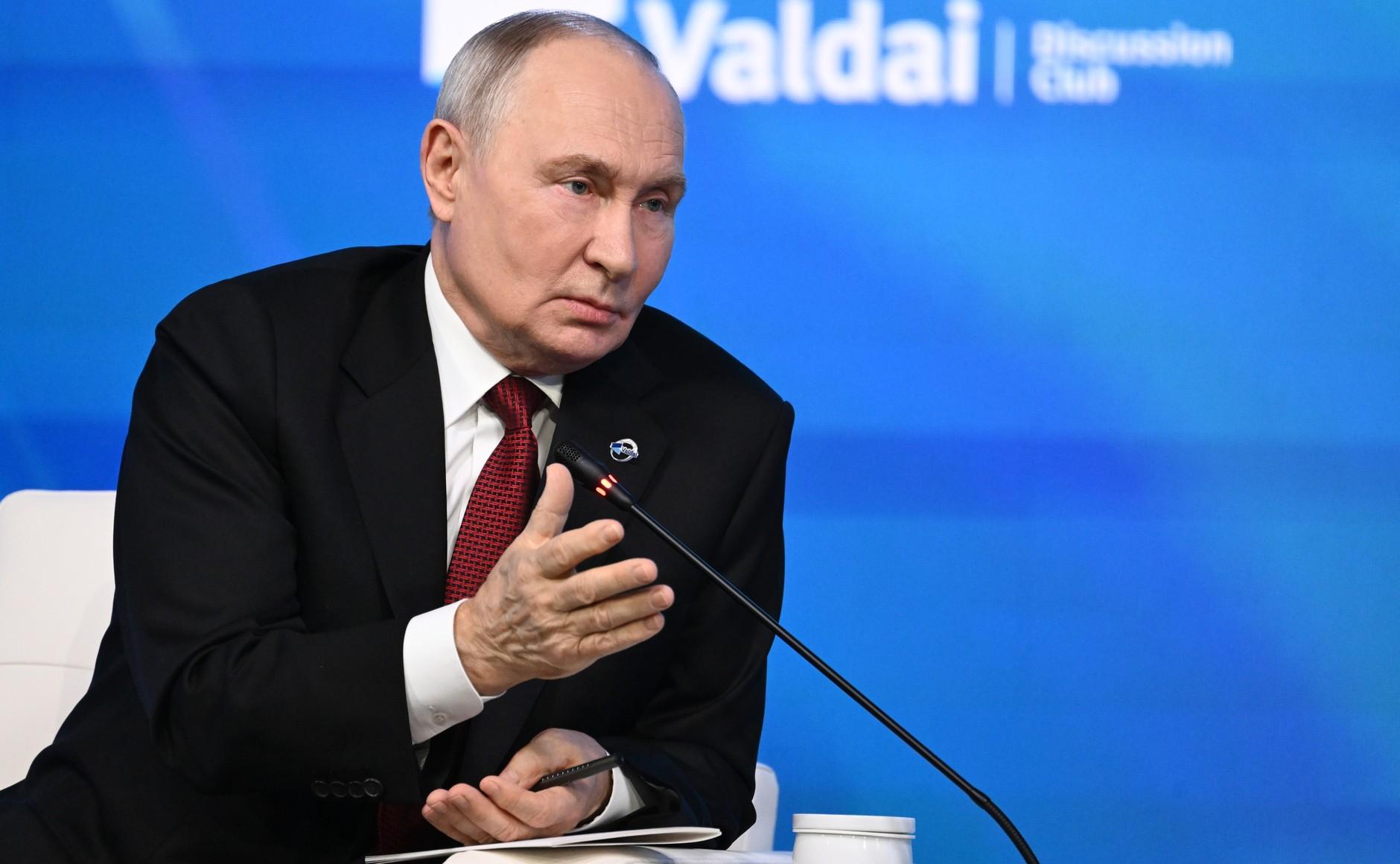
Then came Chekhov: “if you have a rifle hanging on the wall in the first act, it will eventually be fired.” “We must remember this and try to prevent it,” Putin added. He also warned that “the point of no return can come very quickly and unexpectedly for all”.
A day earlier, Foreign Ministry spokeswoman Maria Zakharova, asked about Polish plans to produce missiles for Patriots, announced that plants in Europe producing weapons for Ukraine are potential military targets for Russia. At the Valdai Club meeting Putin stipulated that he was not saying Russia intends to strike them, but that this is a threat and Moscow is following it closely.
Finally, he gave assurances that Russia has no intention of attacking anyone, “whether in 2029, 2030 or 2050”.
Putin assures us that Russia does not intend to attack anyone. A moment later he reminds us what he could attack with. A slip? More a method. Denying the threat is part of the threat: it makes it possible to frighten and at the same time to accuse anyone who notices that someone is frightening them of “seizing on it”.
For the record: in mid-February 2022 the same Zakharova asked Western media to publish “the schedule for our upcoming invasions for the year”, because she wanted to plan her vacation. A little over a week later, Russian columns were driving on Kyiv. The dates 2029, 2030 and 2050 are worth reading with that calendar in hand.
The warm bath
The most comfortable response to Valdai is: theatre. He threatens because he has to. He is talking to his own people. He is raising the stakes before negotiations. Maybe. But the problem today is not whether the West believes Putin. The problem is whether it is listening to how he himself defines this conflict. And he defines it ever more clearly: as a confrontation with the West in which Ukraine is the front, not an end in itself.
The warm bath is the conviction that the war will stay in Ukraine. That Russia will not go further. That every warning is a bluff. That Europe’s security exists regardless of how this war ends. And that it is enough to avoid escalation for escalation never to come.
This is not a call to war. It is a call to listen, because if something looks like a duck, swims like a duck and quacks like a duck, then it probably is a duck.
Putin talks to the West as to a party to the conflict. You are still checking whether the address is wrong.
Get out of the bath. Not to go to the front. To see what is hanging on the wall.
Author: Artur Żak