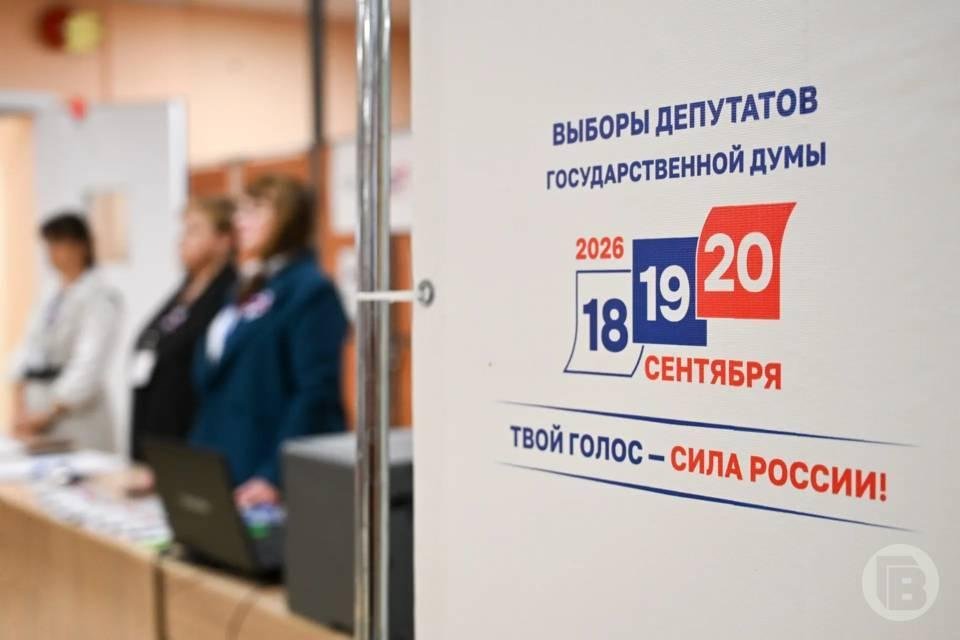

The party of power is again taking a constitutional majority in the State Duma and may form the largest faction in its history. According to preliminary Central Election Commission data, United Russia is taking around 58% of the vote, and its candidates lead in more than 200 single-member constituencies. Five parties are clearing the 5% threshold, among them A Just Russia, which as late as the morning after the vote was not getting into the new Duma.
The Central Election Commission called the parliamentary campaign “as clean and calm as possible”, while opposition parties and independent observers reported numerous violations.
In brief:
- On the latest data United Russia is taking 57.96% of the party-list vote, its candidates are winning in 209 single-member constituencies, and the party can count on 350 seats in the State Duma
- Five parties are currently clearing the 5% threshold: United Russia, the KPRF, the LDPR, New People and A Just Russia; the last of these was still short of the votes it needed that morning
- Turnout in these elections was 59.32%, higher than in the two previous campaigns
- Over the course of the day the preliminary estimate of how many future deputies from the party of power are veterans of the war fell from 86 to 49
- Yabloko was kept out of the State Duma, but on preliminary data the party is entering the Novgorod regional duma
- In the occupied territories every State Duma seat went to United Russia deputies
- The Central Election Commission insists the elections were as clean as possible; observers recorded hundreds of violations
The elections in figures
Russia’s Central Election Commission has published preliminary results for the State Duma elections after processing 97.37% of the protocols. On the latest data United Russia is taking 57.96% of the vote, the KPRF 13.67%, the LDPR 8.96%, New People 7.91% and A Just Russia 5.1%. Five parties are therefore currently clearing the 5% threshold.
Half of the 450 State Duma seats are distributed by party list; another 225 deputies are elected in single-member constituencies. United Russia candidates currently lead in 209 constituencies, KPRF candidates in five, A Just Russia candidates and self-nominated candidates in four each, LDPR candidates in two and a Rodina candidate in one.
If the current results hold, United Russia could take around 350 seats in the new State Duma and keep the constitutional majority, which requires at least 300 mandates. The exact distribution of seats will depend on the final results, which the Central Election Commission plans to confirm on 25 September.
If United Russia’s final number of deputies exceeds 343, the party will beat its own record: that is how many seats it won in 2016. After the 2021 elections United Russia held 324 mandates.
Turnout in these elections was 59.32% – more than 62.6 million voters took part. That is noticeably higher than in previous Duma campaigns: turnout was 51.72% in 2021 and 47.88% in 2016. These elections did not, however, reach the 2007 figure, when 63.71% of voters cast ballots.
Activity was particularly high among those using remote electronic voting. On the federal platform about 3.65 million of roughly 4 million registered participants voted – 90.88%. Moscow used its own electronic voting system.
Turnout also varied markedly by region. The highest figures were recorded in the North Caucasus: turnout approached 94% in Chechnya and 87% in Dagestan, and exceeded 83% in Ingushetia and North Ossetia. At the opposite pole were Irkutsk region and Karelia, where about 39% of voters took part.
The curious case of A Just Russia
As late as Monday morning, after 96.91% of protocols had been processed, A Just Russia was not getting into the State Duma, because it was not clearing the required 5% threshold. Sergey Mironov’s party was on 4.95%, and its result was gradually falling as the count went on. By the afternoon, however, the Central Election Commission reported that A Just Russia had after all taken the votes it needed.
Against the background of uncertainty over whether the party would enter the Duma, A Just Russia’s first deputy chairman Alexander Babakov separately commented on the health of the party’s leader, Sergey Mironov. He said the leader was “in an adequate state”, took an active part in the party’s life and in organising its work, and that anyone wishing to meet Mironov would be able to do so shortly.
Because of health problems the 73-year-old Mironov took almost no part in the final stretch of the parliamentary campaign. At the end of August, during a trip through Siberia, he suffered an injury according to the party’s official account, after which he withdrew from further public appearances and from the debates. Unconfirmed reports of serious health problems followed. Mironov denied them, but confirmed that he was in hospital and continuing to run the party from there.
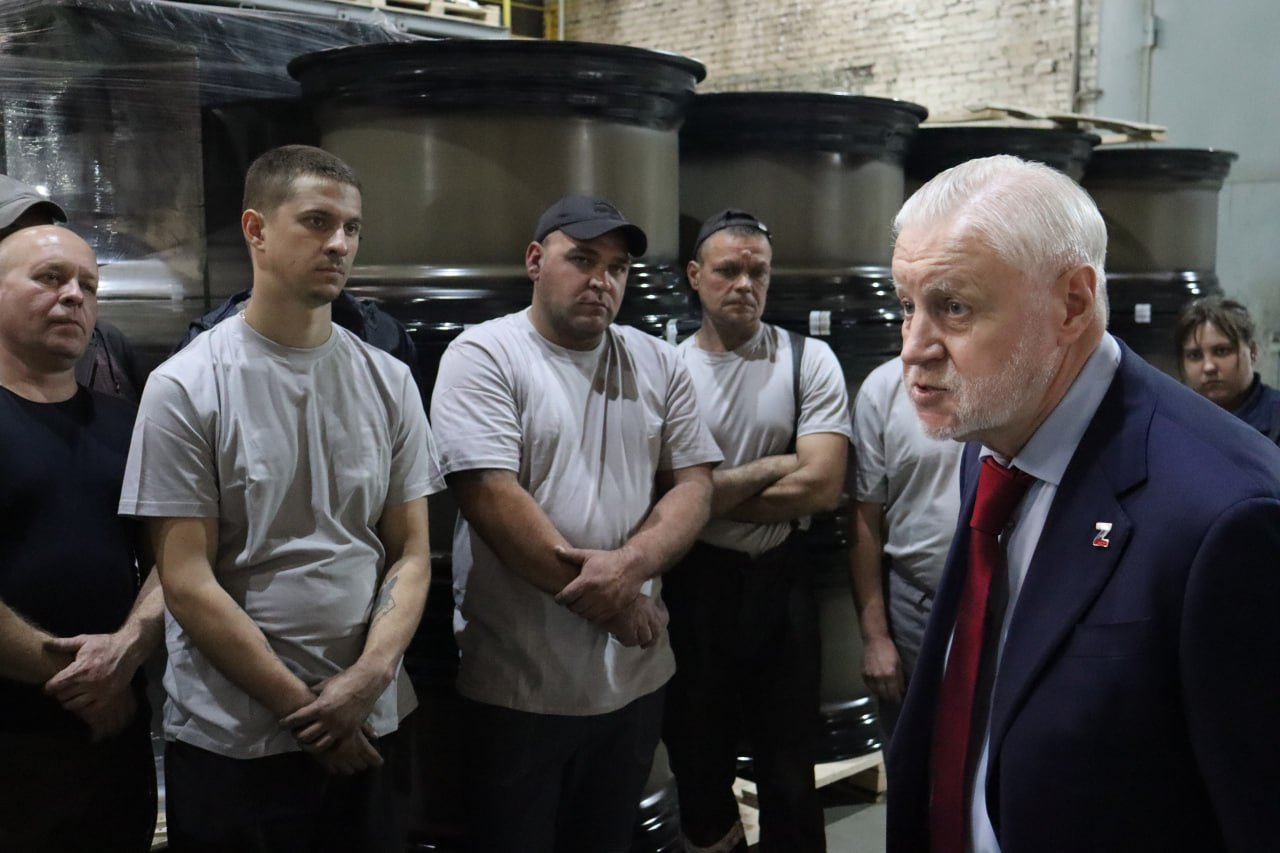
Mironov’s political future depends directly on A Just Russia’s result in these elections. Four of the party’s candidates have, on preliminary data, won mandates in single-member constituencies, but Mironov was not among them: he ran at the head of the federal list. So had the result fallen below 5%, the party leader himself would not have entered the new State Duma.
For Mironov that would have meant the end of more than two decades of unbroken work in the federal parliament. He chaired the Federation Council in 2001–2011 and has been a State Duma deputy since 2011.
A Just Russia itself has never once been outside the State Duma since it was founded. The party appeared in 2006 through a merger of Rodina, the Russian Party of Pensioners and the Russian Party of Life. The project was created in part as a Kremlin-controlled force on the left flank: the then deputy head of the presidential administration, Vladislav Surkov, spoke of the need for a “second leg” for the party system to stand on. One of the political tasks of the new grouping was seen as competing with the KPRF for the left-wing electorate.
There was confusion over the war veterans too
It was said at first that one feature of the new State Duma would be markedly wider representation of participants in the war against Ukraine. A total of 186 participants and veterans of the “special military operation” were registered for the elections – 110 on party lists and 76 in single-member constituencies.
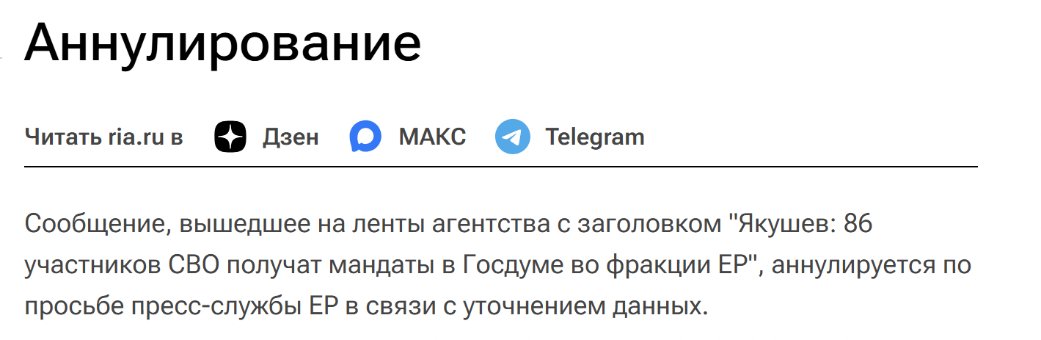
On Monday morning the secretary of United Russia’s General Council, Vladimir Yakushev, told a press conference that 86 war veterans would enter the State Duma.
“As for participants in the special military operation, we will have around 86 of them. If we are talking about the State Duma, that is a serious contribution. <…> But for now we are talking about preliminary results.”
Shortly afterwards, however, United Russia’s press service asked RIA Novosti to withdraw the report.
TASS later cited Yakushev giving a different figure: on preliminary data, 49 participants in the war against Ukraine will receive United Russia mandates.
Yabloko was kept out of the Duma
On preliminary results as of 21 September, no Yabloko candidate in a single-member constituency is entering the State Duma. The party’s federal list was struck from the ballot, so it cannot win list seats either.
At the same time 98 of the 135 Yabloko candidates originally registered in single-member constituencies made it to the vote.
At regional level, though, there is a notable result: Yabloko is entering the Novgorod regional duma – after 96.86% of protocols were processed the party had 6.2%.
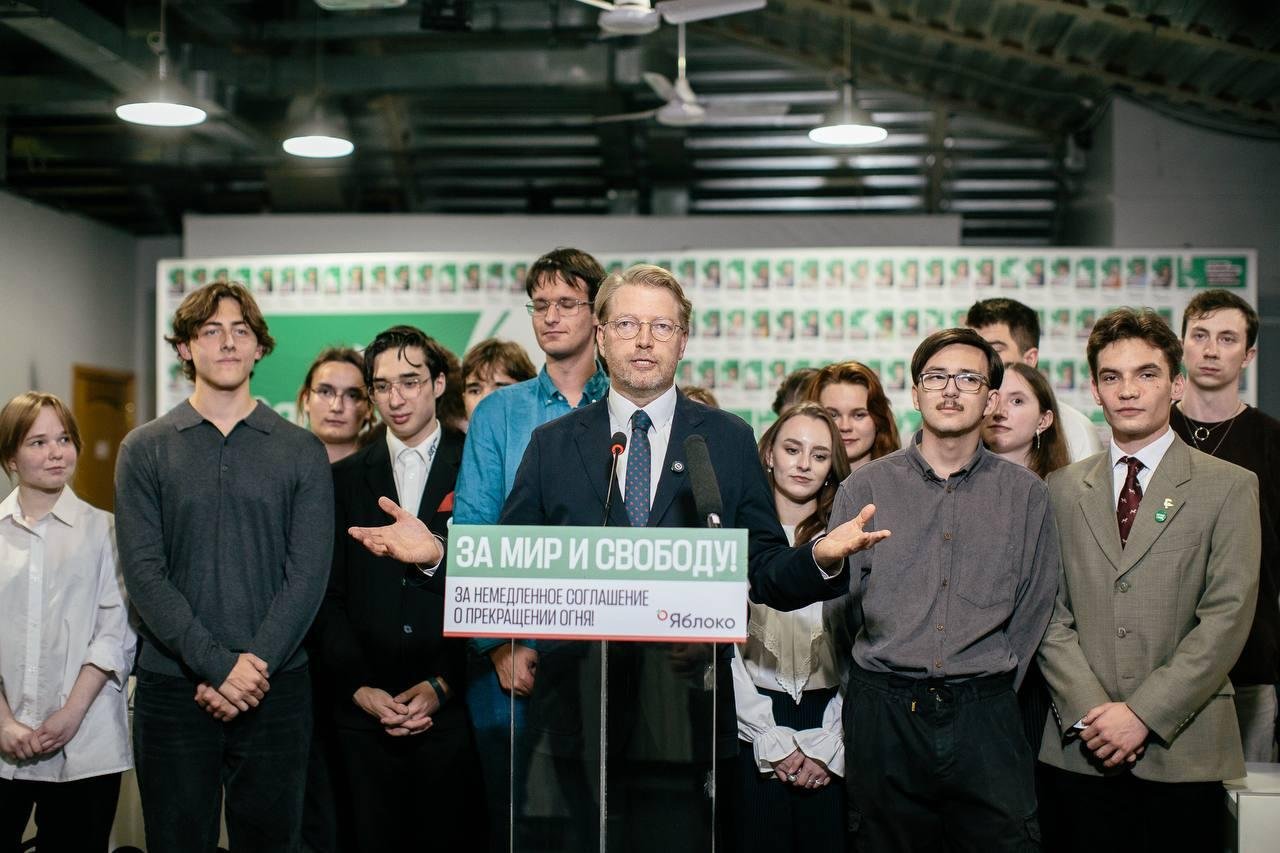
Yabloko’s chairman Nikolai Rybakov said the campaign had shown a substantial public demand for the party’s anti-war agenda despite the removal of its federal list. Had the list been allowed onto the ballot, he said, Yabloko could have come second.
“I can say that this is a political event of global significance, because a party that has not been represented in the country’s parliament for 23 years came second in the polls – in the conditions in which we exist. And the authorities could do nothing about it except strike that party from the ballot.”
How Russians voted abroad…
For Russians voting abroad, 326 polling stations were organised in 152 countries. The Central Election Commission had initially reported 333 stations, but immediately before the vote the number fell to 326. According to Russia’s foreign ministry, more than 212,000 people voted outside the country, counting early and three-day voting.
On preliminary Central Election Commission data, United Russia comes first at the overseas stations with 39.58% of the vote, though its result there was far below the national one. New People came second abroad with 24.49% and the KPRF third with 16.99%.
The results differed markedly from country to country. In a number of large centres of Russian emigration, New People came first.
In some countries voting was accompanied by organisational difficulties. Because the number of Russian consulates has been cut, some voters had to travel to other cities. After the closure of Russia’s consulate general in Bonn, the only polling station in Germany operated in Berlin. In Georgia no stations were opened at all, and the Moldovan authorities approved only one, at the Russian embassy in Chisinau. Queues formed in some cities, and in the Baltic states voting was accompanied by additional checks.
The official spokeswoman for Russia’s foreign ministry, Maria Zakharova, said the Russian side had recorded cases of threats, provocations and acts of violence abroad during the voting period.
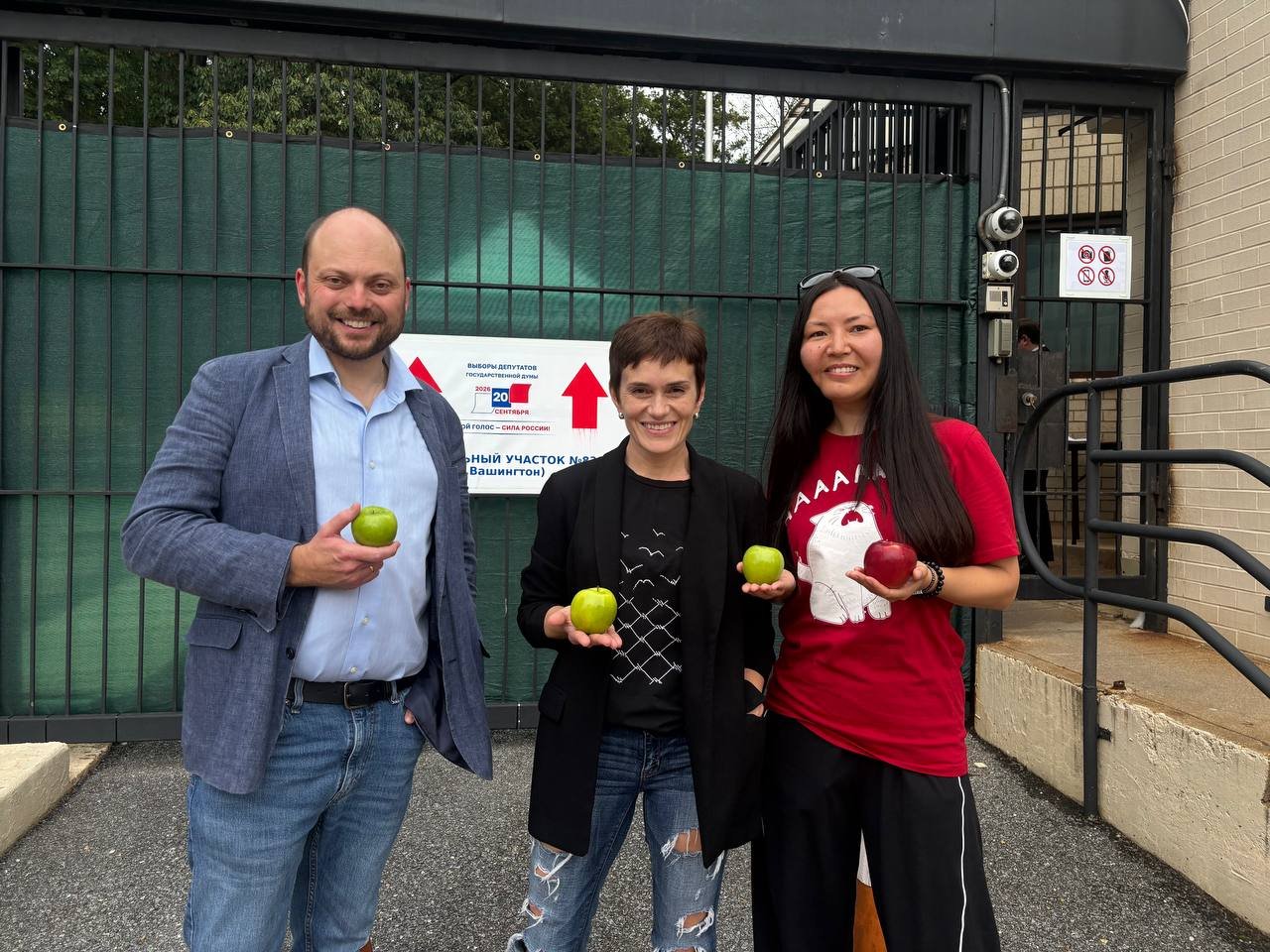
Not all Russians abroad were able to vote. The Russian opposition politician and vice-president of the Free Russia Foundation, Vladimir Kara-Murza, was not admitted to the polling station at the Russian embassy in Washington. As he wrote on his Telegram channel, the reason was that he did not have the right passport.
I planned to cross out all the pro-war parties and write Yabloko onto the ballot, but the chairman of the commission came out to the gate in person and said I would not be allowed to vote.
“You only have an internal passport, and you need a foreign one,” he tells me with a smile.
“But it was you who refused to issue me a foreign passport,” I reply.
“That wasn’t us, that was Moscow” – and the smile grows wider.
We left them the apples anyway.
…and in the occupied territories
United Russia came first on the party lists in all four occupied territories of Ukraine, and its candidates are winning in all seven single-member constituencies created there. In the Donetsk region Irina Kuksenkova took 69.53% of the vote, Alexander Boroday 60.35% and Sergey Makarov 62.38%. In the Luhansk region Denis Kolesnikov and Ivan Sanayev are winning, in Zaporizhzhia Alexey Tikhomirov and in Kherson Elena Dmitruk.
Election commissions also reported turnout far above the national average: around 81% in the DPR, 79.33% in the LPR, more than 79% in the Zaporizhzhia region and 74.61% in Kherson.
After the voting ended, the European Union stated that it recognises neither the holding of Russian elections in the occupied territories of Ukraine nor their results. The EU called the vote a violation of international law and of Ukraine’s sovereignty and territorial integrity, and said sanctions would be applied to those involved in organising the elections and to the candidates who ran there.
Individual EU states issued statements of their own. Poland assessed that the results have no legal consequences and cannot legitimise the attempted annexation of the occupied territories. Lithuania also announced that it will never recognise the results of elections held there, and Estonia said that organising these elections must have consequences at international level.
The United Kingdom, Canada, Australia, New Zealand and Norway issued a joint statement. They called the holding of elections in the occupied territories a gross violation of Ukraine’s sovereignty and stressed that the vote cannot change the international legal status of those territories.
Ukraine’s foreign ministry said separately that including deputies elected in the occupied territories in the new State Duma calls into question the legitimacy of the entire lower house of the Russian parliament.
The Central Election Commission: elections as clean and calm as possible
The chair of the Central Election Commission, Ella Pamfilova, assessed the campaign that has just ended as “as clean and calm as possible”.
According to the commission, 15 observers were removed from polling stations during the voting, including six representatives each of Yabloko and the KPRF. The stated reason was interference in the work of election commissions and the provoking of conflicts.
“Another 17 members of election commissions in four regions were suspended from work,” Pamfilova said. Six of them represented Yabloko. Among the reasons for suspension the commission chair named the deliberate spoiling of ballots.
According to Pamfilova, the commission recorded two cases of ballot stuffing during the elections, and the material on them was passed on for further examination.
One such episode occurred in the Republic of Mari El. The KPRF State Duma deputy Sergey Kazankov published a video showing a member of a precinct commission dropping several ballots into the box at once after observers had left the room. The regional election commission confirmed the violation: the chair, the deputy chair and another member of the precinct commission were suspended, and the ballots concerned were ruled invalid.
The KPRF raised objections to the conduct of the elections. After the first results were published, the party’s leader Gennady Zyuganov spoke of problems encountered by Communist observers. According to him, the party intends to compare the copies of protocols obtained at polling stations with the official results.
“During the election campaigns, tendencies came to light that have come to us from the turbulent 1990s. That absolutely cannot be allowed,” Zyuganov said.
According to the project “Elections 2026 – Observing Together!”, as of 21 September 1,048 reports of possible violations from 64 regions had been published on its map.
A critical assessment of the results came from the political analyst Boris Ovchinnikov. On the basis of his own statistical analysis he puts the share of falsified votes for United Russia at roughly 55% of all the votes credited to the party, while among votes cast on paper ballots the share he considers falsified is around 31%.
By Ovchinnikov’s calculations, leaving aside the roughly 3 million voters who registered for remote electronic voting, actual turnout may have been below 40%. He also claims that outside Moscow signs of artificially inflated turnout are found at about 69% of polling stations.
“In Moscow offline turnout was not inflated, but it looks as though the distribution of votes between candidates was falsified on a large scale – nothing like it since 2011,” Ovchinnikov writes.
Official Russian and Belarusian sources cited in this text are for informational purposes only. Content from these sources may constitute disinformation or propaganda.