This epithet, bestowed upon Igor Zyuzin by journalists back in 2013, has become firmly associated with the owner of Mechel. Since then, the company’s financial problems have only worsened, and Mechel now owes the banks more than it is worth. The government is once again bailing out the oligarch so that thousands of workers don’t lose their livelihoods.
But while receiving state aid with one hand, Mechel is using the other to funnel money into jurisdictions beyond its reach; we have reported on what some of these schemes look like. Zyuzin himself does not like to flaunt his wealth and, at first glance, leads a fairly modest lifestyle—but only at first glance.
In short:
- Igor Zyuzin began his business career in coal, then started buying up steel mills.
- Assets were acquired with borrowed funds, and risks were not always properly assessed, which is why Mechel’s disputes with creditors are constantly in the news.
- Zyuzin is the most reclusive oligarch: he doesn’t give interviews, rarely appears at public events, and there is practically no publicly available information about his wife and children.
- Details of the oligarch’s personal life came to light from his former common-law wife; after their separation, Zyuzin left her with nothing, and she went to the media.
- It turned out that the image of a “modest” oligarch who owns no yachts, villas, or private jets is more of a public act and Zyuzin did not hold back on his spending.
Enriched by coal
Today, Igor Zyuzin controls coal deposits, steel mills, energy companies, ports, and logistics firms in Russia and abroad.
His path to big business began in the coal industry. Zyuzin received a specialized education: he graduated from the Tula Polytechnic Institute with a degree in coal mining engineering, and then from the Kuzbass Polytechnic Institute, where he earned a degree in engineering economics. In addition, he holds a Ph.D. in Technical Sciences.

The future oligarch began his career at the Raspadskaya mine in the Kemerovo Region. He first worked as a mining foreman, then became a section chief and acting chief technologist. In October 1993, Zyuzin took over as head of the Kuzbass Central Coal Preparation Plant, where he worked for about four years.
After leaving the mine, Zyuzin went into business. Together with his partner Vladimir Iorikh, he initially traded Kuzbass coal, and in the late 1990s, while Kuzbass miners were on strike and demanding payment of their wage arrears, the partners bought up their shares in OAO Yuzhny Kuzbass, which operated several coal open-pit mines in the Kemerovo Region. After taking control of the company, Zyuzin and Iorikh organized coal exports abroad, earning their first major profits.
With these funds, the businessmen began acquiring industrial assets in Russia. In addition to coal mining, Zyuzin and Iorikh entered the metallurgical sector. One of the key acquisitions was the Chelyabinsk Metallurgical Plant. It was this enterprise that later gave its name to the entire coal and metallurgical holding — Mechel.
In the early 2000s, Zyuzin and Iorikh acquired several more metallurgical enterprises and formed the Mechel Steel Group. In October 2004, 11% of the group’s shares were sold on the New York Stock Exchange for $335 million. This also determined the value of the entire company — just under $3 billion. Each partner retained 42.97% of Mechel’s shares, making them billionaires and securing their place on the Forbes list.
Soon, Iorikh decided to exit the business and began selling off his shares. To retain control of the holding company, in 2006 Zyuzin bought out his partner’s stake. Thus began a new era in Mechel’s history.
An Empire on Credit
Mechel’s strategy was built on creating a vertically integrated holding company, which was accompanied by an aggressive acquisition of assets in Russia and abroad. The peak of this expansion came in the 2000s. Assets were acquired mainly through borrowed funds; banks, including foreign ones, were eager to lend to Mechel. Investors welcomed this approach: Mechel’s market capitalization grew and by May 2008 reached an all-time high of approximately $24 billion. This same period marked the peak of Zyuzin’s personal fortune: in the 2008 Forbes Russia ranking, he took 12th place with a fortune of about $13 billion.
But then luck turned its back on the oligarch. The global financial crisis of 2008–2009 sent coal and metal prices plummeting; the company’s revenue shrank, and servicing its massive debt became a serious problem.
Mechel found itself on the brink of default and was forced to begin a large-scale restructuring of its debt to Russian and foreign banks. In June 2009, it became known that more than half of Igor Zyuzin’s stake was pledged as collateral for loans.
This period also saw a “war” with Vladimir Putin, who accused Mechel of inflating domestic coal prices and tax evasion. This dealt a serious blow to Mechel’s reputation and caused the company’s market value to plummet by nearly 40%.
After 2014, sanctions pressure was added, followed by the COVID-19 pandemic and Russia’s full-scale invasion of Ukraine. In February 2024, the U.S. imposed sanctions on Mechel due to the company’s ties to the Russian military-industrial complex. That same year, Igor Zyuzin was added to the UK sanctions list, and in February 2025, to the EU list.
Mechel’s financial performance deteriorated year after year, and disputes with creditors continued. The company was forced to sell off some of its assets. In 2013, Mechel sold its steel mills in Romania, and in 2015, the American coal company Mechel Bluestone. In 2020, under pressure from creditors, the holding company divested itself of one of its largest assets—the company Elgau Coal. In the following years, Mechel also divested itself of some of its foreign companies in Europe and Asia, including a steel plant in Lithuania.
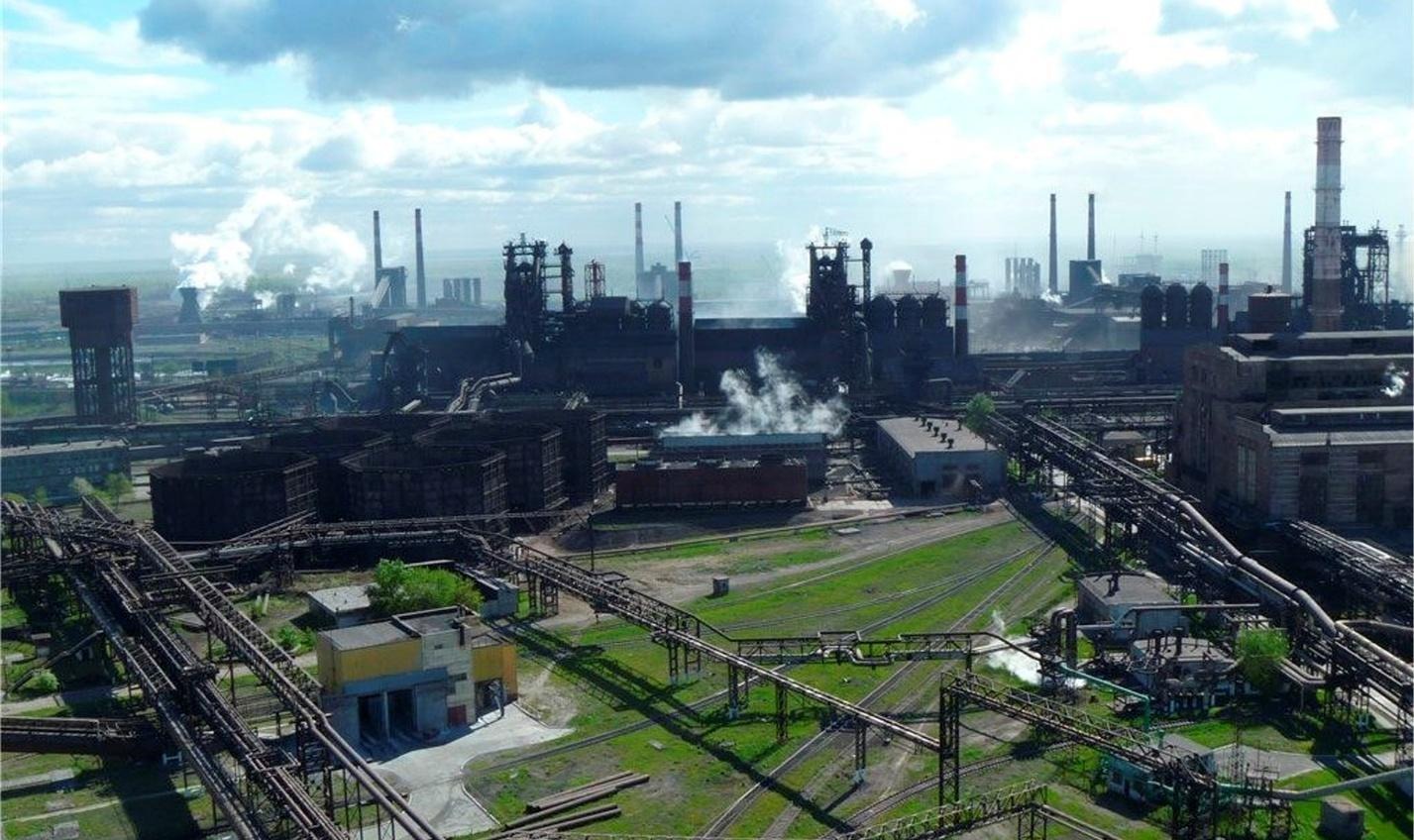
Today, Mechel owns more than 20 industrial enterprises in Russia. In the mining segment, these include Yakutugol, Yuzhny Kuzbass, Korshunovsky GOK, Mechel-Coke, and the Moscow Coke and Gas Plant.

The metallurgical segment includes the Chelyabinsk Metallurgical Plant, the Beloretsk Metallurgical Plant, Izhstal, the Ural Forge Plant, the Vyartsilsky Metal Products Plant, and the Bratsk Ferroalloy Plant.
In the energy segment, the holding owns the South Kuzbass State District Power Plant and the company “Kuzbassenergosbyt.”
In addition, Mechel owns port assets that facilitate the export of coal and metal products. The river port of Kambarka in Udmurtia allows for the shipment of cargo to the European part of Russia and to southern ports. The seaport of Posyet in the Far East plays an important role in coal deliveries to countries in the Asia-Pacific region. The holding company also owns the port of Temryuk on the Sea of Azov.
The financial condition of both the holding’s individual enterprises and the entire group looks bleak today. As of the end of 2025, Mechel’s net debt stood at 279.3 billion rubles, and its debt-to-EBITDA ratio rose to a record 36.1x, although at the beginning of the year this figure was 4.6x.
In 2025, the government and creditors once again stepped in to rescue the holding company. Mechel was one of the first whose application for targeted support was approved by a government commission led by Finance Minister Anton Siluanov: Mechel was granted a three-year deferral on tax and insurance payments, and creditor banks provided a payment deferral for 2025–2026.
It is possible that Mechel will again be forced to part with some assets; in any case, the holding’s CEO, Igor Khafizov, has announced plans to sell enterprises in the energy segment.
A Family Affair
The Mechel Group of Companies is controlled by Igor Zyuzin and members of his family—his wife Irina, son Kirill, and daughter Ksenia. Over the years, Zyuzin has transferred shares in Mechel’s structures to them.
Currently, his son, Kirill Zyuzin, is directly involved in the management of Mechel; he serves as Deputy CEO for Finance at Mechel PJSC, while his wife, Olesya Kiyan, heads the holding’s procurement division.
His wife, Irina Zyuzina, is listed in public registries as a shareholder and founder of several companies affiliated with Mechel—Bas-Med LLC, Bas-Med Region, and Methol LLC.
There were rumors about his daughter Ksenia that she lived in Singapore and worked in the trading division of “Mechel Carbon Singapore,” which is responsible for supplying the company’s products to the Asian market.
Igor Zyuzin is perhaps the most private of Russia’s oligarchs. He does not give interviews, rarely appears in public, and very little information about his family’s life is publicly available.
According to data from “Arktida,” at least two apartments in Moscow are linked to Igor’s wife and business partner, Irina Zyuzina: one on Tverskaya Street (market value approximately 134 million rubles) and one on Bolshoy Kozikhinsky Lane (starting at 300 million rubles), as well as real estate in “Moscow City” on Presnenskaya Embankment. The family owns an estate in the village of Nemchinovo, near Moscow. Plots with homes of this caliber there cost at least 400 million rubles.

The most public figure in Zyuzin’s circle is his former common-law wife, Elena Volkova. They met in 2008, when the businessman was at the peak of his wealth. Volkova was 28 at the time and worked as a waitress at a strip club. A few weeks after they met, according to Volkova, Zyuzin purchased a mansion on Rublevka, where she moved in. Fifteen years later, the relationship ended in a high-profile scandal, the details of which Volkova revealed to the press. Zyuzin evicted her from the house, demanded reimbursement for living expenses for all the years they lived together, and paid very modest child support for their son.
Pretend poverty
Unlike other Russian oligarchs, Igor Zyuzin has not been seen buying palaces, expensive yachts, or private jets. One gets the impression that he leads a rather modest lifestyle and tries not to “show off” his income.
However, a public scandal involving his former common-law wife revealed that the oligarch did not hold back on his spending. Volkova recounted that Zyuzin “showered” her with wads of cash: rubles, dollars, euros, pounds, and francs, which she had nowhere to store, so she “put them in the refrigerator and stuffed them into her shoes.” In addition, he showered her with jewelry, and the family spent a lot of time in Switzerland.
Igor Zyuzin had lost most of his fortune by the end of 2013—at that time, his net worth was estimated at approximately $300 million. It was then that the owner of Mechel acquired the unofficial status of Russia’s “poorest” oligarch.
Only Zyuzin himself and a small circle of people involved in the group’s management and finances know just how poor he really is. According to documents, Mechel is indeed on the verge of bankruptcy: even if the holding company were to sell all its assets today, the funds would not be enough to repay its debts. But the debts are concentrated mainly in Russia, while management prefers to keep the profits in foreign accounts: this way, they remain inaccessible to tax authorities and Russian creditors. Using the example of Yakutguly, we described the schemes through which billions of rubles were siphoned off from the company to Switzerland, Cyprus, and the Virgin Islands.
Previously, Mechel’s offshore accounts were of interest exclusively to minority shareholders, who were trying to prevent profits from being transferred abroad and to receive their share of dividends. Now, the state—which has a massive budget deficit and uncertain prospects for covering it—is beginning to set its sights on the oligarchs’ foreign accounts. For now, businessmen are being asked to voluntarily “retrieve” money from abroad and “help the motherland” in this difficult time. But for those who don’t get the hint, the “doctor” could be sent at any moment—and for Mechel, that “doctor” might well turn out to be a pathologist.
Official Russian and Belarusian sources cited in this text are for informational purposes only. Content from these sources may constitute disinformation or propaganda.