
The European Union has begun accession negotiations with Ukraine, which had been blocked by the Hungarian parliament for 17 months. However, Kyiv had to pay a certain price for this. Hungary presented an 11-point plan to protect the Hungarian national minority in Ukraine. The Ukrainian side accepted 10 of these demands, but the mechanisms for their implementation have not yet been defined.
In brief:
- Ukraine and Hungary have reached an agreement on the protection of the Hungarian national minority within Ukraine. Eleven points were discussed.
- Hungary has withdrawn its veto against the start of the negotiation process regarding Ukraine’s accession to the EU.
- Péter Magyar stated that, despite withdrawing the veto, Hungary would not support Ukraine’s accession to the EU, and also indicated how long the rounds of negotiations might take – between ten and fifteen years.
- Members of the Verkhovna Rada of Ukraine are analysing, in their respective committees, the agreements reached by the Ukrainian and Hungarian delegations.
- Meeting Hungary’s demands could set a precedent for other countries, which may then demand similar protection for their own national minorities in Ukraine.
What Hungary and Ukraine have agreed on
Péter Magyar announced on 3 June on social media that Ukraine and Hungary had reached a comprehensive agreement on the linguistic, educational, cultural and political rights of the 100,000-strong Hungarian minority. This refers to the “Action Plan for the Protection of the Rights of Persons Belonging to National Minorities (Communities) in Ukraine”, comprising 11 demands concerning the protection of the Hungarian population in Ukraine, presented to Kyiv by Budapest.
Some of the demands concerning the protection of Hungarians in Ukraine relate to education. Documents certifying educational attainment, external independent assessment papers – with the exception of those on the Ukrainian language and the history of Ukraine – and signage at educational establishments will be permitted to be reproduced in the national minority language. At the same time, certain subjects may be taught in the language of the national minority with the consent of parents. Furthermore, the headteacher or deputy headteacher of an educational establishment located in a municipality with a significant number of members of an ethnic minority will be required to know the language of that national minority.
Competitions will be introduced, including nationwide school Olympiads, to test knowledge of the languages and literature of national minorities (communities) and the indigenous peoples of Ukraine.
Another set of proposals concerns the provision of services within state bodies:
- within local government bodies, executive authorities, municipal enterprises, institutions and organisations, it will be possible to provide services and communicate in the language of a national minority;
- when recruiting civil servants and staff, knowledge of the language of the relevant national minority will be one of the eligibility requirements;
- regulatory and legal acts of local government bodies in localities where a significant proportion of the ethnic population traditionally resides will be reproduced in the language of the national minority;
- the language of the national minority (community) will be used when providing medical assistance, care in care homes for people with disabilities, and assistance in situations threatening life or health;
- the languages of the relevant national minorities (communities) may be used during election campaigns in national and local elections;
- events will be organised to mark Mother Tongue Day for the ethnic population;
- signs bearing official names on the buildings of local government bodies, including district councils and municipal enterprises, shall be displayed in the language of the national minority, subject to a relevant resolution by the local council; the same applies to the names of streets, squares, public spaces and other place names;
- symbols of national minorities may be used during official state ceremonies; however, they must not visually dominate over Ukrainian symbols nor contravene Ukrainian legislation.
Ukraine did not accept the provision guaranteeing a quota for the representation of the Hungarian minority in elected bodies, including parliament, on the grounds that it would violate the Constitution.
How Ukraine plans to implement these proposals
The “Action Plan for the Protection of the Rights of Persons Belonging to National Minorities (Communities) in Ukraine” was added by the Verkhovna Rada of Ukraine to the document concerning the negotiation process for Ukraine’s accession to the European Union under Cluster 1, “Foundations of the EU Accession Process”.
Hungary’s proposals are currently being discussed in the committees of the Verkhovna Rada of Ukraine. Rostyslav Pavlenko, a Member of the Parliament of Ukraine and member of the Verkhovna Rada Committee on Education, Science and Innovation, explains in an interview with Black Sky that, for the time being, there are only framework agreements reached by the delegations. Previously, the Ukrainian Ministry of Foreign Affairs and the Ministry of Education had effectively been sidelined on issues relating to national minorities; consequently, discussions are now underway on how to implement these arrangements.
The MP reports that ways of implementing the agreements are still being sought, particularly regarding language and symbols.
The Hungarians want to restore the possibility of a full education in their own language, bypassing Ukrainian, but we say: no. You may know it, you may use it, there are subjects taught in your language, but you study in Ukrainian and must use the Ukrainian language. That is what they do not want. And where to find a balance here – that remains an open question – says Rostyslav Pavlenko.
How Hungary’s demands may conflict with Ukrainian law
In 2019, a law was passed to ensure the functioning of the Ukrainian language as the state language, which sparked a wave of outrage among Hungarian partners, particularly due to provisions that are now being sought to be amended following agreements between Ukraine and Hungary. The Act stipulated that representatives of national minorities have the right to be taught in primary school in the language of the national minority alongside the state language, whilst in higher years and at universities, teaching takes place in Ukrainian, with provision for the teaching of the national minority language. Changes are currently being planned which will allow members of national minorities to choose a specific number of subjects taught in the national minority language at all levels of education.
As regards the provision of services, particularly within state administrative bodies, services are currently provided exclusively in the official language. The new measures provide for the inclusion of Hungarian on an equal footing with Ukrainian in localities inhabited by members of this minority. This also applies to signs and inscriptions on administrative buildings, street signs, public events, election campaigns and other matters.
State symbols are a separate issue. Ukraine’s law “On the State Symbols of Ukraine” stipulates that the national flag of Ukraine must be permanently displayed on administrative buildings housing state authorities, local government bodies and the authorities of the Autonomous Republic of Crimea. On public holidays, the flag may be displayed on the administrative buildings of state-owned enterprises, institutions, organisations and educational establishments, as well as on residential buildings.
The use of the symbols of other states is strictly regulated by the Law of Ukraine on measures to regulate the use of flags and other state symbols of foreign states on the territory of Ukraine. Under this law, the state symbols of other states may be displayed at consulates. During state, official or working visits by heads of foreign states, speakers of parliaments and heads of government of other states, as well as foreign ministers, the symbols of other states may be used in state authorities, local government bodies, state institutions, enterprises and organisations. Furthermore, with the consent of the central executive authority, in the aforementioned cases it is permitted to display the state symbols of another country inside or on the façades of buildings. Any other instances of displaying the symbols of other states in Ukraine are prohibited. This is why the Hungarian side is attempting to legalise its own symbols in municipalities inhabited by members of minority groups.
Why has there been no reaction to this change in Transcarpathia?
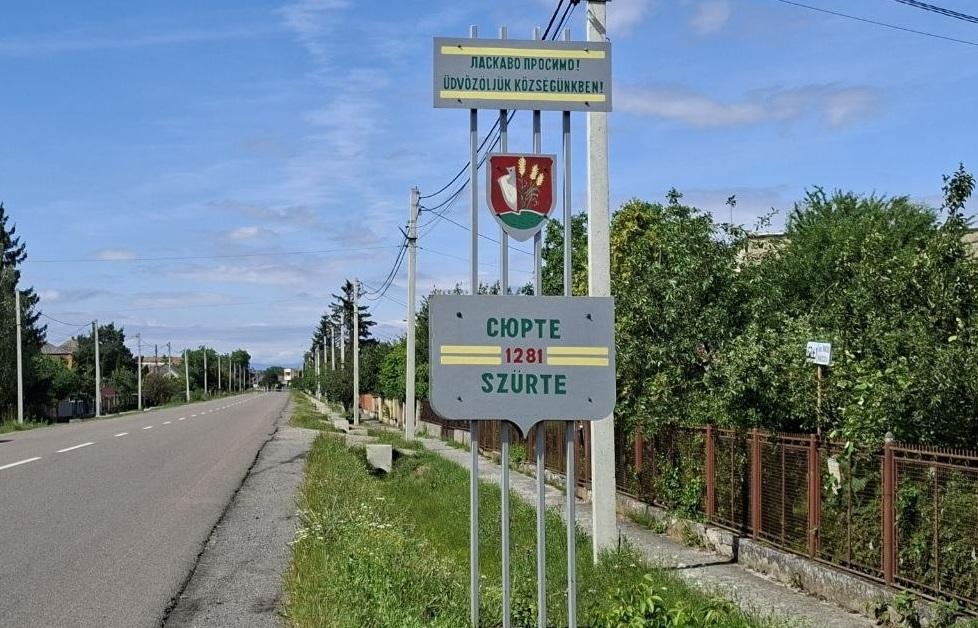
Despite the ban on the permanent display of symbols of other states, Hungarian flags have long since found their place on the buildings of local government bodies in municipalities inhabited by the Hungarian national minority. The Berehove district is often cited in the media as a striking example of the presence of the Hungarian national minority in Transcarpathia, as it is home to the largest concentration of Hungarians in the region. On the one hand, this is hardly surprising: the nearest border crossing with Hungary is only about 7.8 km from Berehove, whilst the regional capital, Uzhhorod, is 35 km away from Berehove. However, as an example, we will look at the situation in a village situated slightly closer to the regional capital – the village of Surte, just 15 km from Uzhhorod.

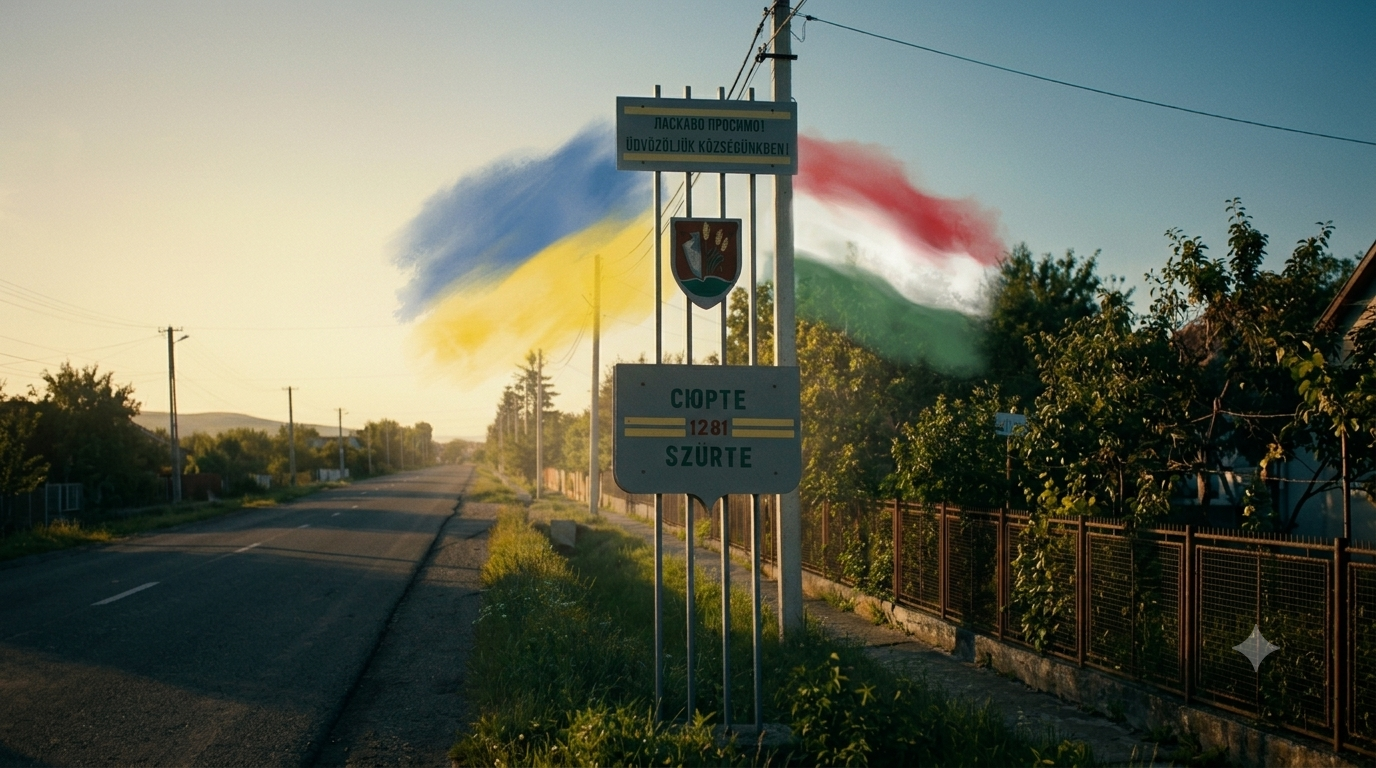
The village is located 11.4 km from the Chop–Tisa border crossing with Hungary and has long had a dual name in Hungarian.
Just beyond the village, however, lies a border crossing to another neighbouring country – Slovakia. The Mali Selmentsi–Velyki Selmentsi pedestrian border crossing is a mere 7.2 km away, but the municipality does not identify with the Slovak minority. Two flags have been displayed on the municipal headquarters building, and the name of the administrative building is given in two languages.
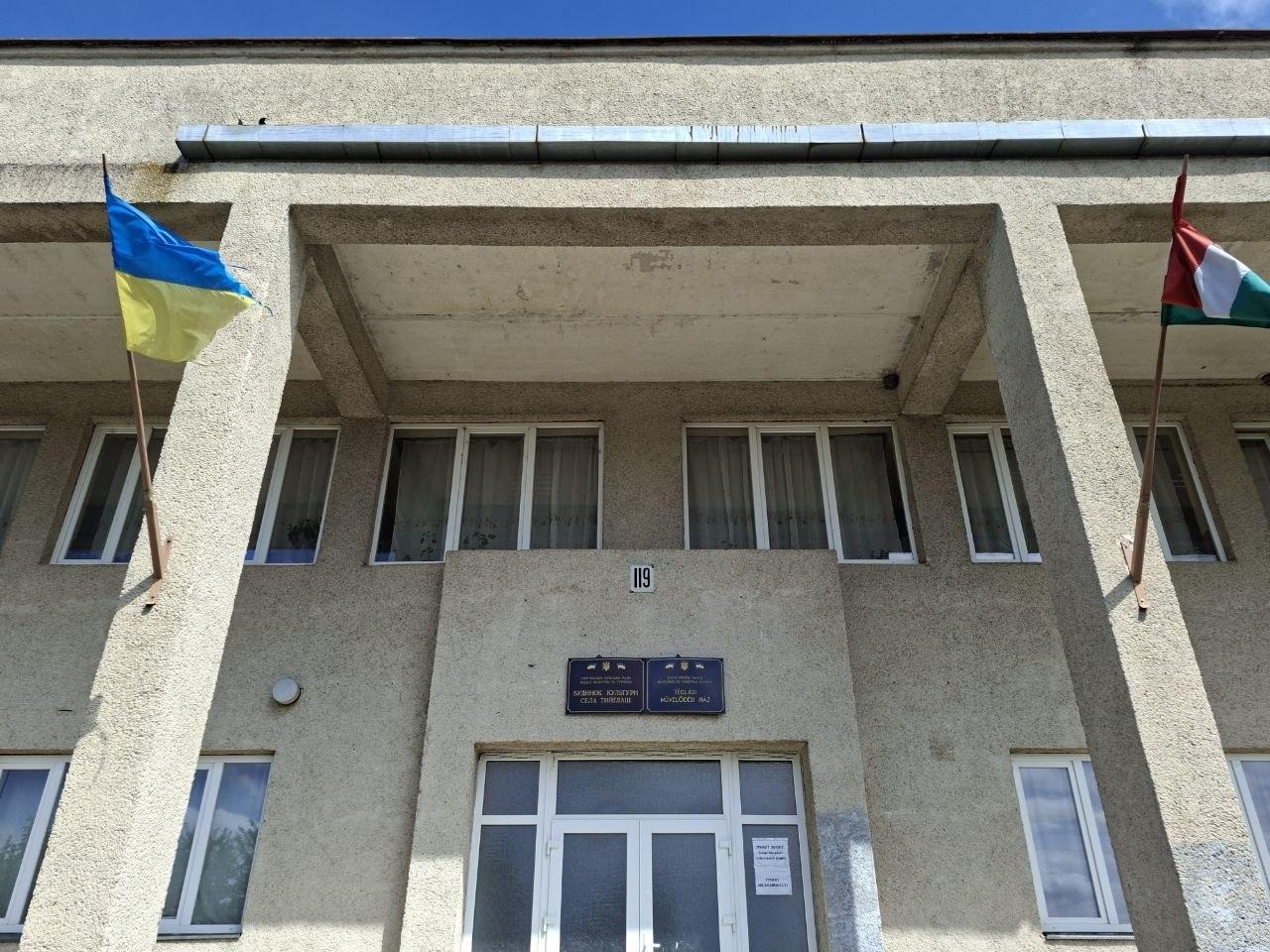
Similar references to Hungarian ethnicity can also be found on other buildings – cultural centres, nurseries and schools.
This community is looking to a future in which the recently discussed agreements between Ukraine and Hungary have already been implemented. It is not alone in this.
What are the risks associated with extending protection for ethnic Hungarians in Ukraine
Ukraine actively supports national minorities and works to protect their languages. On 12 June, the President of Ukraine signed Law 4699-IX and expanded the list of languages protected under the European Charter for Regional or Minority Languages to 18. This is one of the longest lists within the Council of Europe; however, the issue of protecting the languages of national minorities remains an open and sensitive one for Ukraine.
Rostyslav Pavlenko, a member of the Verkhovna Rada of Ukraine, believes that the swift incorporation into Ukrainian law of the agreements reached between the Hungarian and Ukrainian sides could set a precedent for other countries in terms of extending the rights of their own national minorities in Ukraine.
For the time being, we have managed to keep other countries within the framework of existing agreements, but there has been a change of government in Bulgaria and there will certainly be others to follow. We appear to have constructive cooperation with Romania for the time being, but the situation may also change. If a government crisis were to arise there, we cannot know who would come to power and what issues they would raise. Therefore, to put it very briefly: yes, there is a risk that other countries may also demand that the rights of their own national minorities in Ukraine be extended. This is precisely why we must try to oppose this, so as not to set a precedent in international relations,” says Rostyslav Pavlenko.
Julia Derdiuk