On 15 August, the Ukrainian Armed Forces struck the Progress Rocket and Space Centre, which manufactures engines for the Soyuz family of launch vehicles. Launch vehicles of this type are used by the Russian Federation to place ‘Rassvet-3’ low-orbit satellites into orbit. Ukraine had previously carried out a series of strikes on space communications centres in Russia.
In brief:
- In March 2026, Russia entered the active phase of deploying a system of low-Earth orbit satellites to establish satellite communications as part of the ‘Rassvet’ programme — 31 satellites have now been launched into orbit.
- Ukraine attempted to disrupt the launch of the first batch of satellites from the Plesetsk spaceport.
- The second launch of the “Rassvet-3” satellites took place on the night of 18–19 July, following a similar scenario.
- Following a failed attack on Plesetsk, the Ukrainian Armed Forces began striking space communications centres.
- The Ukrainian Armed Forces struck a Roscosmos research institute and workshops where engines for ‘Soyuz’-type launch vehicles are manufactured.
How Ukraine is threatened by the ‘Rassvet’ space programme
On 23 March 2026, the Russian Federation moved into the active phase of deploying the ‘Rassvet’ satellite communications network, launching the first batch of 16 ‘Rassvet-3’ satellites into orbit.
As early as July 2026, a Soyuz-2 launch vehicle lifted off from the Plesetsk Cosmodrome carrying a second batch of 16 low-Earth orbit satellites.
Subsequently, the Ukrainian publication ‘Military’ reported that the Russians had managed to achieve stable coverage over Ukraine at intervals of around one hour. Even assuming the slowest possible pace of programme deployment, it is forecast that by March 2027, Russia will achieve round-the-clock coverage over the line of contact, enabling Russia to utilise satellite communications across the entire front line.
Russia is taking security measures during launch operations
During the first batch launch of 16 ‘Rassvet-3’ production satellites, which took place on 23 March 2026, restrictions were imposed on shipping and airspace in Plesetsk between 20 and 26 March 2026. The duration of these restrictions was dictated by security measures designed to prevent the precise time of the rocket launch from being determined.
Russian media reported attempts by the Ukrainian Armed Forces to attack the cosmodrome during the launch of the first batch of satellites, but the Ukrainian authorities did not confirm these attacks. At the same time, Russian politicians levelled accusations at the Ukrainian armed forces, arguing that ‘space should be free from politics’. However, the use of satellite communications for military purposes automatically turns space-based objects into military targets.
Restrictions on airspace and shipping during the second launch of the ‘Rassvet-3’ satellites from the Plesetsk spaceport were imposed for the period from 11 to 19 July 2026.
Ukraine has changed its approach in its attempts to disrupt the ‘Rassvet’ space programme
In early August, the publication ‘Defense Express’ analysed a scenario involving the potential shooting down of Russian satellites in orbit and cited the example of the ‘Kosmos-252’ interceptor satellite, which destroyed the target satellite ‘Kosmos-248’ — an operation carried out by the USSR on 1 July 1968. However, Ukraine does not have access to such resources. In particular, the publication notes that the current density of space objects in orbit is so high that it is practically impossible to destroy a specific object without damaging others.
Ukraine is therefore pursuing a different strategy — striking ground-based infrastructure.
Since June 2026, the Ukrainian military has targeted a number of space communications centres in Russia:
- On 22 and 30 June, the ‘Dubna’ Space Communications Centre in the Moscow Region was struck. The centre is used for military communications and to control satellite transponders employed by the Russian Ministry of Defence for communications, reconnaissance and the coordination of troops.
- On 22 June, the ‘Vladimir’ Space Communications Centre near Gus-Khrustalny in the Vladimir Region was damaged.
- On 26 June, a strike hit the Space Communications Centre (SCC) of the Armed Forces of the Russian Federation near the village of Beloomut in the Moscow Region. This is the most modernised and powerful communications hub of the Russian Armed Forces in the central region.
Previously, in early March, the Ukrainian Armed Forces carried out an attack on the Yevpatoria Long-Range Space Communications Centre near Vitin in Crimea, which had been occupied and was being used by Russian forces for military purposes.
Space communications centres are ground-based complexes that monitor the technical condition of satellites in orbit, control them and adjust their trajectories. They are also responsible for collecting, processing and transmitting data. Both civilian and military information passes through these centres.
The Ukrainian Armed Forces are attempting to destroy missiles well before launch
In addition to space communications centres, the Ukrainian military has set its sights on destroying enterprises involved in the manufacture of key components for the Russian defence industry. For instance, on 1 July, the sanctioned Research Institute of Physical Measurements in Penza, which forms part of Roscosmos, came under drone attack.
The General Staff of the Ukrainian Armed Forces reports that the facility manufactures, amongst other things, sensors for cruise and ballistic missiles (Iskander, Kalibr, Kh-101), components for aircraft avionics (Su-34, Su-35, Tu-95MS) and equipment for military space programmes (reconnaissance satellites).
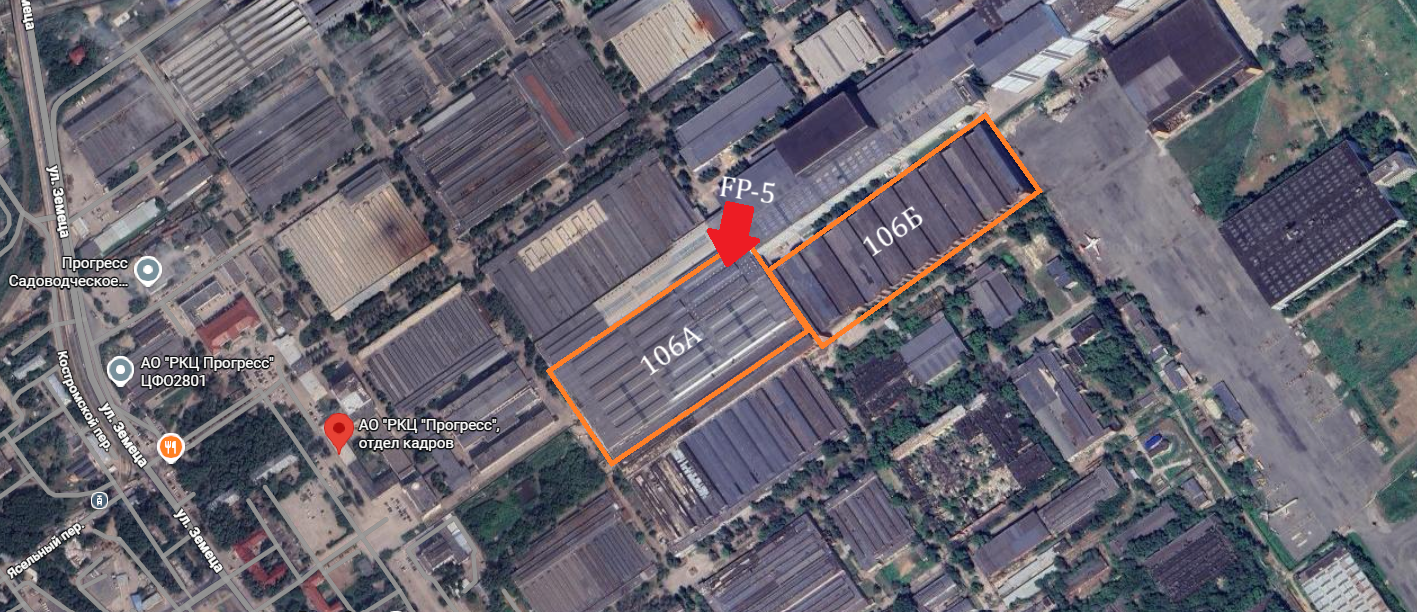
On 15 August, the Ukrainian Armed Forces struck the ‘Progress’ Rocket and Space Centre in Samara. Damage to the production workshop where engines for the ‘Soyuz’ family of launch vehicles are assembled has been confirmed.
It was precisely the ‘Soyuz-2’ launch vehicles that were used by ‘Bureau 1440’ during both launches of the ‘Rassvet-3’ low-Earth orbit satellites from the Plesetsk cosmodrome.
According to its original plan, ‘Bureau 1440’ had stated its intention to place at least 252 low-Earth orbit satellites into orbit. If the space programme proceeds according to the original scenario, Roscosmos will need more than 15 additional launch vehicles to place a sufficient number of satellites into orbit. Therefore, attacks on Ukraine could significantly slow down the roll-out of the space programme.
Read also: Russian Starlink: the Russian space programme is expanding
Yulia Derdyuk