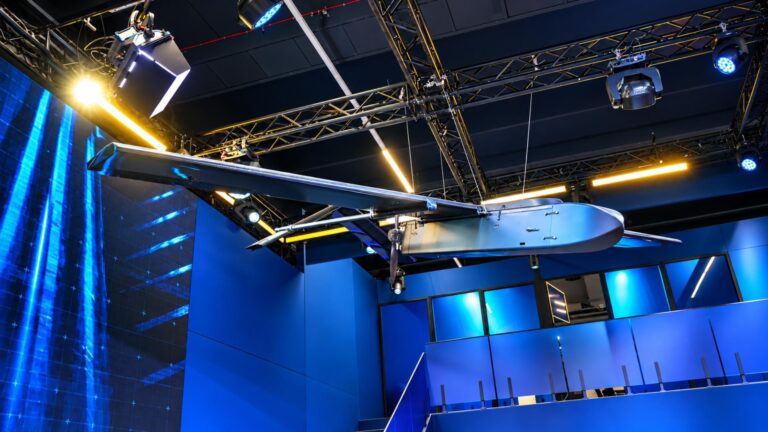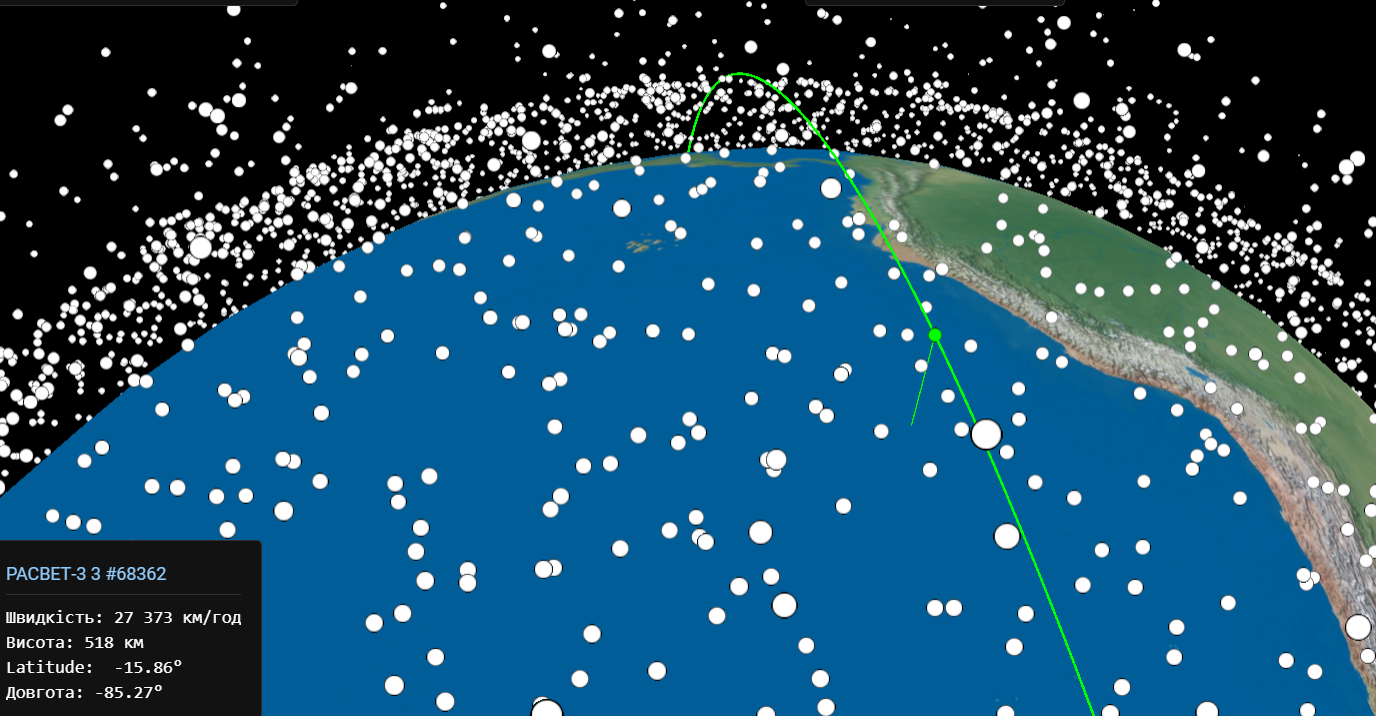
Russia has launched the second batch of “Rassvet-3” satellites, designed to create a network of satellite internet coverage over Russia. This is the second launch since the start of the year. There are currently 30 satellites in orbit. Analyst and founder of RussianSpaceWeb Anatoly Zak told ‘Black Sky’ how long it will take Russia to get its own satellite internet system up and running.
In brief:
- Since 2023, Russia has been developing its own satellite internet coverage system — the ‘Rassvet’ space programme.
- In March 2026, the first launch of ‘Rassvet-3’ satellites into orbit took place from Russia.
- The Russian satellites are planned to be placed in orbit at an altitude of 800 kilometres, in contrast to the American Starlink satellites, which are positioned at an altitude of approximately 550 kilometres.
- In July 2026, the space agency ‘Bureau-1440’ launched a second batch of satellites.
- ‘Bureau-1440’ reports that it is ready to begin establishing satellite communications as soon as the spacecraft reach their operational altitude.
What is the ‘Rassvet’ space programme?
In 2023, Russia began the active operational phase of its space programme for a satellite communications system modelled on the American Starlink system. The ‘Rassvet’ space programme is managed by the aerospace company ‘Bureau-1440’.
In 2025, individual test satellites of the ‘Rassvet’ and ‘Rassvet-2’ models were launched, but it was not until March 2026 that the first mass launch of 16 ‘Rassvet-3’ satellites took place, into an orbit at an altitude of 336 kilometres from the Plesetsk Cosmodrome.
The key difference with modern satellite internet systems is that the satellites are positioned in low Earth orbit. Unlike the satellite internet system that has been in operation since the 1960s, where satellites were positioned at a fixed distance of 36,000 kilometres, modern systems involve placing satellites at a distance of 550–800 kilometres, which requires them to be in constant motion to ensure full coverage.
“These satellites are constantly moving; as they are in low Earth orbit, they appear to be constantly shifting from the perspective of an observer on Earth. That is why a large number of them are needed. Because when one satellite moves out of sight, another must be available. Consequently, this system must have hundreds or thousands of satellites, depending on the orbital altitude,” explains Anatoliy Zak.
What has become of the first batch of Russian satellites?
On 16 March, the Russian authorities issued a warning to maritime and air traffic in the Barents Sea due to a rocket launch scheduled for the period from 19 to 28 March 2026, during a 10-hour window from 11:00 to 21:00 Moscow time.
The launch of the first batch of 16 satellites took place on 23 March. Approximately 8.5 minutes after lift-off, the satellites were placed into their initial orbit of 290 by 324 kilometres, with an inclination of 82.3 degrees to the equator.
On 31 March 2026, the US Space Force catalogued 15 ‘Rassvet-3’ objects associated with the launch of the ‘Soyuz’ spacecraft on 23 March, whilst on 2 April, NORAD identifiers were assigned to a further two objects. These comprise 16 ‘Rassvet-3’ satellites and the upper stage of the ‘Fregat’ launch vehicle.
Anatoliy Zak explains that, given the satellites’ initial inclination of 82.30 degrees to the equator, it is possible to draw conclusions about the agency’s future plans to position the satellites at an operational altitude of 800 km:
“The satellites launched in March never reached an altitude of 800 km. They are all at various altitudes within 500 km above sea level, which is 300 km lower than the stated altitude.”
The satellites’ first manoeuvres did not begin until two weeks later. It was expected that the satellites would begin to gain altitude, but only a few of them were moving in the direction of gaining altitude, moving away from their initial orbit by approximately 40–50 kilometres. Anatoliy Zak the satellites’ erratic movement to difficulties encountered by the space agency whilst attempting to control a large number of satellites simultaneously, which is why they decided to manoeuvre in small groups.
However, in early June, a satellite that had remained stationary until then re-entered the Earth’s atmosphere and burned up.
How many satellites are needed to establish an internet connection
The American Starlink system, which has been available to the general public since 2020, comprises around 10,000 spacecraft in orbit and provides internet coverage across virtually the entire globe.
Anatoliy Zak explains that ‘Bureau-1440’, in the documentation submitted to the International Telecommunication Union, outlined two possible scenarios for the development of the space programme. The first involves deploying satellites at an operational altitude of 800 kilometres above sea level with an inclination of 82.3 degrees. Under this scenario, to ensure stable coverage, 12 orbital planes are required, each containing 21 satellites (approximately 252 satellites in total). The other option involves a 600-kilometre orbit with an inclination of 60 degrees, which would require 45 satellites in each of 30 orbital planes (over 1,350 satellites).
According to preliminary information, the first launch was planned for December 2025, but did not take place until four months later. The second batch of satellites was launched into orbit on 20 July 2026, just three months after the first.
Anatoliy Zak believes that the delays were due to technical issues, but by resolving them, Russia is streamlining the launch process for itself, and in future we can expect only an acceleration in satellite launches and their deployment to operational altitude.
The launch of the second batch of satellites in July followed a very similar scenario. Sixteen satellites aboard a ‘Soyuz-2’ launch vehicle were launched from the Plesetsk Cosmodrome. The Russian authorities had previously announced periods of restrictions on shipping and flights over the Barents Sea, each lasting around 24 hours, in order to make it more difficult to determine the exact launch time.
On 24 July, the US Space Force catalogued the expected 17 objects (16 satellites and the upper stage) in orbit at 290 by 327 kilometres, with an inclination of 82.3 degrees to the equator.
Could Russia start using satellite communications in the near future?
On 20 July, ‘Bureau-1440’ published a statement on Telegram regarding the successful launch of the second batch of spacecraft: ‘Following the completion of checks and the operational activation of subsystems, the satellites will begin their transition to their target orbit to provide communications services.’
Anatoliy Zak explains that, in theory, Russia could begin establishing satellite communications even with a small number of satellites. However, the way satellite connections work means that communication is only possible if a satellite is within line of sight.
The satellites move relative to Earth’s orbit, whilst the Earth itself also continues to move.
“Satellites can be positioned so that the chain has a single long communication period, or they can be positioned so that there are many very short periods. However, a single longer period also involves a long gap without communication. At present, we can see that the Russians are attempting to implement the first scenario, positioning the satellites in a conventional chain,” — says Anatoliy Zak.
At the end of July, the satellites from the second batch began their orbital ascent and had already reached a significant altitude by 5 August.
The Ukrainian publication ‘Military’ reports that Russian satellites are currently passing over Ukraine four times a day, but only twice is their orbital altitude sufficient to establish a stable connection. The positioning of the satellites allows for two communication windows lasting 1–1.5 hours.
Yulia Derdyuk