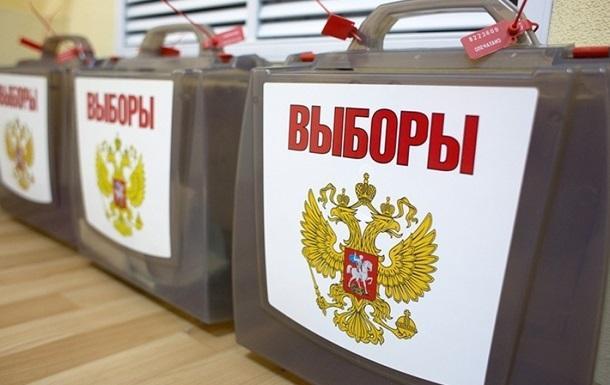

Voting in the State Duma elections begins in Russia on 18 September. The organisers had planned to run this parliamentary campaign as calmly and predictably as possible, but in the end they created a problem for themselves: first they registered Yabloko’s federal list, and then they struck it from the ballot. That only added to the popularity of the Yabloko candidates running in single-member constituencies.
Although there is no minimum turnout threshold in State Duma elections, the authorities want as many Russians as possible to come to the polling stations. Vladimir Putin has joined the effort to mobilise voters personally: he has linked taking part in the elections to supporting the country in wartime.
In brief:
- Voting in the State Duma elections begins on 18 September. In parallel, Russians will elect the heads of 11 federal subjects, and elections to regional legislative assemblies will be held in another 39 subjects
- For the first time, Russia is holding State Duma elections in the Donetsk, Luhansk, Zaporizhzhia and Kherson regions, annexed in 2022
- The elections will be valid whatever the turnout, but the authorities want Russians to take part in the largest possible numbers. Vladimir Putin has joined the effort to mobilise voters personally
- The party of power – United Russia – will, according to the polls, keep its majority in parliament; the Communists, the LDPR and New People will also enter the State Duma
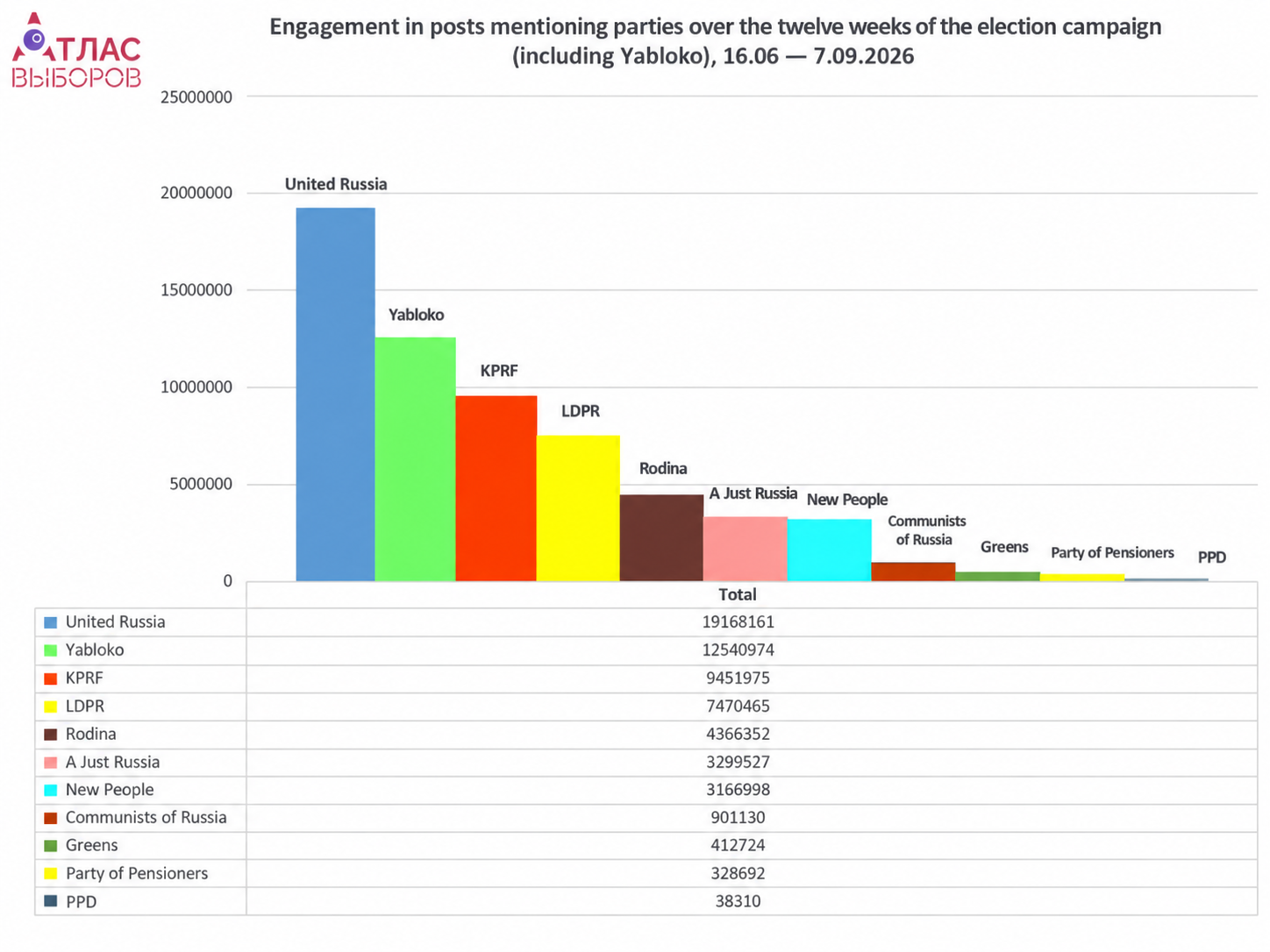
- Despite having its federal list struck from the ballot, Yabloko has not lost its audience: the number of reactions and comments under social-media posts mentioning the party has grown 80-fold
- The opposition has no single strategy on voting: the options range from a full boycott of the elections to spoiling ballots
A single voting day
Russia’s single voting day falls on 20 September this year – the State Duma elections and most regional and municipal campaigns are timed to that date. In practice, however, voting will last three days – 18, 19 and 20 September.
The main nationwide campaign is the election of deputies to the ninth State Duma. Of the 450 deputies, half will be elected from party lists and the rest in single-member constituencies.
At the same time, Russians will elect the heads of 11 federal subjects: in eight regions by direct vote, and in three more through regional parliaments. In addition, elections to regional legislative assemblies will be held in 39 subjects.
Voting is possible both at polling stations and remotely. Remote electronic voting, however, is available in only 32 regions.
Russian citizens who are abroad may also take part in the State Duma elections. For them, 319 polling stations will operate in 152 countries.
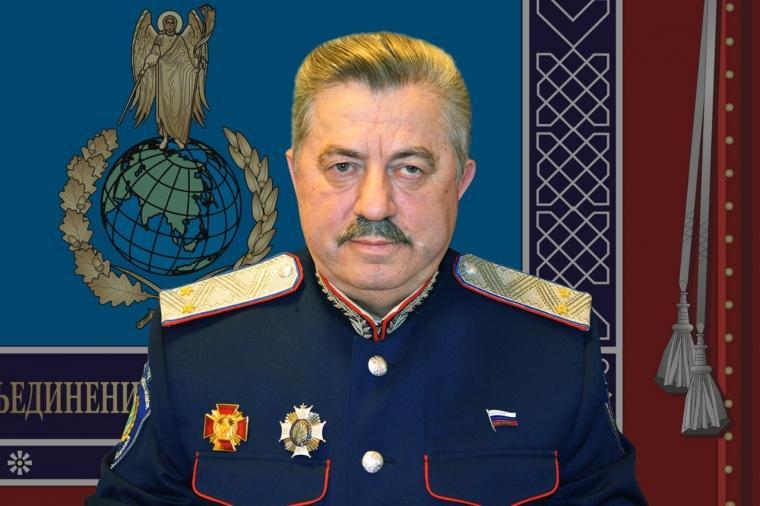
For the first time, Russia is holding State Duma elections in the Donetsk, Luhansk, Zaporizhzhia and Kherson regions, annexed in 2022. United Russia has paid particular attention to these territories. The party has merged the DPR, the LPR and the Zaporizhzhia and Kherson regions into a single regional group of 20 candidates. It is headed by the sitting State Duma deputy Viktor Vodolatsky, a former ataman of the Almighty Don Host.
Putin: taking part in the vote is a contribution to Russia’s victory
According to the latest data from VTsIOM, 70% of Russians say they intend to take part in the State Duma elections, and 54% say they will definitely go to vote. The projected turnout, however, is noticeably lower – 51–53%.
That is comparable with the previous Duma elections: turnout was 51.72% in 2021 and 47.88% in 2016. The elections are recognised as valid even if very few voters turn up: there is no minimum turnout threshold in State Duma elections – it was abolished in 2006.
For the authorities, however, a high turnout matters as an indicator of public support for the current course, and above all of support for the “special military operation”. According to information from Meduza, the authorities intend to make extensive use of administrative resources and of so-called corporate mobilisation – employees of state-funded institutions, state corporations and large companies whose management is loyal to the Kremlin will be brought to the polls in an organised fashion.
Vladimir Putin has also campaigned for participation in the elections personally. On 16 September he addressed Russians, directly linking taking part in the vote with supporting the country in wartime and saying that it would be a contribution to Russia’s victory:
“Your choice and your will will once again show that behind our fighters stand millions of people, that we are a united people, bound together by history and by values.”
United Russia will win, but with what result
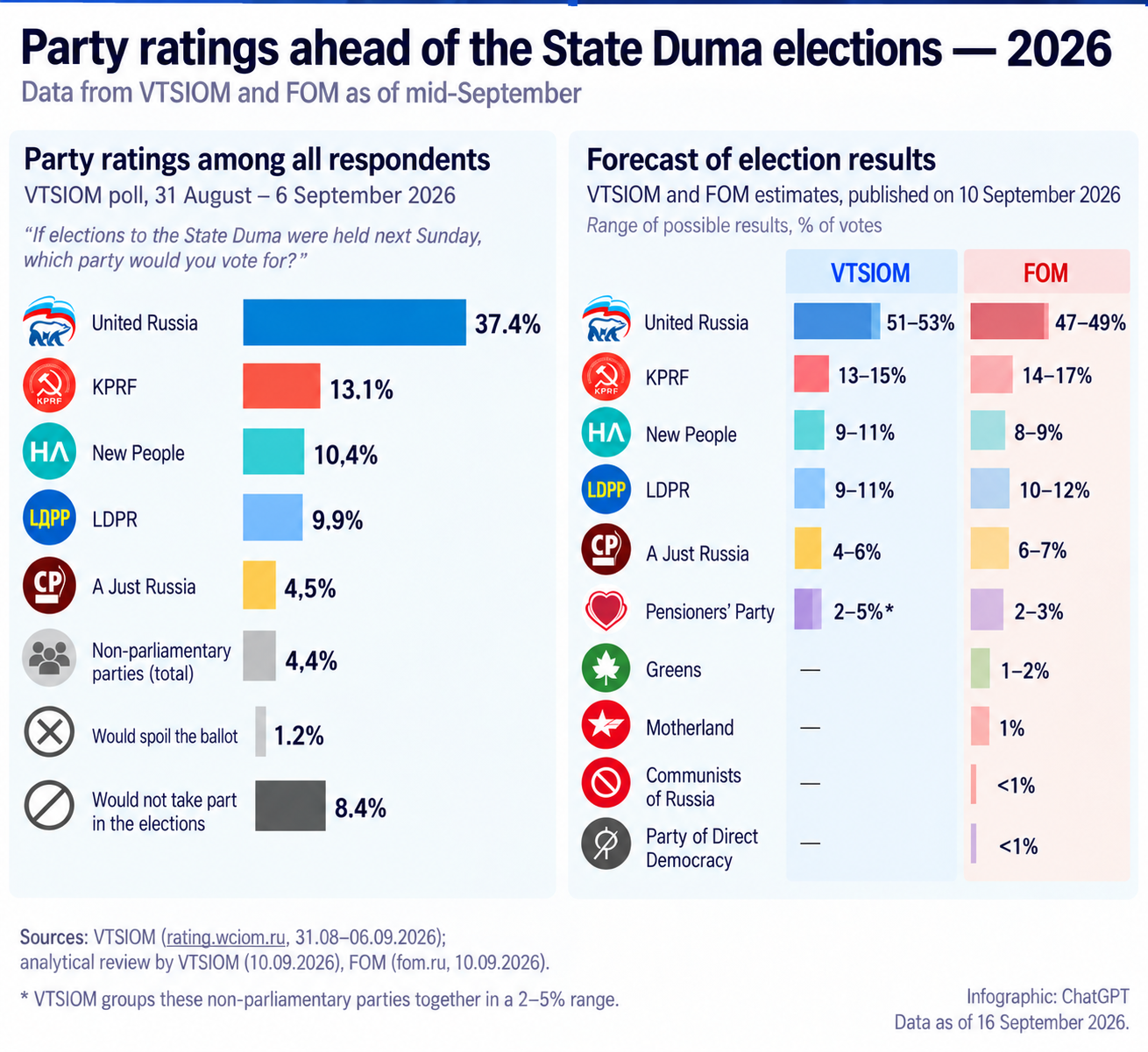
The Kremlin’s main task in these elections is to preserve United Russia’s position in the new State Duma. Early in the year, RBC’s sources close to the presidential administration said that the benchmark for the federal campaign was 55% of the vote for United Russia on a turnout of around 50%. By the final days of the campaign, however, judging by reports from RBC’s sources, expectations had become more modest. The benchmark now is to repeat the result of the 2021 elections: United Russia then took 49.82% of the vote and, together with the single-mandate deputies, 324 of the 450 seats in the State Duma. The party of power currently leads the pre-election polls by a wide margin over its rivals.
According to the polls, the KPRF, the LDPR and New People are also clearing the 5% threshold. Sergey Mironov’s A Just Russia also has a chance of entering the State Duma, although its electoral position remains unstable for now.
Yabloko was struck from the ballot, but it only gained in popularity
As the authors of the Atlas of Elections project note, the authorities initially “expected that, amid the socio-political overstrain that the political regime is currently experiencing, the elections would be as routine, as mundane and as controllable as possible”. The registration of Yabloko’s federal list, and then the cancellation of that registration, disrupted the campaign’s original scenario.
Against this background, voters’ interest in the party, which went into the elections with an anti-war position, rose sharply. In the three weeks between the registration of Yabloko’s list and its removal, the number of reactions and comments under social-media posts mentioning the party grew 80-fold. On this measure Yabloko, despite the cancellation of its federal list registration, ranks second among the parties, behind only United Russia.
After its federal list was struck from the ballot, Yabloko also began losing single-mandate candidates en masse. According to the party itself, by mid-September 18 candidates in single-member constituencies had lost their registration following lawsuits by representatives of other parties. In addition, in St Petersburg the electoral commission refused to register the party’s city-wide list for the Legislative Assembly elections.
The KPRF also came under pressure during the campaign, although its scale and consequences proved smaller than in Yabloko’s case. Several Communist candidates were removed from the ballot or came under threat of removal, and the party later managed to have some of those decisions overturned.
The Samara Regional Court, for example, initially cancelled the registration of State Duma deputy Mikhail Matveyev after a lawsuit by his rival from the Pensioners’ Party. The complaints included copyright infringement in campaign materials – in particular the use of Microsoft photographs and fonts. Matveyev appealed, however, and on 26 August had himself reinstated in the election.
The KPRF itself described what was happening as “administrative pressure” and “dirty campaign technology”.
Lawsuits demanding the cancellation of registration were also filed against United Russia candidates. According to the data available in mid-September, however, no United Russia candidate ultimately lost registration by court decision. One candidate did withdraw voluntarily from the party of power’s federal list – the former head of Udmurtia, Alexander Brechalov.
In total, according to the GAS Vybory state system as of 14 September, at least 32 candidates in single-member constituencies have lost their registration. The grounds cited included breaches of the nomination and documentation procedures, of campaign legislation and of copyright, as well as administrative cases relating to the law on “extremist” symbols.
The opposition has no single tactic
Initially, part of the opposition tried to consolidate the protest and anti-war vote around Yabloko. After the registration of its federal list was cancelled, however, no single tactic could be worked out.
The Free Russia Forum, one of whose founders is Garry Kasparov, is calling for a full boycott of the elections. A statement by the Forum’s Council describes the current vote as a “farce”. Its authors argue that taking part in the elections helps to legitimise the existing political system, and therefore urge people to refuse to vote.
Yabloko itself has proposed that Russians come to the polling station on 20 September and mark several parties on the ballot at once – that is, make it invalid. In single-member constituencies the party proposes voting for the Yabloko candidate if one has remained on the ballot and, if there is no such candidate, likewise spoiling the ballot.
Yulia Navalnaya and the FBK have called on supporters to vote for any party other than United Russia on the party lists, and in single-member constituencies to follow the recommendations of Smart Voting, with candidate recommendations prepared for every single-member constituency. Yabloko’s leader Nikolai Rybakov has criticised this strategy. In his view, a protest vote for other systemic parties in effect means supporting politicians whom Yabloko considers responsible for the war and for political repression.
Mikhail Khodorkovsky proposes voting for anti-war candidates if there are any on the ballot and, if there are not, looking for a candidate who at least does not support the war and is capable of competing with the United Russia representative. If there is no such candidate either, Khodorkovsky proposes spoiling the ballot. A boycott he considers justified in relation to the occupied territories of Ukraine.
Official Russian and Belarusian sources cited in this text are for informational purposes only. Content from these sources may constitute disinformation or propaganda.