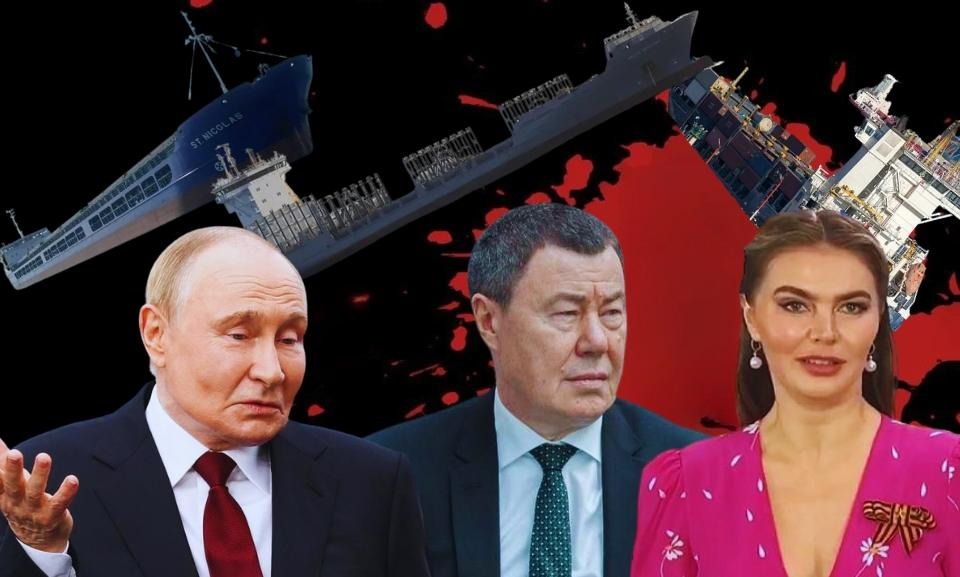

On March 31, 2026, the U.S. Department of the Treasury announced, without providing a reason, the removal of three Russian ships from the U.S. SDN list: the container ships FESCO Moneron and FESCO Magadan, as well as the bulk carrier SV Nikolay. The lifting of sanctions applies to specific vessels—the ships themselves were “unblocked”—rather than to companies or entire corporate groups automatically associated with them. This decision surprised sanctions experts and warrants analysis, as both FESCO vessels were added to the SDN list in 2022 due to their ties to PSB-Leasing (Promsvyazbank), and the SV Nikolay due to its ties to Alfa-Leasing (Alfa-Bank). In particular, the Nikolay’s involvement in the export of Ukrainian grain from occupied Crimea lends this case additional political significance.
In brief:
- On March 31, 2026, OFAC lifted sanctions on the vessels FESCO Moneron (IMO 9277412), FESCO Magadan (IMO 9287699), and SV Nikolay (IMO 9482926). The decision was issued as a routine update to the SDN list, without detailed comments.
- Both FESCO vessels had been on the sanctions list since 2022 due to ties to the leasing company PSB-Leasing / Promsvyazbank (a Russian financial institution serving law enforcement agencies). The registered name of the bulk carrier SV Nikolay included “ALFA-LIZING,” and it fell under secondary sanctions as being linked to Alfa-Bank.
- Formally, only the vessels themselves were removed from the list, while restrictions on all affiliated companies did not automatically cease to apply. The U.S. typically updates its sanctions lists “in the usual manner,” based on feedback from interested parties and internal reviews. The lack of an official justification allows us only to assume that the reason was changes in ownership structure and legal status in 2022–2026.
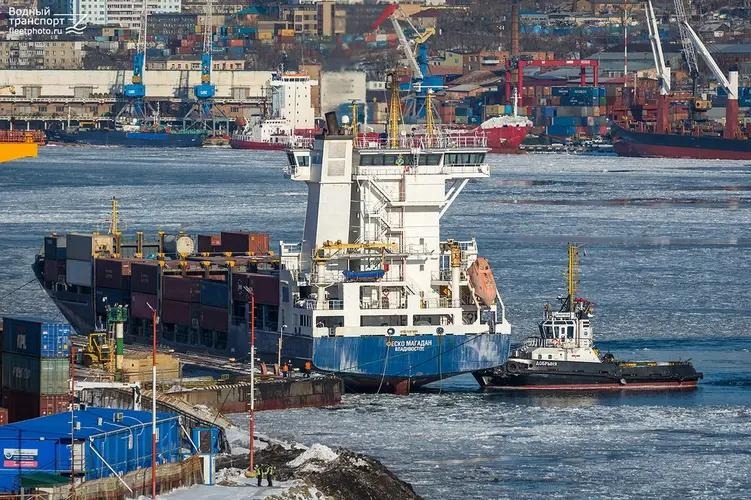
- FESCO container ships are of great importance for Russian logistics in the Far East (they operate on Asia–Russia routes). Since 2023, FESCO has been controlled by the state-owned corporation Rosatom (which owns approximately 92% of the shares) and serves, among other ports, the port in Vladivostok. Their “unblocking” could improve transportation and insurance conditions for Russian carriers.
- The SV Nikolay combines grain and coal narratives. Two investigations (Reuters / PBS, 2022) revealed that this vessel transported Ukrainian grain from Sevastopol, falsely listing the port of loading as Kavkaz in Russia. Later data (UK Open Source Centre, Kyiv Independent, 2025) indicate that the SV Nikolay also transported metallurgical coke from occupied Mariupol to Algeria, falsely reporting a shipment from Temryuk to Turkey. The consignee was the Hong Kong-based company Green Rabbit. Investigations revealed that Muslim Temerkayev, an advisor to Marat Kabayev (the father of Alina Kabayeva, Vladimir Putin’s unofficial partner), is behind Green Rabbit.
FESCO Moneron and Magadan — why they ended up on the sanctions list
The container ships FESCO Moneron and Magadan were designated by OFAC as assets linked to PSB-Leasing / Promsvyazbank. In May 2022, as part of a broad sanctions campaign in response to the invasion of Ukraine, the U.S. imposed sanctions against Russia’s entire financial and logistics chain. In practice, the SDN list also included seagoing vessels controlled by companies linked to PSB-Leasing. PSB-Leasing was part of the Promsvyazbank group, which specializes in financing the defense sector. The vessels’ connection to these entities served as the formal basis for the sanctions.
As of March 31, 2026, the official SDN list included the following vessel descriptions: “FESCO MONERON (ФЕСКО МОНЕРОН), container ship, 7519 GRT, flag of Russia (PSB LIZING OOO)” and similarly—“FESCO MAGADAN (PSB LIZING OOO).” However, unlike the oligarchs who were sanctioned, the inclusion of the vessels on the list occurred without a court hearing—the U.S. acted in accordance with its sanctions policy and the OFAC mechanism.
As noted by the gCaptain service, the U.S. Department of the Treasury characterized the removal of these vessels as a standard review of the list, rather than a change in overall policy toward Russia.
SV Nikolay — ties to Alfa-Bank and grain smuggling
The bulk carrier SV Nikolay was added to the SDN list not directly due to cargo transportation, but indirectly—through ties to “Alfa-Leasing” (“Alfa-Bank”). OFAC considers them to be entities associated with this private financial organization. However, another aspect often comes into focus: the SV Nikolay’s involvement in a scheme to export Ukrainian grain from Crimea.
In 2022, a Reuters investigation revealed that, despite documentation indicating loading at the Russian port of Kavkaz, the vessel SV Nikolay was actually near the grain terminal in Sevastopol (occupied and later illegally annexed by Russia) On June 18, 2022—that is where the corn was loaded, after which the ship set sail for Turkey. Ukrainian authorities identified the SV Nikolay as one of the vessels suspected of transporting war booty.
Formally, the cargo was declared to have been loaded elsewhere, but analysis of satellite imagery and AIS data clearly established the vessel’s actual route.
During the next phase of the investigation (2024–2025), it was discovered that the SV Nikolay was also transporting cargo other than grain—metallurgical coke from Russian-occupied mines in the Donbas. In March 2025, the vessel arrived in Algeria (the port of Annaba) with a cargo of coke, listed in documents as having been shipped from Temryuk (Russia) to Turkey. Such “disguising” of ports and cargoes is well known from the practice of circumventing sanctions. The formal owner of the cargo was Green Rabbit Limited, a Hong Kong-based company specializing in the trade of coal and wheat, particularly from the occupied territories of Ukraine. Investigative reports by “Important Stories” (Важных историй) and The Kyiv Independent revealed that Muslim Temerkayev—an advisor to Marat Kabayev (the father of Alina Kabayeva, Putin’s unofficial partner and the mother of his children)—is behind Green Rabbit.
Change of ownership and technical-legal aspects of delisting
Formally, the U.S. decision concerned only the unblocking of vessels. According to the OFAC announcement, the entries for “FESCO Moneron” and “FESCO Magadan” were removed from the SDN list, marked with the tag [RUSSIA-EO14024], similarly to the case of “SV Nikolay.” There were no mentions of sanctions against PSB-Leasing or Alfa-Leasing—their status remained unchanged. This means that the vessel itself could theoretically return to the regular maritime market (ports, insurance), but the parent companies may still be subject to sanctions.
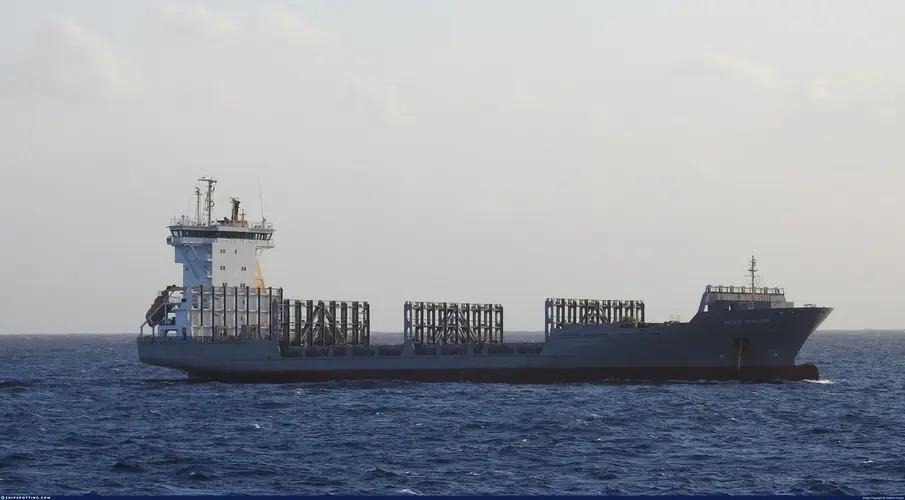
The most likely explanation for this move is that these vessels have changed owners or management structures in recent years.
In the case of FESCO Moneron and Magadan, they formally belonged to PSB-Leasing in 2022. However, according to the analysis, after the sanctions were imposed, they came under the management of FESCO—a logistics operator now controlled by the state corporation “Rosatom.” This could have led to the vessels being “decoupled” from the previously sanctioned network. Similarly, the vessel SV Nikolay has since changed ownership—it is now owned by Riversi Plus, whose beneficial owner was not previously subject to sanctions. OFAC regularly removes entities from the list when it determines that their factual and legal status has changed (for example, illegal activities have ceased or assets have been sold).
However, it must be emphasized: the lack of an official explanation from the U.S. means that we have no hard facts, only hypotheses. Some media outlets point to a “routine update” of the list and the separation of vessels from companies subject to sanctions. Others suspect political motives—for example, the initial tightening of sanctions by the U.S. occurred under the Biden administration, and currently, diplomacy is seeking a truce with Russia—but such motives remain unconfirmed. It is known, however, that the removal of vessels from the list does not mean the automatic lifting of sanctions against Promsvyazbank or Alfa-Bank, although speculation on this matter is circulating online.
The Importance of the FESCO Fleet for Russian Logistics
The economic context must also be taken into account. FESCO (Far Eastern Shipping Company) is a key logistics operator on Russia’s Far Eastern maritime route. In November 2023, the state, represented by Rosatom, acquired approximately 92.4% of FESCO’s shares (which previously belonged to the convicted oligarch Magomedov). FESCO operates the port in Vladivostok—a key hub for trade with China and Japan—as well as other strategic ports in the Far East. The container ships Moneron and Magadan, though small (7,519 gross registered tons each), were used in this region. Their removal from the list could simplify obtaining insurance coverage and access to spare parts, which would theoretically increase the throughput capacity of maritime carriers.
On the other hand, critics emphasize that if the lifting of sanctions is indeed linked to increased state control, this signifies a strengthening, not a weakening, of the Russian fleet’s integration with the state economy.
In practice, Russia is increasingly shifting its logistics toward domestic resources, yet FESCO’s importance for exports remains unchanged. Paradoxically, any increase in the Russian fleet’s mobility could enhance the capabilities of the Kremlin’s military-industrial complex and logistics. Therefore, it is worth watching to see if other Western sanctions targeting vessels or transport-related entities will soon be amended.
SV Nikolay — Legal and Moral Implications
Despite the technical nature of the U.S. decision, the SV Nikolay case also carries symbolic significance. Beyond issues of ownership and logistics, it is linked to allegations of looting Ukrainian raw materials. Officially, the SV Nikolay was not on the SDN list for transporting grain or coal—the sanctions were related to Alfa-Bank. However, the very fact that the vessel appears in public investigations as a participant in the export of resources plundered in the occupied territories of Ukraine makes this story particularly prominent in the media.
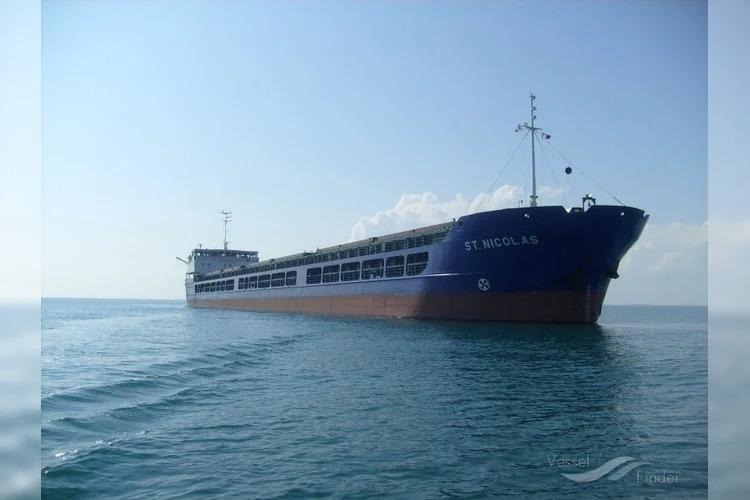
Even if the U.S. formally lifts sanctions on the vessel, this does not imply its operational innocence: the charterer may still violate international law or Ukrainian legislation prohibiting the transport of stolen resources. The case of the SV Nikolay could be used by the Kremlin to promote the narrative that sanctions are “ineffective” and that the West is easing pressure.
The lifting of U.S. sanctions against the FESCO Moneron, FESCO Magadan, and SV Nikolay is an unusual precedent. On March 31, 2026, OFAC removed these vessels from the SDN list, citing only a routine review, without a public explanation. For several years, they remained prime examples of how sanctions mechanisms intersect with investigations into the export of Ukrainian grain and coal from occupied regions. The most likely explanation for this decision appears to be changes in ownership structure: FESCO came under the control of the state-owned corporation Rosatom, and the re-registration of the SV Nikolay to the company Riversi Plus theoretically “decouples” it from sanctioned networks. However, the mere removal of vessels from the list does not mean that sanctions against the entities behind them have been lifted. One can cautiously assume that this administrative step is primarily technical in nature, allowing Russia to ensure smoother transportation and access to maritime services. Further consequences will depend on whether Russia exploits this loophole to strengthen its logistics, or whether the West views this as a signal to refine its sanctions mechanisms.