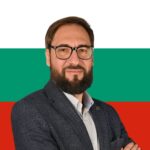
The crushing defeat in the recent parliamentary elections in Hungary of the FIDESZ party (FIDESZ), led by incumbent Prime Minister Viktor Orbán, has put his political allies in neighboring countries on the back foot—allies who have long served Viktor Orbán’s regime faithfully and helped him retain power. The Party of Hungarians of Ukraine (KMKSZ), founded on the basis of the public organization “Society of Hungarian Culture of Transcarpathia” (Kárpátaljai Magyar Kulturális Szövetség), was no exception in this regard.
In short:
- Over the years of FIDESZ’s rule in Hungary, the Transcarpathian Hungarian Cultural Association (KMKSZ-TUMZ) gradually transformed into its informal Ukrainian branch, which helped it gather votes in elections
- Throughout the entire four years of the war, the KMKS-TUMZ never once condemned Russian aggression, never appealed to Viktor Orbán to stop blocking Ukraine’s accession to the EU, and never opposed sanctions against Russia
- Following FIDESZ’s defeat in the elections, the KMKS-TUKZ general assembly re-elected Viktor Orbán’s ally, László Brenzovics—who has lived in Budapest for six years—as the organization’s leader
- A new generation of leaders of the Hungarian community has emerged in Transcarpathia, one that is well aware that its full-fledged and successful development is possible only through close cooperation with the Ukrainian authorities
The Society of Hungarian Culture of Transcarpathia (TUMZ), better known to the public by its Hungarian-language abbreviation KMKSZ, has been active in Transcarpathia since February 1989. Since 1990, this organization has participated in elections to the Transcarpathian Regional Council and, based on the results, formed its own faction and, through political bargaining, systematically secured the position of deputy or first deputy chair of the regional council.
With the FIDESZ party coming to power in Budapest in 2010, KMKS-TUMZ gradually transformed into its informal Ukrainian branch in Transcarpathia. It was precisely through foundations affiliated with this structure that funding from Budapest flowed steadily for years, narratives about the “oppression” of Hungarians in Transcarpathia were systematically disseminated, political pressure was exerted on Ukraine, and the blocking of Ukraine’s European integration was justified through Ukrainian- and Hungarian-language electronic and print media founded by front figures.
With each new election in Hungary, the KMKSZ’s dependence on its Hungarian patron only grew stronger. The fact is that support for FIDESZ’s openly populist policies among voters in Hungary itself weakened noticeably before each election, especially in Budapest and the country’s economically prosperous industrial and cultural centers. Having “squeezed” the maximum out of the Hungarian electorate, Viktor Orbán’s regime set its sights on Hungarians in neighboring countries—Romania, Slovakia, Serbia, and Ukraine. It was in the second decade of the 21st century that the Hungarian government launched a large-scale campaign to issue Hungarian passports and court Hungarians living abroad. To successfully organize this effort on the ground, partner organizations in neighboring countries were needed.
In Ukraine, the mission to attract a new and loyal Fidesz electorate was entrusted to the KMKS, which, it must be acknowledged, carried it out quite successfully. However, right from the start, things did not go quite as the Hungarian authorities had hoped. After receiving Hungarian passports, Ukrainian citizens began moving to their “rediscovered homeland” for permanent residence in such numbers that Hungary itself was not prepared to accept them. This only exacerbated an already difficult socio-economic situation and fueled the local population’s hostility toward the “newcomers” who had moved to Modorossag to “take away” the livelihoods of the native Hungarians. The situation reached a point where, in 2017, the Hungarian authorities organized an “international scientific conference” in Nyíregyháza for the leaders of local Hungarian-speaking communities in Transcarpathia (the vast majority of whom are traditionally members of the KMKSZ), at which a high-ranking official from Budapest stated bluntly: “Hungary does not need Transcarpathian Hungarians in Hungary. Hungary needs Hungarians in Ukraine. That is why our assistance will be targeted at those who are building Hungary in Ukraine.”
The issuance of Hungarian passports to Ukrainian citizens has long caused a surge in tensions and mutual accusations between Ukraine and Hungary. Everyone, including Ukrainian central and local authorities and law enforcement agencies, was well aware that tens of thousands of Transcarpathians—and not only those of Hungarian nationality—held Hungarian passports despite the existing ban on dual citizenship. They knew, but turned a blind eye to it. Meanwhile, the FIDESZ electorate abroad, appeased by various handouts, regularly paid him a “tribute” with their votes every four years on the day of parliamentary elections.
The situation began to change after the latest local elections in Ukraine in October–November 2020. According to the results, KMKS-TUKZ received 11.5% of the vote and, as in the previous term, once again fielded its own faction of 8 deputies to the 7th Transcarpathian Regional Council. During preparations for the first session of the regional council, the usual “bargaining” began. However, something went wrong. It is not exactly clear why: whether the KMKS’s demands were too high, or because the leader of the ruling “Servant of the People” party’s faction in the Transcarpathian Regional Council was retired SBU General Oleksiy Petrov, but this time, instead of the usual concessions, the KMKS-TUKZ received… searches by law enforcement. On November 30, 2020, the Security Service of Ukraine conducted several searches at the offices of Hungarian organizations and foundations, as well as at the home of KMKS-TUKZ leader László (Vasyl) Brenzovych, during which they found printed materials promoting the creation of ethnic autonomy in Transcarpathia and “Greater Hungary,” which includes territories of neighboring states where Hungarian minorities reside. The defendant himself prudently and promptly left Uzhhorod for Budapest and has not returned to Ukraine since. A few weeks later, the Transcarpathian Court of Appeal imposed a seizure on the property confiscated during the search at László Brenzovics’s residence. On the first day of the first session of the Transcarpathian Regional Council on December 7, 2020, all deputies of the Party of Hungarians of Ukraine (KMKSZ) demonstratively left the session hall in protest against the actions of Ukrainian law enforcement agencies.
And subsequently, a large-scale war by Muscovy against Ukraine began, along with the heroic struggle of Ukrainians of all nationalities against their age-old enemy for their own state, independence, freedom, and the right to live on their own land—a struggle in which the Hungarians of Ukraine are also sacrificing their lives. Despite this, throughout all four years of resistance, the KMKS-TUKZ has never once condemned the Russian aggression, from which the Hungarians of Transcarpathia are also suffering, nor has it appealed to Viktor Orbán—who, throughout the years of the war, has regularly met with the Kremlin’s bloodthirsty tyrant—demanding that he not block Ukraine’s accession to the EU, not sabotage sanctions against Russia, and support Ukraine on the international stage. The KMKS has, in fact, become like that little monkey who sees nothing, hears nothing, and says nothing…
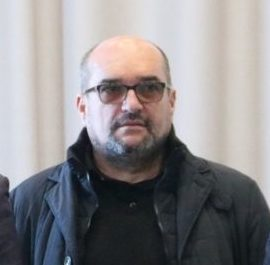
And so, on April 18 of this year, a week after the resounding defeat of Viktor Orbán’s party, the 36th General Assembly of the KMKS-TUKZ took place in Berehove. The assembly delegates elected as the head of their organization for the next term… László Brenzovics, who participated in the meeting online from the Hungarian capital. The irony of the situation lies also in the fact that in Budapest, in the coming days, for the first time in 16 years, there will be a change in power, and there are high hopes that Hungary’s foreign policy course will shift from pro-Putin to pro-European, as the new Hungarian leader Péter Magyar has stated. But at the KMKS-TUKZ, everything remains stable—László Brenzovics is the boss for life! Even though he has been living outside Ukraine for six years now. The man who for many years has cultivated an image as a loyal ally of Viktor Orbán is supposed to lead the Hungarian community of Transcarpathia into a new political reality! This is truly surreal, proving that despite all the geopolitical changes, the essence of the organization has not changed. It has drawn no conclusions and continues to live in the delusional illusions of the day before yesterday.
Meanwhile, over the past few years, a new generation of leaders within the Hungarian community in Transcarpathia has emerged—one not infected by the virus of Viktor Orbán’s toxic politics. These are young and pragmatic politicians who are well aware that the full and successful development of the Hungarian community in Transcarpathia is possible only through close cooperation with the Ukrainian authorities, alongside the progressive socio-economic development of the entire region, and within the context of Ukraine’s genuine European integration. And it is they, not the rigid proponents of Viktor Orbán’s marginal ideas who are entrenched in their anti-Ukrainian stance, who are capable of becoming the true voice of the Hungarian community in Transcarpathia and ensuring a reset of Ukrainian-Hungarian relations from a long-standing confrontation to a plane of partnership and good-neighborly relations, in harmony with the spirit of the modern European community, and the Party of Hungarians of Ukraine (KMKSZ) can become a reliable bridge for establishing qualitatively new Ukrainian-Hungarian relations. But for this, the party itself must first reboot itself.
Here is the opinion on this matter from Alexander Bertolon, deputy chairman of the board of the NGO “Association of Political Scientists and International Relations Specialists of UzhNU”:
“The re-election of László (Vasyl) Brenzovych as chairman of the Society of Hungarian Culture of Transcarpathia (KMKS-TUKZ) for a new term highlights the organization’s deep institutional crisis rather than its stability. The situation where the head of a key organization of Transcarpathian Hungarians manages it remotely, having spent the last six years in Hungary, is paradoxical. Amid martial law and complex socio-economic challenges, the Hungarian national minority needs a leader who physically shares these realities on the ground, rather than managing processes through a computer screen.
In recent years, under Brenzovics’ leadership, KMKS-TUKZ has become the primary recipient of financial support from Viktor Orbán’s government. This cooperation had a distinctly political character: Budapest actively used the issue of protecting the rights of Transcarpathian Hungarians for domestic propaganda and mobilizing the electorate, while Brenzovics played the role of a fully loyal champion of these interests. However, with political changes in Hungary and the formation of a new government led by TISZ party leader Péter Magyar, this model is now under threat. It is quite evident that the new government will initiate a detailed audit of the multimillion-dollar grants provided by Hungary and will change its approach, abandoning the sponsorship of FIDESZ’s old political satellites in favor of transparent and depoliticized aid mechanisms.
Given these factors, Brenzovych’s re-election appears to be an attempt by the organization’s current leadership to preserve the status quo, which undoubtedly drives it into a dead end. To maintain its influence, establish a constructive dialogue with Kyiv, and secure continued support from a renewed Budapest, the KMKS-TUKZ critically needs a leadership overhaul. The organization requires a rejuvenation of its leadership and the election of a leader who is not burdened by a political legacy and who resides permanently in the Zakarpattia region, alongside the community. Without these steps, the KMKS-TUKZ risks finding itself in self-isolation, having lost the trust of both its own community and future Hungarian donors.”
Vasyl Ilnytskyi