Russia has restricted shipping through the Azov-Don Canal, which provides access for vessels from the Don River to the Sea of Azov. The decision was made following attacks by Ukrainian drones on Russian vessels in the waters of the Sea of Azov. About a quarter of Russia’s wheat exports pass through this transport corridor, so the restrictions have caused concern among participants in the global grain market.
Russian authorities, for their part, are assuring foreign partners that the situation will not affect Russia’s ability to fulfill its export obligations.According to officials, there are alternative logistics routes for grain shipments, and all existing contracts will be fulfilled on schedule.
In Brief:
- Russia accounts for a quarter of global wheat exports. The largest buyers are Egypt and Turkey.
- Restrictions on ship passage through the Azov-Don Canal will affect 25% of Russian wheat exports.
- Russia’s Ministry of Agriculture assures that all export contracts will be fulfilled, and the ministry is working on alternative supply routes.
- Rerouting cargo flows will require farmers and exporters to use additional fuel, which is currently hard to come by in the southern regions.
- Importers of Russian wheat will not be left without grain: they have a record harvest and alternative suppliers.
Russia — the Largest Wheat Exporter
In recent years, Russia has ranked first in the world in terms of wheat export volumes, accounting for about a quarter of global supplies. After the introduction of export duties in 2021, export volumes declined slightly, but rebounded in 2022–2024, reaching historically high levels. The peak occurred during the 2023/24 season, when approximately 55.5 million metric tons of wheat were shipped to foreign buyers.
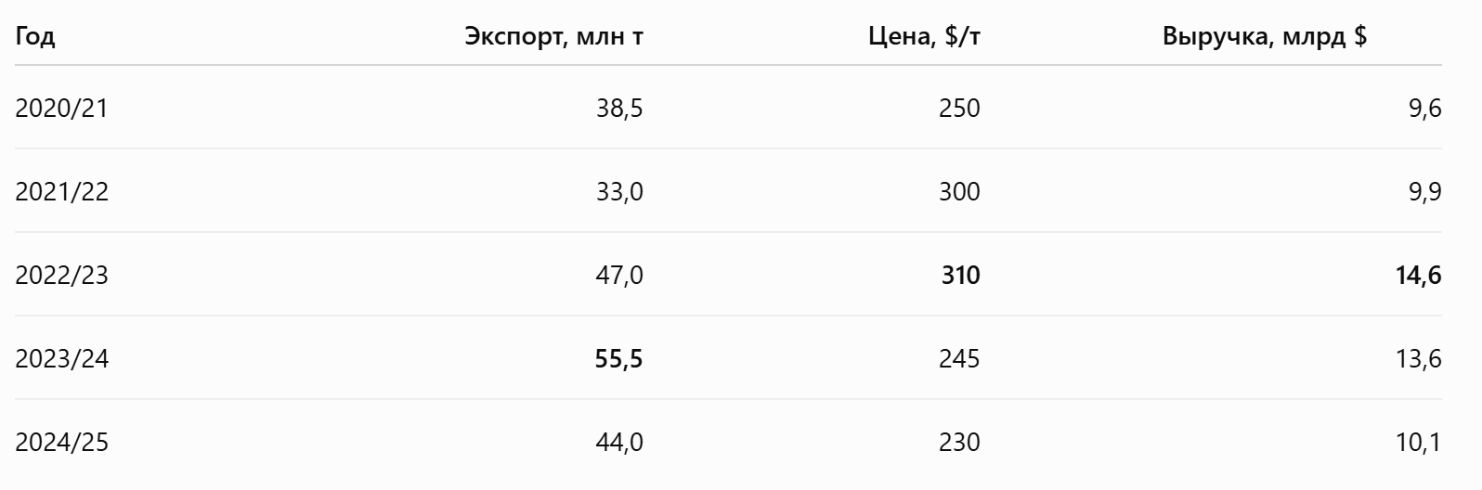
The Russian Ministry of Agriculture estimated the export potential for the 2026/27 season at approximately 60 million metric tons of grain. There was no separate official forecast for wheat, but industry organizations cited a figure of 47–48 million metric tons.
Egypt is the largest buyer of Russian wheat—supplies from Russia account for about a quarter of the country’s wheat consumption. Other major importers of Russian grain include Turkey, Iran, Saudi Arabia, Bangladesh, Algeria, Pakistan, Libya, Yemen, and Israel.
From Field to Sea: How Wheat Is Transported to Ports
The main producers of export-grade wheat in Russia are medium-sized agricultural enterprises, family farms, and large agricultural holdings in southern Russia, the Volga region, and the Central Black Earth Region.
Wheat is exported through ports on the Black Sea and the Sea of Azov. It is transported to the ports by rail and via inland waterways, including the Volga-Don Canal and the Don River system.
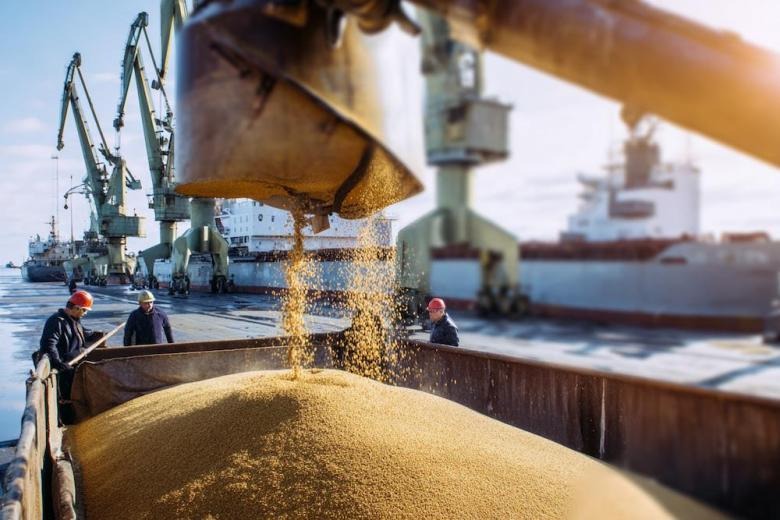
The Azov-Don Canal provides access for ships from the ports of Rostov-on-Don and Azov to the Sea of Azov, and then through the Kerch Strait to the Black Sea basin. Ports on the Sea of Azov account for about a quarter of Russia’s grain exports. Any disruptions on this route immediately affect the global grain market.
In recent years, Russia has been trying to reduce its logistical dependence on Black Sea ports and is increasing grain exports via the Baltic Sea: new grain terminals have been commissioned in Vysotsk and Lugaport. Their combined capacity is estimated at approximately 15 million metric tons per year.
Restrictions in the Sea of Azov
In July, the Ukrainian military attacked more than 100 Russian vessels in the Sea of Azov. Reuters reported that, against this backdrop, Russia restricted vessel traffic through the Azov-Don Canal and the Kerch Strait. Shipping was not completely halted. According to market participants, carriers decide for themselves whether to limit operations, depending on market conditions.
The Ministry of Agriculture stated that the situation in the Azov Sea will not affect either the supply of food to the domestic market or Russia’s export capabilities. The ministry promised to reorient the logistics of agricultural cargo deliveries if necessary and has already begun exploring alternative routes.
The Union of Grain Exporters and Producers assured that the industry’s infrastructure has sufficient reserve capacity for transshipment. If necessary, this capacity allows for the rapid redistribution of cargo flows and the rerouting of shipments to other terminals. The union stated that Russia will fulfill its grain supply obligations in full, despite the situation in the Azov Sea.
So far, no serious disruptions to export shipments have been reported: due to the late start of the harvest in Russia, the new crop has not yet arrived at the ports in full. Problems may arise if the restrictions remain in place after August, when the main wheat harvest is expected.
Prolonged restrictions on shipping in the Sea of Azov and the Kerch Strait may force exporters to reroute grain to deep-water ports on the Black Sea. However, this route is also dangerous: the Ukrainian military has already launched a systematic campaign of strikes against Russian transport vessels in the Black Sea. On the night of July 15, drones attacked 20 vessels, including 17 oil tankers and two gas carriers.
In addition, revising logistics routes will increase transportation costs for Russian agricultural producers and their demand for fuel, which may be difficult to obtain in southern regions due to a prolonged shortage.
Is there a threat to the food security of importing countries?
Following reports of restrictions in the Sea of Azov and potential problems for Russian grain exporters, wheat prices on the European exchange Euronext rose by more than 5%, marking the sharpest jump since mid-April. Wheat futures in Chicago rose by 4.8%—the largest daily increase since mid-May.
According to experts, a global wheat shortage is not expected on the world market, as global stocks remain high.
Logistical issues also do not pose a critical threat to countries that purchase large volumes of Russian wheat. Turkey is expecting a record wheat harvest and says it may reduce its need for imports, particularly from Russia. Egypt has also purchased a record 4.6 million metric tons of wheat from its own farmers, reducing the country’s dependence on emergency imports. In recent years, Egyptian authorities have diversified their suppliers and are purchasing wheat from Russia and other countries.
In the event of prolonged restrictions on shipping in the Azov and Black Seas, buyers of Russian wheat plan to diversify their purchases more actively. Asian countries have announced their intention to increase imports from Australia, while countries in the Middle East and North Africa may boost purchases from EU nations, as well as from Canada, Argentina, and the United States.
Author: Olha Semashko
Official Russian and Belarusian sources are cited solely for informational purposes. The information they publish may contain elements of disinformation or serve as a propaganda tool.