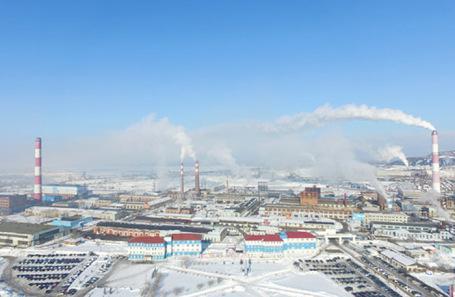
The ‘Alabuga’ Special Economic Zone, established as a showcase for investment and industrial modernisation in Tatarstan, has, following Russia’s full-scale invasion of Ukraine, become one of the key hubs for Russian-Iranian drone cooperation. It is there, according to US sanctions authorities and several independent investigations, that Russia has localised the production of the ‘Geran-2’ – its version of the Iranian Shahed-136 – whilst simultaneously ramping up production, expanding the campus and integrating educational and recruitment programmes into the military framework.
The story of ‘Alabuga’ is significant not only because it concerns a factory producing attack UAVs. It illustrates a broader mechanism at work in the modern Russian military economy: arms production is disguised as a career ladder; teenagers and students are drawn into the technological cycle; foreign female workers are sold the promise of ‘education’ and ‘work in Europe’; whilst social media, influencers and platform advertising become part of the effort to sustain the war against Ukraine.
In brief
- In February 2024, the US Treasury Department explicitly stated that the ‘Alabuga’ Special Economic Zone was fulfilling a contract with the Russian military to assemble the ‘Geran-2’, increasing the localisation of components and exploiting underage students from an affiliated polytechnic in the assembly of attack UAVs.
- According to an investigation by the Associated Press, ‘Alabuga’ has become Russia’s main production centre for the Shahed/Geran, with a plan to produce 6,000 drones a year by 2025; by autumn 2024, this plan was, according to one expert’s assessment, already ahead of schedule.
- According to the AP, around 200 young women from Africa were working alongside Russian students in the same production facility; a UN human rights assessment suggested that such an arrangement, if involving deception and exploitation, could meet the criteria for human trafficking.
- The Associated Press documented large-scale online recruitment via YouTube, Facebook, Instagram and TikTok; following the publication of the investigation, Google, Meta and TikTok removed accounts linked to ‘Alabuga’ and ‘Alabuga Polytech’, but part of the infrastructure remained on Telegram.
- In 2026, the UK imposed sanctions on entities linked to ‘Alabuga Start’, describing the programme as a scheme to recruit people from abroad – typically from economically vulnerable groups – to manufacture drones in Tatarstan.
How ‘Alabuga’ became part of Russia’s drone war
Formally, the ‘Alabuga’ Special Economic Zone was established in 2006 to attract business and investment to Tatarstan. But following the full-scale invasion, its profile began to change rapidly: according to data from the Associated Press, the zone expanded sharply, completing and repurposing buildings, whilst part of its infrastructure was switched to military production. This is no longer a side issue of military mobilisation, but an example of how a civilian industrial façade is being integrated into the Russian defence-industrial complex without any official renunciation of the previous rhetoric on modernisation.
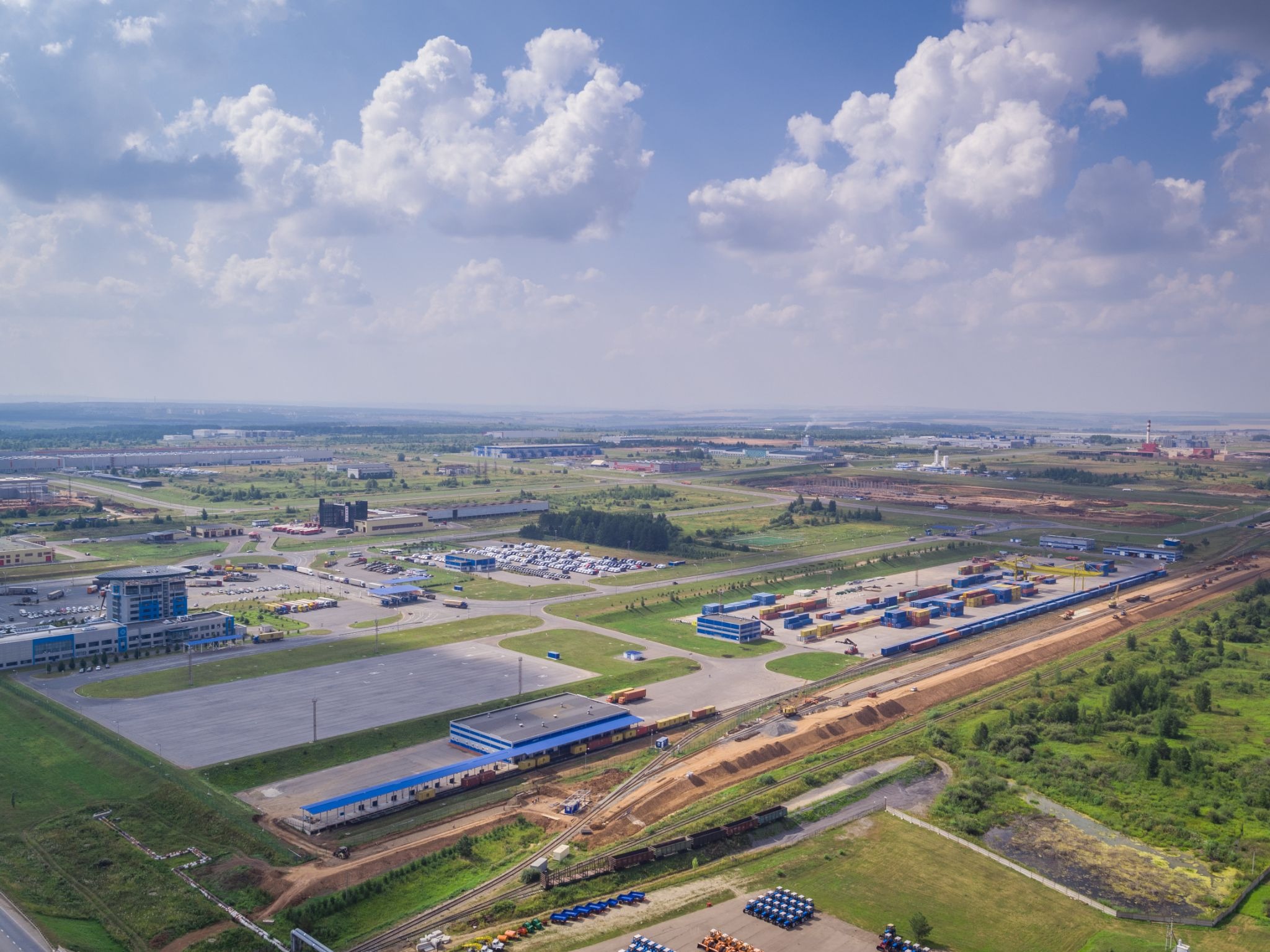
In its sanctions package dated 23 February 2024, the US Treasury Department described this transformation in no uncertain terms: ‘Alabuga’ — a special economic zone which, according to the US Treasury, has a contract with the Russian military to assemble ‘Geran-2’ missiles, received from Iran in kit form, whilst simultaneously expanding its own capacity to produce components within Russia. The same document notes that the zone is controlled by the government of Tatarstan, and that the supply chain involves its leaders, subsidiary organisations, financial intermediaries and logistics channels linked to Iranian supplies.
This point is particularly important for understanding Russia’s current campaign of strikes against Ukraine. This is not a one-off import of Iranian UAVs, but the transfer of technology, production documentation, procurement schemes and personnel to Russian territory. The Washington Post, citing a C4ADS report, wrote that the shift from imports to localised production in Tatarstan played a significant role in bolstering Russia’s drone capabilities, and that the scheme itself was accompanied by a covert payment infrastructure — including gold shipments and the use of intermediary jurisdictions to circumvent sanctions.
The strategic significance of this localisation has long extended beyond the site itself. According to reports by Reuters and the AP, by 2025 Russia was using drones on a massive scale, and the Russian-Iranian partnership was already enabling hundreds of UAVs to be launched at Ukrainian cities every day. For Ukraine, this means not only direct damage from strikes, but also the constant straining of its air defence systems, the depletion of ammunition stocks and pressure on its logistical infrastructure.
‘Alabuga Polytech’: an educational showcase and a military function
‘Alabuga Polytech’ plays a dual role within this system. Outwardly, it is an educational brand, synonymous with careers, technical skills and a ‘high-tech future’. Internally, it serves as a recruitment pipeline for a company that Western sanctions authorities and journalistic investigations directly link to the production of attack drones.
AP reported that “Alabuga Polytech” accounts positioned the educational institution as a training ground for “drone production experts”, and the platforms themselves removed this content not as ordinary educational material, but as part of a toxic recruitment infrastructure.
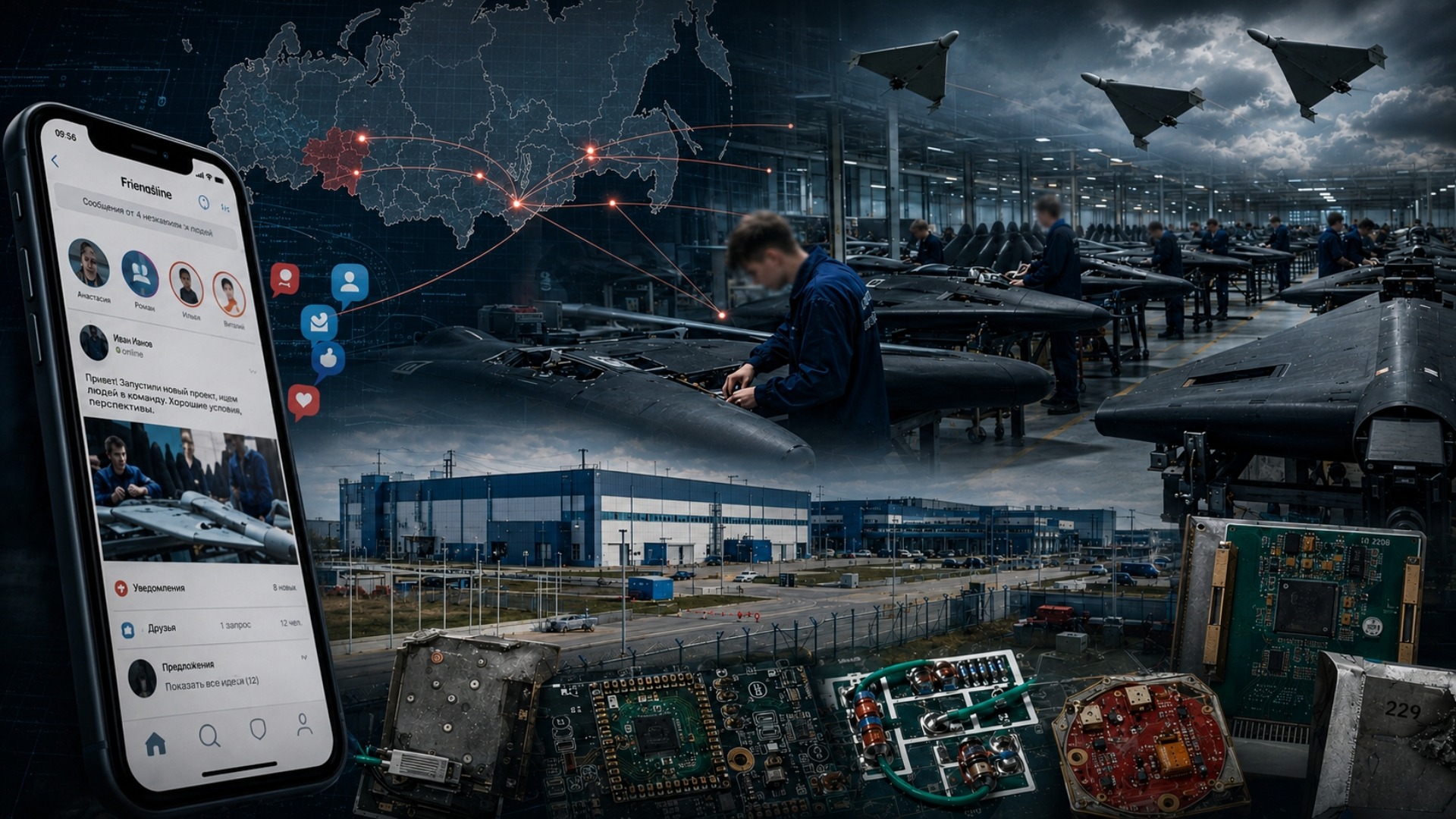
It is telling that even in its own public image, the system has ceased to make any particular effort to conceal its military focus. Reuters reported that in July 2025, the Russian Ministry of Defence’s television channel ‘Zvezda’ showed teenagers at the factory who were being invited to enrol at the college attached to the factory after Year 9 — at the age of 14–15 — to study drone manufacturing and then go on to work at the factory. The footage showed rows of finished ‘Geran-2’ drones, a test site and young workers engaged in manufacturing and testing components.
Minors in the production cycle
Legally speaking, care must be taken with the wording here. Not every instance of teenagers’ involvement in the training-and-production process automatically constitutes what is commonly referred to as ‘child labour’. But in this case, there is a fact that carries more weight than any journalistic interpretation: The US Treasury Department has officially stated that ‘Alabuga’ – a special economic zone – exploited underage students from the affiliated ‘Alabuga Polytech’ to assemble attack UAVs under exploitative conditions. For the purposes of public debate, this is sufficient to state that the Russian state and its associated organisations are drawing minors and very young people into the production of weapons used against Ukraine.
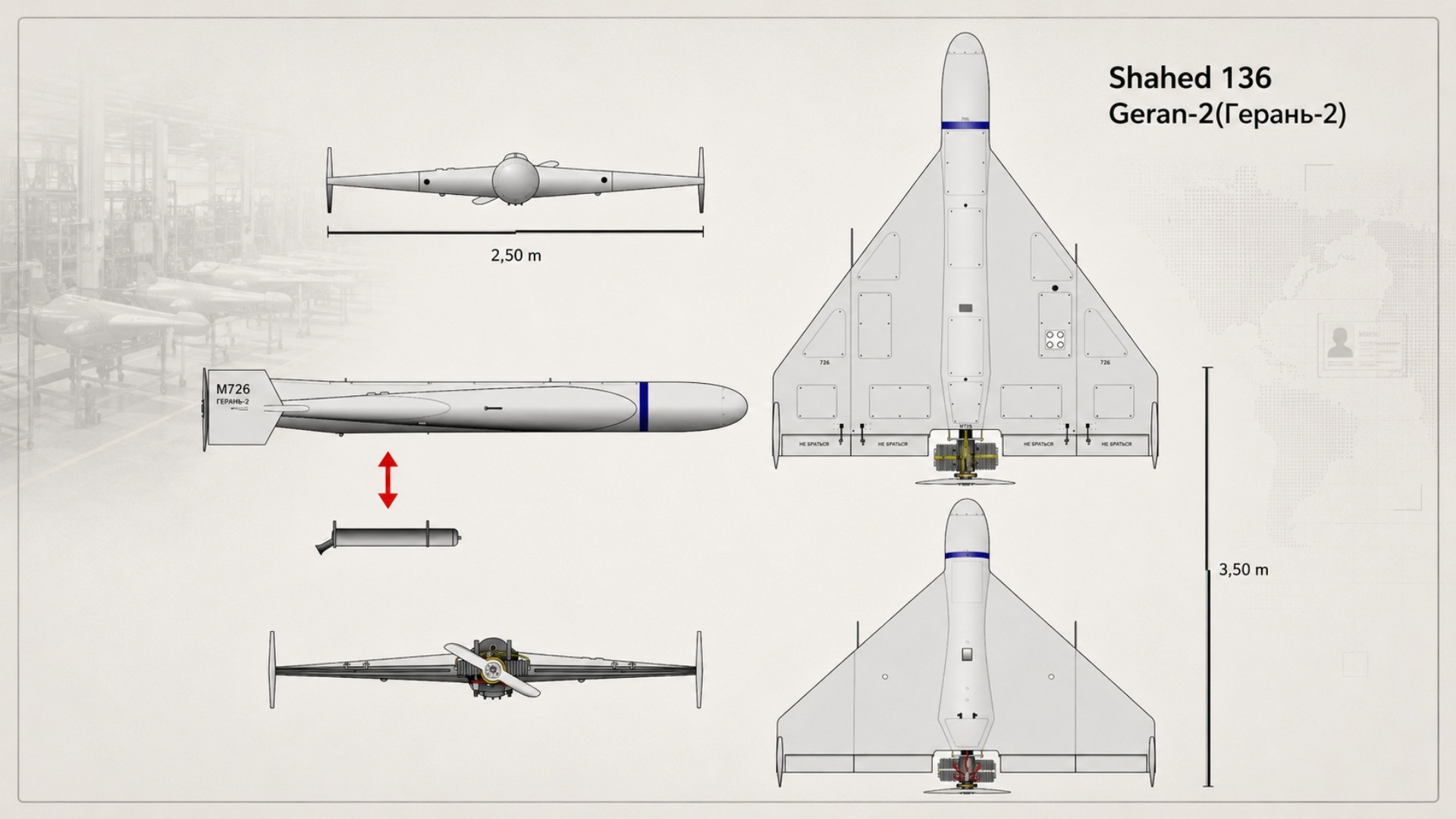
AP added important details to this picture. According to its reports, Russian students were working at the factory alongside foreign female workers, and ‘Alabuga Polytech’ itself was positioned as a training centre for drone production personnel. AP separately cited Russian investigative media outlets which reported that some of the students were as young as 15; it is important to note that this information comes from an additional journalistic source rather than constituting independent official confirmation.

The point of this scheme is that education here ceases to be an independent sphere and becomes an extension of the weapons workshop. Teenagers are offered not an abstract technical education, but a path at the end of which lies a specific factory, a specific type of weaponry and a specific war. This transition from ‘study’ to direct service to military production is, in essence, one of the most telling features of ‘Alabuga’.
‘Alabuga Start’: foreign female workers and vulnerability as a resource
Whilst ‘Alabuga Polytech’ provided an internal talent pool, ‘Alabuga Start’ became a channel for external recruitment. According to an investigation by the AP, young women — primarily from African countries, as well as from South Asia and Latin America — were lured by promises of education, high salaries by local standards, free flights and a career start. Once there, some of them discovered that instead of hotel work or an ‘international programme’, they were expected to work in defence manufacturing, assembling and maintaining drones.
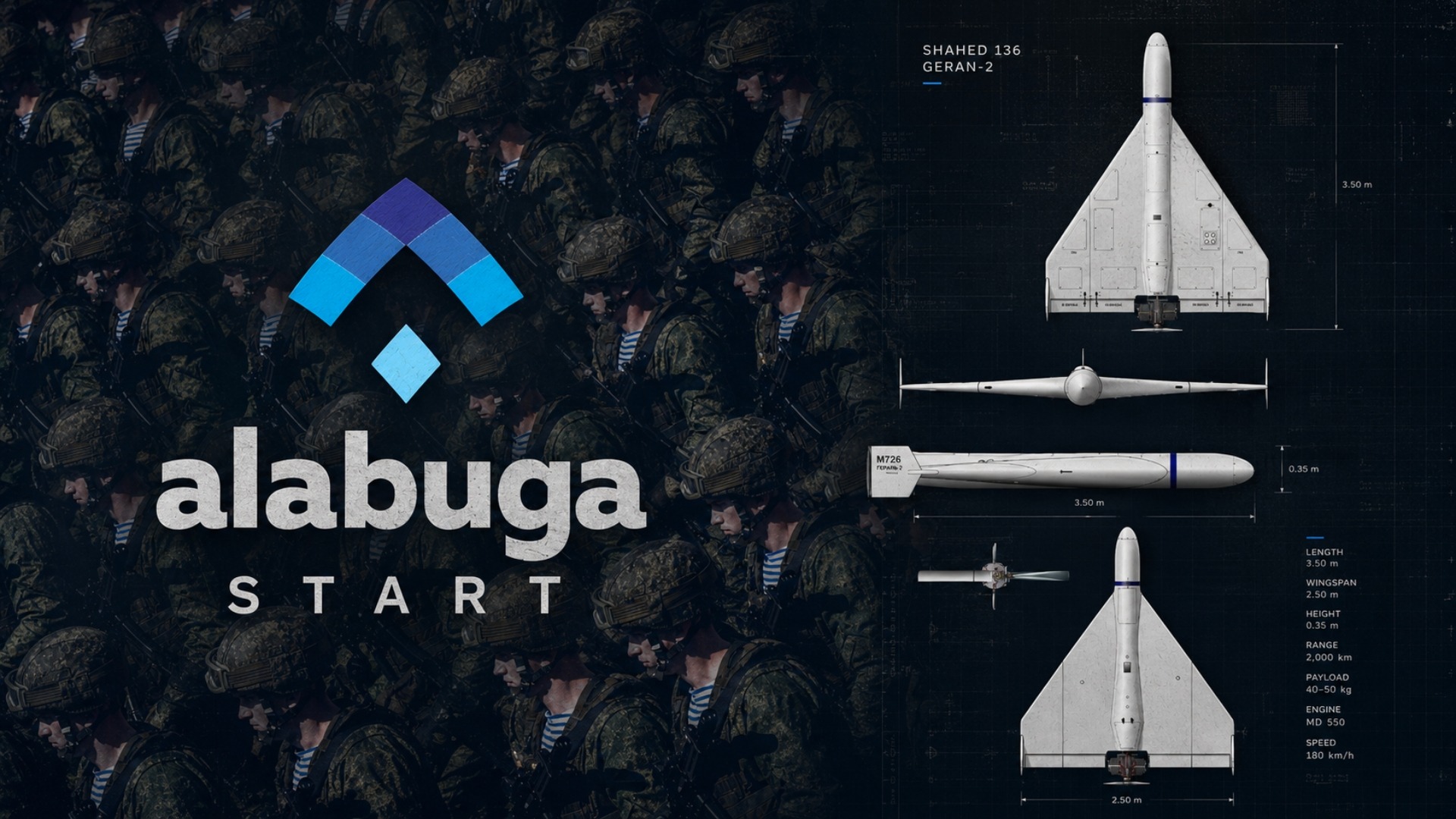
The AP reported on around 200 African women working alongside Russian students, citing their accounts of long shifts, constant surveillance, discrepancies between promised and actual wages, and exposure to corrosive chemicals. Internal documents and AP’s observations indicated that the foreign women were largely carrying out work that did not require high qualifications: assembly, processing and painting. Experts quoted by the AP estimated that around 90 per cent of the women recruited through ‘Alabuga Start’ ended up working in drone manufacturing.
Here, precision is required, but so is candour. A spokesperson for the Office of the UN High Commissioner for Human Rights told the AP that Russia’s actions ‘could fall under the criteria for trafficking’ if it were proven that the recruitment was fraudulent and the aim was exploitation. This is not a foregone conclusion in court, nor is it a substitute for an investigation. However, this is already a very serious human rights assessment of the risk: we are seeing not merely a controversial labour practice, but a scheme in which vulnerability, poverty and information asymmetry are being exploited as a resource for the war effort.

It is also significant that AP documented the security regime: passage through checkpoints, round-the-clock guarded dormitories, facial recognition, and a ban on bringing mobile phones into the workshops. For the employers themselves, this is not a ‘normal campus’ nor a neutral factory. According to AP’s sources, this is a ‘sensitive military site’.
Social media, bloggers and the promotion of war
‘Alabuga’s’ digital recruitment was organised according to the principles of the platform economy, rather than traditional military conscription. The AP described videos featuring upbeat music, promises of adventure ‘in Europe’, attractive visuals, sport, excursions, cultural venues in Tatarstan and career progression for young women. Before departure, candidates underwent games and vocabulary tests; upon arrival, some of them discovered that the work involved weapons production. This was the key deception: the war was packaged in the language of mobility, education and personal success.

The scale of the online infrastructure has also been publicly confirmed. Following an AP investigation, Google, Meta and TikTok removed accounts linked to the ‘Alabuga’ and ‘Alabuga Polytech’ Special Economic Zones. The AP reported that these accounts had a combined total of at least 158,344 followers, and one TikTok page had garnered over a million likes. TikTok explicitly stated that it had removed content that violated its rules against recruiting victims, organising their movement and exploiting them through deception, coercion or fraud.
What has been confirmed, and what requires caution
The following has been confirmed by major media outlets: recruitment via YouTube, Facebook, Instagram and TikTok did take place; the accounts and content of ‘Alabuga’ and ‘Alabuga Polytech’ were indeed removed by major platforms; part of the recruitment infrastructure subsequently remained on Telegram; the campaign itself deliberately concealed the military nature of the work behind the guise of an international study-and-work programme.
A different approach is needed when it comes to the issue of influencers. The AP reported that the growth in ‘Alabuga Start’s’ audience may have been linked to the involvement of influencers who promoted the programme on TikTok and Instagram as an easy way for young women to earn money after school. But this is not the same as a proven, comprehensively documented list of all campaign participants. Therefore, naming specific bloggers requires separate editorial verification through publication archives, advertising tags, saved stories and the terms of collaboration.
A separate strand concerns talk of a ‘digital operation’, following which the platforms began imposing bans. The publicly confirmed part of the story is as follows: following the AP investigation and the ensuing media attention on the issue, Google, Meta and TikTok did indeed begin deleting accounts and videos. Claims of a broader, coordinated campaign of pressure, complaints or external moderation mobilisation are possible, but without a separate body of evidence, it is better to leave them in the realm of OSINT hypotheses rather than presenting them as established fact.
Sanctions against ‘Alabuga’: from components to the human infrastructure of war
The US sanctions package of 2024 is significant in that it targeted more than just hardware. The US Treasury has outlined an entire network surrounding ‘Alabuga’: zone managers, subsidiaries, financial intermediaries, logistics for supplies from Iran, as well as the structures through which parts, materials and commercial drones were procured for subsequent modernisation to meet the needs of the Russian army. In this context, ‘Alabuga’ is not merely a factory, but an organisational ecosystem of war.
The UK’s move in 2026 is particularly significant. Reuters, citing the UK Foreign, Commonwealth and Development Office (Foreign Office), reported that London had imposed sanctions, including against entities linked to ‘Alabuga Start’, and described the programme as a scheme for recruiting people from abroad, typically from economically vulnerable backgrounds. This comes very close to acknowledging that the import of labour for drone production is not a side effect, but a standalone sanctions risk. Sanctions compliance in this context must cover not only microchips and engines, but also recruiters, advertising contractors, migration intermediaries, payment infrastructure and digital recruitment channels.
The European sanctions framework, as reflected in the available public records, appears less straightforward with regard to ‘Alabuga’ itself, but it has consistently put pressure on Russian-Iranian supply chains. In October 2024, the EU imposed restrictions on Iranian officials and airlines accused of supplying drones, missiles and other military equipment to Russia. For editorial legal accuracy, a separate check of the current entry in the Official Journal of the European Union (OJEU) should be carried out prior to final publication if the text requires precise legal wording regarding specific individuals. Politically, however, the picture is already clear: the sanctions issue has long since extended beyond the components themselves.
Against this backdrop, the report by the Washington Post on covert payments via gold and intermediary jurisdictions is particularly telling. Even when sanctions target a single node, the network adapts: companies are wound up, new legal front companies emerge, and payments are channelled through physical gold and offshore structures. For ‘Alabuga’, this means one simple thing: its resilience is ensured not only by its production facility, but also by its ability to conceal military deals within the grey area of international trade and finance.
A military facility disguised as a campus
For those lured there with promises of ‘education’ and ‘careers’, the most important fact is this: ‘Alabuga’ is not a neutral industrial park. Reuters described the plant as a secret facility that had already been targeted by Ukrainian long-range drones. The AP reported that security restrictions typical of a military facility are in place within the complex, whilst the female workers themselves spoke of surveillance, monitoring of their correspondence and a ban on mobile phones in the workshops.
This paradox is at the heart of the whole story. Young people are sold the promise of a campus-like atmosphere, international mobility and professional development — but in reality they find themselves caught up in a production cycle that contributes to attacks on Ukrainian cities and itself becomes part of the theatre of war. The deeper Russia integrates teenagers, students and foreign female workers into this cycle, the more evident it becomes that this is not about ‘factory employment’, but about the social mobilisation of the population to serve the needs of a protracted war.
This is precisely why the story of ‘Alabuga’ is significant far beyond the borders of Tatarstan. It is a model that the Russian system can replicate in other sectors: a formally civilian platform, an educational framework, the import of a vulnerable workforce, digital marketing, the circumvention of sanctions and the production of weapons, all within a single administrative and commercial structure. When such an integrated system begins to operate seamlessly, war ceases to be merely a matter for the army and becomes a managed industry with its own HR, social media marketing and export-logistics infrastructure.
‘Alabuga’ in the Russian military economy is no longer simply the ‘Geran-2’ factory. It is a system brought together in one place, where industry, education, migration, digital advertising and sanctions evasion all serve a single purpose: to sustain Russia’s large-scale drone war against Ukraine. And whilst at the start of the full-scale invasion Moscow was dependent on imports of Iranian UAVs, it now relies on a localised production line in which human vulnerability has become as much a resource as aircraft adhesive, composite fuselages or navigation modules.
Author: Artur Zak
Official Russian and Belarusian sources cited in this text are for informational purposes only. Content from these sources may constitute disinformation or propaganda.