On the evening of March 10, 2026, the skies over Bryansk ceased to be under the control of Russian air defense. Although the city had grown accustomed to the sounds of war over the years, this time the scenario changed dramatically. Instead of chaotic kamikaze drone raids, Russian critical infrastructure faced the precision of Western missile technology. The strike on the “Kremniy El” microelectronics plant is not merely about material damage amounting to billions of rubles or a tragic death toll. It is, first and foremost, the physical elimination of one of the most critical “bottlenecks” in the Russian defense complex, without which the production of Iskander, S-400, or Kh-101 missiles turns into a logistical nightmare.
In Brief:
- The Storm Shadow missile strike on the “Kremniy El” plant in Bryansk may represent one of the most serious blows to Russia’s microelectronics base since the start of the war.
- The target of the attack was a facility producing components used by the Russian defense industry, specifically missile and air defense systems.
- The scale of the consequences depends not only on the visible damage to buildings, but primarily on potential damage to precision production lines and cleanrooms.
- Given sanctions and limited access to specialized equipment, restoring such capabilities could prove to be a lengthy and costly process.
- The attack fits into Ukraine’s increasingly clear strategy of striking at the most vulnerable links in Russia’s military capabilities—where the operational impact can be greater than the mere appearance of destruction.
The First Minutes of Chaos: Detection of the Attack and Initial Reports
The chronology of events on March 10, 2026, reveals a stark disparity between the speed of the local authorities’ response and the pace of the Kremlin’s official narrative. The first signs of the threat appeared on airspace monitoring channels at 4:52 p.m. local time. At that time, unidentified objects were detected in the Pogarsky District of the Bryansk Region. Just three minutes later, an air raid alert was declared in Bryansk itself, and at 4:59 p.m., the first explosion was recorded on the grounds of the “Kremniy El” plant.
Bryansk Oblast Governor Alexander Bogomaz was the first to inform the public about the incident. His message was concise and delivered in an alarming tone: “A missile strike has been launched on the city of Bryansk.” From the very beginning, the Russian institutional narrative was dominated by the themes of “attacks on civilians” and “acts of terror.”
Bogomaz highlighted the smoke in the Sovetsky District and urged residents to close their windows, but during the first few hours, he avoided directly confirming that one of the country’s key microelectronics plants had been targeted.
Only later, in a mode of deliberate and substantiated confirmation, did the Ukrainian side speak up. President Volodymyr Zelenskyy reported a strike on an “important Russian military factory,” and the General Staff of the Armed Forces of Ukraine clarified that the operation was carried out using Storm Shadow cruise missiles. This dichotomy in messaging—Russia’s attempt to delegitimize the target by emphasizing collateral damage and Ukraine’s framing of “systematic reduction of military capabilities”—defined the information battle that unfolded over the next 24 hours.
Reconstruction of the Strike
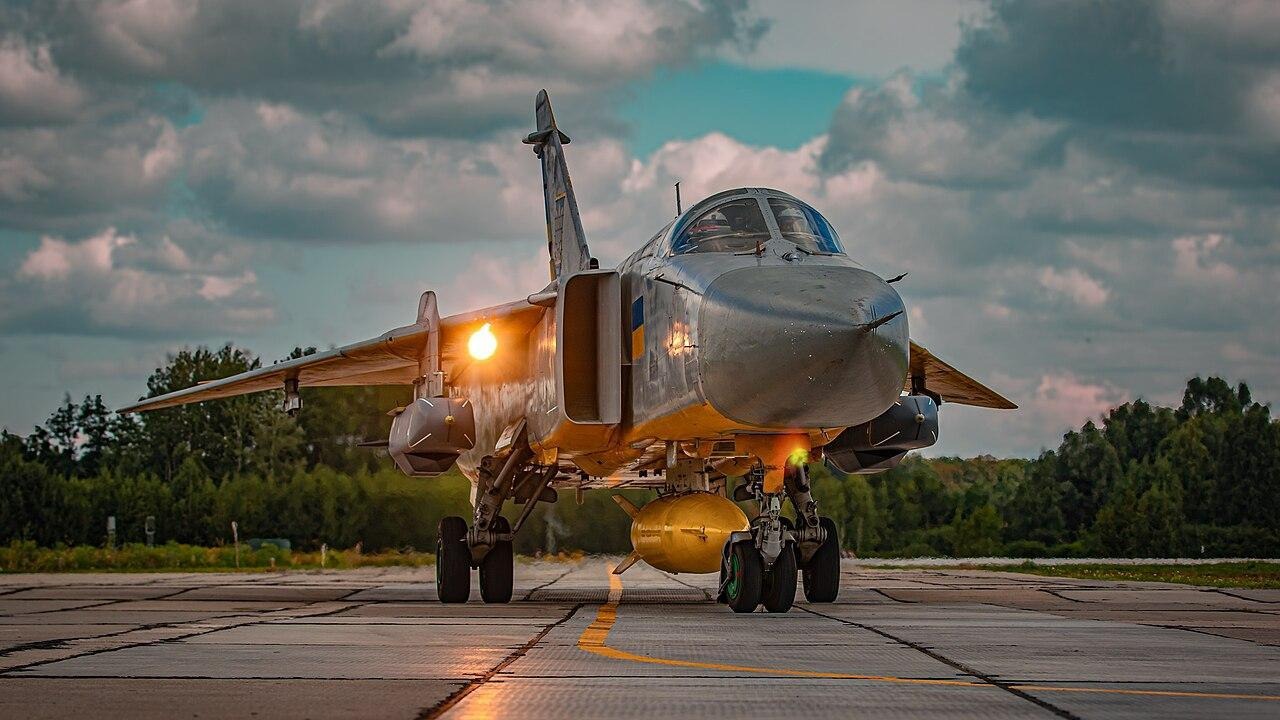
A tactical analysis of the airstrike indicates a high degree of operational complexity. The Storm Shadow missiles did not take the shortest route to the target. OSINT data and the geolocation of video footage indicate that the missiles followed a complex, circuitous route: from Pogar through the Trubchevsk area to ultimately strike Bryansk from the east. This flight profile, based on digital terrain maps and flight at extremely low altitude, allowed the missiles to bypass known Russian air defense positions deployed along the border.
What distinguishes the March attack from previous operations is the involvement of the “Raid” unit from the 413th Regiment of the Ukrainian Unmanned Systems Forces. According to available data, the strike was guided in real time by a reconnaissance drone. This allowed for near-surgical precision: of the seven to eight confirmed hits, as many as five struck the so-called “Building No. 4.” This is a structure measuring approximately 140 by 140 meters, which serves as the plant’s technological heart.
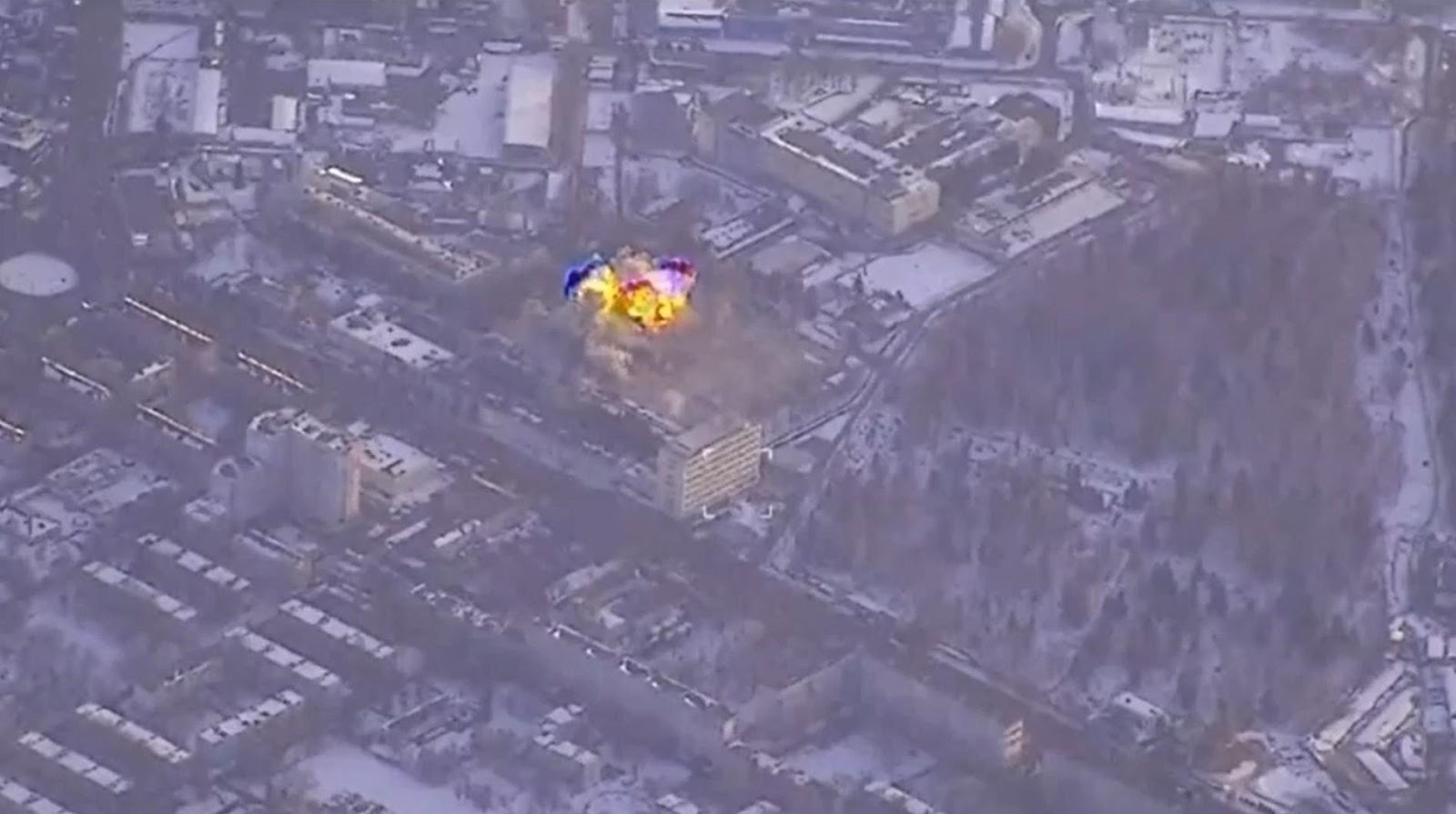
The use of 1,300-kg Storm Shadow missiles with a two-stage BROACH warhead was crucial here. The first cumulative charge penetrated the reinforced ceilings of the production halls, while the main high-explosive charge detonated inside, destroying sensitive equipment.
Footage from dashcams on Bryansk Front Street, more than a kilometer away from the plant, captured a series of powerful explosions that, as it later turned out, put an end to the sterile production conditions for Bryansk microchips.

Immediate consequences—material, human, and infrastructural
The death toll following the strike is tragic and, as is often the case in Russian reality, controversial. Official data from Governor Bogomaz reported 6 dead and 37 wounded. However, independent sources, including a report by Meduza, point to a higher figure: at least 7 dead and 42 wounded, most of whom required hospitalization. The large number of casualties inside the facility is explained by the fact that the strike occurred during a shift change.
The material damage, however, goes far beyond medical statistics. The Investigative Committee of the Russian Federation reported damage to over 70 infrastructure facilities and vehicles in the area around the plant. The shockwave affected nearby residential buildings, as well as a technical college for management and business. However, what happened inside “Building No. 4” determines the strategic significance of this attack. Microelectronics manufacturing requires compliance with ISO Class 5 or higher air cleanliness standards—so-called “clean rooms.” In such facilities, only a minimal amount of dust is permitted. The detonation of five warheads with immense destructive power led to the instantaneous contamination of all sterile zones. Construction dust, soot from the fires, and seismic shocks irreversibly damaged equipment that was not directly struck by debris. Among the destroyed equipment are, in particular, German MLA 150 Maskless Aligner lithography systems from Heidelberg Instruments, purchased before sanctions were tightened. Without these machines, the design and production of new types of integrated circuits becomes impossible.
“Kremniy El” – The “Nervous System” of Russian Missiles
To understand why Ukraine decided to use scarce and expensive Storm Shadow missiles specifically against the Bryansk plant, one must look at its production profile. “Kremniy El” is Russia’s second-largest manufacturer of microelectronics, specializing in components with enhanced resistance to radiation and extreme temperatures. The plant supplies over 1,200 types of components, more than 90% of which go directly to the defense sector. These components include:
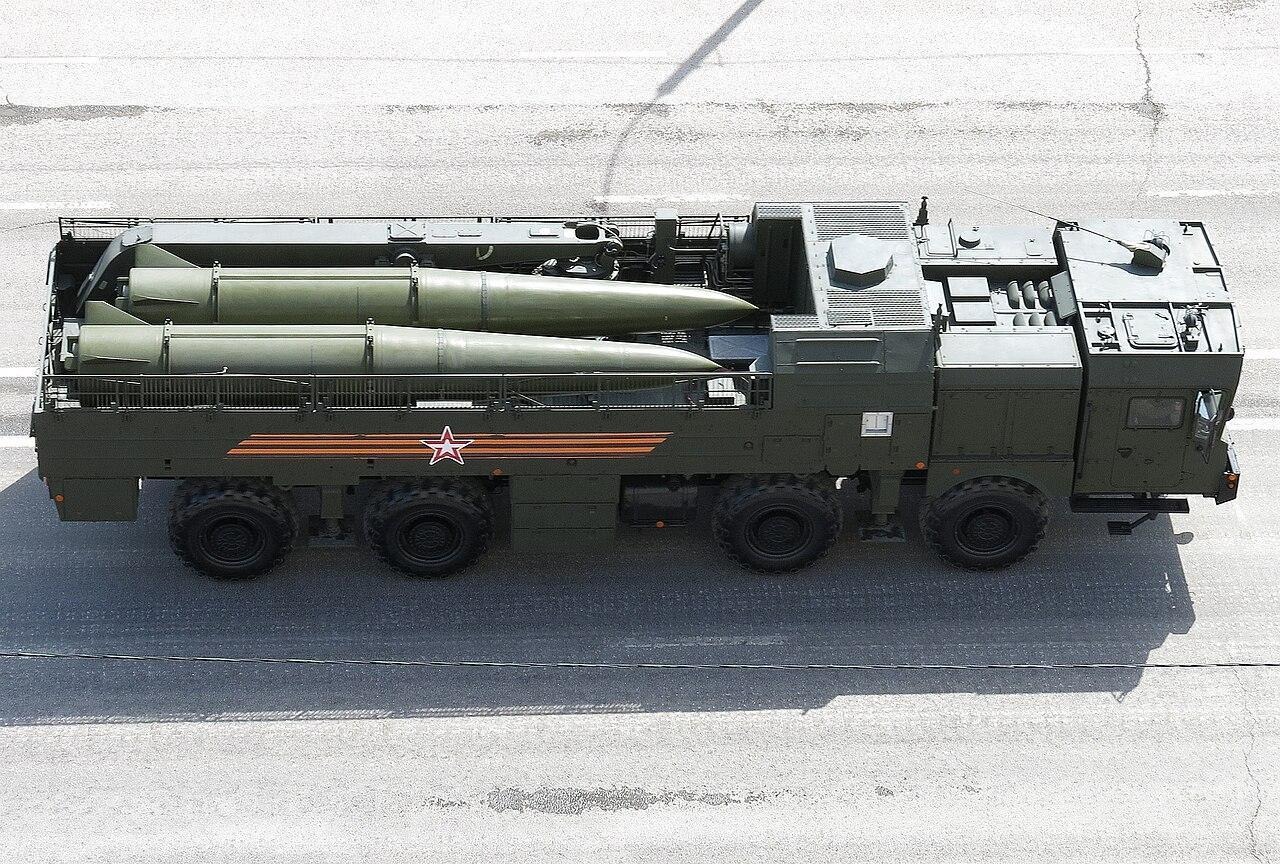
- For the Iskander-M and Iskander-K systems: integrated circuits and power transistors that control actuators and computing units.
- For air defense (S-300, S-400, “Pantsir-S1”): radar signal processing modules and homing heads.
- For strategic aviation: electronics for the Kh-101, Kh-555, and Kh-59 missiles.
- For electronic warfare (EW) systems: high-frequency transistors used to jam navigation and communications.
The Bryansk plant implemented a key import substitution program—the “K” series—which was intended to replace Western microchips that were still being found in the debris of Russian missiles. The destruction of the production base for these components is forcing Russia to return to a risky, expensive, and slow supply chain reliant on intermediaries in Asia, which drastically reduces the reliability of its weapons systems.
Obstacles to recovery: outdated equipment and limited access to high-tech resources
Russian propaganda may claim the plant will be quickly restored, but technological realities are unforgiving. Even before March 2026, “Kremniy El” was already facing problems stemming from previous, smaller-scale drone attacks in 2023–2025. Russian industry sources (including the CNews portal) acknowledged that the plant’s equipment fleet relied on outdated foreign machinery: 1997 Canon photolithography systems or American dimensional control devices from the 1990s.
Rebuilding the production facility is not just about erecting walls and a roof. It requires recreating complex HVAC systems, HEPA filtration systems, and ultra-high-purity technical gas supply systems. Under sanctions, acquiring precision assembly equipment and photolithography machines is a process that takes 3 to 5 years. Russia has lost not only buildings, but above all unique production lines that cannot be easily replaced with products from China or North Korea, since the Bryansk facility was closely integrated with specific post-Soviet weapons projects.

Additionally, it is worth noting that a few weeks before the Storm Shadow attack, “Kremniy El” announced that due to an increase in orders from the Russian Ministry of Defense, it was introducing a three-shift work schedule; therefore, the aspect of skilled labor during the plant’s reconstruction is also very important.
The Geopolitical Map of Microelectronics: “Micron” and “Integral”
Does Russia have an alternative? Two key centers remain on the map, but each has its limitations.
- “Micron” (Zelenograd, Russia): the country’s largest manufacturer, capable of operating using a 90-nm process. It is protected by the densest air defense network in the Moscow area (about 130 positions), making it an extremely difficult target. However, Micron’s production lines are extremely overloaded with civilian orders (Mir cards, passports) and are unable to quickly take over the entire specialized production of military electronics from Bryansk.
- “Integral” (Minsk, Belarus): a key facility responsible for approximately 50% of the microchips used in “Iskander” missiles. “Integral” supplies components using 350–180 nm technologies, which are sufficient for older control systems. Following the attack on Bryansk, pressure on Belarusian enterprises will increase, making them a priority target for future sanctions packages and sabotage operations.
The March strike on “Kremniy El” was not an isolated incident. It was the culmination of an escalating campaign: from drone attacks in September 2023, through fires in October 2024 and January 2025, to the current kinetic strike using various air attack assets. Each of these stages tested Russian air defense and forced the redeployment of Pantsir, S-300, and S-400 systems deeper into the country, weakening the defense of the immediate rear of the front.
Strategic Significance for Ukraine and Russia
The strategic significance of this strike goes beyond the slogan of a “breakthrough,” but three cautious conclusions can be drawn.
First, Ukraine has demonstrated that it is capable of publicly justifying strikes against Russia’s industrial rear: identifying a specific target, the type of weaponry, and noting that the scale of losses is being verified. This narrows the room for maneuver regarding the Russian claim of a “targeted attack on civilians,” though it does not completely refute it, as casualties and collateral damage are a fact.
Second, the Russian information response was twofold: at the regional level, it focused on casualties and rescue operations; at the federal level, it quickly framed the issue as a dispute with the West. The Kremlin’s claim about “British specialists” is an attempt to shift responsibility onto arms suppliers and raise the political cost of future deliveries. At the same time, the Russian Ministry of Defense reported the interception of Storm Shadow missiles, which carries propaganda value regardless of how many missiles were actually intercepted.
Thirdly, the impact on Russian military capabilities will depend on whether the strike hit production segments that are “bottlenecks” and for how long it put them out of commission. OSINT indicates that strikes were concentrated on a key building within the complex, while Russian industry sources highlight the plant’s reliance on imported, often outdated equipment and pre-existing difficulties with spare parts. This supports the hypothesis of a prolonged logistical “tail” following the attack—even if some operations can be shifted to other entities or replaced with imports.
Therefore, the most honest answer to the question “what does this mean” is as follows: On March 10, 2026, Ukraine struck a facility which—according to reports from the striking party, the official sanctions designation, and Russian data on production profiles—is part of Russia’s supply chain for weapons components. The scale of the strategic impact cannot be publicly assessed today, but the direction of the impact is clear: the pressure is directed at the most vulnerable part of the rear, where restoring production is more difficult than the rapid restoration of construction infrastructure.