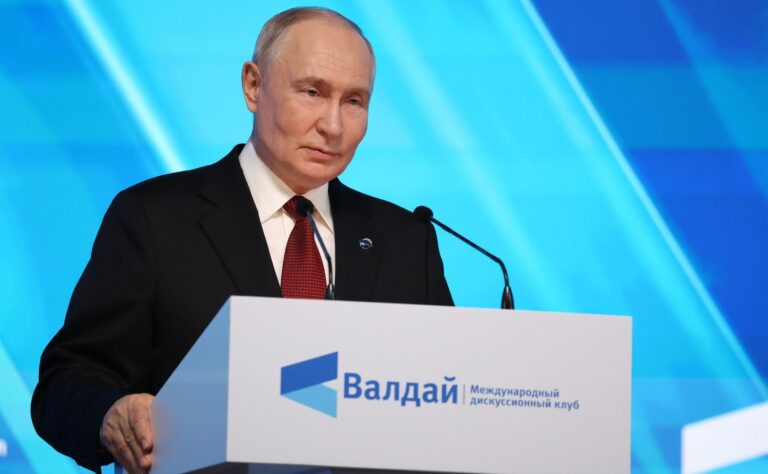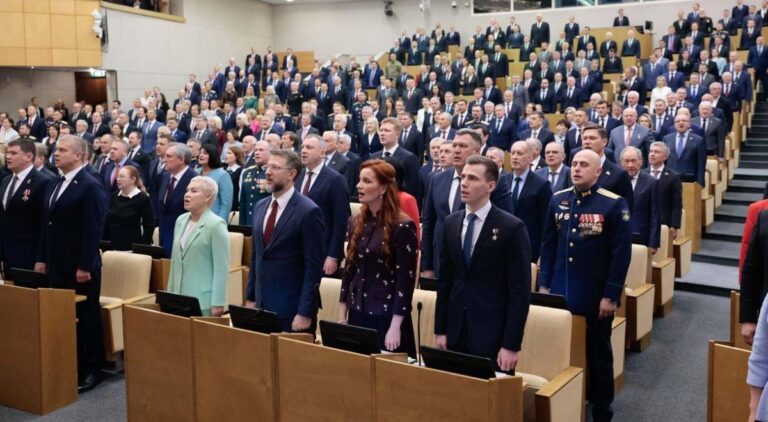

There are less than two months to go until the elections to the Russian State Duma. Vladimir Putin has officially bid farewell to the deputies of the previous convocation and expressed his confidence that the parties will conduct their election campaigns with respect for the electorate and for one another. State Duma Speaker Vyacheslav Volodin called on parliamentary candidates to “avoid populism and demagoguery whilst the country is at war”, whilst Central Election Commission Chair Ella Panfilova promised to ensure maximum security for all those involved in the electoral process.
Eleven parties will take part in the elections, and only one of them is standing with a clearly anti-war platform, but risks failing to secure a seat.
In brief:
- 225 deputies will be elected from party lists, with a further 225 elected from single-member constituencies
- Voting will take place over several days, from 18 to 20 September
- The Central Election Commission has registered 11 parties to take part in the elections. To win seats, they must clear the 5 per cent threshold
- The presidential administration expects United Russia to secure 45 per cent of the vote
- The Yabloko party has been admitted to the State Duma elections; it is the only party standing with an anti-war programme
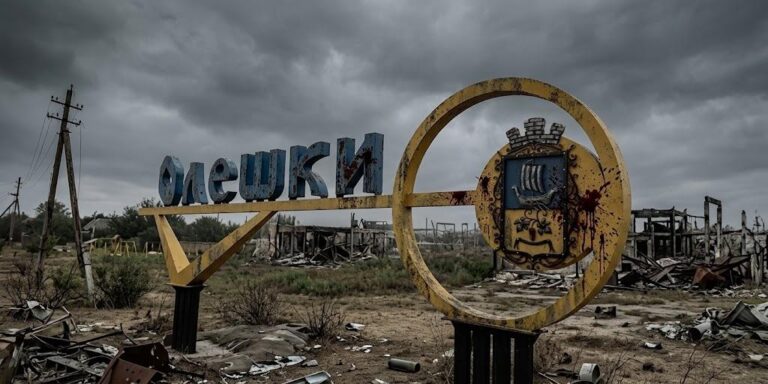
- For the first time, residents of the Donbas, Zaporizhzhia and Kherson regions will elect their representatives to the State Duma. Single-member constituencies have been established in these areas
- United Russia has reserved at least 40 seats in the State Duma for veterans of the special military operation
Who will be elected and when
The State Duma elections will be held under a mixed system: 225 deputies will be elected from party lists, and a further 225 from single-member constituencies.
To secure seats via the federal party list, a party must secure at least 5 per cent of the vote nationwide. In a single-member constituency, the candidate who secures a relative majority of the vote wins – even if this is less than 50 per cent – as there is no second round.
According to a decree by Vladimir Putin, the main polling day for the State Duma elections is 20 September. However, multi-day voting is permitted: voters may go to polling stations over a three-day period — from 18 to 20 September.
Who is eligible to stand in the State Duma elections
Russia’s Central Electoral Commission has registered the lists of all 11 parties taking part in the elections to the State Duma of the ninth convocation. This means that five parliamentary political parties are officially involved in the electoral process: ‘United Russia’, the Communist Party of the Russian Federation (CPRF), the Liberal Democratic Party of Russia (LDPR), ‘New People’ and ‘Fair Russia’. They are joined by six non-parliamentary organisations — the Pensioners’ Party, ‘Yabloko’, ‘Rodina’, ‘Communists of Russia’, the Direct Democracy Party and the ‘Greens’.
One of the main points of intrigue in the campaign was the registration of Yabloko’s federal list; many did not believe until the very last moment that it would be allowed to stand in the State Duma elections. Nevertheless, the Central Election Commission accepted the party’s list.
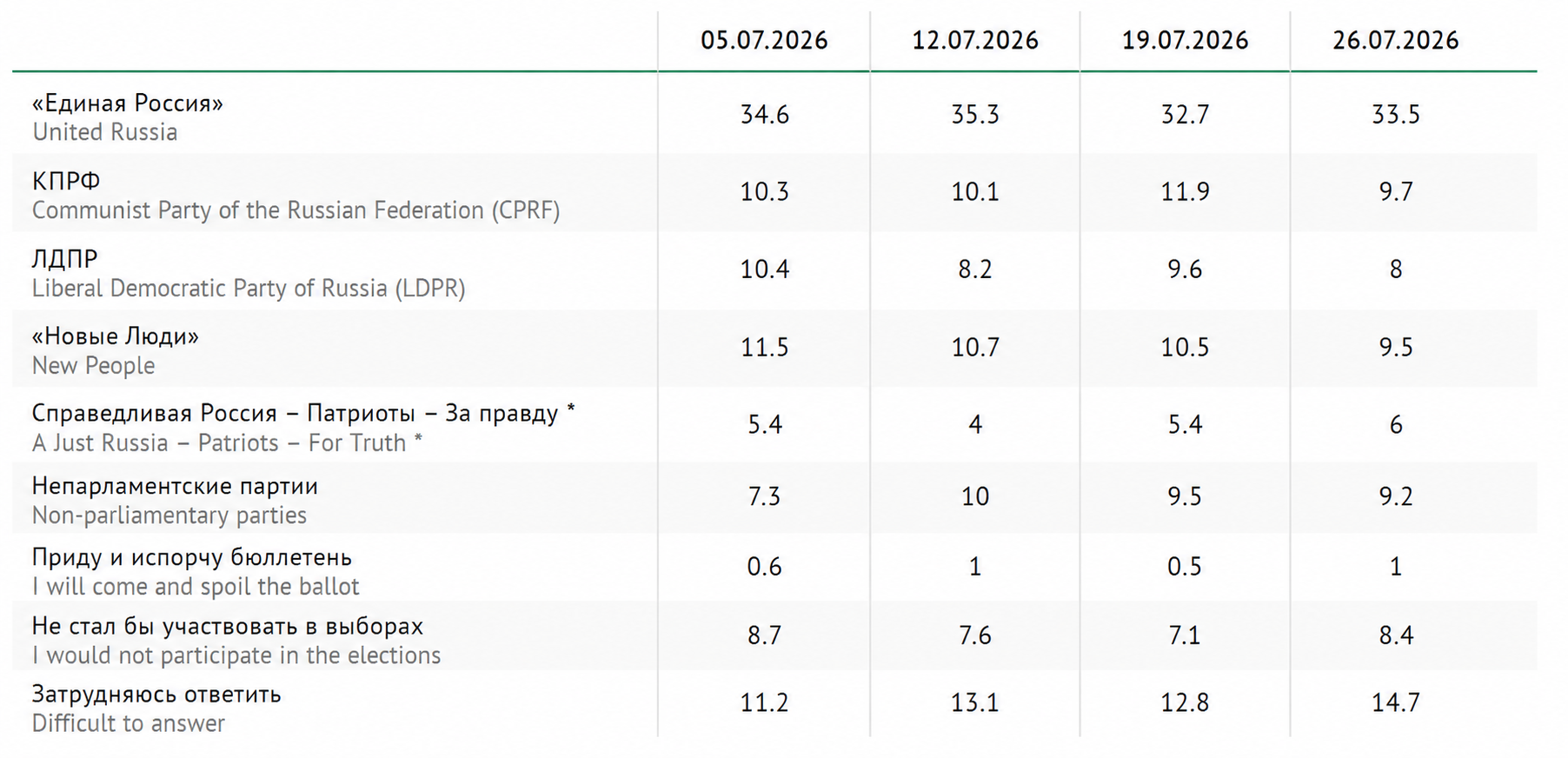
The main question now is who will come second after ‘United Russia’. According to VCIOM, the Communist Party of the Russian Federation (CPRF), the Liberal Democratic Party of Russia (LDPR) and ‘New People’ are neck and neck in terms of support, whilst ‘Fair Russia’ is struggling to clear the five per cent threshold.
Which political parties are running in the election and with what agenda
‘United Russia’
Following the ‘United Russia’ congress held in June, the party’s current chairman, Dmitry Medvedev, did not make it onto the party’s list of candidates. Foreign Minister Sergey Lavrov tops the list. The top five also include Moscow Mayor Sergey Sobyanin, the head of the ‘Yunarmiya’ movement’s campaign headquarters Vladislav Golovin, Children’s Ombudsman Maria Lvova-Belova and military correspondent Yevgeny Poddubny.
The party’s election manifesto has not yet been finalised—until 10 August, “United Russia” is collecting proposals from voters for its “People’s Programme”. Its main priorities have been announced as support for war veterans, regional development, the social sector and demographics.
Against the backdrop of Vladimir Putin’s falling approval ratings, high figures for United Russia in the elections would look suspicious; consequently, the presidential administration now expects United Russia to secure 45 per cent of the vote, rather than 55 per cent as previously anticipated, according to media reports.
CPRF
The CPRF’s list for the State Duma elections is headed by the party’s long-standing leader Gennady Zyuganov. The Communists’ ultimate goal is to repeat their 2021 result, when they secured 57 seats in the State Duma.
The CPRF’s election manifesto was presented at the party congress in June. Its main aim is the revival of socialism. The CPRF advocates the return of key economic sectors to state control, price regulation, a lower retirement age and higher pensions.
During his speech at the congress, Gennady Zyuganov lashed out at his main rival, United Russia, calling it a “liberal-market and oligarchic” party. He stated that since the start of the special military operation, the number of billionaires in Russia has risen from 101 to 155, and their wealth has ‘swelled’ to $700 billion. ‘Our fellow citizens are absolutely fed up with this feast during a plague,’ Zyuganov concluded.
LDPR
In the State Duma elections, the LDPR list was headed by the party’s chairman, Leonid Slutsky; the top five also included Alexei Vereshchagin, Maria Voropaeva, Andrei Lugovoi and Viktor Bout. The party has publicly stated that its aim is to come second in the State Duma elections.
The party’s convention to nominate candidates took place on 23 June 2026. At the convention, the pre-election manifesto—“100 Days of Russia’s Transformation”—was also approved.
According to Leonid Slutsky, the manifesto is focused on “protecting the ordinary Russian person”. The LDPR is proposing a package of measures to tighten immigration legislation, support domestic producers, and protect the Russian language and Russian culture.
The party stated that its founder, Vladimir Zhirinovsky, had “repeatedly warned of the need for rapid transformation in the country. No one listened. And today, in 2026, we are at a crossroads: to save Russia or to slowly die out.”
“Fair Russia”
The all-Russian section of the list includes the party’s chairman Sergei Mironov, Deputy Speaker of the State Duma Alexander Babakov, State Duma deputy Marina Kim and participant in the special military operation Oleg Chernyshev. Fair Russia’s main public aim is to come second in the State Duma elections, behind United Russia. Sergei Mironov spoke about this on several occasions in 2025–2026.
The SR is contesting the elections with the ‘Manifesto of Justice’, which sets out the party’s 10 objectives, the first of which is measures to support participants in the special military operation. The party also calls for a halt to rising prices, an increase in wages, measures to support Russian families, and a cap on the rise in housing and utility tariffs.
‘New People’
The federal section of the ‘New People’ party list for the 2026 State Duma elections is headed by a well-known trio: Alexey Nechaev — party chairman and founder of Faberlic, Vladislav Davankov — Deputy Speaker of the State Duma, and Sardana Avksentyeva — former mayor of Yakutsk.
According to representatives of ‘New People’, they expect to secure around 10 per cent of the vote on the federal list and win between one and three single-member constituencies. Alexei Nechaev also states that the party is aiming to become one of the leading parliamentary forces and expects to significantly expand its current parliamentary group. ‘New People’ entered parliament for the first time in the 2021 State Duma elections. The party is approaching the 2026 campaign with an established parliamentary group and, according to a number of polls, is among the parties with a realistic chance of clearing the 5 per cent threshold and increasing its representation.
The party’s election manifesto was adopted at its congress in the spring of 2026. The campaign is centred on the idea of renewing the state without radically changing the political system. The manifesto also reflects the party’s best-known initiative—‘A Year Without Bans’—which aims to reduce excessive restrictions and administrative barriers for citizens and businesses.
‘Yabloko’
Unlike most parties, ‘Yabloko’ did not include its best-known politicians—Grigory Yavlinsky and Nikolai Rybakov— in the main part of its list. The list is headed by seven young party members, including Yaroslav Shcherbakov, Dmitry Anisimov and Yana Ivanova.
The party itself is modest in its forecasts: it does not specify a particular percentage of votes it hopes to secure, but rather views the campaign as an opportunity to convey its political stance and regain representation in the State Duma.
‘Yabloko’ is the only registered party contesting the election under an anti-war slogan. Instead of a comprehensive manifesto, it has adopted the shortest election manifesto in its entire history – just 43 words.
For peace and freedom! For a life without fear!
For a ceasefire agreement, diplomacy and the achievement of peace!
Our aim is to prevent nuclear war.
For a Russia free from fear and political repression.
For the preservation of life, respect, human dignity and well-being.
Our aim is a prosperous, democratic Russia
Although the Central Electoral Commission has registered Yabloko’s federal list, the party is facing problems in the regions: in St Petersburg, the party was refused registration for the Legislative Assembly elections; in Karelia, a court annulled the registration of the list; and in a number of regions, disputes have arisen over the registration of individual candidates.
According to statements by Yabloko members in Moscow, for the first time in many years, its representatives have not been included in the composition of the territorial electoral commissions. The party leadership claims that several of its members are facing criminal prosecution or are currently in prison.
According to political strategists, as polling day approaches, pressure on the party will intensify, and new criminal and administrative cases may be brought against Yabloko’s most prominent representatives. However, this is unlikely to be an attempt to remove the party from the election entirely. On the contrary, the logic behind the campaign is to keep the party on the ballot paper whilst simultaneously weakening it as much as possible in terms of organisation and personnel.
“Special military operation” and the elections
Residents of the Donbas, Zaporizhzhia and Kherson regions will be electing their representatives to the State Duma for the first time. Separate single-member constituencies will be formed for these regions: three in the DPR, two in the LPR, and one each in the Zaporizhzhia and Kherson regions. ‘United Russia’ has already finalised its list of candidates who will stand in these constituencies. Most of the candidates will be local councillors, although there will also be figures of national renown among them — for example, ‘Channel One’ military correspondent Irina Kuksenkova, reports ‘Kommersant’. The publication’s sources claim that United Russia’s lists in the new territories will, as is traditional, be headed by the governors — Denis Pushilin, Leonid Pasechnik, Yevgeny Balitsky and Vladimir Saldo — but they will most likely act as ‘frontmen’ and decline their seats after the election. Although it cannot be ruled out that some of them may continue their careers in the lower house.
Other Russian parties have little chance of securing seats in the annexed regions. Among the more unusual candidates is Sergei Arbuzov, the former First Deputy Prime Minister of Ukraine during the Yanukovych era, who has been living in Russia since 2014 and has suddenly decided to stand for the State Duma on the ‘Fair Russia’ ticket.
A separate issue is the participation of military personnel in the elections. Earlier, ‘United Russia’ reported that 535 participants in the special military operation had submitted applications for the primaries. According to data from RBC, ‘United Russia’ plans to include between 40 and 50 new deputies from among the participants in the special military operation in the new State Duma. In total, there could be around 100 veterans in parliament. Meanwhile, the State Duma is already discussing the creation of a separate committee on veterans’ affairs and increasing the influence of Special Military Operation participants in politics.
Author: Olga Semashko
Official Russian and Belarusian sources cited in this text are for informational purposes only. Content from these sources may constitute disinformation or propaganda.