
In Kyiv’s Berezniaky neighbourhood, SBU officers used firearms during a confrontation with people from structures linked to HUR; according to Ukrainska Pravda, three HUR servicemen were injured. It is not known, however, who fired first or whether both sides opened fire. The incident has exposed a real gap in the coordination of the security apparatus — but it does not yet prove a ‘war between the agencies’.
In brief
- The SBU has acknowledged that its officers used firearms in Berezniaky. It says there had first been an ‘armed attack’; publicly available material does not establish who fired first.
- On 3 September, the SBU said that Stepan Kaplunov had been in contact with the FSB, was preparing the assassination of a Russian anti-Kremlin activist and had received other assignments for money. The allegations have not yet been independently confirmed.
- Kaplunov has retracted his earlier admission. He says he was held for nine days and subjected to psychological pressure; his lawyer makes the more serious allegation that he was tortured.
- Official HUR materials describe the RDK as a formation operating within the ‘Tymur’ Special Unit; the full formal and legal status of this relationship is not public. The conflict between HUR and the SBU is not a conflict between the SBU and the Armed Forces of Ukraine as a whole.
- Ukraine has formal mechanisms for oversight of its security services. The events in Berezniaky show, above all, that deconfliction did not work in time in this particular operation.
Shots were fired in Berezniaky. We still do not know who fired first
On 2 September, police cordoned off Yurii Shumskyi Street in Berezniaky, in Kyiv’s Dniprovskyi District. At the scene were officers of the Security Service of Ukraine (SBU) and people linked to Defence Intelligence of Ukraine (HUR), followed by investigators from the State Bureau of Investigation (DBR) and the leadership of the SBU’s Special Operations Centre ‘A’, or Alpha. According to Ukrainska Pravda, three HUR personnel were injured. The SBU confirmed that there were injuries among the people who, in its account, had resisted, but did not give a number.
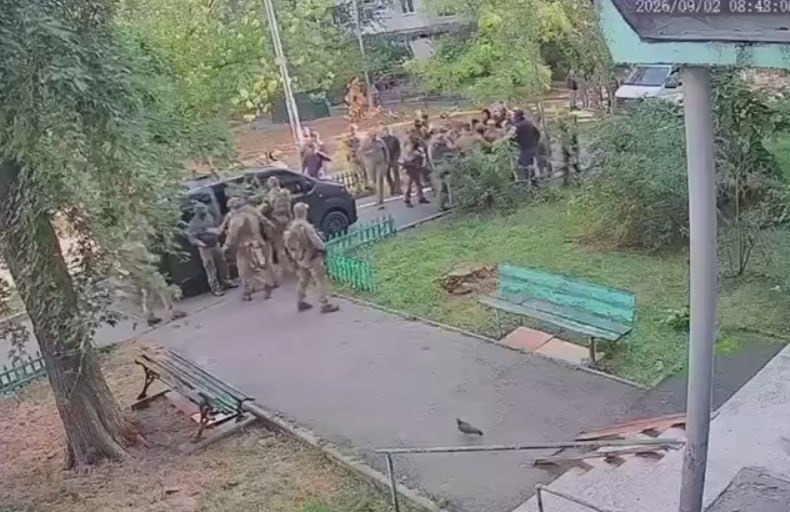
In its statement of 2 September the SBU officially acknowledged that its officers had used firearms. At the same time, it maintains that a group of people carried out an ‘armed attack’ on the operational and investigative team, blocked vehicles and prevented officers from carrying out their duties. Only then, it says, was Alpha deployed. Groups linked to the RDK and HUR give the opposite account: according to them, the SBU opened fire on servicemen who at that moment posed no threat.
Footage published by Censor.NET confirms a violent armed confrontation. The outlet itself noted that it could not identify who fired the first shot; its sources in the SBU and HUR gave conflicting accounts. The footage also does not establish that personnel on both sides fired at each other. ‘Shooting’ is therefore a justified term; ‘exchange of fire’ is not, at this stage.
That evening, Volodymyr Zelenskyy called the incident ‘an absolutely shameful situation between individual units of the SBU and HUR’. He instructed the Prosecutor General and the DBR to reconstruct the events step by step and announced internal investigations and personal accountability. He also stressed that in Ukraine weapons should be directed against the Russian occupiers. The President spoke of individual units, not a war between two institutions. A report on his remarks was published by Ukrainska Pravda.
The SBU says Kaplunov was tasked by the FSB. He retracts his testimony
The key development came on 3 September. In a statement published at 11:10 the SBU said it had been conducting a counter-sabotage operation concerning an FSB plan to assassinate one of the leaders of the Russian anti-Kremlin movement, who was due to visit Ukraine for Independence Day. According to the SBU, the operation uncovered contacts between Stepan Kaplunov, deputy commander of the Russian Volunteer Corps, and the Russian security services.
The leading independent Ukrainian news and politics outlet Babel, citing law enforcement sources, reported that the opposition figure whom Stepan Kaplunov, deputy commander of the Russian Volunteer Corps (RDK), was allegedly planning to assassinate turned out to be Akhmed Zakayev, one of the leaders of the Chechen Republic of Ichkeria.
The SBU says that Kaplunov was to prepare the assassination, that he was also given assignments concerning other soldiers of the Defence Forces and that he acted for payment. The Service says it recovered correspondence with an FSB representative from his phone, and that the serviceman admitted to the contacts and provided information about other people. An excerpt from a recording in which he speaks about contact with members of the Russian security services has been published.
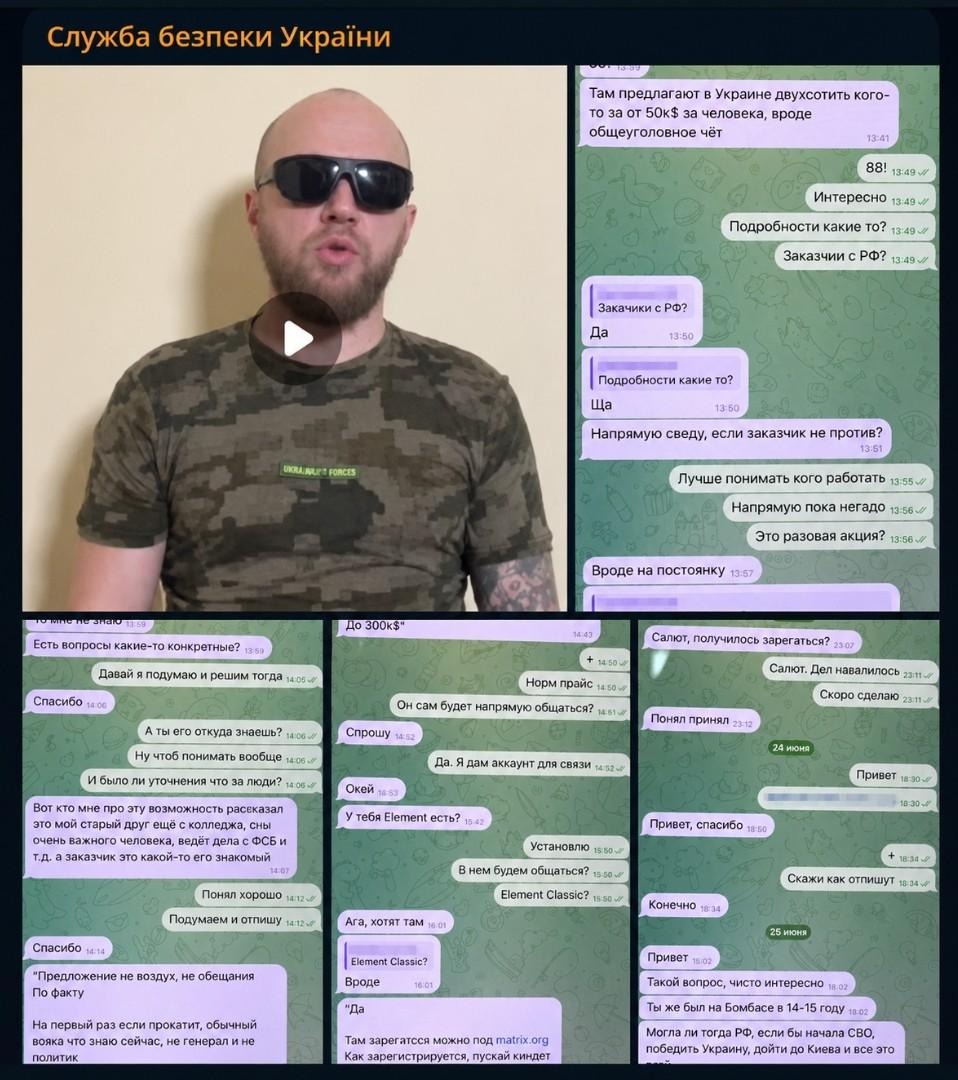
These are serious allegations, but not a publicly verified body of evidence. As of 15:00 on 3 September, the correspondence in full, metadata, a technical examination of the phone, complete recordings of the interrogations and any financial trail had not been made public. The SBU may have such material. The public has not seen it.
After his release, Kaplunov withdrew his earlier account. In an interview with Radio NV reported by Ukrainska Pravda he says that on 23 August he was taken from near his home, handcuffed and then held for nine days at two locations while being subjected to psychological pressure, including threats that he would ‘disappear’. He says this is why he agreed to the account of contacts with the FSB.
The two accounts need to be distinguished. Kaplunov himself said that, except at the moment he was detained, no physical violence was used against him. His lawyer, Taras Borovskyi, makes the more serious allegation of torture and death threats. The lawyer’s allegation remains an allegation. Likewise, the SBU’s statement about correspondence with the FSB remains the position of one party to the proceedings until the evidence is independently assessed.
At 14:26, Kaplunov accused the SBU of trying to use him to discredit Dmytro Ivanov, deputy commander of the ‘Tymur’ Special Unit, and Kyrylo Budanov, head of the Office of the President, as well as of attempting to plant items in his flat. The RDK released CCTV footage showing people carrying a bag, but the recording does not establish why they entered. As of 15:00, there was no independent confirmation of this account. Kaplunov’s statement was published by Ukrainska Pravda.
Nine days is not a procedural detail
On 1 September, the RDK raised the alarm that it did not know Kaplunov’s whereabouts or the grounds for his detention. The DBR confirmed to Ukrainska Pravda that it had received a formal notification from the lawyers and was analysing it for further action. This confirms the existence of a complaint, not the ‘abduction’ itself or unlawful deprivation of liberty.
The Ukrainian Code of Criminal Procedure defines actual detention as beginning when a person is compelled to remain with an officer or at a specified place and, as a rule, makes deprivation of liberty subject to judicial oversight. Martial law does not abolish these rules, but Article 615 of the Code provides for a special procedural regime. The legality of the actions therefore cannot be determined from their description alone.
At the time of writing, it is also impossible to establish from publicly available material that the nine days described by Kaplunov were lawful. This would require official records, the formal basis for the deprivation of liberty, information on access to defence counsel, full recordings of the interrogations and decisions by the prosecutor and the court. The SBU has said only that no preventive measure was imposed on him because of his admission and cooperation. This does not publicly clarify the status of the entire preceding period.
The issue therefore goes beyond whether Kaplunov is telling the truth. The state may conduct a covert counter-intelligence operation against a person from its own security apparatus. But if his home agency does not know for several days what is happening to him, and armed personnel from two agencies later meet at the scene of the operation and shots are fired, the deconfliction procedure has failed, regardless of the eventual outcome of the criminal case.
Kireyev: a tragic precedent, not evidence of a war between the agencies
In March 2022, Denys Kireyev, a participant in the first Ukrainian–Russian talks, was killed in Kyiv. In a later interview with Radio Free Europe/Radio Liberty, the then head of HUR, Kyrylo Budanov, said that Kireyev had been working covertly for military intelligence and had been killed by SBU officers. He rejected the account that Kireyev was a Russian agent. The Wall Street Journal, in turn, reported an SBU officer’s account according to which Kireyev was suspected of spying for Moscow.
Two state bodies assessed the same person in radically different ways. Mykhailo Podoliak of the Office of the President later said that Kireyev’s death was linked to a lack of coordination between HUR and the SBU. Babel reported his comments.
The Kireyev case is therefore a stark precedent of disastrous deconfliction. It is not enough, however, to draw a straight line between 2022 and 2026 and declare a four-year ‘war between the agencies’. The two cases show systemic risk, but do not prove an ongoing institutional conflict.
The SBU and HUR are subject to oversight. The question is whether it worked in practice
The SBU is a state special-purpose body with law-enforcement functions, responsible for state security and counter-intelligence, among other things. The Law on the SBU subordinates the Service to the President and provides for continuous oversight by the Verkhovna Rada of Ukraine. HUR is a military intelligence body within the Ministry of Defence. It is not synonymous with the Armed Forces of Ukraine as a whole.
The Law ‘On Intelligence’ provides for the President’s leadership role, coordination of the intelligence community and parliamentary oversight. Article 53 identifies the relevant committee of the Verkhovna Rada, the Ukrainian Parliament Commissioner for Human Rights and the Accounting Chamber. The problem, therefore, is not a lack of legal basis. The question is how effective these mechanisms are in practice in covert, rapidly conducted operations involving personnel from another armed body.
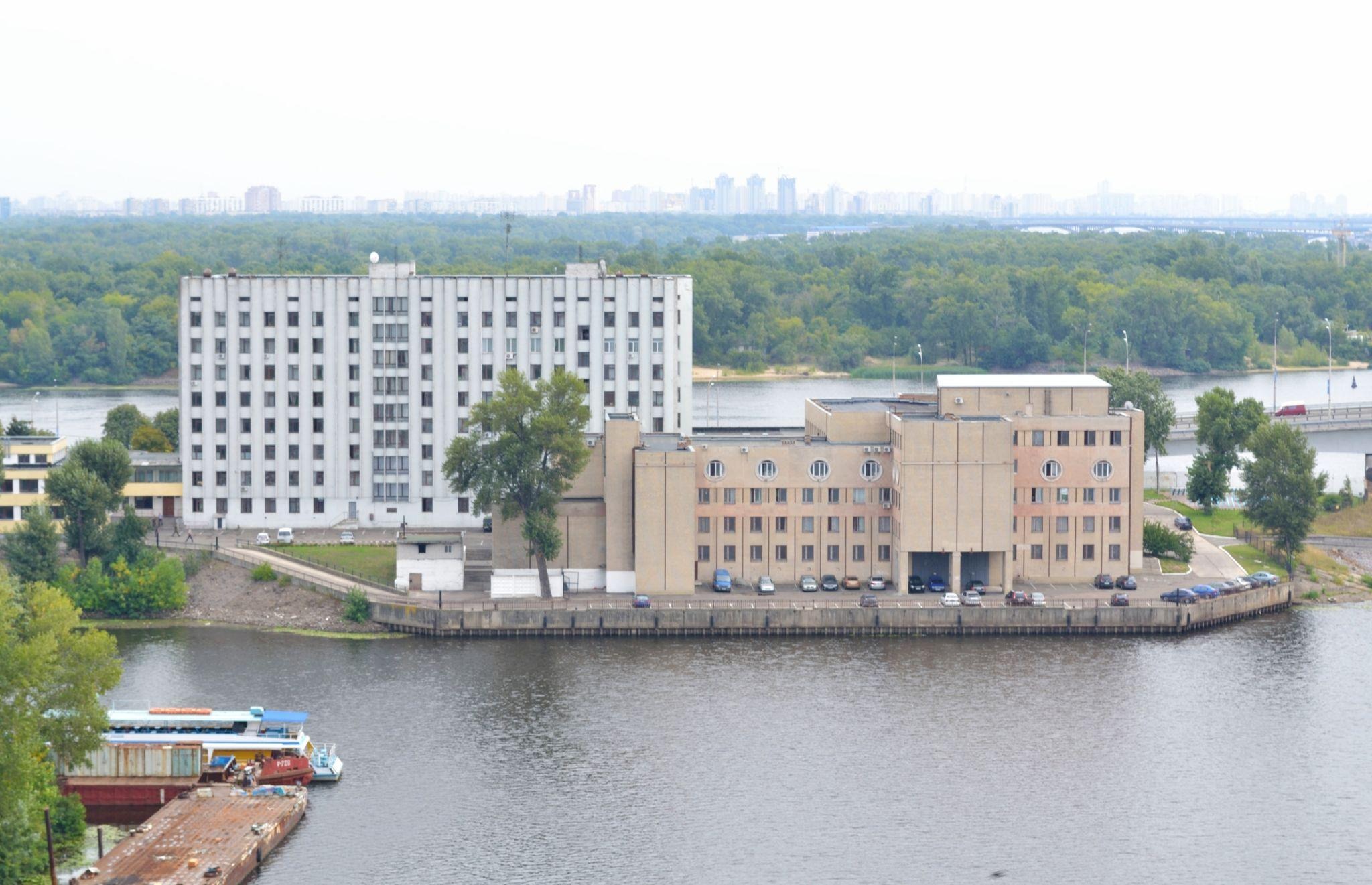
The same applies to the RDK. Official HUR material dated 11 August 2026 describes the Russian Volunteer Corps as a formation fighting as part of HUR’s ‘Tymur’ Special Unit. This confirms a real operational link, but does not reveal the formation’s full formal and legal structure or its chain of command in every operation.
Kyrylo Budanov no longer heads HUR. Since 2 January 2026, he has headed the Office of the President of Ukraine, while HUR has been commanded by Gen Oleh Ivashchenko — as confirmed by presidential decrees of 2 January. After the shooting, Budanov called for an impartial investigation and said that no one has the right to abduct servicemen or fire weapons in the streets with impunity. This was a statement by the head of the Office of the President and former intelligence chief, not a formal communiqué from HUR’s current leadership.
Bankova centralised decision-making. That does not mean it directed this operation
The Office of the President on Bankova Street in Kyiv became a stronger centre of decision-making during the full-scale war. The European Council on Foreign Relations warned of excessive centralisation around the presidential administration, while Chatham House pointed to the need for decentralisation and the strengthening of other state institutions. This provides a basis for discussing the concentration of decision-making.
There is, however, no public evidence that Bankova instructed the SBU to conduct the operation against Kaplunov in a particular way, that it directed the response of people linked to HUR or that the shooting was an expression of a political conflict. Centralisation and a high degree of operational autonomy within the security services can coexist. That is precisely why procedures must work without a phone call to a single person at the top.
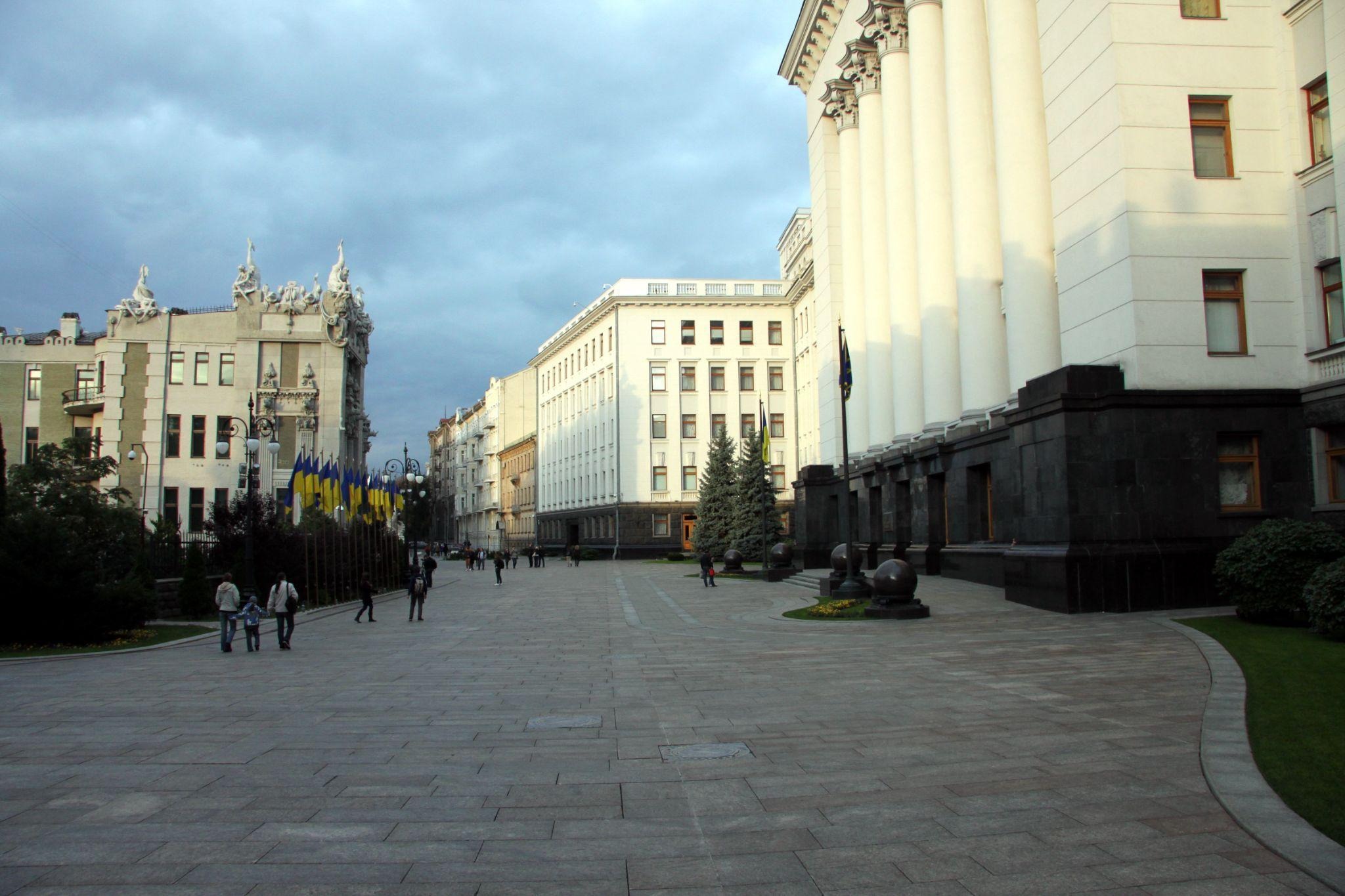
The attempt to increase political control over NABU and SAPO in the summer of 2025, and its subsequent reversal under pressure from protests and criticism by partners, showed both phenomena at once: a tendency to concentrate decision-making and the existence of corrective mechanisms. Associated Press and Reuters reported on this at the time. This supports a discussion of centralisation, presidentialisation and the informalisation of decision-making. It is not enough to declare Ukraine a ‘personalist regime’.
The most dangerous scenario does not require a ‘war between the agencies’
If the SBU’s main account of Kaplunov’s contact with the FSB proves true, the Russian service may have used a person operating within structures linked to HUR against Kremlin opponents and Ukrainian soldiers. A side effect of such an operation could be mutual suspicion among Ukrainian institutions. There is, however, no evidence that the FSB planned the SBU–HUR conflict itself.
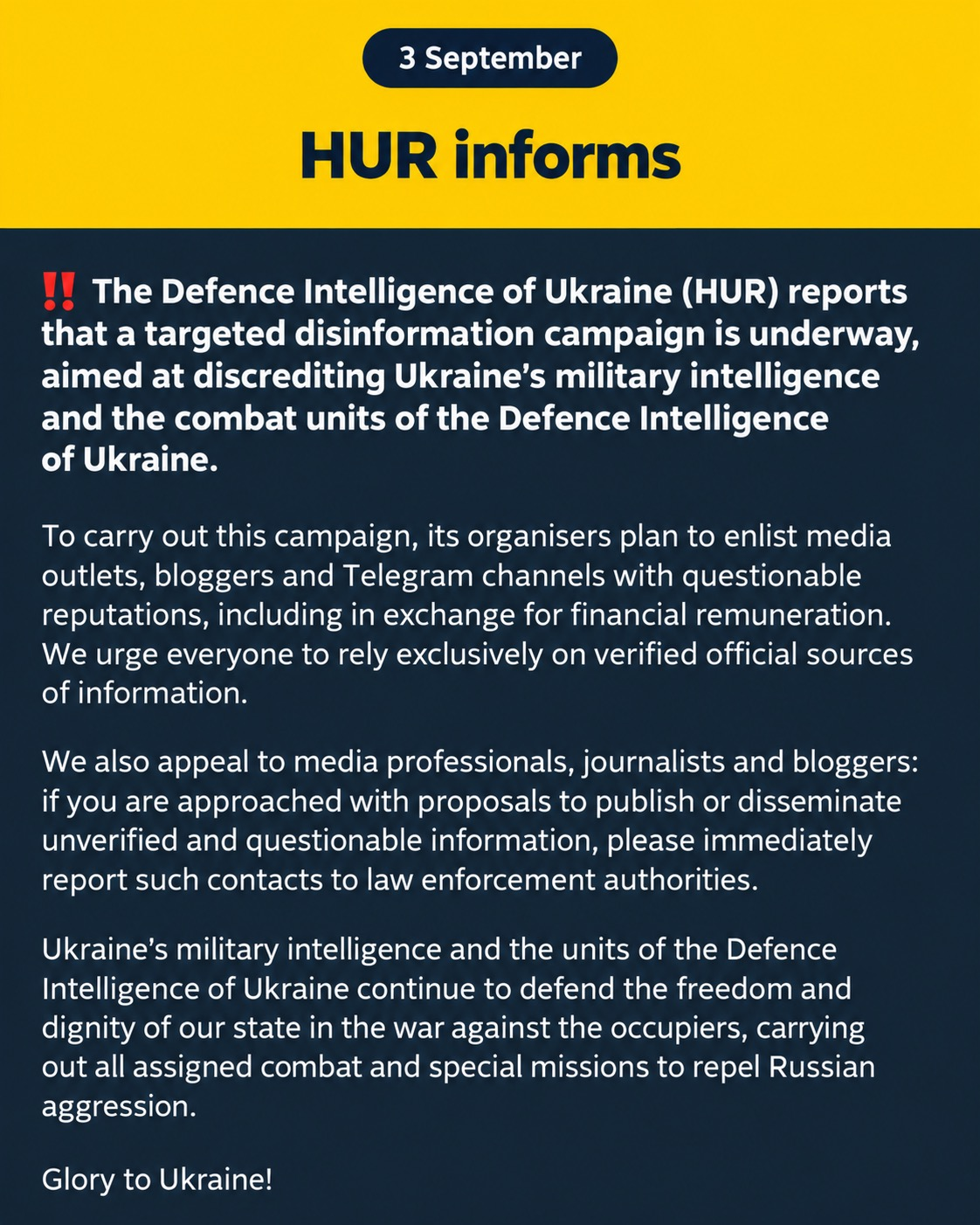
On 3 September, HUR warned of a ‘deliberate disinformation campaign’ targeting military intelligence and its combat units. The statement does not mention the SBU, Kaplunov, the RDK or Berezniaky. The timing of its publication allows it to be analysed in the context of the crisis, but not presented as an official accusation against the SBU.
The risk to national defence is more prosaic: friendly fire, exposure of a counter-intelligence operation, compromise of sources, mutual obstruction of operations and loss of trust among people who may have to cooperate against Russia the very next day. No theory of state collapse is needed for this.
What the shooting in Berezniaky really revealed
As of 15:00 on 3 September, we know enough to call Berezniaky a serious deconfliction failure. The SBU was conducting operations connected with the Kaplunov case. People from structures linked to HUR arrived at the scene. The SBU used firearms; HUR personnel were injured, and the DBR and Alpha’s leadership had to defuse the situation. The President demanded an investigation and accountability.
We do not know who fired first, whether both sides fired, what the full legal basis was for the nine-day period described by Kaplunov, or whether the SBU’s evidence will indeed prove deliberate cooperation with the FSB. Nor do we know whether a wider bureaucratic conflict lay behind the confrontation. There are grounds for such a hypothesis, but not for a verdict.
The conclusion is less striking than the slogan of a ‘war between the agencies’, but more useful. Ukraine has two powerful institutions which, during the war, have accumulated vast experience, resources and operational autonomy. It also has a formal system of oversight. In Berezniaky, however, there was no mechanism to stop the dispute before weapons became the argument.
Fixing this does not require a weaker SBU or a weaker HUR. What is needed is a mandatory deconfliction channel for operations involving personnel from another service, a neutral command mechanism for ‘blue-on-blue’ incidents, an inviolable register of actual deprivation of liberty, full recording of high-risk interrogations and stronger parliamentary oversight under classified procedures. Secrecy may protect an operation from leaks. It cannot protect a shambles from accountability.
Above all, the following remains to be established:
- whether Kaplunov actually collaborated with the FSB;
- under what conditions he gave his testimony;
- who fired first in Berezniaky;
- whether the actions of those involved were lawful;
- and why the conflict between state bodies could have reached such a level.
The shooting in Berezniaky does not prove the collapse of the state or an SBU–HUR war that has been under way since 2022. It proves something narrower: in one of the most sensitive parts of the security apparatus, coordination failed to stop armed men serving the same state from coming into conflict. During the war with Russia, that is a serious enough warning sign.
Author: Artur Żak