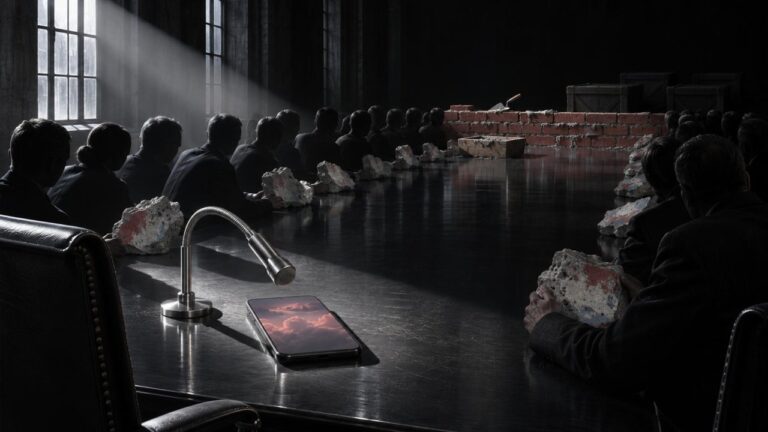

Political analysts believe that, in recent years, the outcome of elections in Slovakia has been determined by voters who have no clear answers to key questions concerning society …
In brief:
- The political preferences of Slovak voters and attempts by Russian disinformation to influence them
- Why the government wants to hold parliamentary elections ahead of schedule
- In Slovakia, simply winning the parliamentary race and forming a government is not enough to secure full power; one must also win the local elections
- Where the real line lies between Slovak Prime Minister Robert Fico’s public populism aimed at Slovak voters and his practical pragmatism regarding Ukraine
In just over a month, on 24 October this year, local and regional elections will be held in neighbouring Slovakia, in which voters will elect mayors of towns, village and community leaders, heads of eight self-governing regions and local and regional councillors. The results of these elections, despite their local nature, will be of significant importance not only for Slovakia itself, but also for its neighbours, and Ukraine in particular. The fact is that they will take place less than a year before the next parliamentary elections in 2027 and will serve as something of an indicator of the political mood within Slovak society. Another important feature is that, under Slovak law, regional authorities have significant powers and are not accountable to the capital on many issues.
Who appeals to whom, and with what
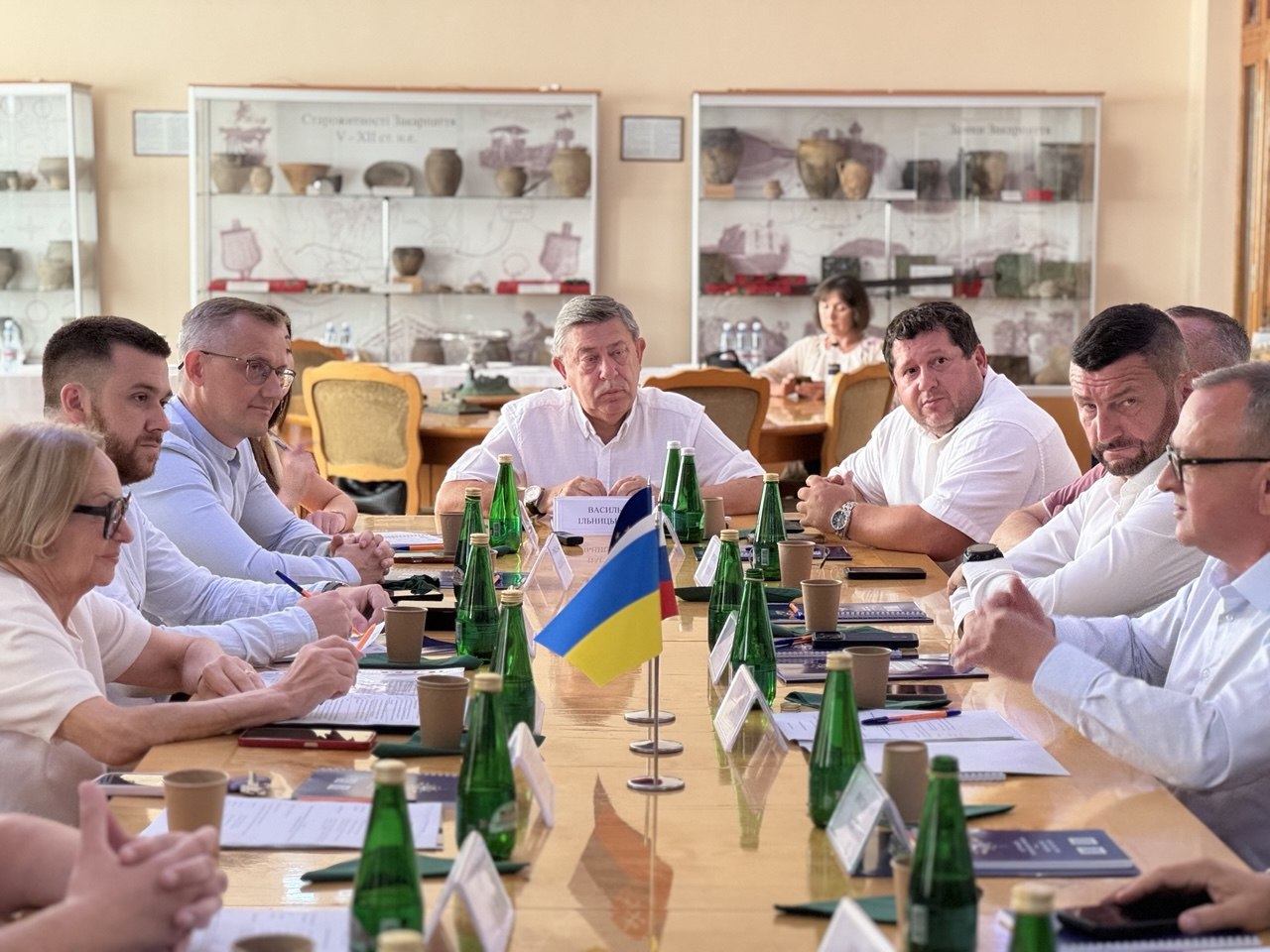
Given the significance of this event, the Uzhhorod-based ‘Centre for the Analysis of Regional Risks’, in partnership with the Institute of Central Europe and the Transcarpathian branch of the Academy of Political and Legal Sciences of Ukraine, held an expert discussion on the last day of August on the topic ‘Ukrainian-Slovak relations in the current political reality: Challenges, Prospects and the Factor of Upcoming Elections in Slovakia’, featuring the renowned Slovak expert and academic, Professor Alexander Duleba of the University of Prešov. During the discussion, the expert academics addressed a number of important issues that have a direct impact on the development of current Ukrainian-Slovak relations.
Both the Ukrainian experts – the doctors of science and political scientists Myroslava Lendiel, Mykola Palinchak, Yurii Ostapets, Volodymyr Prykhodko, Vasyl Levkulych, Anatolii Kliuchkovych, Ihor Vegesh and Svitlana Mitriaieva – and the Slovak professor Alexander Duleba together with Oleg Adamchuk, Honorary Consul of Slovakia in Velykyi Bereznyi, were unanimous in their view that Slovak society is currently highly polarised. Almost half of potential voters – 46–48 per cent, to be precise – categorically reject both the foreign and domestic policies of the current Prime Minister, Robert Fico, and his party, Smer-SD. These are, for the most part, younger and middle-aged Slovaks with higher education who identify as part of the European community. They form the ‘rock-solid’ electorate of the liberal opposition parties, in particular the leading force, Progresívne Slovensko.
Support for the current governing coalition – the Smer-SD and Republika parties – stands at around 30 per cent. In total, there are six or seven parties on the right wing of the Slovak political spectrum, of which four or five are radical. If several parties gain seats in parliament, a government can only be formed on the basis of a coalition. And this always involves compromise and often a departure from the promises made during the election campaign.
Through his statements during his current term as Prime Minister, Fico has practically ‘siphoned off’ the electorate of the far-right parties and swelled the ranks of his own supporters at their expense. It is precisely the electoral sentiments of these people that Russia is also attempting to influence, employing a wide range of blatant disinformation and fuelling anti-Ukrainian sentiment among Slovaks – particularly towards Ukrainian refugees and Ukrainians in general. To this end, the Russians work closely with so-called ‘alternative’ media outlets, whose activities are aimed at paralysing people’s capacity to think – in particular by planting doubts in voters’ minds about the effectiveness of democratic state institutions, and ideas about the irrelevance of EU membership and ‘Slavic unity’… And these narratives are finding supporters.
Russia’s overarching interest in Slovakia is to undermine the foundations of democratic institutions and Euro-Atlantic structures, and to turn the country into a ‘weak link’ within the European community. This is particularly important to them today, following the Kremlin’s crushing defeat in the April parliamentary elections in Hungary. And Fico’s government is aiding the Muscovites in their endeavours. During Eduard Heger’s premiership, every Slovak ministry had specialised departments dedicated to combating disinformation. With Fico’s return to the prime minister’s seat, all of them were abolished.
A further 20 per cent or so of potential voters in Slovakia have no fixed political convictions at all. These are people who, in the space of a single day, can radically change their political allegiances under the influence of some compelling argument, as they have no clear answers in their minds to the key questions concerning society and their place within it. It is they who are currently deciding the outcome of elections in Slovakia! The best illustration of this is the success in the 2020 elections of Igor Matovičs ‘Ordinary People’ party, which, three days before the election, saw its support surge from 8 per cent to 24 per cent on the back of escalating anti-corruption sentiment and the public outcry following the murder of the investigative journalist Ján Kuciak and his fiancée in 2018. This tragedy sparked mass protests across the country, while allegations of links between the mafia and the ruling party undermined confidence in the then Fico government.
Why the government is seeking early parliamentary elections
The current ruling coalition is feeling the precariousness of its position, which is growing by the day, and is trying to stay one step ahead. Recently, the Hlas party, founded by the current president and Fico’s ally Peter Pellegrini, put forward a proposal to pass a constitutional law which, following a nationwide referendum, would shorten the election campaign period and hold parliamentary elections much earlier than in autumn 2027. This is ‘Plan B’ for Fico. According to experts, the reason for this ‘initiative’ is a lack of funds in the national budget to ‘appease’ voters with additional social benefits, in particular a ‘thirteenth’ pension and other populist measures that his supporters are expecting. But there is no money in the budget for this. The current Slovak government came to power when reforms had been successfully implemented and there were funds in the budget, which Fico ‘successfully’ handed out to boost his own popularity. But in 2027, unpopular decisions will have to be made, which will certainly not win the current government any new supporters.
According to analysts, the ‘Ukrainian card’ is unlikely to be played in these elections. Slovakia is neither Poland nor Hungary – and in its relations with Ukraine it has neither historical ‘dark spots’, nor complaints about the treatment of the national minority, nor grievances against contemporary Ukrainian refugees. What is more, there has recently been a trend of Ukrainians moving from Poland to Slovakia. An analysis of government data shows that the financial contributions made by Ukrainian refugees, who work in many sectors of Slovakia’s economy, exceed the budgetary expenditure on support for them. More than 70 per cent of displaced persons from Ukraine are in work and pay taxes. In Bratislava, almost 80 per cent of taxi drivers are Ukrainians, and many of our compatriots work in the restaurant and beauty industries. Incidentally, Ukrainians may also stand in local elections provided they hold the relevant residence permits.
The national significance of local elections
An important factor for the further development and strengthening of Ukrainian-Slovak cooperation is a provision in Slovak legislation which has delegated significant powers to regional authorities in matters of socio-economic development. Regional authorities are not obliged to ask the government in Bratislava with whom they may develop mutually beneficial cooperation, including abroad. For example: if a memorandum of cooperation between Ukraine’s Zakarpattia Oblast and the Prešov and Košice self-governing regions provides for the construction of arms manufacturing facilities for the needs of the Armed Forces of Ukraine, the Slovak government has no authority to block such agreements. There are no state administrations in Slovakia’s self-governing regions, and the central government has no direct leverage over regional authorities. This is precisely why Fico’s Slovakia has not become Orbán’s Hungary. The Prime Minister can only influence the head of a self-governing region elected by its residents if that head is a member of the same party. And today the situation is such that, out of eight self-governing regions, only one is led by a member of Fico’s party. So in Slovakia, to secure full power, it is not enough to win the parliamentary elections and form a government; one must also win the local elections.
This is a purely domestic Slovak context. But there is also an international dimension. As is well known, during the parliamentary elections in Hungary in April this year, Fico openly supported former Prime Minister Orbán. The current head of the Hungarian government, Péter Magyar, detests Fico and makes no secret of it. There are therefore well-founded hopes that the electorate of the parties representing the Hungarian community in Slovakia – which accounts for almost 10 per cent of the total number of voters – will not support the candidates put forward by the current government either. It is worth noting that with the election of Péter Magyar, who has established not merely a partnership but a relationship of personal trust with his Polish counterpart, Donald Tusk, Hungarian-Polish relations have become almost fraternal. This factor will also influence electoral sentiment in Slovakia and serve to shift the focus of political animosity from relations with Ukraine to relations with Hungary.
We shall soon see how political preferences play out. But even today it is possible to predict that candidates from opposition parties oriented towards European integration stand a good chance of winning the elections in the Košice and Prešov self-governing regions, which border Ukraine’s Zakarpattia region, Hungary and Poland.
When he tells the truth…
Participants in the discussion also highlighted the marked discrepancy between the current Slovak Prime Minister’s public rhetoric and his practical actions regarding cooperation with Ukraine, including in the military sphere. Where exactly does the real line lie between his public populism aimed at Slovak voters and his practical pragmatism towards Ukraine? On the one hand, Fico constantly states that Slovakia will not fund the ‘continuation of the war’. Meanwhile, Slovak defence companies regularly fulfil commercial contracts for the Ukrainian Armed Forces, and the government in Bratislava is successfully negotiating major infrastructure projects with Kyiv. Admittedly, the current Slovak government does not make the sort of gifts to Ukraine that the government of Eduard Heger did in its time, supplying S-300 air defence systems and MiG aircraft in the first weeks of the war. Ukrainians are often shocked by the anti-Ukrainian content of Fico’s statements. On the other hand, before Muscovy unleashed its war against Ukraine, Slovakia produced fewer than 10,000 artillery shells a year of the most commonly used 155-millimetre calibre. Today, Slovak arms manufacturers are producing more than 300,000 of them! The well-known ‘Czech initiative’ to supply the Ukrainian Armed Forces with artillery shells is being carried out mainly at factories in Slovakia. In the Prešov Self-Governing Region, a leading Ukrainian company has set up a modern drone manufacturing plant, and emergency electricity supplies are regularly provided to Ukraine at particularly critical moments. It is therefore by no means wrong to think that Fico is a mere conformist. To remain popular with his electorate, he flies to Moscow to be photographed with Putin, and upon returning home gives the go-ahead for the development of cooperation with Ukraine.
During the discussion, the participants repeatedly emphasised that in Europe there is currently an illusion of a ‘safe distance’ from the war, and that this illusion is growing. But this is far from the truth. The notion that any country can hide behind its geography, neutrality or populist rhetoric is a very dangerous illusion. Today, the border between Uzhhorod and Mykhailivtsi is not merely the boundary between two states. It is the border between the stability of the European Union and the zone of the Russian Federation’s aggressive expansionism. And when we in Ukraine talk about the future of our relations with Bratislava, we proceed from a simple truth: Slovakia can only be safe, prosperous and sovereign if Ukraine is safe and sovereign – a country which is currently holding the front line at an incredible cost and guaranteeing Europe’s security.
Vasyl Ilnytskyi