Ten years of contacts between key figures of the Alternative für Deutschland (AfD) party and Russian structures: from trips to occupied Crimea and networks around Manuel Ochsenreiter to contacts with the circles of Medvedchuk, the Party of Regions and its successors, and part of the party’s open course towards restoring relations with Moscow.
This investigation is not based on the assumption that Russia “created” the AfD or that all party members act on direct instructions from the Kremlin. There is no evidence of that. The subject of our analysis is the structure of contacts, intermediaries and media platforms through which AfD representatives systematically crossed paths with Russian influence networks.
In brief:
- Since 2015 representatives of Alternative für Deutschland (AfD) have developed contacts with Russian structures, including through trips to occupied Crimea and participation in politically motivated election “observation” missions.
- Published documents contained plans for Russian support of Markus Frohnmaier’s election campaign, but they prove neither a transfer of money nor that the politician knew of these plans.
- AfD politician Petr Bystron figures in an investigation into the alleged receipt of money from the Voice of Europe network in exchange for political activity in Russia’s interests; he denies the allegations.
- The AfD leadership advocates lifting sanctions on Russia and ending arms deliveries to Ukraine, and the parliamentary group has proposed cutting aid until Kyiv agrees to negotiations with Moscow.
- In June 2026 Markus Frohnmaier met Gazprom chief Alexei Miller and Putin’s special envoy Kirill Dmitriev, arguing for a resumption of Russian gas supplies to Germany.
September 2026. The result of the election in the German state of Saxony-Anhalt sent shock waves through European capitals. The far-right Alternative für Deutschland (AfD) won 43.8% of the vote. That is 23 percentage points more than five years earlier. With 39 of the 83 seats in the state parliament, the AfD was one step away from an absolute majority, leaving Chancellor Friedrich Merz’s Christian Democrats (CDU) far behind (17.2%).
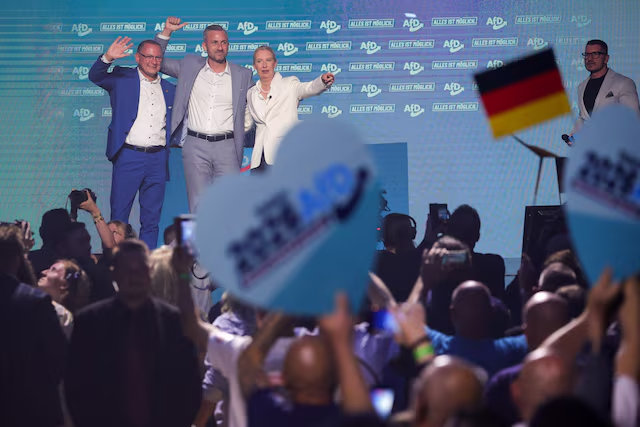
It is a record result in the party’s history. But the AfD’s success in Saxony-Anhalt is part of a broader strengthening of its position in Germany. In the Bundestag election of 23 February 2025 the party won 20.8% of second votes and 152 seats, becoming the second-largest parliamentary force. And in a nationwide INSA poll for Bild am Sonntag published on 5 September 2026, its support stood at 28%. At this scale, links between party figures and foreign centres of influence acquire national significance.
The AfD’s political breakthrough was not limited to one state. On 20 September 2026 the party won the election in Mecklenburg-Western Pomerania with 38.2% of the vote and 32 of 71 seats. Compared with 2021, its support more than doubled. On the same day in Berlin the AfD received 16.3% of the vote and 29 seats in the state parliament.
The September elections thus showed not only the growing popularity of the far right but also the concentration of its political strength in eastern Germany. In Saxony-Anhalt, where the AfD fell just three seats short of an absolute majority, talks began after the election on possible parliamentary cooperation with the Sahra Wagenknecht Alliance (BSW). Although the BSW rejected a formal coalition, support for individual AfD initiatives was discussed.
The party is growing stronger amid a dispute over its legal status. On 2 May 2025 Germany’s Federal Office for the Protection of the Constitution (BfV) classified the AfD as a “gesichert rechtsextremistische Bestrebung” – an organisation with confirmed right-wing extremist aspirations. The party challenged the decision. On 26 February 2026 the Cologne Administrative Court, in interim proceedings, barred the BfV from applying this classification and from publicly describing the AfD in this way until the main case is decided at first instance.
This political scale cannot be analysed in isolation from the geopolitical context. Over the past decade key AfD figures have built contacts with Russian state structures, taken part in politically motivated election “observation” and met representatives of Vladimir Putin’s entourage in St Petersburg. Other episodes in this investigation trace links to pro-Russian Ukrainian figures and to the sanctioned platform Voice of Europe. These contacts and proceedings have different evidentiary status, but their political significance grows together with the AfD’s representation and its ability to influence the decisions of German and European institutions.
The AfD’s evolution: from Euroscepticism to geopolitical revisionism
The AfD was founded in 2013 as a party opposed primarily to European integration and the eurozone bailout policy. Its early version was not the party Europe knows today.
The turn came after the 2015 migration crisis. The euro question gradually gave way to migration, national identity, anti-elite rhetoric and hard-line cultural conservatism.
At the same time its foreign policy orientation changed. In AfD rhetoric Russia increasingly appeared not as an authoritarian state threatening European security, but as a necessary partner: economic, energy and geopolitical.
This is an important distinction. The AfD’s Russian orientation did not emerge overnight and cannot be explained solely by outside interference. It took shape at the intersection of domestic German right-wing populism, anti-Americanism, criticism of the EU, economic interests, nostalgia for cheap Russian energy and contacts with Russian political networks. And the first notable episodes of this story led not to Berlin or Moscow, but to Ukraine.
2015. “Observers” who came to support the right candidate
In 2015 the so-called Political Initiative formed an international mission to observe Ukraine’s local elections. Among its 18 members were at least six AfD representatives: Ludwig Flocken, Corinna Herold, Olaf Kießling, Rainer van Raemdonck, Thomas Rudy and Christina Schade. They were joined by representatives of Hungary’s Jobbik and other European political milieus.
The problem, however, was not only the mission’s composition. A study by OPORA and the European Platform for Democratic Elections showed that many of its members had previously taken part in pseudo-observation of illegal processes in Russian-occupied territories, including the Crimean “referendum” of 2014. The researchers also concluded that during the mission in Dnipropetrovsk and Mariupol its members apparently worked in favour of the Opposition Bloc. The Opposition Bloc had been formed in September 2014 after the political milieu of the Party of Regions fell apart, and became one of the main carriers of its electoral and personnel legacy.
This does not mean that the AfD formally cooperated with the Party of Regions. But it does mean that six of its representatives ended up in an international mission that researchers described as effectively helping to legitimise the pro-Russian Opposition Bloc.
After the first round AfD representative Rainer van Raemdonck declared that the elections met European standards. When the Opposition Bloc candidate Oleksandr Vilkul made it to the run-off, members of the mission began to speak of alleged provocations against him.
This was an early example of how European politicians could lend pro-Russian Ukrainian forces international legitimacy through the status of “independent observers”.
2016. Crimea, money and the Eurasian network
The following year the links became much more concrete. AfD MEP Marcus Pretzell took part in the Yalta International Economic Forum in occupied Crimea. He later confirmed that the organisers had paid for his trip, although he denied receiving a fee.
A leak of the correspondence of Russian parliamentary staffer Sargis Mirzakhanyan, examined by OCCRP, revealed a much wider picture. The documents discussed trips by European politicians to occupied Crimea, fees and media support. In one document nine European politicians and €21,500 in planned “fees” appeared, separately from the cost of plane tickets.

Among the network’s key European contacts OCCRP named Manuel Ochsenreiter, a German far-right publicist with contacts in the AfD. The documents also contained a plan to support Markus Frohnmaier’s 2017 election campaign and work on an AfD anti-sanctions resolution in Baden-Württemberg. We will come back to this episode later.
For now, let us agree that the existence of a financing plan does not prove the money was actually handed over. But it does prove the intention of a Russian network to support a specific German politician.
Uzhhorod. When political influence turns into violent provocation
The events of 4 February 2018 in the Ukrainian city of Uzhhorod were a vivid illustration of how the network of contacts around Alternative für Deutschland (AfD) goes beyond purely political rhetoric or media campaigns. That day unknown perpetrators set fire to the building of the Society of Hungarian Culture of Transcarpathia, leaving Nazi symbols on the facade.
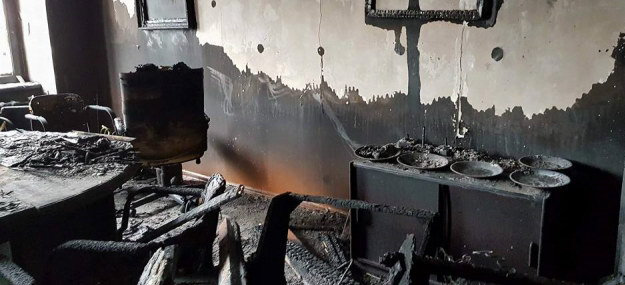
At first glance it looked like a local outburst of ethnic extremism. But subsequent investigations by European security services uncovered a complex cross-border scheme aimed at destabilising the region and undermining the unity of European states.
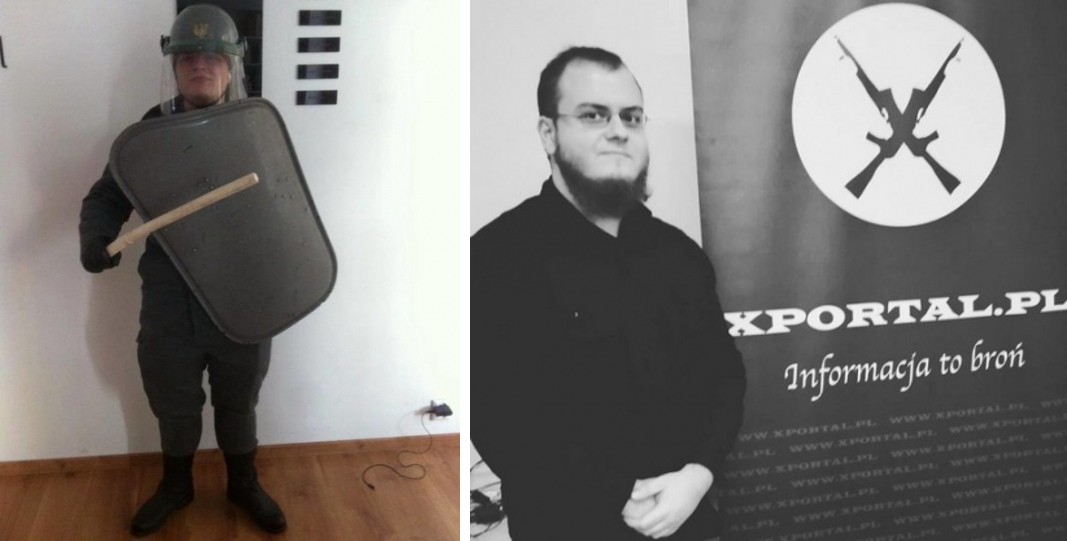
An investigation by Poland’s Internal Security Agency (ABW), conducted under the supervision of prosecutors, led investigators to three Polish citizens: Adrian M., Tomasz Sz. and Michał P. On 23 March 2020 a court in Kraków found all three guilty: Michał P. was sentenced to three years in prison, Tomasz Sz. to one year, and Adrian M. to two years of restricted liberty with community service. However, at the time the ABW published its official statement on the results of the investigation, the verdict was not yet final. In June 2021 Portal Kujawski reported that the verdict had become final, but did not cite the relevant court decision.
At the time of the attack Ukrainian-Hungarian relations were already in a phase of acute conflict. The Hungarian government sharply criticised Ukraine’s education law and its language policy towards national minorities, and Budapest was blocking meetings of the NATO-Ukraine Commission. Poland’s OSW explicitly described the dispute over the education law as one of the main reasons for the deterioration of bilateral relations.
But, as the Polish investigation established, the attack was not merely criminal but staged. The perpetrators were to create the impression that Ukrainian far-right activists were behind it. A swastika and the number “88” appeared on the building – not random graphics but symbols meant to reinforce the version of neo-Nazi involvement. According to the Polish prosecution, the aim of the operation was to stoke hostility between Ukrainians and Hungarians and deepen the existing conflict between Kyiv and Budapest.
In other words, the operation was built on the principle “crime – planted attributes – desired conclusion”. The physical attack was meant to create material “proof” that the Ukrainian state was supposedly losing control over the far right and that the Hungarian minority was under threat. This made it possible to shift responsibility from the real organisers to an invented enemy and at the same time aggravate the existing political crisis between Kyiv and Budapest.
The German link in the “Uzhhorod episode”
The key turning point in the case was Michał Prokopowicz’s testimony at the court in Kraków in January 2019. He named as the client and financier of the arson Manuel Ochsenreiter, a German far-right publicist, co-founder of the “German Centre for Eurasian Studies” and at that time an aide to AfD Bundestag member Markus Frohnmaier. According to Prokopowicz, Ochsenreiter paid him €1,500: he sent the first €500 by post, hidden in a book, and handed over the remaining €1,000 in person after the attack at Berlin’s Tegel airport.
This version also had additional documentary support. According to a Kontraste and t-online investigation of 31 January 2019, the case files contained a receipt for a parcel from Germany and a LOT passenger list confirming Prokopowicz’s flight to Berlin on 7 February 2018. In messages that day his wife asked about the time of the meeting with Manuel; Prokopowicz replied that it was scheduled for 11:30 and explained his plan to take a taxi by his reluctance to use public transport with a large amount of cash.
These are indirect confirmations of certain circumstances of his account, which in themselves do not establish that Ochsenreiter handed over money specifically for the arson. Ochsenreiter denied all the accusations, and the ABW’s official statement of 23 March 2020 does not mention his name.
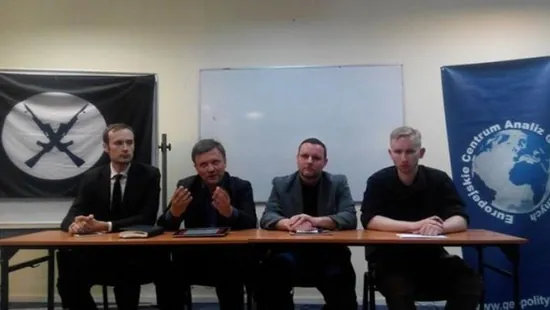
However, after receiving materials from its Polish colleagues, Germany’s Federal Prosecutor’s Office opened its own investigation into Ochsenreiter on suspicion of financing and inciting the crime.
Ochsenreiter matters to this story for one more reason. He was not an isolated figure who appeared only in the Uzhhorod episode. As mentioned above, he worked as an adviser to AfD Bundestag member Markus Frohnmaier.
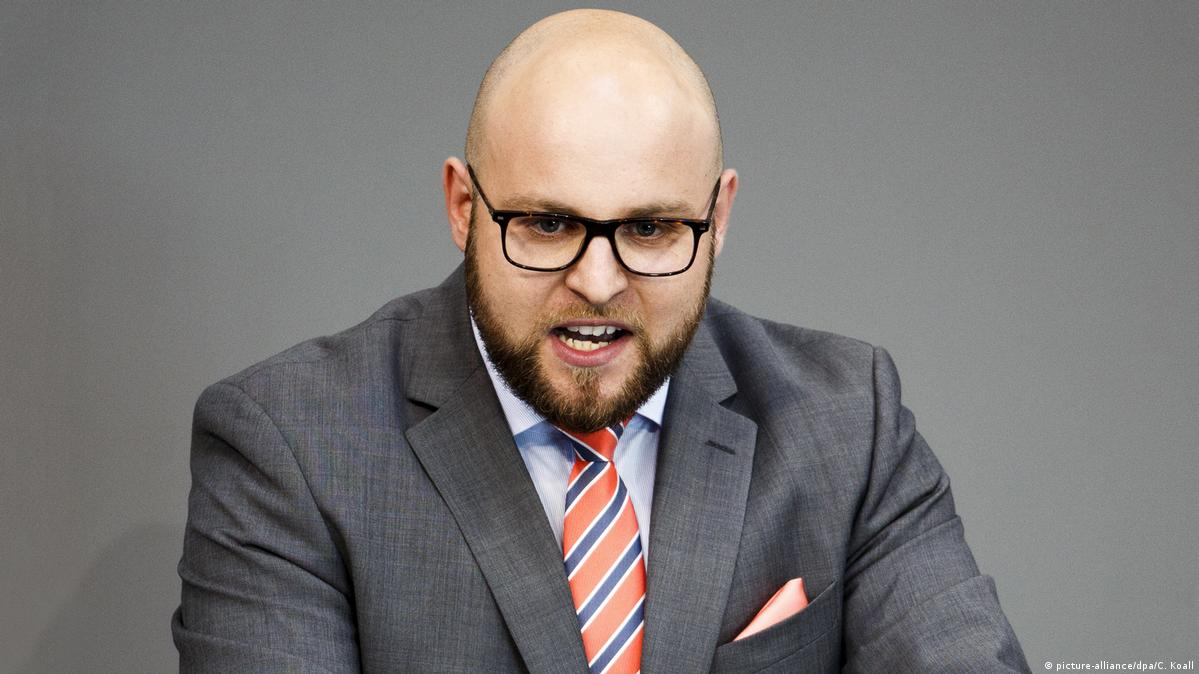
At the same time, in 2017, documents obtained by the Dossier Center and examined by German and British journalists discussed Russian support for Frohnmaier’s election campaign. One document spoke of the intention to get “our own, absolutely controlled MP” in the Bundestag. A separate document contained a draft plan for Frohnmaier’s campaign. At the same time, these materials prove neither that Frohnmaier knew of the Russian plans nor that the proposed support was implemented.
Although the testimony of the Uzhhorod arsonists and the findings of the German investigation pointed to Ochsenreiter’s key intermediary role, the case did not end in a final court verdict in Germany. Ochsenreiter categorically rejected all the accusations, and in 2019 he left Germany for Moscow, where he died in 2021. Because of the suspect’s death the German criminal proceedings were closed.
2018. AfD “observers” in Crimea
A month and a half after the Uzhhorod arson, another part of the network surfaced in Ukraine again. During Russia’s 2018 presidential election several AfD MPs travelled to Russia as alternative “observers”.
Particularly telling was the case of MP Ulrich Oehme. He went to occupied Crimea and observed the illegal Russian vote. An investigation by Der Spiegel and ARD found that his trip was financed by a committee of the Russian State Duma. Oehme himself declared this funding. Russian state media used his positive assessments of the election.
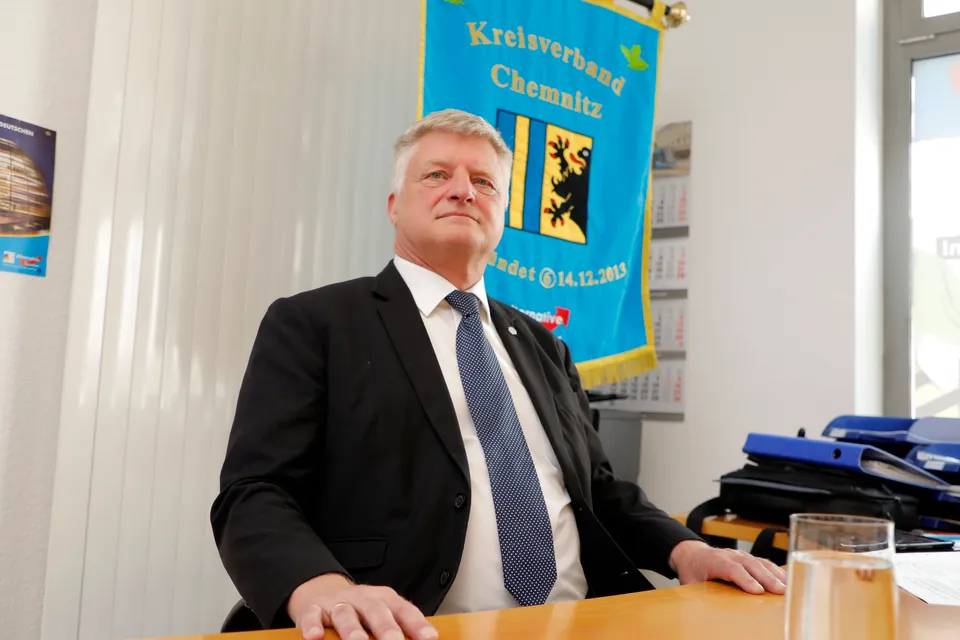
For Russia such trips had obvious propaganda value. The Russian authorities could show a European MP confirming the “normality” of the Russian vote, including voting on occupied Ukrainian territory.
2019–2021. The Medvedchuk network
Around the same period another channel of links formed through Viktor Medvedchuk. In this story, however, it is important to separate two questions: what exactly has been proven about specific European politicians, and what can or cannot be transferred from this to the AfD as a political party.
One of the most telling examples concerns not the AfD but Viktor Medvedchuk’s network. On 21 November 2025 the Central Criminal Court of England and Wales, the Old Bailey, sentenced former UKIP and Brexit Party MEP Nathan Gill to ten years and six months in prison. Notably, on 26 September Gill himself had pleaded guilty to all eight counts of bribery under section 2 of the UK Bribery Act 2010.
According to the Crown Prosecution Service (CPS), in 2018–2019 Gill received about £40,000 in exchange for tabling parliamentary motions, making speeches and facilitating media access for people linked to pro-Russian interests. This is a concrete model of paid political influence for which Gill admitted criminal responsibility and was convicted.
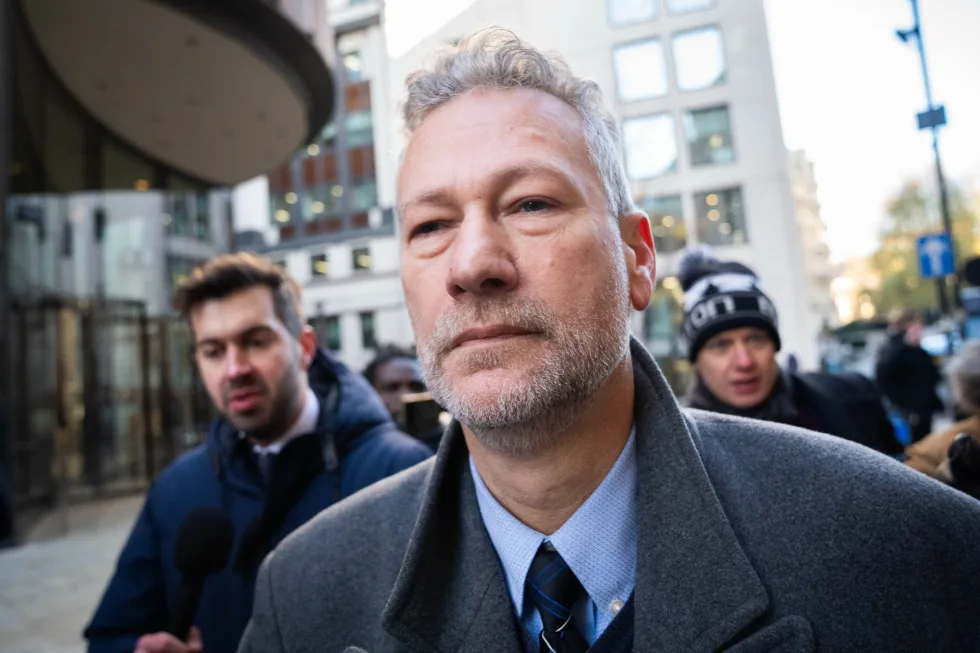
Nathan Gill’s case files feature Oleh Voloshyn, a former Ukrainian politician who worked in Medvedchuk’s media and political network. In the documentary reconstruction of the case, Viktor Medvedchuk is named as the source of the money. This is no longer an assumption about how an influence network might work, but a model confirmed by a trial.
But it is precisely here that a line must be drawn, important for any investigation. This episode does not prove financing of the AfD and gives no grounds for automatically transferring the scheme established by the court to the whole party. It proves something else: Medvedchuk’s Russian-Ukrainian political network had a practical mechanism for working with European politicians in which money could be exchanged for a concrete political and media result.
Another risk, already inside the European political milieu
The second episode is of a different nature. The case of Jian Guo concerns Chinese intelligence activity. It shows how work in European political structures can give a foreign intelligence service access to internal information.
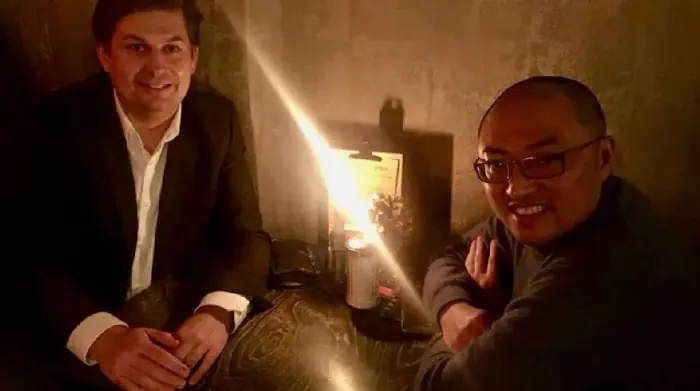
Guo worked in the office of AfD MEP Maximilian Krah. On 30 September 2025 the Dresden Higher Regional Court sentenced him to four years and nine months in prison for espionage on behalf of China in a particularly serious case. According to the court’s official statement, Guo gathered information about the AfD and the work of the European Parliament using his position in Krah’s office, and also spied on Chinese dissidents. Together with co-defendant Yaqi X., he passed to Chinese intelligence data on flights, passengers and cargo at Leipzig/Halle airport, including military transports. She was sentenced to one year and nine months, suspended.
But this episode is not limited to the activities of an assistant. Since 8 May 2025 the Dresden Prosecutor General’s Office has been conducting a separate investigation into Krah himself on suspicion of taking bribes as an MEP and money laundering in connection with payments from China. According to a Der Spiegel investigation cited by Tagesspiegel, between April 2019 and December 2022 more than €50,000 from companies in Guo’s circle went to two law firms Krah worked with. Investigators are examining the nature of these payments; no court has classified them as bribes. Krah rejects the suspicions and explains the payments as fees for legal work.
On 11 September 2025 the Bundestag authorised searches and seizures in these proceedings, lifting Krah’s immunity accordingly. As the prosecutors’ statement said, investigators searched his parliamentary office in Berlin and residential and work premises in Dresden, Limbach-Oberfrohna and Brussels, seizing documents and electronic devices. In February 2026 parliament authorised additional searches and seizures from third parties in the same proceedings.
Separately, law enforcement examined reports that Krah may have received Russian money. He denies these allegations as well.
Voice of Europe: from journalistic investigation to sanctions
The third episode combines sanctions decisions against a Russian influence network with a criminal investigation into a specific AfD politician, Petr Bystron.
On 27 March 2024 the Czech government added the Voice of Europe platform, Viktor Medvedchuk and Artem Marchevskyi to its national sanctions list. The Czech Republic linked their activities to a Russian influence operation targeting the European political milieu.
On 17 May 2024 the EU Council decided to suspend the broadcasting of Voice of Europe in the EU. On 27 May it also added the platform, Medvedchuk and Marchevskyi to the sanctions list for actions undermining Ukraine’s territorial integrity, sovereignty and independence. The sanctions listing states that Medvedchuk secretly financed and controlled Voice of Europe through Marchevskyi. The EU Council described the platform as a tool for spreading disinformation, channelling money to pay propagandists and building a network of influence over members of European political parties.
The link between this episode and the AfD can be traced in the case of Petr Bystron, then a member of the Bundestag and later of the European Parliament. According to a joint investigation by Deník N, Die Zeit and ARD Kontraste, the Czech Security Information Service (BIS) had an audio recording of a meeting at which Bystron allegedly received €20,000 from Marchevskyi.
In April 2024 the Munich Prosecutor General’s Office opened a preliminary examination of reports of possible payments to Bystron. On 16 May, after his immunity was lifted in the Bundestag, investigators carried out searches as part of an investigation on suspicion of bribery and money laundering. They covered his parliamentary office in Berlin, premises in Mallorca and properties in the Munich, Erding and Deggendorf districts.
After Bystron was elected to the European Parliament, continuing the investigation required a new decision on immunity. On 6 May 2025 the European Parliament voted to lift it. According to the official document, the investigation covered suspicions of at least six counts of bribery, as well as money laundering, fraud and at least five counts of tax evasion. Investigators suspected that Bystron may have received cash or cryptocurrency from the operator of Voice of Europe in exchange for political activity in the interests of the Russian government. The MEP denied the allegations. The European Parliament’s decision allowed the investigation to continue but did not establish his guilt.
Voice of Europe shows the infrastructural level of the operation: a media platform could simultaneously spread pro-Kremlin talking points, give politicians a public stage and serve as a channel for financing an influence network. The Bystron case adds to this picture a specific AfD representative and institutionally recorded suspicions of payment for his political activity.
What these three episodes really allow us to say
On its own, none of these episodes proves that the AfD as a party acted on the Kremlin’s instructions. But together they show something else: Russian influence in the European political milieu can work not only through direct contacts with the Russian authorities, but also through intermediaries, financial mechanisms, media and political platforms.
The network linked to Viktor Medvedchuk demonstrates one such mechanism. Money and political tasks could pass through intermediaries and be used to influence European politicians and the information space. The Nathan Gill case became judicial confirmation that such a model was real.
The Jian Guo case showed a different aspect: the vulnerability of European political structures to exploitation by foreign states. At the same time, it was a case of Chinese, not Russian, intelligence, so it cannot be used as evidence of Russian influence on the AfD. Its significance lies in demonstrating the very risk of foreign states exploiting political access.
Voice of Europe, in turn, shows the information dimension of such influence: political actors do not need to control a party if they gain access to platforms, audiences and channels for spreading the desired narratives. That is why the Czech and EU sanctions against Voice of Europe, Medvedchuk and Artem Marchevskyi matter for understanding the broader mechanism.
Ukraine as the main fault line
After Russia’s full-scale invasion of Ukraine, the ties of AfD representatives with Moscow took on additional significance: the party takes part in parliamentary decisions on weapons, funding and other resources Ukraine needs for its defence. Its position can be traced not only in public statements but also in voting records.
A separate episode concerns Vladimir Sergienko, a former aide to AfD Bundestag member Eugen Schmidt. In a joint investigation by The Insider and Der Spiegel published on 1 February 2024, journalists identified his interlocutor “Alexei” as FSB officer Ilya Vechtomov. According to the published correspondence, they discussed legal action intended to stop or delay deliveries of German tanks to Ukraine. In July 2023 the AfD group did indeed apply to the Federal Constitutional Court on the need for parliamentary approval of military aid. Sergienko denied links with Russian intelligence, and the group denied any connection between its lawsuit and this correspondence.

The AfD’s position on arming Ukraine is recorded in the Bundestag’s roll-call vote of 14 March 2024. Then 65 members of the group supported rejecting the CDU/CSU motion on supplying Taurus missiles, one voted against rejection, one abstained and another 11 did not vote. During the debate AfD co-leader Tino Chrupalla explicitly opposed handing Taurus to Ukraine, arguing that it would prolong the war and harm Germany.
An even more concrete example is the decision of the Bundestag budget committee of 21 March 2025. According to the parliament’s official statement, AfD representatives voted against additional spending of about €2.5 billion and against authorisation to enter into budget commitments of about €8.3 billion up to 2029.
The financial dimension can also be traced on the question of Russian assets. On 5 December 2025 all 132 AfD MPs who took part in a roll-call vote supported rejecting a Green motion to push within the G7 for the transfer of frozen Russian state assets to Ukraine in accordance with international law. Another 19 members of the group did not vote. The AfD’s own parliamentary motion makes its intentions even clearer. In draft resolution No. 21/3307, described by the Bundestag on 17 December 2025, the group demanded that German financial and military support be cut until Ukraine agrees to serious “peace negotiations” with Russia.
This is where the Ukrainian dimension of the investigation acquires concrete substance. The AfD’s documented position includes rejecting Taurus deliveries, voting against additional military funding and opposing the proposed use of Russian assets for Ukraine. These actions do not in themselves prove that Moscow’s instructions were being followed. But they show how the party’s political line translates into attempts to limit the resources of Ukraine’s defence, and its own motion explicitly turns cutting aid into a means of pressure on Kyiv.
“Useful idiots” or conscious partners?
The formula “useful idiots” does little to distinguish unconscious reproduction of narratives favourable to Moscow from a consistent political choice. In the case of the AfD leadership, this choice is recorded in the party’s own statements: restoring energy cooperation with Russia, lifting sanctions and ending arms deliveries to Ukraine.
On 18 October 2022 AfD co-leader Tino Chrupalla called for abandoning sanctions against Russia and for repairing Nord Stream and restarting it, citing the need for cheap gas. On 9 May 2023 he attended a reception at the Russian embassy in Berlin. In an interview published two days later, Chrupalla explained that he had discussed with the ambassador the need for normalising German-Russian relations.
The party’s co-leader Alice Weidel publicly took the same line on sanctions and energy. On 31 August 2022, after the start of the full-scale invasion, she demanded the launch of Nord Stream 2 and the lifting of sanctions against Russia. On 15 April 2025 Weidel and Chrupalla, in a joint statement on the AfD’s official website, opposed handing Taurus missiles to Ukraine and called for an immediate halt to all arms deliveries to the parties to the war. So this is the position of both co-leaders, not just of individual party representatives.
The documentary basis of this investigation shows three interrelated risks. The first is the leadership’s political course, confirmed by statements and parliamentary actions. The second is the vulnerability of the party milieu to foreign influence, demonstrated by the cases examined above. The third risk is scale. In the Bundestag election of 23 February 2025 the AfD received 20.8% of second votes and 152 seats, compared with 10.4% and 83 seats in 2021. Growing representation increases the party’s ability to influence parliamentary debates, committees and decisions on support for Ukraine.
It is therefore more accurate to speak of a situational political partnership or a convergence of interests that does not necessarily involve carrying out Russian orders. At the same time, there is an alternative explanation. The AfD’s pro-Russian line may reflect the mood of part of its east German electorate, and its contacts with Moscow may be a consequence of this political choice rather than its cause.
But electoral demand and foreign influence can coexist. Voters’ moods do not automatically explain specific episodes of hidden financing or coordination, which require separate evidentiary assessment. Conversely, for the Kremlin to benefit politically, outside support may become unnecessary: if a party, for its own reasons, seeks to limit military aid to Ukraine and ease sanctions on Russia, it is already promoting decisions that benefit Moscow.
2026: Back to St Petersburg and legitimisation in the mainstream
In June 2026 Markus Frohnmaier – the same politician who in Russian documents a decade earlier appeared as “our candidate” – officially attended the St Petersburg International Economic Forum (SPIEF 2026). It was not, however, a personal trip by “our candidate” but in effect an AfD delegation, also represented by Bundestag member Steffen Kotré, MEP Petr Bystron and the head of the party’s Saxony branch, Jörg Urban. The participation of representatives of the federal parliament, the European Parliament and the party’s state leadership gave the trip a political weight beyond the personal contacts of a single MP. Before the trip Bystron said he did not need permission from his European Parliament group, but that he had informed the AfD’s federal leadership.
Frohnmaier explained his participation by the need to maintain dialogue and represent German interests. “Interfering in foreign wars is not in Germany’s national interest,” he said in his speech in German. His party seeks to normalise relations between Germany and Russia “because we believe German-Russian relations are important”. At the same time he added: “My participation (in the forum – ed.) does not mean approval of the war in Ukraine.”
And although Germany’s Foreign Office had advised against travelling to Russia, on 3 June Frohnmaier met Gazprom chairman Alexei Miller and Putin’s special envoy for investment and economic cooperation Kirill Dmitriev. He argued for restoring energy ties with Russia, including gas supplies and a possible return to using Nord Stream.

Besides Frohnmaier’s personal meetings, there were also demonstrative appearances by Bystron, Kotré and Urban at a discussion moderated by Dmitriev. They called for normalising relations with Russia, and the Russian official in turn publicly praised them for the “courage” to come despite criticism in Germany. It is here that Bystron’s presence is especially telling in the context of the proceedings described above concerning alleged payments from the Voice of Europe network. A politician who denies these suspicions continued to publicly develop Russian contacts. This does not prove his guilt, but it shows that the investigation did not stop the political interaction.
In the 2017 documents Russian authors discussed supporting Frohnmaier as a promising candidate. In 2026 he returned to Russia as a representative of the parliamentary group’s leadership, alongside other influential AfD figures. The scale of the contacts has changed: politicians from several levels of the party structure are involved, and the federal leadership, according to Bystron, knew about his trip.
Three months later, in the election of 6 September 2026, the AfD received 43.8% of the vote in Saxony-Anhalt. This result does not show that voters support the party’s Russian contacts as such. It shows something else: the participants in such trips represent a political force with considerable electoral weight, and their meetings give the Kremlin an opportunity to demonstrate access to an influential European political milieu.
From St Petersburg meetings to talks on the return of Russian gas
In September 2026 contacts between representatives of Alternative für Deutschland and the Russian political leadership developed further. If in June Markus Frohnmaier met Gazprom chief Alexei Miller and Putin’s special envoy Kirill Dmitriev in St Petersburg, by autumn information emerged about preparations for talks with the possible participation of the AfD’s federal leadership.
On 18 September Reuters, citing two sources, reported that Dmitriev and AfD representatives were preparing a meeting on resuming Russian gas supplies to Germany. The party’s co-leaders Alice Weidel and Tino Chrupalla were named among possible participants. The talks could take place as early as March 2027, provided a framework peace agreement between Russia and Ukraine had been reached first.
A few days later the deputy leader of the AfD parliamentary group, Beatrix von Storch, confirmed to Deutsche Welle that Frohnmaier had personally discussed with Miller the possibility of resuming gas supplies. And on 28 September Frohnmaier, according to media reports, spoke of contacts with Dmitriev about organising an economic forum with representatives of Germany, Russia and the US.
The Kremlin publicly welcomed the AfD’s desire to restore dialogue with Moscow. At the same time its spokesman Dmitry Peskov said he had no information about concrete preparations for talks.
These events add new substance to the AfD’s Russian contacts. Attendance at economic forums and meetings of individual MPs are gradually being supplemented by attempts to organise political dialogue at the level of the party leadership. And the subject of this dialogue is not an abstract improvement of relations but a concrete economic issue: the restoration of energy cooperation with Russia.
This does not prove the existence of a secret agreement between the AfD and the Kremlin. But it does show that the party’s political course towards the return of Russian energy is accompanied by direct contacts with senior representatives of the Russian authorities.
A ten-year chronology shows a clear transformation of the AfD and its ties with Russia
2013–2014: Origins: economic Euroscepticism.
Focus on abandoning the euro. No systematic Russian vector.
2015–2017: The right turn: the migration crisis. Pseudo-observers, trips to Crimea. Ideological rapprochement with the Kremlin through conservative anti-globalism.
2018–2021: Building infrastructure: points of contact. The involvement of Medvedchuk and the creation of think tanks.
2022–2026: Systemic geopolitics: the official party line.
Open demands to lift sanctions, end aid to Ukraine and visits to Russia become the party’s platform.
Ten years ago Russian political networks were looking for allies among the German far right, offering support to individual politicians and using their participation in international events to legitimise their own actions. Today we see some influential AfD representatives independently advocating the restoration of relations with Moscow, the lifting of sanctions and limits on military aid to Ukraine. Documented contacts, individual criminal proceedings, parliamentary votes and public statements show how closely the political interests of part of the AfD coincide with the Kremlin’s strategic interests.
But the greatest danger for Europe lies not only in Russia’s attempts to influence individual politicians. It arises when decisions that benefit Moscow become part of the independent political programme of an influential European party. In that case the external centre of influence no longer needs to direct every step of its potential allies. It is enough that their own political goals lead to the result the Kremlin seeks.