Armenia is becoming Russia’s new enemy in the post-Soviet space. First, Vladimir Putin openly threatened Armenia with the fate of Ukraine if it continued to move toward the European Union. Then Belarusian dictator Alexander Lukashenko joined in with his own threats. And a handful of countries—members of the Eurasian Economic Union—demanded that Armenia hold a referendum on whether to move toward the EU or remain in the EAEU. Meanwhile, parliamentary elections are set to take place in Armenia this coming Sunday, June 7, which will determine the country’s future course. What has driven Armenia to distance itself from Russia and the organizations it controls, and what is the mood within Armenia on the eve of the elections?
IN SHORT:
- Armenia is turning away from Russia because Russia does not recognize it as a sovereign state.
- 75% of Armenian society supports the path toward EU integration.
- Armenian farmers are willing to bear the costs of Russia’s embargo to preserve the state.
- Armenia is living under a hybrid war with all its elements.
- Threats from Putin and Lukashenko have united Armenian society.
Russia does not consider Armenia a state
In 2024, Armenia officially announced the suspension of its participation in the Collective Security Treaty Organization (CSTO), due to disappointment over the latter’s refusal to provide assistance during the war with Azerbaijan in 2023. Since then, this distancing from Russia and the international organizations it controls has only intensified.
According to Armenian political scientist, expert at the Armenian Institute of International Relations and Security, and vice-chairman of the “For the Republic” party Ruben Mehrabyan, the fundamental reason for this distancing is Russia’s attitude toward Armenia.
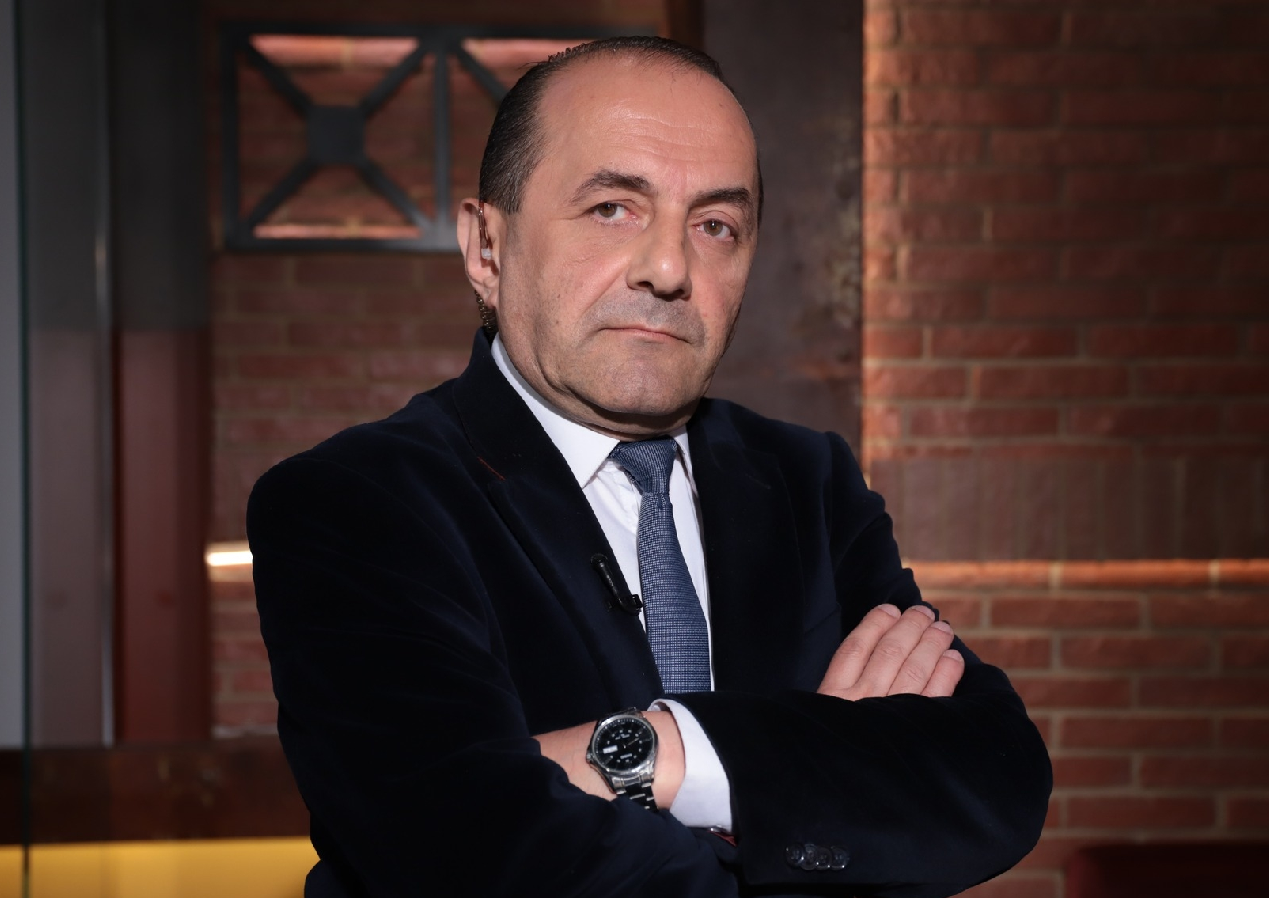
“Russia does not consider Armenia a state. It considers it temporarily lost territory. But it sees the June 7 elections as a good opportunity to recover or compensate for this loss. That is the first point.
And the second point. The Russians believe that if they fail to seize power, their fallback option is to co-opt the opposition in Armenia, turn it into a noose around the neck of the Armenian state, and create as many obstacles as possible to preserve the remainder of their imperial influence. Everything else is a consequence or a byproduct of this political goal.
Of course, Armenia has no intention of accepting such an attitude from Russia or putting up with such an approach. That is why Armenia is resisting, mobilizing both its own capabilities and those arising from the strengthening of relations with partners with whom we have already established common goals, interests, and values. These include the European Union and a number of individual European countries—EU member states—as well as the United States of America,” said Ruben Mehrabyan in a special interview with “Black Sky.”
“We will not trade our state for tomatoes”
In December 2025, the Armenian government adopted the Strategic Partnership Program between the EU and Armenia. Since then, relations between Yerevan and Brussels have only grown stronger. In May of this year, an EU–Armenia summit was held in Yerevan, which was also attended by Ukrainian President Volodymyr Zelenskyy. This was yet another factor that greatly irritated the Kremlin. “Black Sky” recently discussed this event with the head of the New Challenges Department at the National Institute for Strategic Studies, Olena Bordilovska.
But Ruben Mehrabyan told us how society within Armenia views the country’s intentions to fully join the European Union and distance itself from Russia and the organizations it controls:
“Here are the latest polls reflecting the political preferences of Armenian society: I can cite data from a Breavis poll, according to which 75% of respondents support Armenia’s full membership in the European Union. And based on my observations from interacting with voters as a campaigner, this roughly corresponds to reality.”
In response to Armenia’s pro-European moves, Russia began to deploy its tried-and-true tools of pressure, first and foremost Rospotrebnadzor, which finds various violations in goods supplied from the country it needs to pressure and bans their import into Russia. “Black Sky” reported on such trade wars and on the restrictions Russia has recently imposed on Armenia and the reasons behind them. Moreover, the latest restrictions imposed by Russia on Armenian products affect fruits that have not yet ripened this year. However, Ruben Mehrabyan believes that Armenian farmers and business circles understand that such costs are the price for preserving their state:
“We have no intention of trading our country for tomatoes and the right to sell those tomatoes in Russia. Or flowers, or apricots, or peppers, or anything else. Right now, farmers on the road from Yerevan to Armavir have brought out their strawberries for people to buy. They say: ‘Yes, we’re incurring costs, and we’ll keep incurring them, but we’ve faced even greater costs before.
We will not go against statehood, and we have no intention of trading these strawberries for our country.” These are the real responses from those who are currently trading in Armenia rather than shipping their produce to Russia.”
Putin and Lukashenko’s threats—a signal to pro-Russian forces to trade on fear
At the end of May, at the Eurasian Economic Union summit in Astana, Kazakhstan, first Vladimir Putin, and then the self-proclaimed president of Belarus, Alexander Lukashenko, began almost simultaneously warning Armenia against further steps toward the European Union, hinting at a possible war similar to what happened in Ukraine.
“I have already mentioned this. The crisis in Ukraine began with attempts to bring Ukraine into the EU,” the Russian dictator stated.
“The Armenians need to be very careful so that, God forbid, they do not repeat what happened in Ukraine… That is exactly how it all began in Ukraine. You remember that. So that the Armenians, who have just emerged from one war, do not find themselves in a difficult situation because of this. There is no need to rush. We just need to think; we need to be wise people,” said Lukashenko.
Mehrabyan says that in Armenia, such statements were perceived as threats and this only united Armenian society:
“The majority of society in this regard stands in solidarity with that part of the political class which supports the European choice and understands the vital importance of statehood. One could say that consolidation due to these statements has already become a fact.
But this pandering on Lukashenko’s part is simply repulsive. Because he’s a nobody—he’s the Gauleiter of Belarus, a sort of Maria Zakharova (spokesperson for the Russian Foreign Ministry – ed.) with a mustache. He’d be better off keeping his mouth shut and not making a fool of himself.”
In late May, the Kremlin recalled its ambassador to Armenia, Sergey Kopyrkin, to Moscow for consultations. In diplomatic terms, this is a sign of a deterioration in relations between the two countries. Ruben Meghrabian says that Armenia has taken note of this fact:
“Armenia has perceived this as a diplomatic move, and an unprecedented one at that in our recent history. This reflects Moscow’s attitude toward Armenia and its people. It is also perceived as a signal to our ‘fifth column’ to keep pushing this issue. Right now, they are busy peddling fear. But in Armenia, the only thing to fear is fear itself.”
“It is not for Moscow to dictate to us when and how to hold referendums”
Pro-Western forces in Armenia spoke in 2024 about a “Euro-referendum” that should be held in the country so that the people could determine its course.
Back in March 2025, the Armenian Parliament passed the law “On the Start of the Process of the Republic of Armenia’s Accession to the European Union.” And this law provided for a referendum to be held at the final stage of negotiations on EU accession.
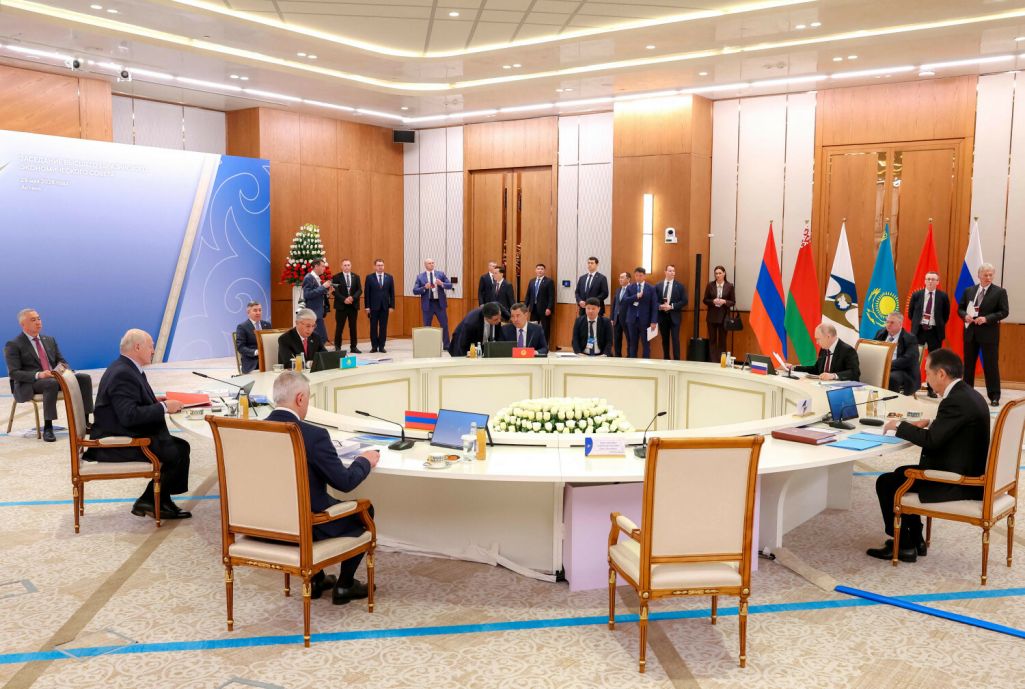
However, during the EAEU summit in Astana at the end of May this year, the leaders of Russia, Belarus, Kazakhstan, and Kyrgyzstan signed a statement effectively demanding that Armenia immediately hold a referendum on European integration. This is clearly intended to pressure and intimidate Armenian society.
Armenian Prime Minister Nikol Pashinyan responded to these demands by stating that holding such a referendum now is inappropriate, saying that Armenia will decide for itself when to hold any referendums.
“The issue is not the referendum. The issue is that Armenia’s movement toward the European Union is consistent and gradual. And it is not for Moscow to dictate when we should hold this referendum. Now is not the time for a referendum. Now is the time to take other measures.
When on September 3, 2013, Serzh Sargsyan (former president of Armenia – ed.) was forced to go to Moscow and made to issue the statement he did (this was three months before the Ukrainian Maidan), there was no talk of any referendum. Because, according to their logic, the Armenian people are nobody. “It is up to us to decide: whether to hold a referendum, not to hold a referendum, and when to hold it,” says Ruben Mehrabyan.
Armenia is living under conditions of hybrid war
At the same time, Russia continues its attempts to influence the results of the elections in Armenia. As reported by Reuters, Russia intends to bring to Armenia about 100,000 Armenians living in Russia who hold Armenian passports and have been indoctrinated by Russian propaganda, so that they will vote for pro-Russian forces in the elections. The Russians have created an entire network of websites and bots in Armenia that mimic Armenian ones but promote a pro-Russian agenda and threaten war in the event of a victory by pro-European forces.
Ruben Mehrabyan believes that Armenia is currently living under conditions of a hybrid war with all its elements:
“There is a disinformation component, an element of discursive pressure from official Russian structures, the activation of Russian agents within Armenia, and, of course, economic leverage. We also expect that Russia will not shy away from using sabotage and terrorist tactics, which it has frequently employed, including in Armenia. One example is the terrorist attack on the parliament in 1999.
Indeed, there is an attempt to influence the election results by bringing in Armenians from Russia. There are even criminal proceedings underway regarding this matter. Whether the Russians succeed in influencing the outcome depends on the effectiveness of our security agencies’ countermeasures.”
At the same time, Russia is banking on political forces in Armenia that promote its interests and want to block the country’s movement toward the EU. These include, for example, the “Strong Armenia” bloc, led by Russian billionaire of Armenian descent Samvel Karapetyan, the “Armenia” bloc, led by former President and Putin’s personal friend Robert Kocharyan, and Gagik Tsarukyan’s “Prosperous Armenia” party, which is a partner of Russia’s ruling “United Russia” party.

Ruben Meghrabian considers these parties and blocs not to be pro-Russian forces, but rather Russian mercenaries and Russian proxies handpicked by Putin.
“They would be pro-Russian if they had an Armenian agenda, some goals for the betterment of Armenia that are achieved through rapprochement with Russia. But they don’t have that. They are supported mainly by disgruntled beneficiaries of the pre-revolutionary criminal dictatorship, who were effectively Russian puppets, or they do it simply for Russian money.”
At the same time, Ruben Mehrabyan is confident that Armenia has no reason to fear a real military threat from Russia:
“As Trump would say, Russia has no cards. Fate has spared us because we do not share a border with Russia. While Russia was previously able to exploit our unresolved conflict with Azerbaijan for decades as a lever of pressure against Armenia, now that a peace treaty between Armenia and Azerbaijan has been initialed, that factor has disappeared.
Russia cannot exert military pressure on us. But this does not eliminate the threat of sabotage and terrorist acts from Russia. Although, our special services are currently in high enough readiness to counter this. Furthermore, following its defeat in the war with Azerbaijan, Armenia has seriously reformed and modernized its army. We have air defense systems, drones, and various other weapons. Because even a rose has thorns to keep donkeys from eating it. And the provocative statements by the Russian and Belarusian dictators have only strengthened our unity and society’s confidence in the correctness of the European path».
Andrus Hajovy