In mid-May of this year, 36 countries and the European Union officially confirmed their intention to join the new Expanded Partial Agreement on the Establishment of the Steering Committee of the Special Tribunal on the Crime of Aggression against Ukraine. This move was welcomed in Ukraine, as the signed agreement means that the tribunal will finally begin its work and, accordingly, fulfill its purpose: to punish Russia’s military and political leadership through court verdicts for the war against Ukraine. Ukrainian Foreign Minister Andrii Sybiha called the decision to approve the expanded partial agreement a “point of no return,” as it confirmed that the Special Tribunal has become a legal reality. How does the Special Tribunal’s mechanism work? How long will the path be from the decision to practical steps? And when will Russian leaders be held accountable for the aggression against Ukraine? Svitlana Mialyk discussed these issues with Olha Butkevych, Doctor of Law and President of the Ukrainian Association of International Law.
In brief:
- 36 states and the European Union have supported the launch of the Special Tribunal on the crime of aggression against Ukraine—this marks the beginning of the creation of an international court mechanism to punish the leadership of the aggressor state.
- The tribunal is being established separately from the International Criminal Court (ICC), because the ICC lacks jurisdiction to adjudicate Russia’s specific crime of aggression against Ukraine.
- Not only representatives of Russia but also those of Belarus and other states may fall under the tribunal’s jurisdiction if their participation in the war against Ukraine is proven.
- Sitting heads of state (president, prime minister, foreign minister) enjoy international immunity while in office; however, the tribunal can already conduct investigations and prepare cases.
- The first verdicts are not expected in the coming years: international justice moves slowly, but the tribunal’s launch now means that accountability for the aggression becomes a legal—not just a political—prospect.
Ms. Olha, please explain in simple terms: What is the Special Tribunal on the Crime of Aggression against Ukraine, and how does it differ from other international courts?
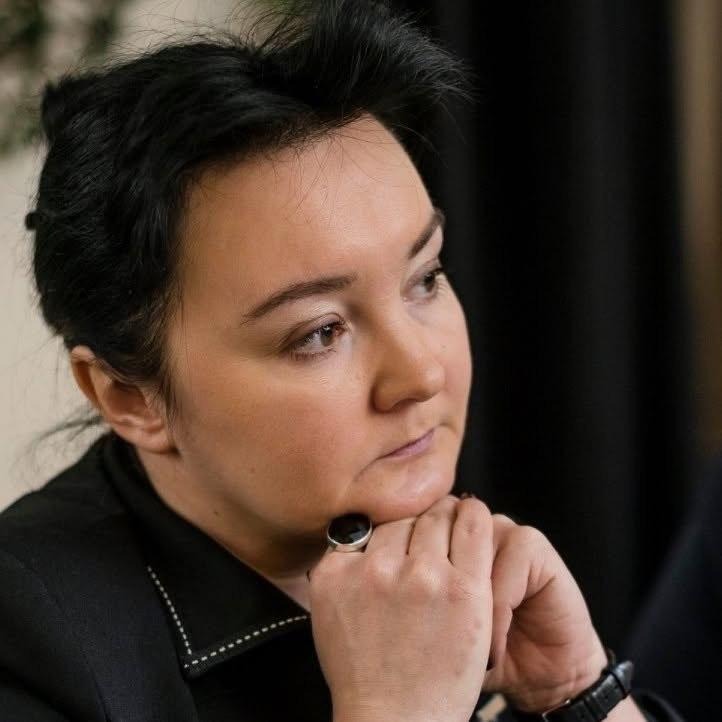
In many ways, the creation of this tribunal was a necessary decision. This is because international crimes—and these are precisely the crimes Russia is committing in the war against Ukraine—are divided into four categories: crimes against peace (which includes aggression), war crimes, crimes against humanity, and genocide. All four of these categories of crimes fall under the jurisdiction of the International Criminal Court, which is the primary court in the field of international criminal law. However, while there are no issues regarding the latter three categories, the International Criminal Court cannot hear this specific case—Russia’s aggression against Ukraine—for two reasons.
Therefore, to ensure that the perpetrators of this crime of aggression do not go unpunished, in the final days of February 2022, former Prime Minister of the United Kingdom Gordon Brown (later joined by former Prime Minister John Major, and a number of academics) launched an initiative to establish a separate tribunal specifically for the crime of aggression—a tribunal that would have jurisdiction and be able to try these criminals
Its jurisdiction does not extend to acts of aggression committed prior to 2017, whereas we date the start of the conflict to February 2014. And second, Russia is not a party to the Statute of the International Criminal Court; it is not a member of the Court. Therefore, to ensure that the perpetrators of this crime of aggression do not go unpunished, in the final days of February 2022, former Prime Minister of the United Kingdom Gordon Brown (later joined by former Prime Minister John Major, and a number of academics) launched an initiative to establish a separate tribunal specifically for the crime of aggression—a tribunal that would have jurisdiction and be able to try these criminals. It was precisely because the International Criminal Court cannot extend its jurisdiction that this tribunal was created.
Why do you think it was possible to move from theory to the practical launch of this mechanism right now? What contributed to this?
Having some understanding of how difficult the negotiation process was (I did not participate in it, but I observed it—ed.), there was resistance for quite a long time. There were various ideas. The first idea was to establish this tribunal through a UN General Assembly resolution. That would have been the ideal solution, as it would have meant broad support from the majority of the world’s nations. But, of course, there was significant opposition from Russia and its satellites, and ultimately, the tribunal was established under the auspices of the Council of Europe. In recent years, the Ukrainian side has indeed managed to make a huge breakthrough in these negotiations. We even managed to make a breakthrough regarding the absolute rejection of any insinuations—even those suggesting that the aggression began in 2014. Therefore, in principle, it is now up to the tribunal’s statute and the agreement establishing it to resolve these issues further. In other words, we are not abandoning the date of 2014. Second, there was, of course, enormous resistance. It stems from the specific nature of the crime of aggression. It is referred to as a “crime of leadership.”
The only thing that could perhaps be called a concession—or perhaps a compromise—is that among those individuals—and as I’ve already said, these are only heads of state—who will be subject to the jurisdiction of this tribunal, there is a trio: the president, the prime minister, and the foreign minister. They cannot be tried while they remain in office.
The crime of aggression can be attributed only to a small circle of individuals—namely, heads of state or commanders of the armed forces. Well, and, of course, setting such a precedent is not in anyone’s interest. And that is why the resistance was so strong. There were other factors as well. But, I repeat, the Ukrainian side managed to achieve this breakthrough and establish the tribunal precisely on the terms we wanted to see. The only thing that could perhaps be called a concession—or perhaps a compromise—is that among those individuals—and as I’ve already said, these are only heads of state—who will be subject to the jurisdiction of this tribunal, there is a trio: the president, the prime minister, and the foreign minister. They cannot be tried while they remain in office.
However, the tribunal will be able to conduct investigative proceedings against them and carry the entire process through to the trial itself.
As I understand it, Putin would only fall under the jurisdiction of this process once he is no longer in office, correct?
There is such a rule in international law regarding this so-called “trio.” The International Court of Justice has confirmed that these three individuals enjoy immunity as long as they remain in office. The “trio” consists of the head of state, the head of government, and the foreign minister. But I repeat that investigative proceedings will be conducted against them—the same procedures that apply to other heads of state. However, the court ruling itself and the enforcement of the sentence are possible only after their terms of office have ended. And here’s another point I didn’t clarify when I said “states,” because this tribunal concerns not only Russia’s crimes of aggression against Ukraine, but also fully encompasses the Republic of Belarus, which fully falls under the definition of aggression. And, as may be proven further by judicial and pre-trial investigations, this may include North Korea, or perhaps some other states that are also actively participating. We must not forget that Ukraine is not at war with Russia alone; Ukraine is at war with a coalition of states created by Russia.
By the way, that was my next question. Can representatives of Belarus and other countries that are aiding the aggression also be brought to trial?
Belarus, definitely, yes. As for other countries, their participation must be proven.
Are there any mechanisms under international law that allow for the prosecution of the current President of Russia?
Heads of state enjoy immunity, known as “personal immunity.” While in office, he cannot be brought to trial. But international criminal law is currently breaking this rule. And, as we can see, this is already happening with regard to the Russian president for other crimes. The International Criminal Court has already issued an arrest warrant for him. And, in fact, steps are already being taken to hold him accountable for other crimes. So this is somewhat of a historical concept—that a sovereign, a head of state, cannot be prosecuted. This concept was radically changed for the first time at the Nuremberg Trials, when the so-called “Nuremberg Principles” were established. And now international criminal law is moving away from this. Historically, the sovereign of a state—the head of state—has been held accountable for his actions. His actions are the embodiment of the state’s sovereignty. But international crimes are not a sovereign right of the state. And that is why international criminal law is now moving away from this principle. So yes, heads of state, among others, are subject to the administration of justice when it comes solely to international crimes.
Tell me, Ms. Olha, when it comes to timelines and realistic expectations, what are they? I’ve heard from experts that the first verdicts aren’t likely before 2030, while others say even later. Why is this process taking so long? And in your opinion, when can we realistically expect the first possible verdicts?
Well, I’ve also read that 2028 is being mentioned as the year for the first verdicts, but that seems unrealistic to me. Thirty years—I wouldn’t call that a long period, because you can compare it to one of the most famous trials today, the former Yugoslavia tribunal. That tribunal itself lasted three times longer than the armed conflict whose crimes it was adjudicating. The trial lasted nearly 25 years—23 and a half years… So, of course, we fully understand that many people did not live to see justice served or the fair verdicts that were ultimately handed down there.
These are long-term processes. But this is because the decisions of these courts are final—they cannot be appealed and must be enforced.
International justice is a lengthy process; it takes a long time, and indeed, it requires a fairly extended period. Today, even the preparatory phase leading up to the launch of a court is quite lengthy. This is because security considerations must be taken into account, logistics must be arranged, and so on. And even that takes a year, years—perhaps a long period… But I repeat that international justice is a lengthy process. This applies not only to this tribunal, nor only, as I have already mentioned, to the tribunal on the former Yugoslavia. One can even mention proceedings at the International Court of Justice and the European Court of Human Rights. These are long-term processes. But this is because the decisions of these courts are final—they cannot be appealed and must be enforced.
Regarding legal mechanisms: What steps do the participating countries still need to take before the court begins its work? Because, as I understand it, the composition of the courts and the prosecutors must be established, right? And, in fact, can Ukraine influence this process in any way, or not? Does Ukraine hold an equal position to all the others?
Ukraine can influence this process. Ukraine can nominate its own representatives. As far as I understand, logistical issues are currently being resolved, and only after all of that has been fully settled will the questions of selecting judges, prosecutors, the court’s composition, and the court’s administrative staff arise. This is also likely to be a fairly lengthy and important period. Therefore, these issues must be addressed before the court begins its work. It is no coincidence that the court will be located in The Hague. This is because, under the court’s jurisdiction, if a person falls under the jurisdiction of both the International Tribunal for Aggression and the International Criminal Court, they will be tried in both courts, but the International Criminal Court will have precedence. That is, they will serve their sentence there, so to speak.
And who will appoint the judges and prosecutors? Will it be the participating countries?
The participating countries that have acceded to the treaty establishing the tribunal.
Tell me, what does the establishment of the Special Tribunal mean for Ukrainians right now, even before the first verdicts are handed down? Because you spoke about justice and about how an international legal process is a rather lengthy one. But still, what does this decision mean for Ukraine and Ukrainians?
Well, first of all, it means justice.
But we need to understand the purpose of this court. To avoid disappointment, we shouldn’t harbor any illusions about this court—that verdicts will be handed down next year and everyone involved in the aggression will begin serving their sentences. That won’t happen. But the establishment of the court means that the international system that protected high-ranking officials and heads of state has been broken. Practically speaking, from Nuremberg until today—with the exception of isolated cases—countries have not agreed to hold heads of state accountable. The cases that did occur were very rare, and they mainly involved states that simply could not resist. We’re talking about a nuclear power here; we understand these challenges. Therefore, the system—the notion that there are untouchable states and untouchable individuals within those states—has been broken. What does this mean for Ukrainians?
A state headed by an international criminal also becomes an outcast in the world.
I’ve already heard this court being called “Putin’s tribunal.” In reality, it isn’t. In fact, it extends its jurisdiction not only to the leaders of Russia and Belarus. It also includes members of Russia’s National Security and Defense Council who were involved in the aggression against Ukraine. It includes judges of the Constitutional Court who voted to occupy Ukrainian territories and to incorporate the occupied territories into the Russian constitution. It may also include members of parliament who voted to deploy troops. In other words, this circle is, after all, much broader than just the head of state, than just the president, than just Putin. I repeat once again that for Ukrainians, this means we should have no illusions, but we must know that international justice will prevail; it will run its course, and everyone will face punishment. Of course, in many cases this may take place in absentia (from the Latin in absentia—“in the absence of”—Ed.), meaning they will not yet be directly present in court, sitting in the dock, no matter how much one might wish to see that in a photograph. But even such a trial will mean that an international criminal is at the helm of the state. This is of immense significance—not only legally, in terms of holding him accountable, but also politically—regarding sanctions, regarding that state itself, regarding its relations, regarding its contacts, and so on. A state headed by an international criminal also becomes an outcast in the world.
One could say that this is a signal to other states, which should consider whether it is worth maintaining any relations or cooperating with an aggressor state at all. And international law and international justice—they’re being put to the test, right?
Yes. And in this case, I would say that with the establishment of the tribunal—and the way it was established—it has passed that test.
Author: Svitlana Myalik