Japan is accelerating its shift in defense policy: a country with a postwar pacifist constitution is building counterattack capabilities, strengthening its missile defense, and increasingly aligning its security with the United States, NATO, the G7, and Ukraine. For Russia, this means the emergence of an additional technological and financial center of pressure in the Far East, and for China and North Korea, it means a strengthening of the deterrence line along the first island chain.
This process cannot honestly be described as a simple “return to Japanese militarism.” Tokyo remains bound by Article 9 of the Japanese Constitution, legal restrictions on the use of force, and the region’s painful historical memory. However, following Russia’s aggression against Ukraine, increased Chinese pressure around Taiwan and the Senkaku Islands, and the deepening of cooperation between Moscow, Beijing, and Pyongyang, the existing model of self-defense has ceased to seem sufficient to Japan’s elites.
In a nutshell:
- Japan is not repealing Article 9 of the Constitution, but is expanding the defensive capabilities of the Self-Defense Forces through missile defense, long-range weapons, and counterstrike capabilities.
- The main external factors driving Japan’s shift are: China, the crisis surrounding Taiwan, the PRC’s activities in the Senkaku Islands region, the DPRK’s nuclear and missile program, and Russia’s military cooperation with China and North Korea.
- Moscow describes Japan’s policy as remilitarization and “NATO in Asia,” but this rhetoric overlooks Russian aggression against Ukraine and the militarization of Russia’s Far East.
- For Ukraine, Japan is important primarily as a source of financial, technological, diplomatic, and infrastructural support, rather than as a major supplier of heavy weaponry.
- The constraints on Japan’s defense pivot remain significant: demographics, a shortage of personnel, export restrictions, dependence on the U.S., the legacy of Japanese imperialism, and the controversy surrounding Article 9 of the Constitution.
Japan is changing its role in defense, but it is not stepping outside the legal framework
Japan’s postwar security system was based on Article 9 of the Constitution. In it, Japan renounces war as a sovereign right of the state and the threat or use of force as a means of resolving international disputes; it also stipulates that “land, sea, and air forces, as well as other war potential” shall not be maintained, and the state’s right to wage war is not recognized.
In practice, Japan has established the Self-Defense Forces—not an army in the classical political and legal sense, but a military organization whose existence has for decades been justified solely by a defensive doctrine. The Japanese Ministry of Defense describes this approach as a strictly defense-oriented policy: force may be used only in the event of an attack, to the minimum extent necessary, and without transforming the country into an offensive military power.
The change in recent years does not mean that Tokyo is suddenly abandoning its pacifist model. Rather, it involves broadening the interpretation of what “minimum necessary self-defense” means today. The 2022 National Security Strategy explicitly mentions the need to conduct multi-domain operations, strengthen stand-off defense capabilities, and develop a counterstrike capability—the ability to strike the adversary’s territory in the event of an armed attack. At the same time, the Japanese government emphasizes that such capabilities remain consistent with the Constitution and international law.
In less bureaucratic terms, this means several specific changes. Stand-off defense capability refers to the ability to strike enemy forces at a distance, without entering the range of their weapons. Counter-strike capability refers to the ability to strike the enemy’s launchers, bases, or command facilities if Japan is attacked and missile defense alone is insufficient. “Integrated deterrence” is not a distinct Japanese doctrine but rather a broader Western model: the combination of military force, alliances, technology, sanctions, intelligence, cybersecurity, industry, and finance into a single deterrence system.
In financial terms, this shift is already evident. In the draft defense budget for fiscal year 2026, the Japanese Ministry of Defense allocates 8.809 trillion yen for the Defense Buildup Program and emphasizes that the government has accelerated its efforts to reach a level of approximately 2% of GDP for defense spending. A significant portion of the funds is to be allocated to long-range weapons: modernized Type 12 missiles, hypersonic glide vehicles, Tomahawk cruise missiles, JASSM, JSM, and launch systems for surface ships and submarines.
A Shift in Domestic Policy: Demographics, Technology, and Abe’s Legacy
Japan’s shift in defense policy also has domestic causes. The population is aging, the labor force is shrinking, and the personnel base of the Self-Defense Forces is becoming increasingly limited. Therefore, the focus on unmanned platforms, automation, sensors, satellite communications, and artificial intelligence is significant not only militarily but also demographically.
The 2026 budget specifically highlights SHIELD projects related to unmanned systems, low-cost mass-produced platforms, satellite communications, space surveillance, and communications security.
There is also an economic factor. Japan’s economy remains one of the largest in the world, but decades of low growth, competition from South Korea and China, dependence on energy imports, and the vulnerability of supply chains are forcing Tokyo to view industry increasingly through the lens of national security. Semiconductors, energy, quantum technologies, space, cybersecurity, radar, missile defense, and shipbuilding are becoming not only economic sectors but also elements of the country’s strategic resilience.
Politically, this course is linked to the legacy of Shinzō Abe. His formula of “proactive contribution to peace” paved the way for the current policy: Japan is to remain a state governed by the rule of law, but no longer a passive recipient of U.S. protection. Sanae Takaichi, who in October 2025 became the first woman to serve as Japan’s prime minister, is continuing this approach: tougher toward China, North Korea, and Russia, more open to revising defense restrictions, but still forced to take public resistance into account.
Following the snap election on February 8, 2026, the Liberal Democratic Party won 316 seats in the 465-member lower house, while its coalition partner, the Japan Innovation Party (日本維新の会, Nippon Ishin no Kai), another 36. This gave the ruling bloc a constitutional majority in the lower house. However, this does not mean that Article 9 will automatically be repealed. Amending the Constitution requires a two-thirds majority in both houses of parliament and approval in a nationwide referendum; in May 2026, mass protests took place in Tokyo against changing the pacifist provisions of the Constitution.
This is precisely where the main line of tension in Japanese politics lies: between the memory of the catastrophe of imperial militarism, the real need for security, and pressure from allies, primarily the United States. Japan cannot ignore history. Nor, however, can it pretend that the region in 2026 resembles the region of the 1990s.
The China Factor: Taiwan, the Senkaku Islands, and the First Island Chain
China is Tokyo’s most significant strategic challenge today. In the East China Sea, Japan notes the nearly daily presence of Chinese coast guard vessels in the area adjacent to the Senkaku Islands (Senkaku is the Japanese name for the disputed archipelago in the East China Sea; in Chinese tradition, it is known as Diaoyu or Diaoyu Dao, de facto, the islands are the subject of a dispute among three parties: Japan, the PRC, and Taiwan—ed.] as well as regular incursions into territorial waters. The Japanese Ministry of Foreign Affairs describes these actions as an attempt to unilaterally alter the status quo through the use of force or coercion.
The Senkaku Islands themselves are significant as a point of contention. Even more important, however, is their place in the broader context—within the first island chain, which stretches from the Japanese archipelago through the Ryukyu Islands and Taiwan all the way to the Philippines. For the United States and its allies, this line limits the Chinese navy’s freedom of maneuver in the western Pacific. To China, it appears as a system blocking its access to the open ocean. For Japan, Taiwan is not an abstract “democratic island,” but a hub upon which the security of Okinawa, maritime communications, and the entire architecture of the U.S. presence in the region depend.
The Chinese military and coast guard are acting with increasing confidence. The Japanese Ministry of Defense points to a series of Chinese exercises around Taiwan between 2022 and 2025, including the launch of ballistic missiles in August 2022, some of which landed in Japan’s exclusive economic zone. In the same region, joint Russian-Chinese naval passages around Japan and bomber flights by both countries have been reported.
China’s reaction to Japan’s defense shift is predictable. Beijing calls Tokyo’s statements on Taiwan interference in the PRC’s internal affairs, and the strengthening of Japan’s defense capabilities a dangerous return to the past. This narrative carries real emotional weight: Japan’s occupation of China, Korea, and Southeast Asian countries was a brutal historical reality, not propaganda fiction. However, the memory of Imperial Japan’s crimes does not alter the fact of China’s current military pressure, its fleet expansion, coast guard activities, and preparations for scenarios involving a blockade of Taiwan.
Tokyo finds itself in a situation where any strengthening of its defenses is exploited by Beijing to accuse it of a resurgence of militarism, while any inaction raises the stakes of a potential crisis over Taiwan. That is why Japan’s strategy is not driven by emotion. It is based on radar systems, missile defense systems, its navy, air force, long-range missiles, and coordination with the United States.
DPRK: The missile threat has been linked to the war against Ukraine
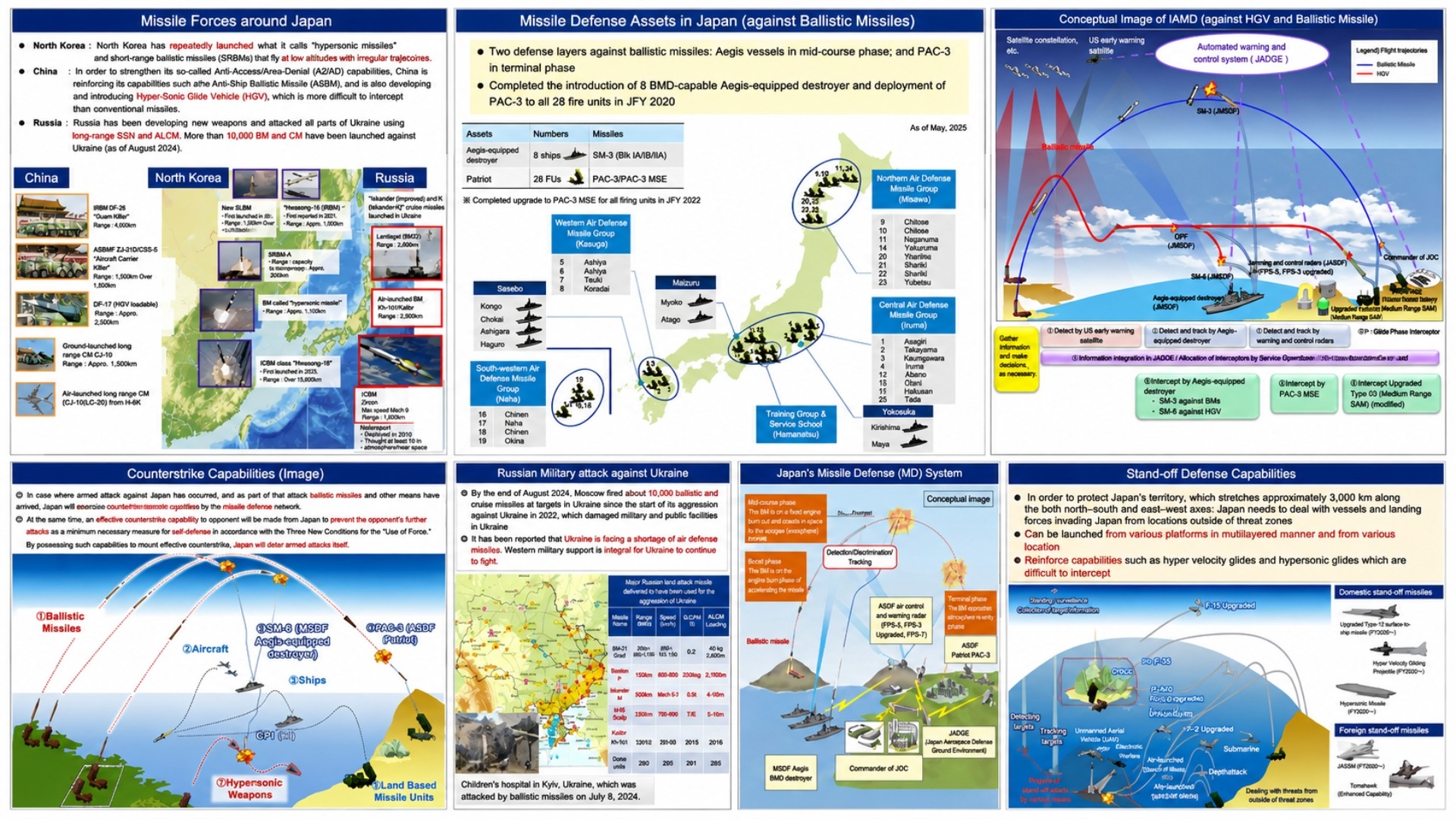
For Japan, North Korea is not a distant dictatorship but a direct source of missile threat. In 2022, Pyongyang carried out 31 series of ballistic missile launches, totaling at least 59 launches; one of the missiles fired in October flew over Japan and traveled approximately 4,600 km.
Assessments by the Japanese Ministry of Defense are even more dire: according to Tokyo, the DPRK has already achieved a level of nuclear warhead miniaturization sufficient to mount them on missiles capable of reaching Japan. The documents also mention missiles with low and irregular trajectories, mobile launchers, rail-based platforms, submarine-launched vehicles, cruise missiles, hypersonic systems, and solid-fuel intercontinental ballistic missiles.
Following Russia’s full-scale invasion of Ukraine, the North Korean factor ceased to be exclusively regional in scope. NATO clearly points out that the DPRK is supporting Russia with troops, weapons, and ammunition. Analytical assessments from 2026 point to North Korea’s extensive involvement in the Russian war—ranging from ammunition and personnel to a possible exchange of technology. However, the specific details of this exchange require caution and are not always corroborated by open-source information.
For Japan, this changes the calculus. If Pyongyang receives money, expertise, air defense technologies, or missile and satellite capabilities from Moscow, then the war in Ukraine has a direct impact on the security of Japanese cities. The European front and the Indo-Pacific region are no longer separate security theaters.
Russia in Japan’s Calculations: Not the Main, but a Dangerous Northern Front
For Tokyo, Russia is not the main challenge in Asia—that role is played by China. After 2022, however, Moscow has become a much more serious risk factor.
For Japan, the Russian Federation is a northern neighbor, a party to the dispute over the southern Kuril Islands—referred to by Tokyo as the “Northern Territories”—a military power in the Far East, and an aggressor that has aligned itself with Beijing and Pyongyang.
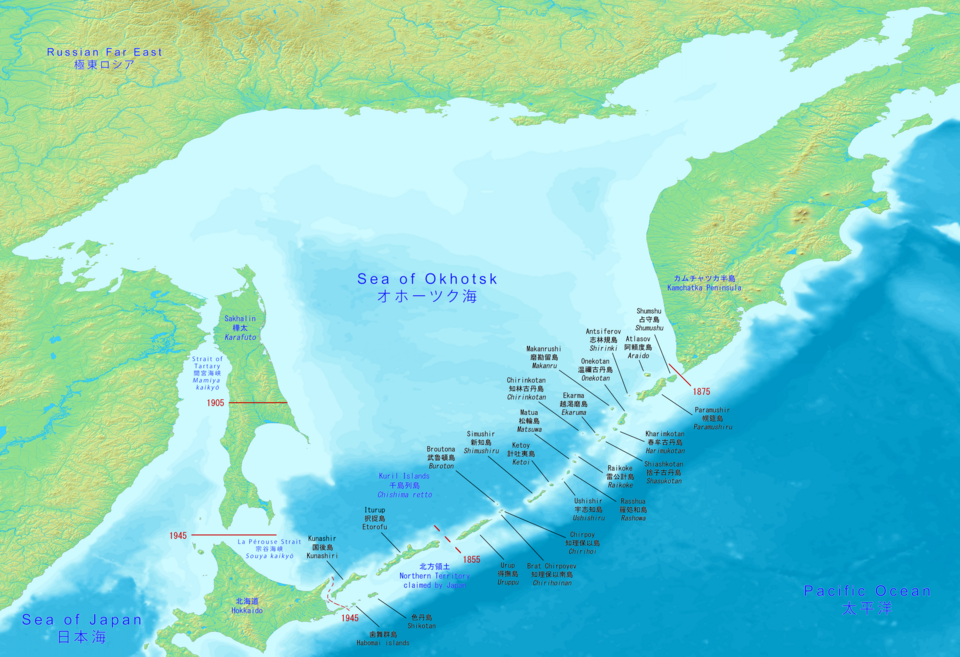
In its diplomatic documents, the Japanese Ministry of Foreign Affairs notes the deterioration of relations with Russia due to the aggression against Ukraine, the maintenance of Japan’s position on a peace treaty following the resolution of the issue of the four “Northern Islands,” protests against Russian military escalation in those territories, and the freezing of economic cooperation projects while maintaining sanctions. In February 2026, the Kremlin effectively admitted that dialogue on the peace treaty had come to a standstill, attributing this to Tokyo’s unfriendly stance.
The military situation has also changed. Russian long-range maritime anti-submarine aircraft, reconnaissance ships, Pacific Fleet forces, and joint operations with China are regularly under the scrutiny of Japanese and American observers. In the spring of 2026, reports were made of Russian Tu-142 aircraft near Japan, the reconnaissance ship Pribal’tika in the Tsugaru Strait area, and a Russian naval task force in the Indo-Pacific region.
Even if Moscow is not preparing for war with Japan, its actions create a constant backdrop of threat in the north. For Tokyo, this means the need to maintain forces not only in the southwest—where Taiwan and the Senkaku Islands are located—but also in the north—around Hokkaido, the Sea of Okhotsk, and the Kuril Islands.
Why Moscow Reacts Nervously to Japan’s Defense Shift
Russia’s official and propaganda-driven response is based on several recurring themes: “the remilitarization of Japan,” “the return of Japanese militarism,” “Tokyo as a tool of the U.S.,” “NATO in Asia,” and “revisionism regarding the Kuril Islands.” There are two layers to this rhetoric that should not be conflated.
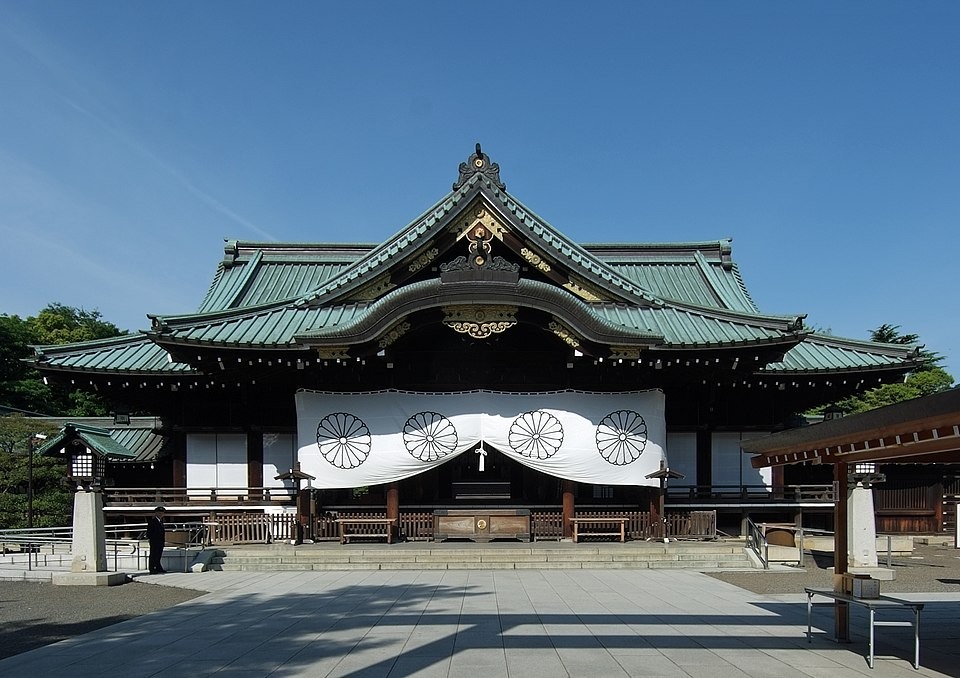
The first layer consists of official statements. The Russian Ministry of Foreign Affairs and its affiliated forums regularly link Japan’s defense decisions to World War II, the Tokyo War Crimes Tribunal, and the Yasukuni Shrine. Following this logic, any expansion of the Self-Defense Forces’ capabilities is interpreted not as a response to China, North Korea, and Russia’s war against Ukraine, but as an ideological return to an imperial past. (global.chinadaily.com.cn)
The second layer involves propaganda reinforcement. Japan is portrayed there not as an independent actor, but as an Asian branch of NATO, an American outpost, and a revanchist power. The problem with this narrative is not that the history of Japanese imperialism is fabricated. It is not. The problem is that the Kremlin uses historical memory as a tool to deny contemporary facts: its own aggression against Ukraine, the militarization of the Far East, joint patrols with China, and its alliance with North Korea.
The picture becomes particularly telling when one compares Russian rhetoric with Japan’s own actions. Tokyo has not renounced Article 9, has not become a nuclear power, has not begun mass deliveries of heavy weapons to Ukraine, and continues to describe its capabilities as defensive. Moscow, on the other hand, is waging a full-scale war against a neighboring state, integrating the DPRK into its military infrastructure, and simultaneously accusing Japan of destabilizing the region.
Ukraine as the European Front of Japanese Security
Japan has become one of Ukraine’s most consistent non-European partners. Tokyo has joined sanctions against Russia, imposed restrictions on technology exports, frozen assets, expanded sanctions lists of individuals and entities, lowered the price cap on Russian oil, and blocked shipments of goods that could strengthen Russian industry and the war machine.
Financial support is also significant. In April 2025, Japan signed a loan agreement with Ukraine for up to 471.9 billion yen under the G7 ERA mechanism, which utilizes proceeds from frozen Russian assets in European jurisdictions. According to estimates by the Marek Karp Center for Eastern Studies, the total amount of Japanese aid to Ukraine reached approximately $15 billion by 2025 and was subsequently supplemented by new commitments.
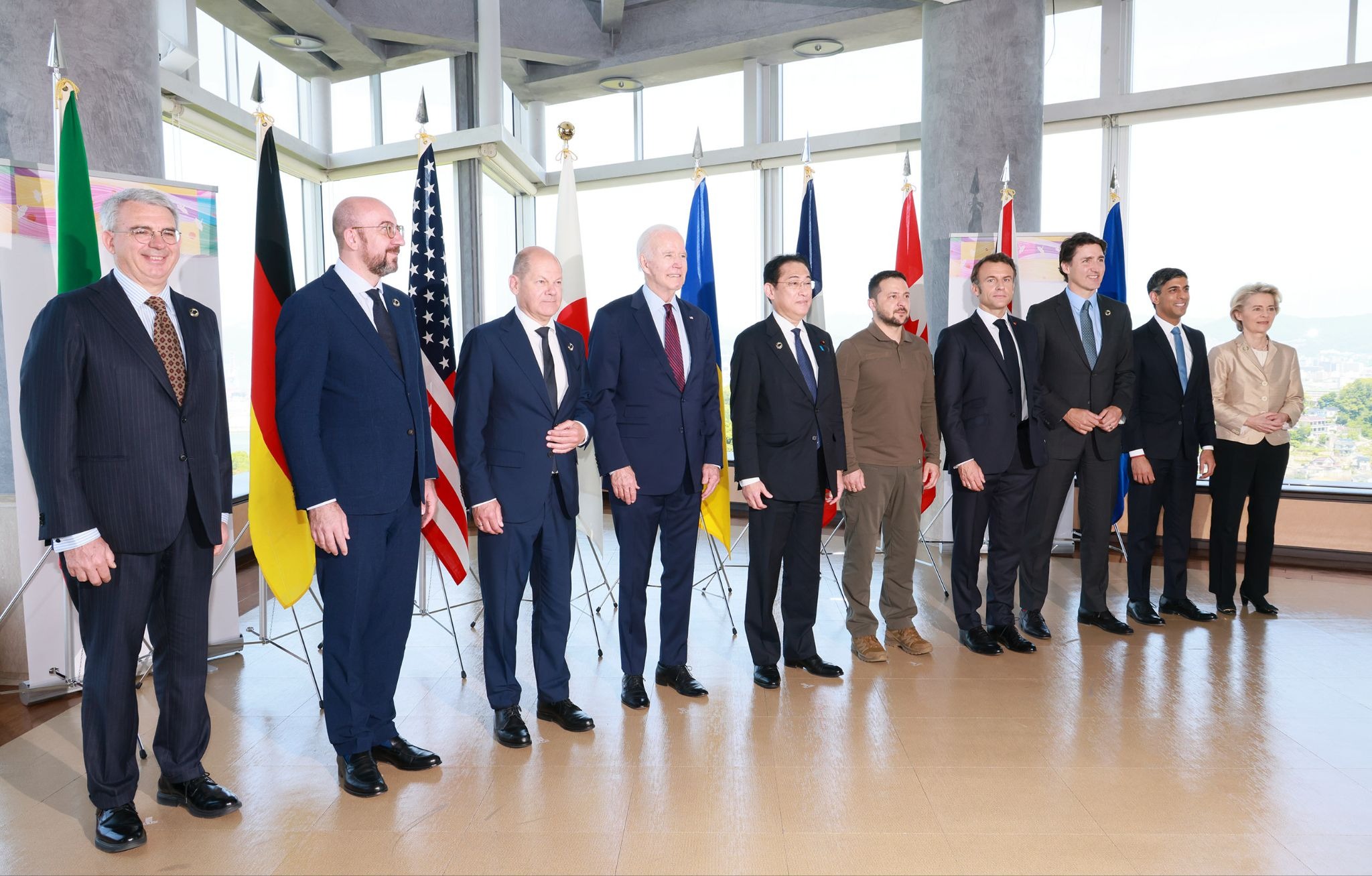
The aid is primarily financial, humanitarian, infrastructural, technical, and non-military in nature. In February 2026, Japan allocated 6.2 billion yen in grants for healthcare, agriculture, debris removal, infrastructure, jobs, and broadcasting. In December 2025, Tokyo announced that it would allocate 4 billion yen for demining, the disposal of unexploded ordnance, medical aid, and training using Japanese technologies.
A separate indicator is participation in NATO mechanisms. On May 29, 2026, Japan contributed $14.658 million to PURL—a mechanism for purchasing U.S. equipment for Ukraine through NATO.
Japan’s contribution is strictly limited to non-lethal equipment, reflecting Tokyo’s legal constraints.
For Ukraine, Japan’s significance is not limited to money. Japanese technologies are also important: radars, sensors, missile defense, cybersecurity, satellite surveillance, logistics, engineering machinery, demining, energy infrastructure, and dual-use technologies. However, it cannot be claimed that Japan is supplying Ukraine with heavy military equipment or complete combat air defense systems on a massive scale. There is no confirmed data to support such a conclusion. Japan’s true strength lies in its financing, technologies, industrial base, and political commitment to the coalition supporting Ukraine.
The U.S., NATO, and Europe’s New Ties to the Indo-Pacific Region
The Japan-U.S. alliance remains the cornerstone of Japan’s security. The U.S. provides nuclear and conventional deterrence, military bases, intelligence infrastructure, and the integration of missile defense systems. In June 2026, Japan and the U.S. held working-level consultations on extended deterrence, discussing China’s growing nuclear capabilities, the DPRK’s program, and a review of Japan’s strategic documents.
NATO is not admitting Japan into the Alliance nor is it creating a formal “Asian NATO.” However, ties are growing ever closer. The NATO–Japan Individual Partnership Program for 2023–2026 covers cyber defense, strategic communications, countering hostile information operations, space, new technologies, maritime security, sustainable development, civil preparedness, and interoperability.
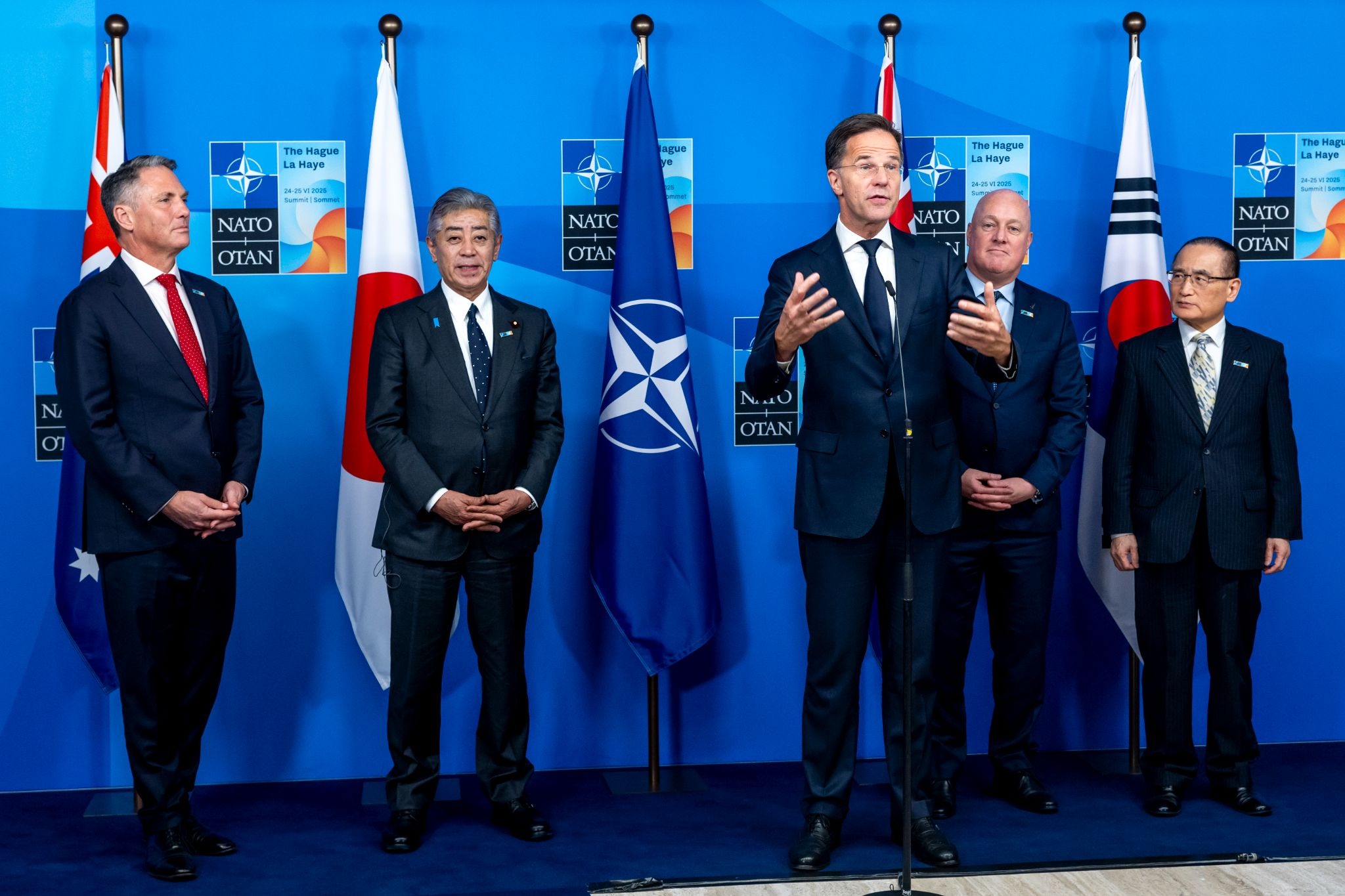
Through the IP4 format—comprising Japan, Australia, New Zealand, and South Korea—NATO brings together the European and Indo-Pacific dimensions of security. Through the G7, Tokyo participates in sanctions and financial policies toward Russia, and through the Quad, it coordinates actions with the United States, Australia, and India in the Indo-Pacific region. In G7 statements regarding Ukraine, Japan appears not as an observer but as a full-fledged participant in the West’s line of support for Kyiv and pressure on Moscow.
For Russia, this is an unfavorable development. Japan is not opening a second front against Moscow in a military sense. However, it is becoming part of a network that simultaneously exerts pressure through sanctions, finance, technology, diplomacy, logistics, and intelligence cooperation. In modern warfare, these are not peripheral elements but part of a real deterrent.
What Japan Actually Contributes to the Western Deterrence System
Japan’s military potential should not be overestimated, but neither should it be underestimated. The country possesses modern naval and air forces, a well-developed missile defense system, a large defense budget, a strong industrial base, and one of the most technologically advanced sectors in electronics, sensors, and communications.
Japan’s missile defense is being built as a multi-layered system: the upper tier consists of Aegis destroyers, while the lower tier comprises Patriot PAC-3 batteries, linked via the JADGE system [Japan’s Integrated Ground-Based Air Defense System – ed.] . The Ministry of Defense cites eight Aegis destroyers and PAC-3 batteries deployed throughout the country. The air component is being strengthened by F-35 purchases: Japan plans to operate a fleet of up to 147 F-35A/B aircraft, making it one of the largest operators of this platform outside the United States.

Long-range systems are changing the psychology of Japan’s deterrence. Tomahawks, upgraded Type 12 missiles, hypersonic programs, ship-based and submarine-launched systems—all of these pose additional risks to China, North Korea, and Russia when planning an attack on Japan. This is not about Japan waging an offensive war against its neighbors, but about raising the costs of a first strike against Japanese territory and U.S. facilities in the country.
From a technological standpoint, Tokyo is important to the West as a manufacturing and research hub. Radar, microelectronics, satellites, cybersecurity, maritime platforms, energy, batteries, optics, and precision engineering can strengthen not only Japan’s defense capabilities but also the stability of Western supply chains. This is precisely why Ukraine’s interest in Japan centers primarily on technology, reconstruction, infrastructure protection, and industrial cooperation.
Where Are the Limits of Japan’s Militarization?
Japan’s pivot has its limits. The first is the Constitution. Even with a political majority, the government cannot simply repeal Article 9 by administrative decree. Parliamentary procedures, a referendum, and public consent—which is not automatically granted—are required.
The second limit is demographics. The Self-Defense Forces may receive more modern missiles, ships, and aircraft, but in an aging society, they compete for personnel with the civilian sector. Therefore, Japan will increasingly invest in unmanned systems, automation, and networked solutions, rather than in a massive conscript army.
The third constraint is arms exports. Japan is gradually relaxing its regulations on the export of defense equipment, but legal and political inertia remains strong. Therefore, Ukrainian expectations regarding Japanese air defense systems, radars, or missile technology must take reality into account: Tokyo acts cautiously, providing non-lethal aid, licenses, funding, compatible components, repairs, infrastructure, demining, and financial mechanisms.
The fourth barrier is historical memory. For China and Korea, the issue of Japanese imperialism is not mere propaganda. It is part of their national trauma. Every visit by Japanese politicians to Yasukuni, every ambiguous statement about the past, and every attempt at political “normalization” of imperial symbolism immediately undermines the international legitimacy of Tokyo’s shift toward defense. Japan can demand a thorough analysis of current threats only if it does not itself obscure its responsibility for its own past.
The fifth barrier is dependence on the U.S. Without the American nuclear umbrella, intelligence, bases, missile defense system, and command compatibility, Japan’s strategy would be significantly weaker. Therefore, Russian and Chinese narratives about an independent Japan are propagandistic in nature, yet they are based on the real fact of alliance dependence. However, dependence on the alliance with the United States does not negate the independent reasons why Tokyo is strengthening its defense.
Japan’s shift in defense policy is neither an isolated Asian development nor a mechanical return to its imperial past. It is part of a global restructuring of security following Russia’s aggression against Ukraine and in the context of the growing rapprochement between Russia, China, and North Korea.
For China, Japan’s strengthening complicates its calculations regarding Taiwan and the first island chain. For North Korea, it raises the cost of missile blackmail. For Russia, it creates an additional source of pressure in the Far East that cannot be neutralized by propaganda slogans about remilitarization. For Ukraine, it opens not so much a channel for heavy weaponry as a source of money, technology, coordination of sanctions, reconstruction, and participation in Western aid mechanisms.
The main change is that Japan no longer wants to be merely an island protected under the American security umbrella. It remains constrained by its constitution, history, and society, but is gradually transforming into one of the technological hubs of Western deterrence. This is precisely what is provoking a nervous reaction from Moscow and Beijing: not some alleged Japanese hysteria, but the emergence of another strong element in the system that links the security of Europe and the Indo-Pacific region.
Author: Artur Żak