
On 14 September Donald Trump said that Ukraine and Russia had agreed to stop striking energy facilities; the warring countries, however, are so far commenting only on their readiness for mutual arrangements, provided there are guarantees that each side will observe them. Dmytro Zhmailo, deputy head of the Ukrainian Security and Cooperation Centre, told Black Sky whether Ukraine and Russia will be able to reach an agreement.
In brief:
- The price of diesel fuel in the United States has come close to record levels.
- Trump openly names Ukrainian strikes on refineries in Russia as the cause of the crisis.
- The US president has announced a mutual arrangement between Russia and Ukraine on an energy truce, but the countries themselves deny any such arrangement.
- Ukraine has said it is ready to halt strikes on Russian refineries provided that Europe guarantees Russia will observe its part of the arrangement.
- In Russia the idea is called a good one, but Kyiv is accused of possibly failing to meet the terms.
Why Russian energy resources worry the United States
Ukraine began striking Russia’s fuel infrastructure in 2023, but in 2025–2026 the attacks became systematic and large-scale.
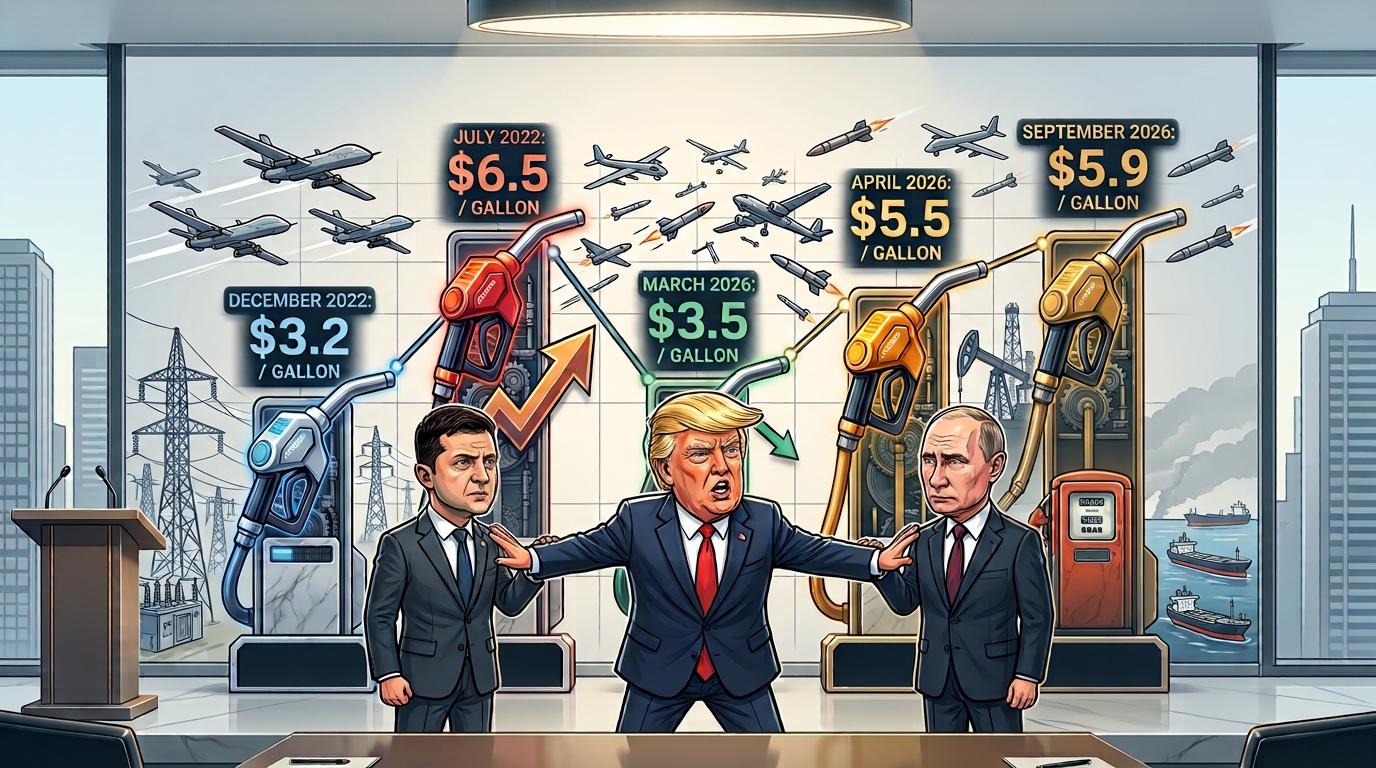
After the escalation of the conflict in the Middle East at the end of February 2026, the question of Russian oil began to sound louder. The blocking of the Strait of Hormuz and the halt to tanker traffic carrying Iranian oil sent world fuel prices sharply higher – by more than 30%. In the United States, diesel cost around $3.5 a gallon at the beginning of March 2026, and by the end of that month it had risen to the $5 mark; in April the price rose to roughly $5.5 a gallon.
For Russia the situation has turned out to be favourable.
Over the first half of 2026 the United States twice eased sanctions against Russian oil, and the current talks on tightening sanctions are being postponed.
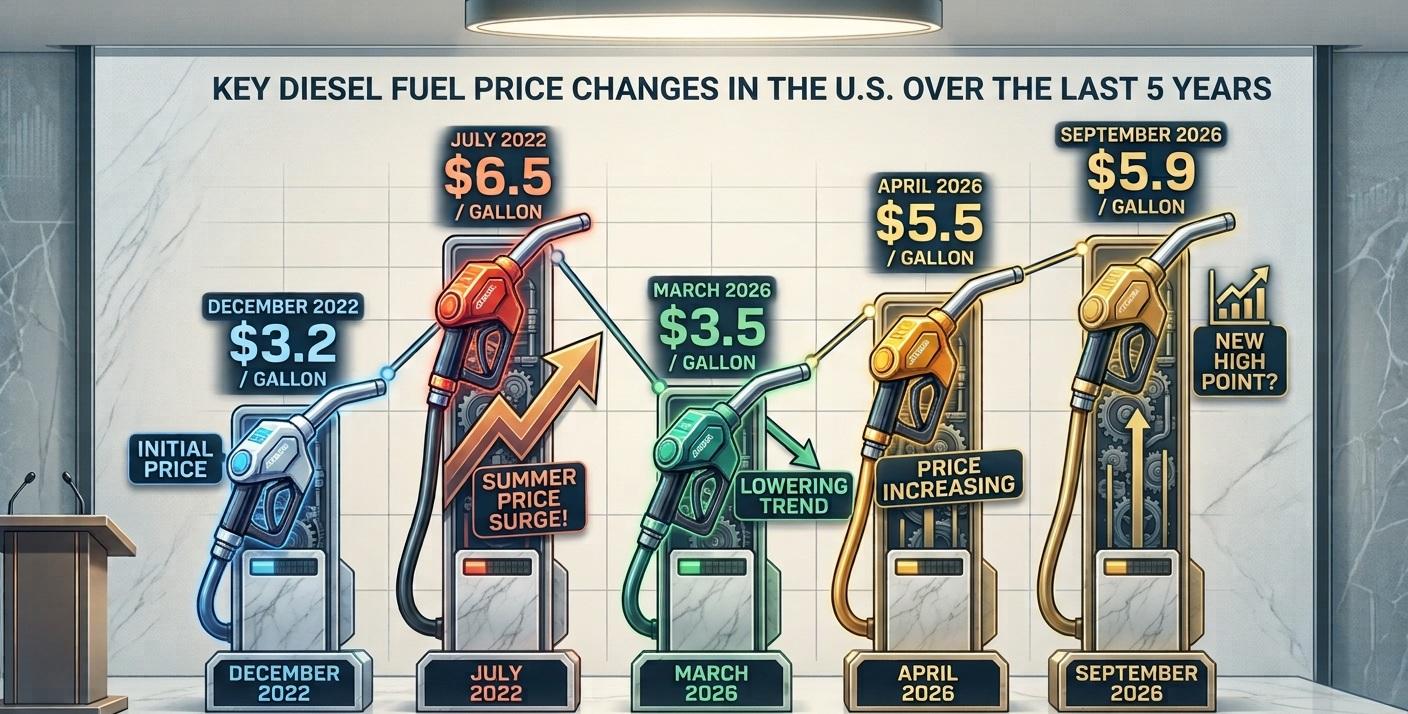
Fuel prices, however, keep breaking records. In Ukraine, for example, the price of a litre of diesel has reached almost 100 hryvnias ($2.24 at the exchange rate of 17 September 2026). In the United States, as of 17 September 2026, the average price of diesel is more than $5.9 a gallon (roughly 70.2 hryvnias a litre at the rate of 17 September 2026). That is still not a record for the States: the highest price was recorded back in 2022, on 29 July – an average of $6.5 a gallon (about 64 hryvnias a litre at the rate of 29 July 2022). By way of comparison, at the beginning of 2022 diesel in the United States cost $3.2 a gallon (roughly 23 hryvnias a litre at the 2022 exchange rate).
Dmytro Zhmailo, however, points out:
“The global shortage of oil and diesel is 90% caused not by strikes by Ukraine’s Defence Forces but by the conflict in the Middle East involving the United States and Israel themselves against Iran, which led to shipping being blocked and the market losing 11 million barrels of fuel a day, whereas Ukrainian attacks cut Russian exports by only 1.4 million barrels.”
What Trump is asking for
On 13 September, during a meeting with journalists, the US president Donald Trump answered a reporter’s question directly, saying that he had asked Ukraine’s president Volodymyr Zelensky to stop striking Russian refineries, because it is precisely the Ukrainian strikes on fuel industry facilities that harm the market and drive fuel prices up. And on the evening of 14 September (local time) he published a statement on his page on the social network Truth Social:
“Ukraine has agreed not to hit Russian Energy targets. Russia has agreed to do, likewise! The World’s Diesel price rise is mostly caused by the Russia/Ukraine War, not Iran. President DJT”
Dmytro Zhmailo points out that Donald Trump’s claim that Kyiv and Moscow have supposedly already reached an arrangement on an “energy truce” and on halting mutual strikes on refineries and infrastructure facilities is not so far borne out by any real agreements.
“The real motive behind Trump’s statement is an attempt to reassure American voters against the background of a noticeable rise in fuel prices in the United States,” the expert believes.
Is Ukraine ready to make concessions
On 14 September Volodymyr Zelensky said that Ukraine is ready for arrangements if Ukrainian energy, vitally critical infrastructure and food logistics are placed under protection.
The military and political analyst Dmytro Zhmailo stresses that this is not the first time Ukraine has proposed such a ceasefire format, but that guarantees the rules will be observed remain important:
“Ukraine has repeatedly initiated such an agreement as a first step towards de-escalation, while demanding strict monitoring with the participation of third countries, which could be implemented in particular through satellite observation and the use of other technologies – something the United States and European countries are ready to provide,” the expert says.
The spokesman for Ukraine’s Ministry of Foreign Affairs, Heorhii Tykhyi, also mentioned Ukraine’s repeated proposals to halt the conflict, at a press conference on 17 September.
Heorhii Tykhyi stressed: “If the Russians are serious about this, then let them provide lists of facilities, let them spell out the details – we are waiting for that.”
How Russia reacted to the proposal to leave energy alone
As recently as 10 September the Kremlin was saying that no substantive talks on an energy truce were under way, while Zelensky was only reporting his intention to discuss such a format with Trump during a possible meeting in New York on 21–23 September. The US president’s hasty statement about existing arrangements therefore sharply changed the way the development of the conflict and the negotiating process is perceived.
After Trump’s statement the reaction in Russia was unexpected: the truce was called a “good initiative”. Kremlin spokesman Dmitry Peskov said: “On the whole we unquestionably consider this a very good idea, a good initiative. We are in contact with the Americans. We are always on the side of peaceful solutions.”
At the same time the spokesman mentioned sanctions that “deprive the world of access to resources”, and expressed doubts about Ukraine’s readiness to observe the terms of a truce:
“Saturating the world market with petroleum products requires safe commercial shipping, and Kyiv is not inclined to guarantee such safety,” Peskov believes.
Dmytro Zhmailo stresses that Russia systematically rejects such proposals:
“The Kremlin will be categorically against such a truce on the eve of winter, since it sees strikes on critical infrastructure as an opportunity to put pressure on the civilian population, using blackouts and a humanitarian crisis as an instrument of pressure to force Kyiv into concessions.”
Yulia Derdiuk
Official Russian and Belarusian sources cited in this text are for informational purposes only. Content from these sources may constitute disinformation or propaganda.