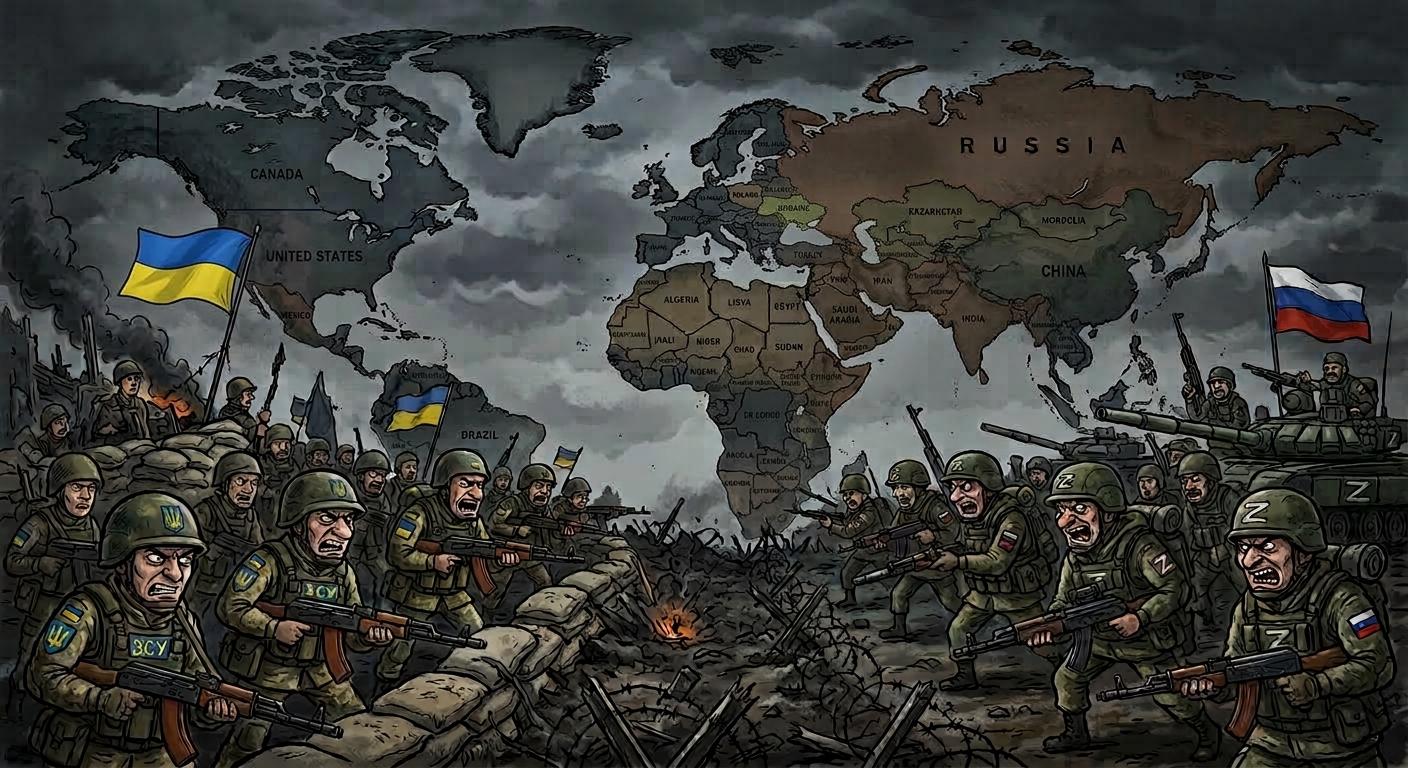

Ukraine is countering Russian influence around the world by sending troops to share their experience with countries that are confronting Russian military formations. Around fifteen soldiers have been sent to Africa to train local juntas in the use of drones against Russian military groupings. This is not the first time Ukraine has shared combat experience in a way that undercuts Russian influence.
In brief:
- Ukraine is actively sharing its unique military experience with partner countries.
- Under a counter-drone programme, 228 instructors from Ukraine were sent to five countries in the Middle East.
- Ukrainian soldiers have been spotted in African countries and in Syria during operations aimed at countering Russian military formations.
- Ukraine is using its own experience of waging war in new conditions as a tool for building international ties and a way of weakening Russian influence in the world.
- Russia is indignant about the presence of Ukrainian troops in Africa, but its narratives echo statements already familiar from 2024.
Over more than four years of full-scale war, Ukrainian combat experience has become a valuable resource for many countries. Tactics, tools and approaches have changed to match a reality in which drones of various kinds, far cheaper than missiles in the conventional sense, are becoming more effective on the battlefield.
Whereas in 2022 NATO countries were running training programmes that involved Ukrainian troops, by 2025–2026 it is Ukraine that is being brought into such programmes as an expert on the use of drones in combat.
In February 2025 the Joint Analysis, Training and Education Centre (JATEC), run by NATO and Ukraine, was opened. Located in Bydgoszcz, Poland, the centre became a venue for exchanging real combat experience, and Ukrainian service personnel from the Armed Forces and the National Guard are officially seconded there. Ukraine’s Ministry of Defence describes JATEC directly as a mechanism for exchanging experience between Ukraine and NATO. All 32 countries of the alliance take part in the programme.
Separately, in 2026 Ukrainian instructors were sent to German military schools and took part in joint Polish-Ukrainian exercises at training grounds in Poland.
Programmes to counter Iranian drones
Besides NATO countries, Ukraine is officially rolling out a support programme for countries in the Middle East. In March 2026 Ukraine sent 228 specialists to provide training in countering Iranian Shahed drones and other strike UAVs. The programme covers Qatar, the United Arab Emirates, Saudi Arabia, Kuwait and Jordan.
Israel is a separate example. There is an active exchange of experience between the two countries on countering drones. After the pro-Iranian Hezbollah grouping adopted Russian practice and began using low-flying FPV drones and fibre-optic UAVs that are hard to jam with electronic warfare equipment, Israel’s need for Ukrainian experience rose sharply. In exchange for that experience, Israel approved export licences for the transfer to Ukraine of modern counter-drone systems (electronic countermeasures and electronic warfare equipment), although the two countries never agreed on the transfer of Israel’s Iron Dome, which Ukraine wants.
How Ukraine counters Russia on someone else’s battlefield
Unlike the exchange of experience through instructors sent to various countries, military operations outside Ukraine are rarely publicised or confirmed by the command. Journalists at a range of outlets have nevertheless repeatedly reported the participation of Ukrainian soldiers on the battlefield in Syria, Sudan and Mali, as well as involvement in military operations in Libya.
The best-documented operation involving Ukrainian troops began in Sudan in 2023.
In April 2023 war broke out in Sudan between the Sudanese Armed Forces (the regular Sudanese army of General Abdel Fattah al-Burhan) and the Rapid Support Forces (the powerful paramilitary grouping of Mohamed Hamdan Dagalo, known as Hemedti).
In the early stage of the war, Russian mercenaries from the Wagner Group supported the RSF, supplying weapons and other equipment. That was one of the motives for Ukrainian involvement. Moscow later began drawing closer to the SAF as well, which made the situation considerably more complicated.
In mid-August 2023 Ukraine sent roughly 100 special forces personnel to Khartoum. The initial aim was to evacuate the Sudanese leadership, but the operation grew into assistance to the SAF and action against RSF forces linked to Wagner.
The active phase of fighting lasted until roughly February 2024. CNN now reports that a small number of Ukrainian soldiers are still in Sudan.
In 2024 there were numerous reports that special forces of the Khimik unit of Ukraine’s military intelligence (HUR) were operating alongside the Syrian opposition against Russian troops and Russian mercenaries in Syria. The regime of Bashar al-Assad, backed by Russian military formations, fell in December 2024.
HUR has not officially confirmed Ukrainian participation in operations in Syria, but in February 2024 the Kyiv Post published a video in which, according to its sources, fighters of HUR’s Tymur unit were interrogating captured Wagner fighters in Sudan.
CNN reports that around 15 Ukrainian soldiers have been sent to Mali to train the local junta in conducting combat operations with drones. The Ukrainians are working with the Tuareg grouping Azawad Liberation Front (FLA), which is fighting the government of Mali and the Russian Africa Corps, Wagner’s successor.
This is not the first time Ukrainians have been recorded in Mali. In 2024 Ukrainian support for Tuareg forces caused an international scandal. After Tuareg forces attacked a column of the Malian army and Wagner on 27 July 2024, inflicting very heavy losses on the Russian side, Mali and Niger broke off diplomatic relations with Ukraine.
The Ukrainian side, for its part, fully denied any involvement in military operations in Mali.
The current approach is that Ukrainian soldiers do not take part in operations themselves but only train and advise local forces. It has also been recorded that soldiers from Chad, Niger and Burkina Faso travelled to Mali to receive drone training from Ukrainian personnel.
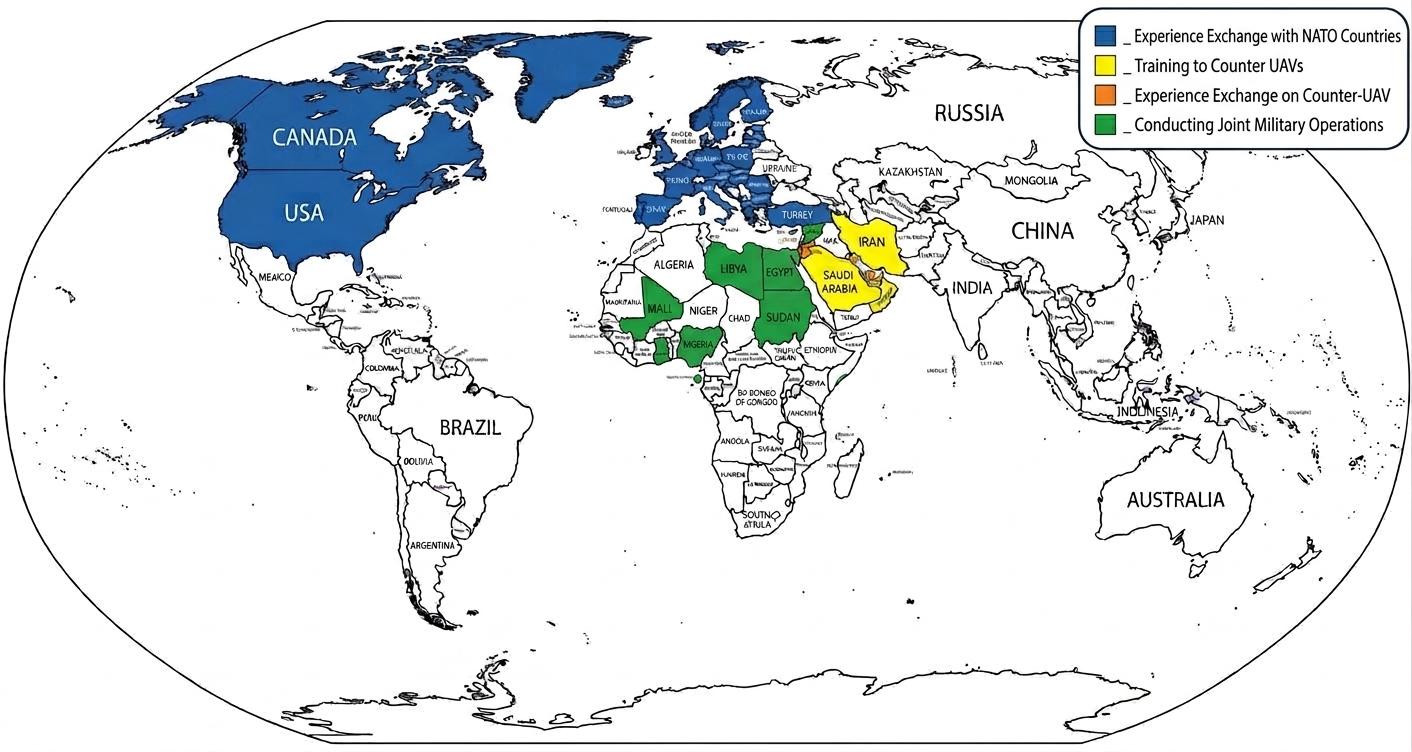
Ukraine’s presence in Libya, which Kyiv likewise does not confirm, deserves separate mention. According to CNN, Ukrainian naval drone operators have been in north-western Libya since late 2025 to counter Russia’s shadow fleet.
Why Ukraine is sending troops to Africa
Despite the fighting on Ukrainian territory, seconding experts and exchanging experience helps Ukraine consolidate its standing in the world.
Yurii Oliinyk, head of research programmes at the non-governmental analytical centre Ukrainian Strategic Studies, notes that Ukraine does not have many resources, but it does have unique experience that can be applied selectively in critical places – more, even, as a political instrument.
“Sending troops is rather a positive strategy, because it allows us to contain Russia and to demonstrate our capabilities to other countries,” the analyst says.
Russia spent years building a system of influence on the African continent and creating networks for spreading its own propaganda, within which Ukraine is an enemy alongside the colonial West. Help from the Ukrainian side to forces confronting Russian groupings is therefore a way of undermining Russia’s influence on the continent and consolidating Ukraine’s own position.
How Russia reacted to the presence of Ukrainian troops in Africa
On 17 August 2026 INTERFAX.RU published a report from a press conference by Russian Foreign Minister Sergei Lavrov devoted to events in Africa. Although it was published in 2026, its content and narratives are based entirely on media clichés and events from 2024. The theses, accusations and rhetoric echo the content of Russian propaganda that Russian officials spread actively in August 2024, against the background of the rout of a Wagner column in Mali, near the town of Tinzaouaten.
Among the narratives:
- Accusing Ukraine of “opening a second front” in Africa.
- Claims of “state terrorism” and of Kyiv’s cooperation with local groupings in the Sahel.
- Accusations against France and the West of trying to undermine Russia’s position “by the hands of militants from Ukraine”.
In the 2026 text Lavrov presents information about “the participation of Ukrainian service personnel” and a “French trail” as new intelligence, although these same theses were already being cited in Russian propaganda outlets in August 2024.
After information about the presence of Ukrainian troops in Mali spread, the Russian information space responded by publicising the story of prisoners of war who had supposedly returned from captivity in Mali. What is striking is that CNN’s investigation into the presence of Ukrainian troops in Mali was published on 12 September, while on 14 September Russian media began circulating the story of two Russian soldiers who had managed to return after 755 days in the captivity of Ukrainian and French troops in Mali. The story describes a horrifying scenario of people held on a metal chain in the heat without adequate access to water or the chance to wash. The same story is being spread on the platforms of the Russian Houses in African countries.
Incidentally, there is currently no evidence of a French military presence in Mali; the last confirmed contingents were withdrawn from the country in 2022.
Yulia Derdyuk
Official Russian and Belarusian sources cited in this text are for informational purposes only. Content from these sources may constitute disinformation or propaganda.