On 17 August, the Appeals Chamber of the Supreme Court upheld the decision to remove Yabloko’s federal list from the State Duma elections. The party was excluded from the elections on grounds of alleged ‘foreign funding’, social media posts and copyright infringements.
Meanwhile, the possibility of eliminating political opponents on the grounds of copyright infringements has already extended beyond the ‘Yabloko’ case. In Samara, Communist candidate Mikhail Matveev was removed from the election for using ‘Microsoft fonts’ without a licence. The State Duma is proposing to put a stop to this pernicious practice: a bill has been drafted to prohibit the disqualification of candidates on the grounds of copyright infringements based on complaints from political rivals.
In brief:
- Yabloko prepared thoroughly for the hearing and gathered over 200 pages of evidence regarding similar infringements by other parties
- Nevertheless, the Appeals Chamber of the Supreme Court upheld the decision of the court of first instance
- The authorities cracked down on attempts to hold a public demonstration in support of Yabloko: around 70 people were detained outside the Supreme Court building
- On the same day, Yabloko’s deputy chairman, Lev Shlosberg, was sentenced to 11 years in a penal colony
- The removal of political opponents from the elections on grounds of ‘copyright infringement’ began to spiral out of control: the State Duma intervened in the case
Yavlinsky: ‘Yabloko’ now stands a chance of coming second in the election
‘Yabloko’ lost its appeal to the Supreme Court regarding the removal of the party’s federal list from the State Duma elections. The Supreme Court ruled on 10 August to revoke the list’s registration following a lawsuit brought by deputies from the ‘Rodina’ party.
According to the reasoning section of the ruling, the grounds for removing the list were rouble donations from Russians who had received money from abroad, posts in support of ‘Yabloko’ on foreign social media platforms, and copyright infringements.
The party had five days to appeal against the ruling, and Yabloko prepared thoroughly for the appeal hearing. The party analysed the activities of its rivals, applying the logic of the Supreme Court’s ruling to them, and compiled over 200 pages of material on alleged violations by other parties admitted to the elections to the lower house of parliament.
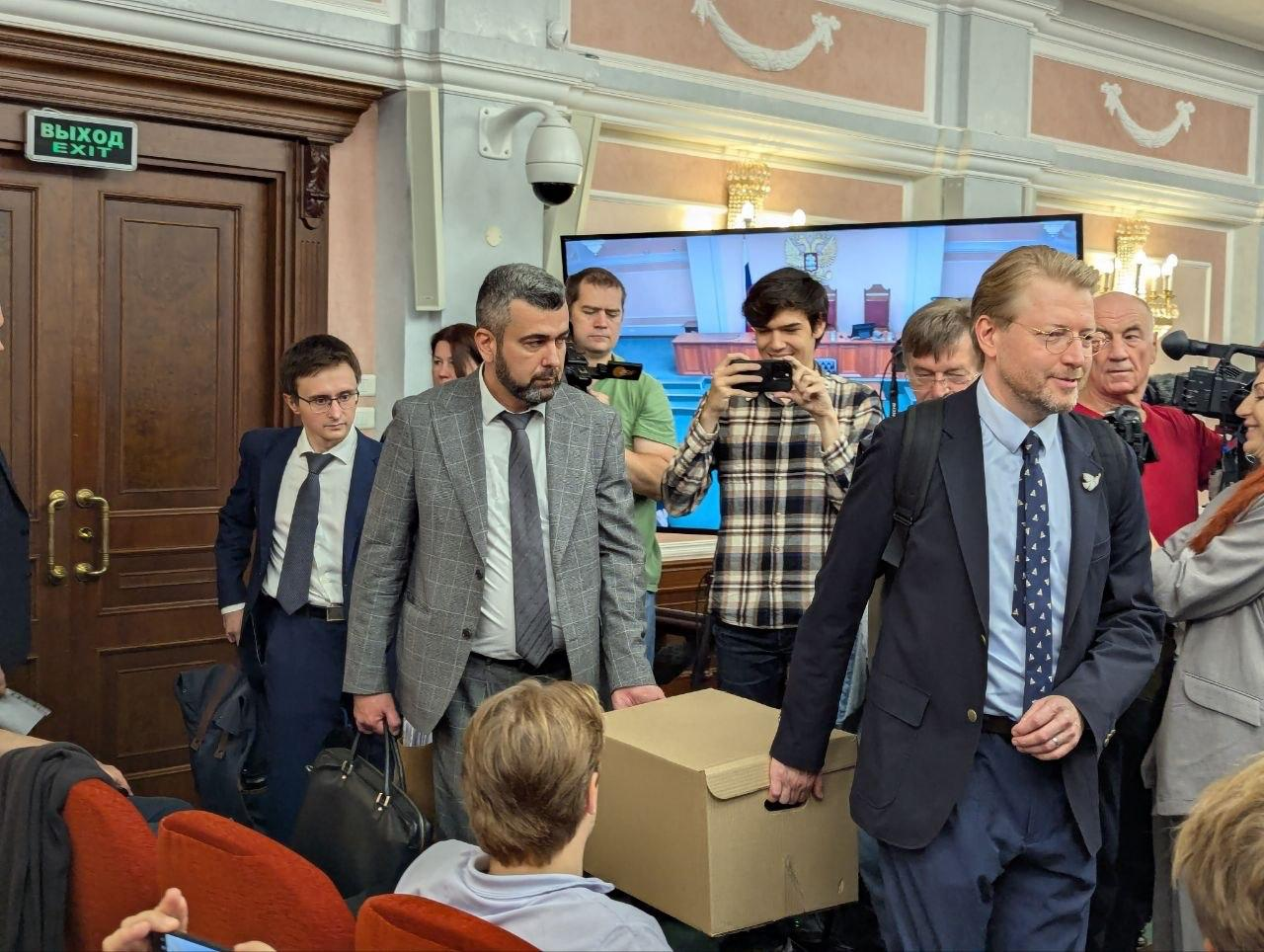
On the eve of the appeal hearing, Yabloko leader Nikolai Rybakov sent these materials to CEC Chair Ella Pamfilova and called on the authorities to prevent the elections from being discredited. He also invited Pamfilova to attend the court hearing in person.
The head of the CEC did not attend the appeal hearing, but set out her position in the media. According to her, at the time the lists were registered, the electoral commission had no grounds for refusal: the CEC had received no requests from the Prosecutor General’s Office, the Ministry of Justice or the Ministry of the Interior regarding Yabloko or any other party.
“The fact that representatives of another party are taking the matter to court and putting forward grounds which may serve as arguments for the court to strike the party off the register is no longer within the remit of the Electoral Commission,” Pamfilova stated.
Representatives of Yabloko insisted that the court’s findings regarding the party’s alleged violations were based on an overly formalistic interpretation of the law and an incorrect assessment of the facts of the case. However, the Appeals Chamber of the Supreme Court upheld the decision of the court of first instance.
Consequently, the decision to remove Yabloko’s federal list from the election has come into force. A meeting of the Central Electoral Commission has been scheduled for 18 August, at which the relevant changes are to be made to the ballot paper.
The party has stated that it intends to lodge a supervisory appeal against the Supreme Court’s ruling in the near future.
The founder of ‘Yabloko’, Grigory Yavlinsky, described the Supreme Court’s ruling as ‘a significant political event, signalling a serious deepening of the crisis in the Russian political system and a lack of understanding of the desired future’.
The essence of this crisis lies in the disconnect between the state – or a significant proportion of the senior officials representing it – and the real lives of ordinary people, as well as the country’s objective interests and its future prospects. In these circumstances, the authorities and all the parties in the current State Duma have become genuinely fearful of actually losing the election – Yabloko now stands to take second place on 20 September. And this is linked to a growing sense of a lost future. People are beginning to feel this more acutely — regardless of their political views or the stance they take. It is precisely this sore spot, this political nerve centre, that we have struck through our participation in the elections and our ‘For Peace and Freedom!’ programme.
Judgement Day for ‘Yabloko’
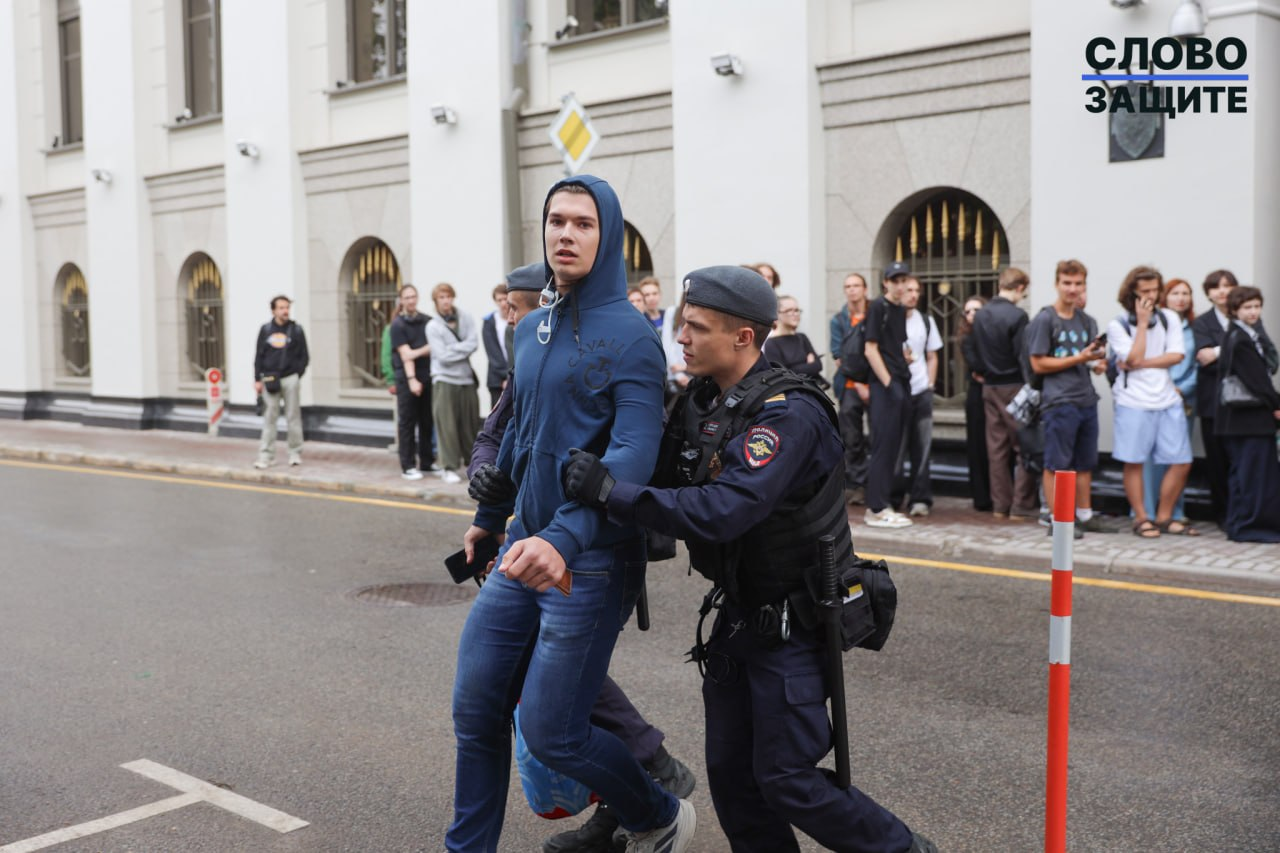
Ahead of the Appeals Chamber hearing on 17 August, the Russian authorities took into account the mistakes made a week earlier and cracked down on attempts to show public support for ‘Yabloko’.
People were not allowed to gather outside the courthouse. Those who refused to leave voluntarily were met by police vans. More than 70 people were detained, including ‘Yabloko’ activists and journalists.
“People were detained without any grounds or reason,” said the chair of the Moscow branch of “Yabloko”, Kirill Goncharov.
Those detained were taken to various police stations. By the evening, almost all had been released without charges being filed.
There was no live broadcast from the courtroom either. The first hearing, which was streamed on VKontakte, was watched by over 150,000 users. This stream became one of the most popular on the Supreme Court’s page in recent years. Only the broadcast of the hearing in the case concerning Larisa Dolina’s flat garnered more views.
On the same day, 17 August, the Pskov City Court handed down its verdict on the deputy chair of Yabloko, Lev Shlosberg. The prosecution had sought a sentence of 12 years and 1 month’s imprisonment for the politician on two separate criminal charges: ‘discrediting the use of the Armed Forces of the Russian Federation’ (Part 1 of Article 280.3 of the Criminal Code of the Russian Federation) and “disseminating information about the Armed Forces of the Russian Federation” (sub-paragraph “d” of Part 2 of Article 207.3 of the Criminal Code of the Russian Federation). The cases were initiated on the basis of debates published on YouTube and a single repost on Telegram.
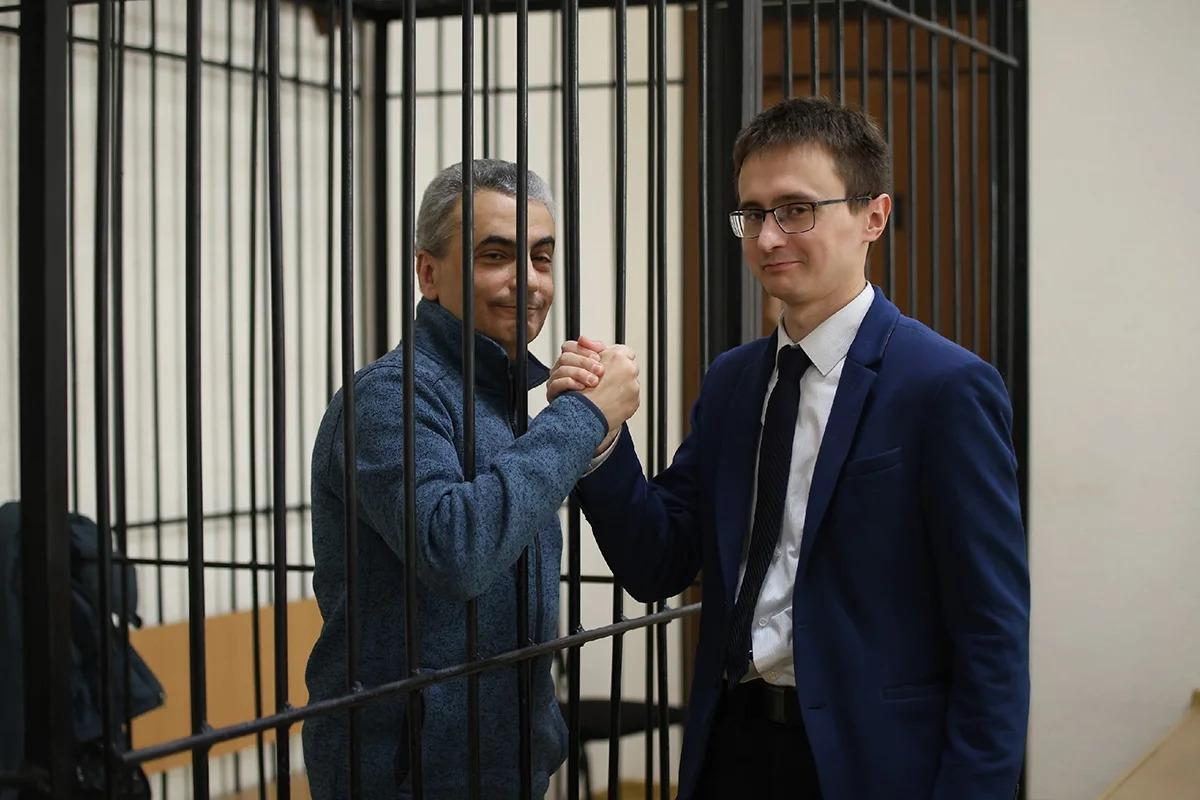
The pronouncement of Shlosberg’s sentence was postponed until 4.00 pm, evidently in anticipation of the Supreme Court’s ruling on the fate of Yabloko’s list in the State Duma elections. And once it became clear that the party would not be reinstated for the elections, Judge Viktoria Malyamova sentenced the deputy chair of ‘Yabloko’ to 11 years and one month in a penal colony.
The Communists also under fire
The possibility of removing candidates from the elections for copyright infringements in campaign materials was quickly seized upon by the Communists’ political opponents. On 14 August, the Samara Regional Court revoked the registration of Mikhail Matveev, a State Duma deputy from the Communist Party of the Russian Federation (KPRF), upholding a claim brought by his rival, Anna Sarantseva.
According to the claimant, campaign materials on the politician’s website and on VKontakte used photographs without the copyright holders’ consent, as well as “fonts from Microsoft that are protected by copyright, for which Matveev had not paid”.
The claims were upheld in full, and Matveev was stripped of his candidate status. The court’s decision caused a widespread stir in the media and on social media — primarily due to the allegations regarding the use of fonts, which many considered absurd.
Meanwhile, the Communist Party of the Russian Federation (CPRF) has urgently drawn up a bill that would prevent candidates from being disqualified from elections for using fonts and photographs following complaints from political rivals.
As the author of the initiative, MP Denis Parfenov, explained, ‘it is not those who hold the rights to these fonts, photographs and architectural features who are complaining, but political rivals’.
At the same time, it is proposed that rights holders retain the ability to seek protection of their rights through the means provided for by law. The bill is due to be tabled in the State Duma on 18 August.
Author: Olga Semashko
Official Russian and Belarusian sources cited in this text are for informational purposes only. Content from these sources may constitute disinformation or propaganda.