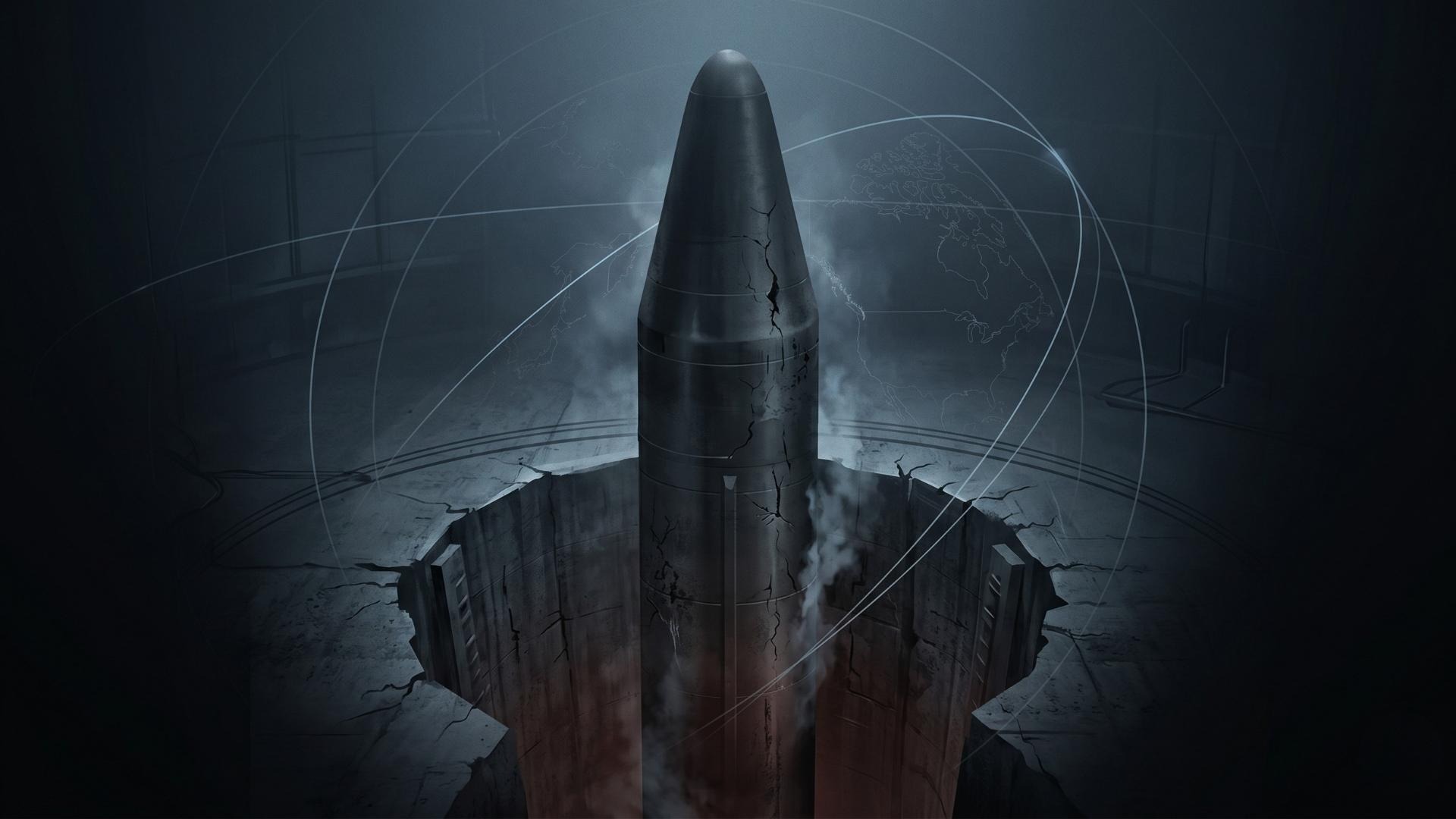

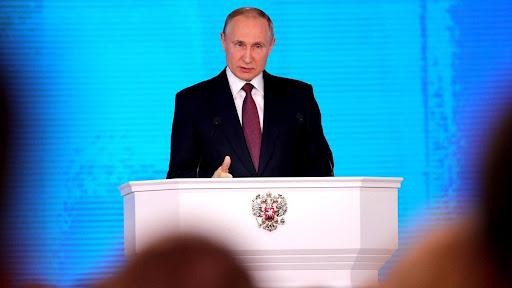
On May 12, 2026, Russia announced the successful launch of the RS-28 Sarmat heavy intercontinental ballistic missile, after which Vladimir Putin once again promised that the first regiment of these missiles would be placed on combat duty before the end of the year.
This statement is significant not only as another episode in Russia’s missile program. The Sarmat remains simultaneously a technically problematic project, a tool of strategic propaganda, and part of a far more dangerous shift: the Kremlin is increasingly speaking of nuclear weapons not only as a deterrent, but also as an instrument of coercion, escalation, and pressure against the United States.
In short
- Russia announced a second fully successful flight test of the RS-28 Sarmat on May 12, 2026, following the first successful launch on April 20, 2022.
- Vladimir Putin stated that the first missile regiment equipped with Sarmats is to be placed on combat duty in the Uzhursky Missile Army in the Krasnoyarsk Krai by the end of 2026.
- Since 2018, Russian authorities have repeatedly announced the imminent adoption of the Sarmat into service, but deadlines have been regularly pushed back due to technical problems and malfunctions.
- The Sarmat is primarily intended to exert strategic pressure on the United States, not for war against Ukraine.
- The main threat lies not in a single successful test, but in the direction of Russian thinking: Moscow is increasingly presenting nuclear systems as a tool for controlled escalation.
A New Launch and the Kremlin’s Old Formula
Following the launch on May 12, 2026, Russian official rhetoric quickly reverted to a familiar pattern: a successful test—confirmation of technological superiority—a promise of rapid deployment—a reminder to the United States of Russia’s ability to overcome missile defense.
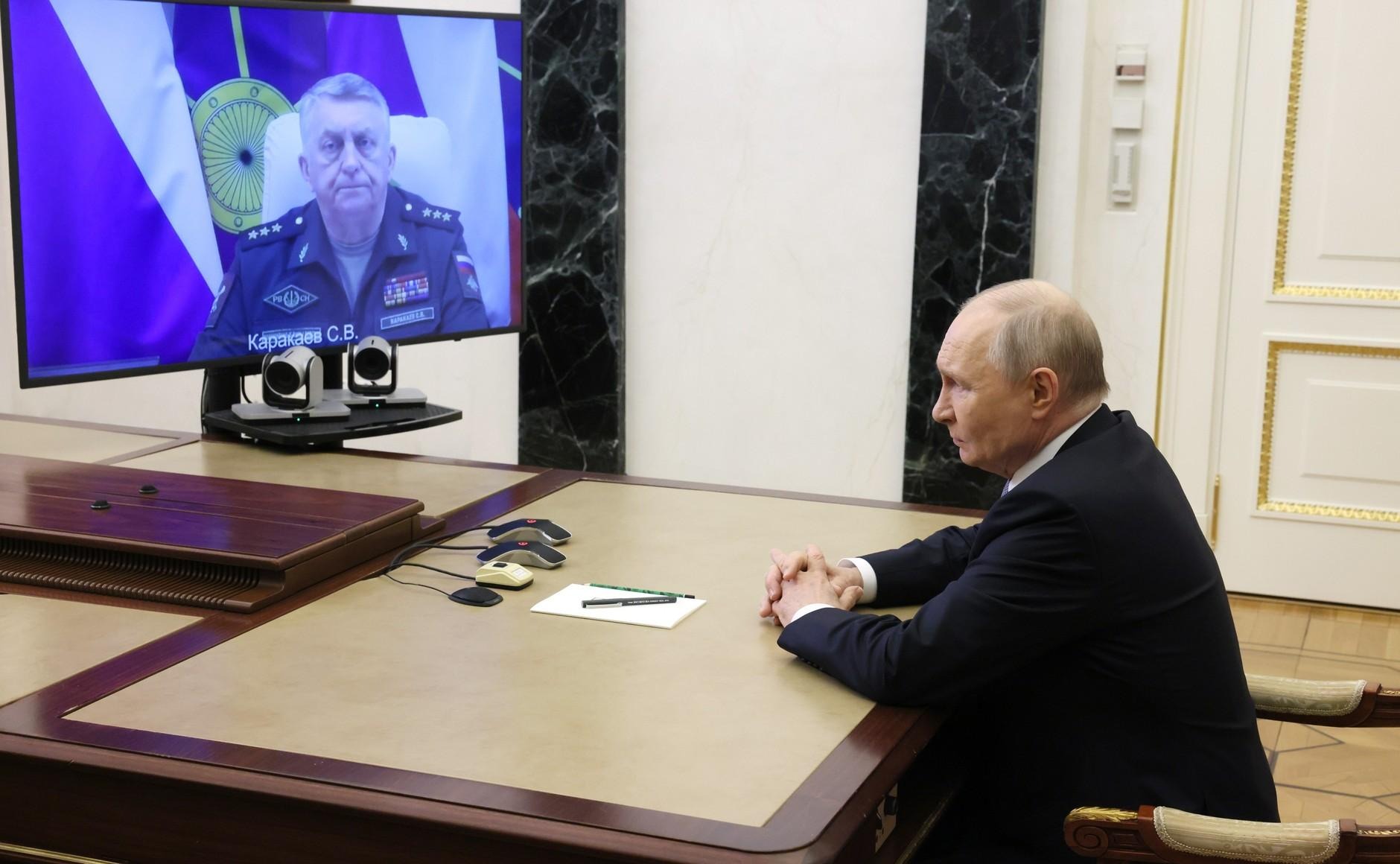
Sergei Karakaev, Commander of the Strategic Missile Forces, informed Vladimir Putin that the launch took place at 11:15 a.m. Moscow time and that the mission had been accomplished. His statement immediately combined technical specifications, a political message, and a promise of deployment:
“Comrade Supreme Commander! Today at 11:15 a.m., the Strategic Missile Forces conducted the launch of the latest heavy liquid-fueled intercontinental ballistic missile, the Sarmat. The launch was successful; the mission was accomplished. <…> The stationary silo-based strategic missile complex equipped with the Sarmat intercontinental ballistic missile is being developed to replace the Soviet-made Voevoda complex [Soviet R-36M2 Voevoda missiles – ed.] . In terms of combat capabilities, the Sarmat surpasses its predecessor primarily in flight range, payload capacity, launch readiness, and the countermeasure system employed, which ensures the ability to overcome existing and future missile defense systems. <…> The successful test launch of the Sarmat missile system will allow us to put the first missile regiment equipped with this system on combat duty by the end of this year at the Uzhursky Missile Division in the Krasnoyarsk Krai.”
For the Kremlin, this is not merely a military report. It is an attempt to close the political gap created by years of program delays, failed tests, and malfunctions. The statement about combat readiness by the end of 2026 sounds convincing only if one forgets that similar promises have been made for several years in a row.
Putin, commenting on the launch, reiterated the main points accompanying the Sarmat since its public presentation in 2018. He called the system the most powerful in the world, emphasized its ability to fly not only along a ballistic trajectory but also a suborbital one, announced a range of over 35,000 kilometers, and claimed it could overcome all existing and future missile defense systems.
“We began work on it in 2011, and in 2018, this work and the advantages of new, advanced missile systems, including the Sarmat, were publicly announced. Let me remind you of what was discussed at the time and what the advantage of our latest system is. First, it is the most powerful missile system in the world, matching in power the Voevoda missile system in our arsenal—as mentioned a moment ago—which was still of Soviet manufacture. The total power of its warhead exceeds that of any existing, most powerful Western counterpart by more than four times. Second, and this is the most important point, the missile can travel not only along a ballistic trajectory but also a suborbital one, which, thirdly, allows for a range of over 35,000 kilometers while offering twice the accuracy and, finally, the ability to overcome all existing and future missile defense systems. By the end of this year, the Sarmat will indeed be put on combat duty”.
The word “indeed” in this sentence is no accident. It sounds like a response to earlier, unmet deadlines.
What is the RS-28 Sarmat
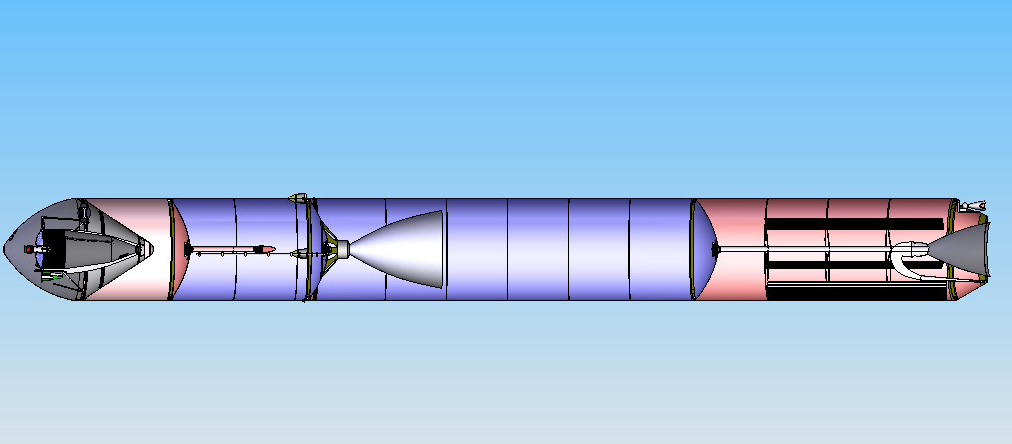
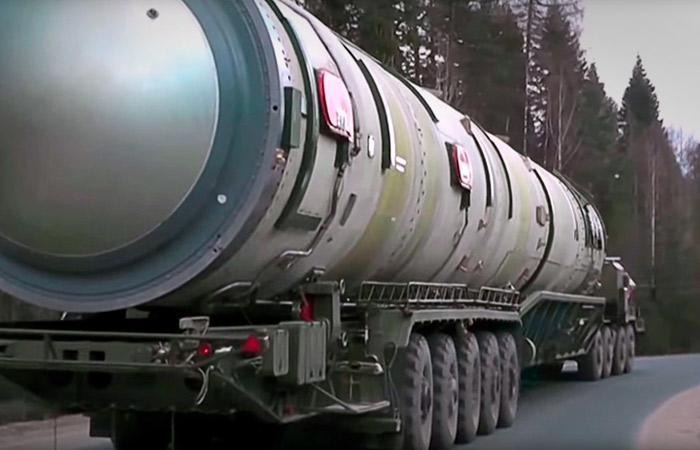
The RS-28 Sarmat is a Russian heavy three-stage liquid-fueled intercontinental ballistic missile (ICBM) designed for silo-based deployment. It was developed by the Makeyev State Rocket Center. This system was created as the successor to the Soviet R-36M and R-36M2 Voevoda missiles, known in the West as the SS-18 Satan.

According to publicly available data, the missile is approximately 35 meters long, has a launch weight of over 200 tons, and is capable of carrying a heavy warhead. Public descriptions indicate the possibility of carrying up to 10 heavy, separable warheads with individual guidance or up to 15 lighter ones. The ability to carry Avangard-class hypersonic glide vehicles is also stated.
The standard ballistic range of the Sarmat is estimated at approximately 18,000 kilometers. When using a partially orbital or suborbital trajectory, the Russian side cites a range of over 35,000 kilometers. It is precisely this element that the Kremlin actively emphasizes in its political rhetoric: according to Moscow’s claims, the missile can strike not only via traditional northern routes but also bypass missile defense lines, including in a scenario involving an approach via the South Pole.
In a military sense, the Sarmat is not a revolutionary breakthrough but a continuation of the Soviet school of silo-based heavy intercontinental ballistic missiles. Its significance lies elsewhere: Russia is attempting to preserve and modernize the strategic forces component inherited from the USSR, giving it a new political spin—a weapon with no equals.
Chronology of promises: the same story with new dates
The public history of the Sarmat began in March 2018, when Putin presented it in his address to the Federal Assembly alongside other advanced systems. At that time, particular attention was drawn not only to the missile itself, but also to the animation of a strike on U.S. territory. The targeting of Florida did not appear to be a neutral demonstration of the trajectory, but rather a political signal directed at Washington.
Since then, the Kremlin has repeatedly announced that the missile is close to being put into service. Initially, the system was expected to be ready around 2020. Subsequently, the years 2021, 2022, and 2023 were cited. In February 2023, Putin promised that the first Sarmat launchers would enter combat duty within a year. In the summer of 2023, he reiterated that the system was in the final phase of deployment.
Yuri Borisov, head of Roscosmos, stated on September 1, 2023, that the Sarmat had already been put on combat duty. However, subsequent statements by Russian officials and Putin himself showed that the actual situation was different. In October 2023, at the Valdai Forum, Putin stated that the work was in fact complete and only administrative and bureaucratic procedures remained. By February 2024, he was already claiming that the first production-run missiles had been delivered to the military.
Then the tone of the statements changed. Following malfunctions and setbacks, Putin in October 2025 effectively admitted that the Sarmat was not yet on combat duty, but promised that this would happen soon. The May 2026 statement continued along the same lines: a new successful test was once again turned into a promise of rapid deployment.
This repetition matters. It shows that the Sarmat is being used not only as an arms program but also as a political calendar. Each successful milestone allows the Kremlin to present the same thesis to the world once again: Russia has allegedly already obtained a tool guaranteed to defeat U.S. missile defense.
Tests: Two Successful Flights and a Series of Failures
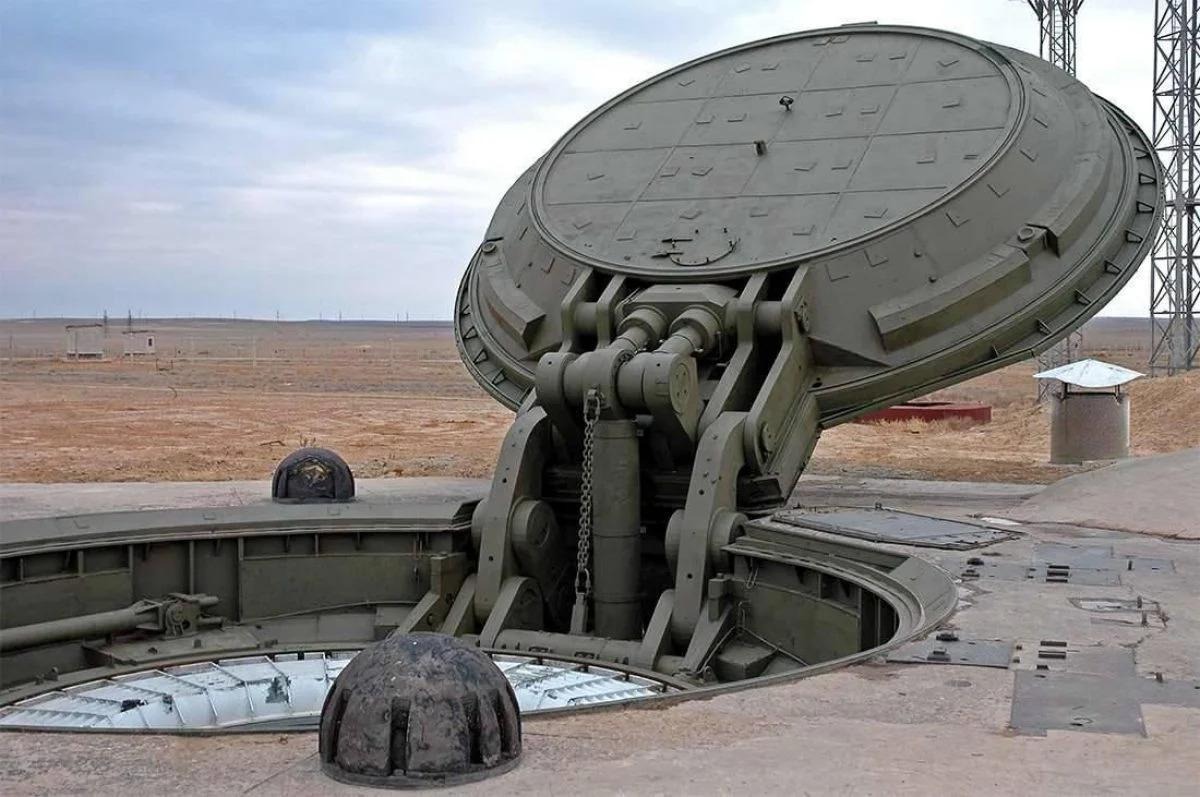
The technical history of the Sarmat is far less smooth than the official rhetoric. In 2017–2018, cold launch tests were conducted, i.e., the ejection of the missile from a silo launcher. The first test in December 2017 revealed problems with the launch equipment. Subsequent tests in March and May 2018 were deemed successful.
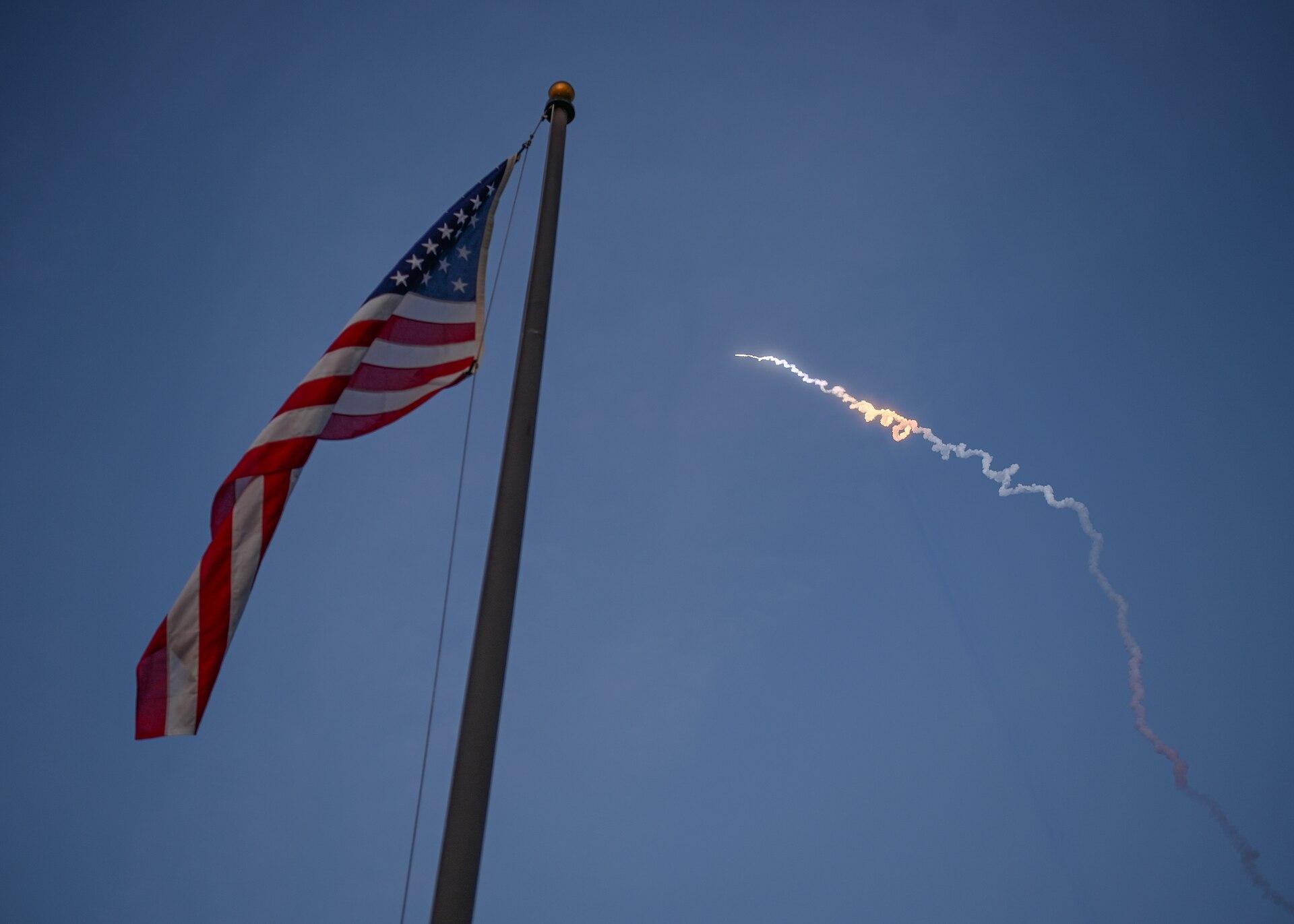
The first fully successful flight launch took place on April 20, 2022, from the Plesetsk Cosmodrome. According to Russian reports, the rocket hit its target at the Kura test range in Kamchatka. Following this event, Putin once again used the phrase describing the system as “unparalleled.”
However, the program then entered a period of setbacks. In February 2023, a test conducted in the context of Joe Biden’s visit to Kyiv, according to American sources, ended in failure shortly after launch. In September 2024, the most serious accident occurred: a missile exploded in a silo in Plesetsk during preparations for launch or refueling. Satellite images showed a large crater and the destruction of the launch site’s infrastructure. In November 2025, a test at the Yasny test site in the Orenburg Oblast also ended in disaster: the missile rose several hundred meters, lost control, began to smoke, and fell.
As of May 2026, the actual state of affairs looks discouraging: two fully successful flight tests—in 2022 and 2026—against a backdrop of at least five failures, malfunctions, or unsuccessful attempts. For a system that the political leadership intends to put on combat duty, this is no technical trifle. Soviet missiles of the R-36 family underwent much more extensive testing cycles before being put into service.
This is where the main contradiction lies. Military logic would call for caution. The Kremlin’s political logic demands a demonstration of success.
Why the Sarmat is primarily directed against the U.S.
The Sarmat is not a weapon for the Ukrainian theater of war. It is a strategic system, designed to strike targets at intercontinental ranges. Politically speaking, its primary target is the United States.
Russia’s argument is based on the U.S. withdrawal from the Anti-Ballistic Missile Treaty in 2002. Putin once again presented this move as the starting point for Russia’s program of new strategic systems:
“We were forced—and I want to emphasize this—forced to consider ensuring our strategic security in the context of the new reality and the necessity of maintaining a strategic balance of power, parity. That is precisely why—I emphasize this once again—work has begun in Russia on the creation of advanced systems with no global equivalents, ensuring the guaranteed defeat of existing and future missile defense systems.”
This narrative suits the Kremlin. It allows every Russian escalation to be presented as a forced response. The logic is simple: The United States withdrew from the Anti-Ballistic Missile Treaty, and Russia is allegedly merely restoring the balance. In this framework, however, the question of how Moscow uses these new systems—as a deterrent or as a tool of political pressure—is lost.
The rhetoric surrounding the Sarmat almost always centers on demonstrating the ability to circumvent U.S. defenses. A suborbital trajectory, a strike from the south, a heavy warhead, a suite of measures to overcome missile defense systems—all of this is presented not so much as a set of technical parameters, but as a message to Washington: Russia claims the right to a guaranteed strike regardless of U.S. defense systems.
Propaganda does not eliminate the threat
It is easy to be ironic about Russian rhetoric regarding weapons that have no counterparts in other countries. Especially after failures, delays, and declarations that have been contradicted by subsequent events. However, reducing the Sarmat to a propaganda spectacle would be a mistake.
Yes, the Kremlin uses every successful test as a media pretext. Yes, statements about imminent deployment have been repeated since 2018. Yes, the Russian strategic communications system is deliberately transforming a technically immature project into a symbol of invulnerability. But behind this lies a real program to modernize the nuclear forces.
Sarmat is important even if its operational readiness is lower than official statements suggest. It serves as a link between the Soviet legacy, Russia’s current defense industry, and the Kremlin’s political doctrine. Its purpose is to maintain Russia’s image as a superpower capable of forcing the United States into talks through the threat of nuclear force.
That is precisely why the issue is not whether to believe every word Putin says. The issue is how to assess a regime that, time and again, builds its foreign policy around demonstrating a readiness for nuclear escalation.
From Deterrence to Belief in Controlled Escalation
Classic nuclear deterrence is based on simple logic: an attack on a nuclear power triggers unacceptable retaliation. This logic does not make the world safe, but it limits the rational use of nuclear weapons.
Russian rhetoric in recent years has increasingly departed from this framework. New systems—Sarmat, Burevestnik, Poseidon, Avangard, and modernized Yars missiles—are presented not only as a guarantee of a retaliatory strike. Russia presents them as a set of tools with which it can bypass an adversary’s defenses, change the rules of escalation, create uncertainty, and impose political solutions on the West.
Particularly troubling is that in such statements, nuclear weapons are gradually ceasing to be a last resort. They are becoming part of the language of coercion. Russia is not merely reminding the world of its arsenal. It is constantly introducing the topic of nuclear superiority into public discourse, linking it to current conflicts, relations with the United States, and the issue of support for Ukraine.
This does not mean that the Kremlin has already decided to use nuclear weapons. Such a conclusion would be unfounded. However, the line of thinking is clear: Moscow is trying to convince its adversary that it is ready to go further than the adversary expects, and that its new systems allegedly give it room for controlled escalation.
It is precisely here that the Sarmat becomes more than just a problematic missile. It is embedded in a political culture where the risk of a nuclear crisis is used as a tool of foreign policy.
Strike from a residual orbit, space, and the limits of the law
The Sarmat’s declared ability to follow a partially orbital or suborbital trajectory deserves special attention. In public discourse, this is often linked to the 1967 Outer Space Treaty, which prohibits placing objects carrying nuclear weapons or other weapons of mass destruction into orbit.
Here, precision is necessary. The passage of a warhead through outer space does not in itself constitute the formal placement of a nuclear weapon in orbit. The historical interpretation of analogous Soviet systems of Fractional Orbital Bombardment—known in Western literature by the English acronym FOBS, from Fractional Orbital Bombardment System — was based on the assumption that a treaty violation occurs when a weapon is placed in a stable orbit, not in the case of a partially orbital flight followed by a departure from the trajectory.
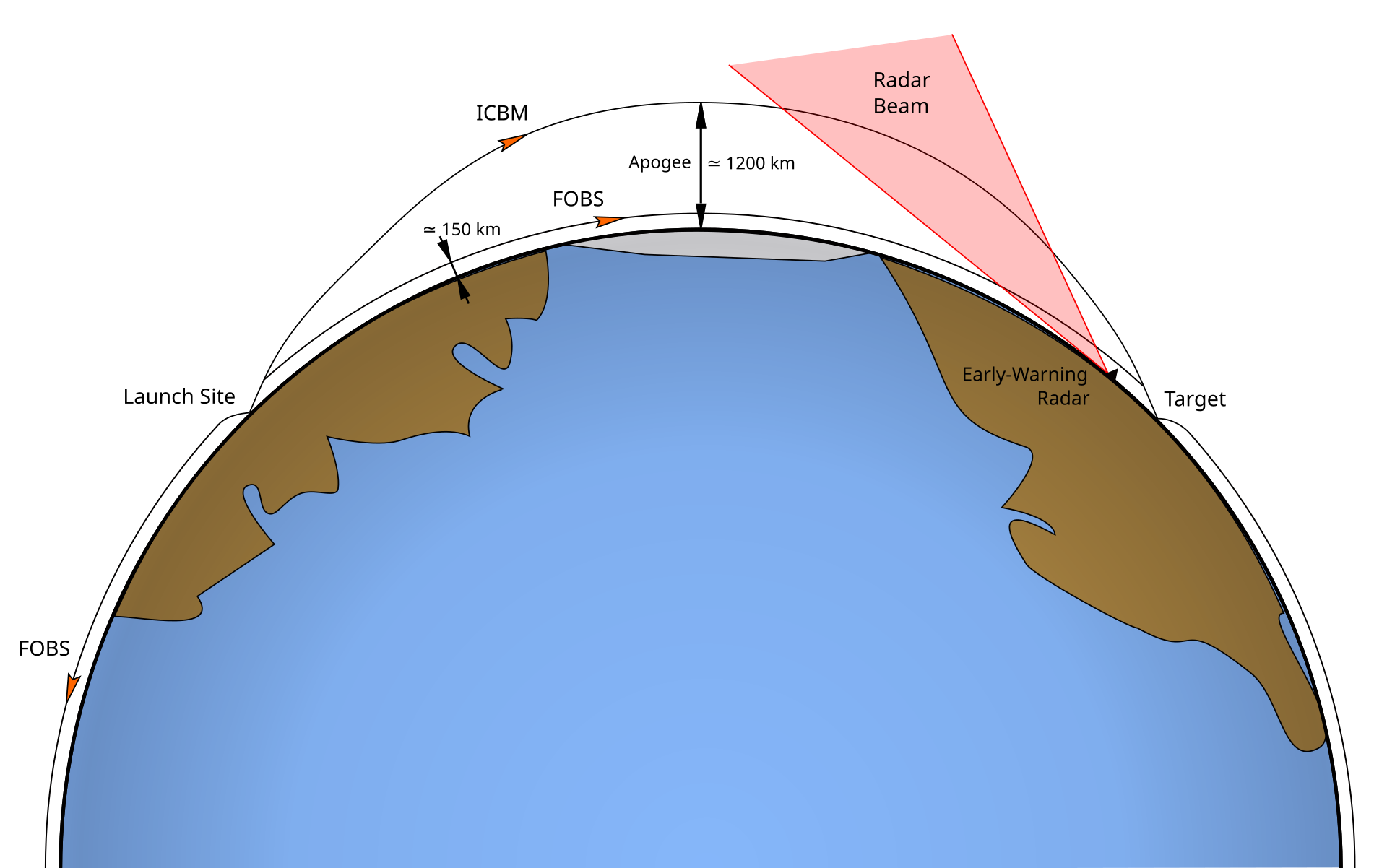
Therefore, it cannot be claimed that the Sarmat automatically violates the Outer Space Treaty. From a political standpoint, its capabilities undermine the predictability of the strategic balance, but a legal assessment requires distinguishing between a formal violation and a strategic effect.
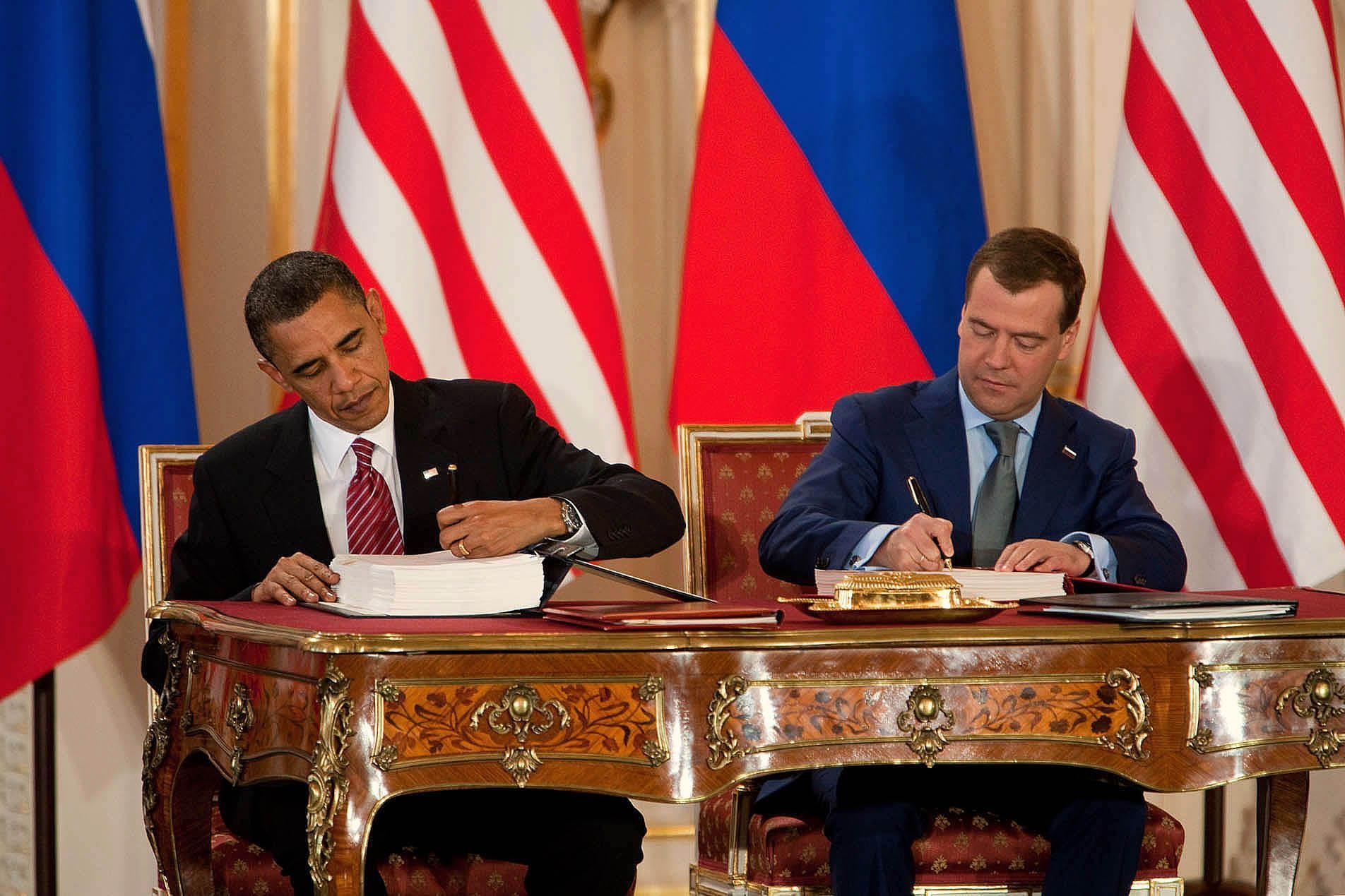
In the case of arms control systems, the situation is even more complicated. As an intercontinental ballistic missile, the Sarmat would fall under the logic of accounting for strategic delivery vehicles under New START (the New START Treaty). However, in 2023, Russia suspended its participation in the treaty, and following the expiration of the regime’s term, the scope of control became even more ambiguous. This does not automatically mean that the missile itself is illegal. It does mean, however, that its deployment is taking place at a time when the existing architecture of predictability has effectively been destroyed.
Why underestimating it would be a mistake
The West’s reaction to Russian statements often oscillates between concern and skepticism. Skepticism is understandable: Russia’s Sarmat program has been plagued by delays, malfunctions, and obvious propaganda exploitation. The problem, however, begins where skepticism turns into underestimation.
The danger does not lie in the fact that a single launch on May 12, 2026, will radically alter the strategic balance. It will not do so on its own. The danger lies elsewhere: Russia continues to attach political significance to systems designed to exert pressure on the United States, while simultaneously promoting the belief that Western deterrence mechanisms can be circumvented, paralyzed, or psychologically broken.
The Sarmat may remain technically unreliable. Its deployment to combat duty may be postponed again. This does not, however, change the fact that the Kremlin is consistently modernizing its nuclear arsenal, using it as a central element of strategic communication, and attempting to portray the U.S. not as a partner in arms control, but as an adversary that must be compelled through the threat of unacceptable escalation.
A separate risk stems from Moscow’s flawed self-assessment. The Russian leadership has previously shown a tendency to overestimate its own capabilities and underestimate its adversary. In the nuclear sphere, such a mistake carries an incomparably higher cost.
The RS-28 Sarmat cannot be viewed merely as just another Russian missile or another episode of propaganda about “unparalleled weapons.” It is a program with serious technical problems, but one of real strategic significance. It replaces the Soviet legacy, fuels the Kremlin’s myth of superiority, is directed primarily at the U.S., and fits into Russia’s broader nuclear policy.
Putin’s May statement following the launch on May 12, 2026, does not resolve the question of the Sarmat’s readiness. On the contrary, it shows how the Kremlin exploits even limited technical success to renew strategic pressure. This is precisely what makes the program dangerous: not because the Russian missile has already proven its flawless reliability, but because Russian authorities are increasingly and persistently using language in which nuclear escalation appears as a controlled political tool.
Author: Artur Żak
Official Russian and Belarusian sources cited in this text are for informational purposes only. Content from these sources may constitute disinformation or propaganda.