
Poland is actively transforming its defense industry into one of the key elements of European security—through large-scale investments, intern ational partnerships, and the localization of arms production.
In brief
- One of the main challenges for the Polish defense sector remains the rapid expansion of production capacity—particularly for the manufacture of ammunition, armored vehicles, and drones.
- Polish-Ukrainian defense cooperation is shifting from arms supply to the creation of joint production facilities and technological projects. WB Group has already invested in drone production in Ukraine and plans to expand cooperation.
- During the forum, Ukraine emphasized that its primary needs remain air defense systems and 155mm ammunition, and called on partners to expedite bureaucratic procedures for weapons deliveries during the war.
Areas of Polish-Ukrainian defense-industrial cooperation, joint weapons production, the development of air defense systems, and the launch of new initiatives—including a “drone fleet”—were among the key topics at the international conference Defence24 Days 2026 in Warsaw, the largest security forum in Central and Eastern Europe.
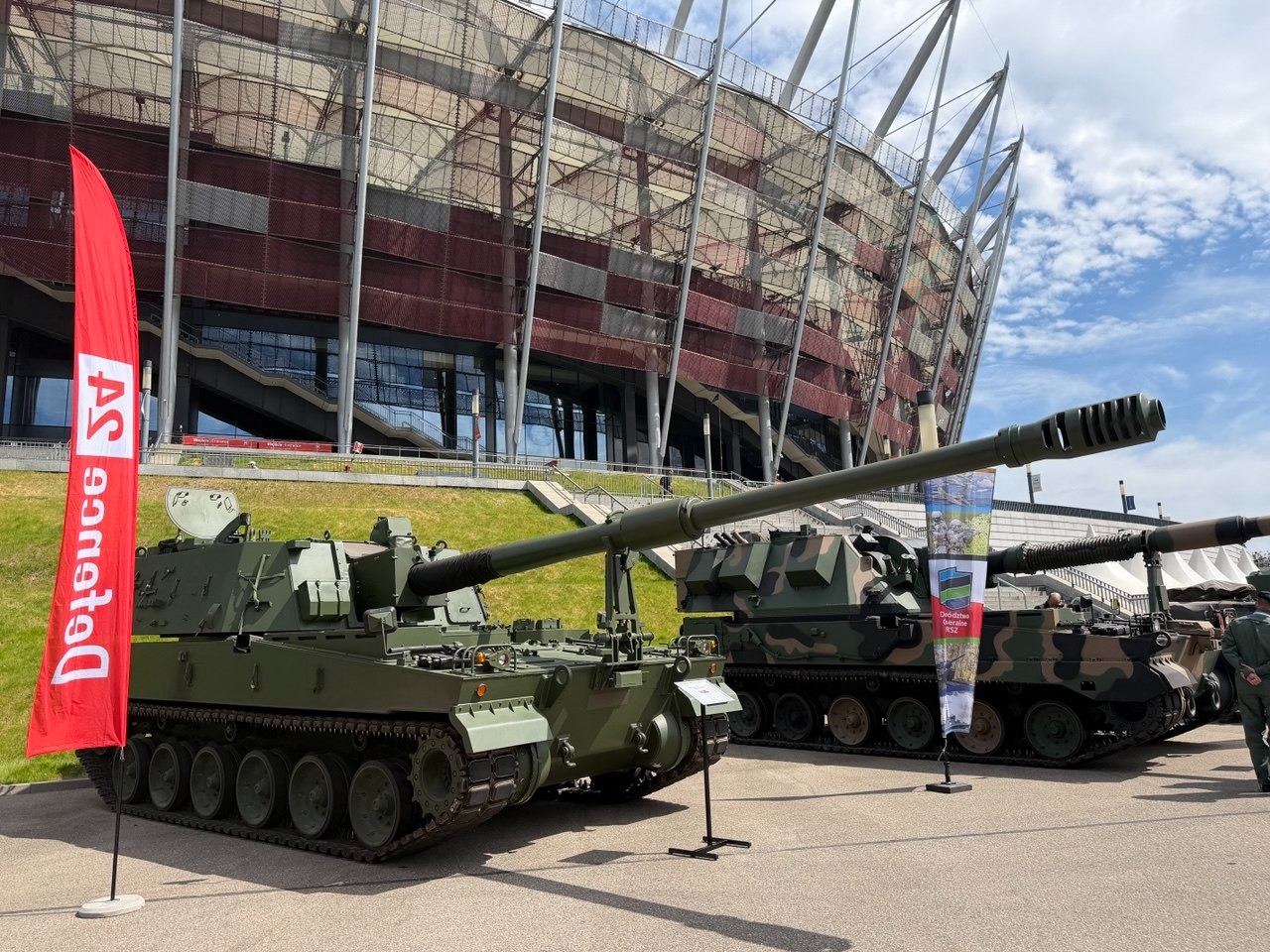
Over the course of two days at the PGE Narodowy Stadium, representatives of the Polish government, the defense industry, the military sector, diplomats, as well as, in particular, Ukrainian government officials and representatives of the innovation and security communities gathered. The forum served not only as a platform for discussing Russia’s war against Ukraine but also as a venue for shaping a new European security architecture, in which Poland aims to play a key role.
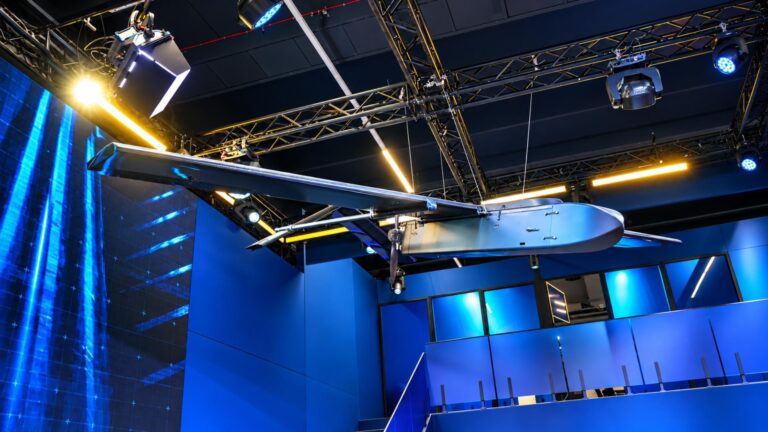
Held in parallel with the conference was the 2nd Exhibition of the Polish Armed Forces and the Polish defense industry, under the patronage of the Polish Ministry of National Defense. Its main goal was to demonstrate the potential of the Polish defense sector to international partners and to strengthen Warsaw’s position as one of Europe’s leading defense hubs.
Poland is betting on its own defense sector
One of the central themes of Defence24 Days 2026 was the transformation of the Polish defense industry. Participants in the discussions spoke about the need to create a comprehensive industrial ecosystem capable not only of meeting the army’s needs but also of competing in the global market.
Konrad Gołota, Poland’s Deputy Minister for State Assets responsible for the defense sector, emphasized that the Polish defense sector is often unfairly criticized for being slow and overly bureaucratic.
“You often hear the opinion that the Polish defense industry is inefficient and outdated. But when the German industry spent years developing the ‘Panther,’ no one said it was incapable. The same goes for the American sector—it isn’t called inefficient because of delivery delays. Before talking about development, we need to learn to appreciate what we already have,” Gołota stated.
According to him, Poland is currently actively developing its defense sector through large-scale international partnerships—primarily with the U.S., South Korea, and European companies. This involves not only the procurement of equipment but also the localization of production, technology transfer, and the creation of domestic manufacturing capabilities.
“If partners want to operate in the Polish market, they must come with technology transfer and establish production in Poland. We are not interested in cooperating with those who are not ready for collaboration,” the deputy minister emphasized.
At the same time, Polish authorities openly acknowledge that the process of building up capabilities takes time. As an example, Gołota cited the Borsuk infantry fighting vehicle and the Piorun man-portable air defense system (MANPADS), whose development took years, yet today they are considered among the most successful Polish defense projects.
SAFE and the Focus on Scaling Up Production
The conference also focused on the SAFE program, which Warsaw views as one of the key tools for modernizing the defense industry.
Artur Kuptel, head of the Polish Armaments Agency, stated that the main task today is to provide the industry with investments that will allow for a rapid increase in production.
“SAFE is a powerful opportunity. The only question is how we will use it. All branches of the Polish armed forces will receive significant quantities of equipment, and a large part of this production will be manufactured by Polish companies,” Kuptel emphasized.
Against the backdrop of rapidly growing demand for weapons and ammunition, scaling up production capacity remains a key issue for the Polish sector.
Adam Leszkiewicz, Chairman of the Board of the Polish Armaments Group, reported that capacity expansion is already underway in many production segments.
“This includes the production of ammunition, the ‘Łucznik’ and ‘Grot’ systems, and the ‘Borsuk’ and ‘Krab’ armored vehicles. In many cases, companies are already operating in three shifts, seven days a week,” he said.
According to Leszkiewicz, the state is actively investing in the defense sector through the Capital Investment Fund. In particular, the company “Belma” (a Bydgoszcz-based Polish enterprise in the electromechanical and defense industries) received over 300 million zlotys to increase mine production, and construction of a new factory for 155-mm ammunition casings is underway in Kraśnik.
Ukraine and Poland: From Partnership to Joint Production
A separate session of discussions was dedicated to Polish-Ukrainian defense cooperation. In Warsaw, there is increasing talk not only of supplying weapons to Ukraine but also of establishing joint production facilities and integrating Ukrainian combat experience into the Polish defense sector.
One of the most telling examples of such cooperation is the work of the Polish WB Group. This is a large Polish private defense company specializing in the production of unmanned aerial vehicles, communications systems, and fire control systems. The company’s CEO, Piotr Wojciechowski, noted that cooperation with Ukraine in the field of unmanned systems has been ongoing since 2014.
“We began supplying unmanned systems to the Armed Forces of Ukraine back in 2014, when many of today’s market players simply did not exist,” he said.
According to Wojciechowski, the company has had its own facility in Ukraine since 2018, where about 200 people are currently employed. Ukrainian companies use Polish technologies to manufacture drones and components that are supplied to both the Ukrainian Armed Forces and the Polish side.
“Mutual trade with Ukrainian partners has already exceeded 300 million euros. Next year, we could approach 500 million euros,” emphasized the head of WB Group.
He noted that this is one of the few examples where a foreign company is investing in production in a country at war.
Ukraine Seeks Quick Solutions for the Front Lines
Oleksandr Mishchenko, Ukraine’s Deputy Minister of Foreign Affairs, also participated in Defence24 Days 2026. He emphasized that air defense systems and 155mm ammunition remain critically important for Ukraine today.
“We cannot meet all the army’s needs on our own, so we are turning to the international community. Such forums provide an opportunity to quickly discuss where we can obtain the necessary weapons,” the diplomat stated.
According to him, Ukrainian diplomacy is currently working to simplify and expedite weapons supply processes as much as possible.
“The defense industry during wartime requires quick decisions. Licensing and oversight are necessary, but we cannot allow bureaucracy to delay weapons deliveries,” emphasized Mishchenko.
He also stressed that Poland remains one of Ukraine’s key strategic partners in the security sector.
Poland is shaping a new role in European security
Defence24 Days 2026 demonstrated that Poland no longer views itself exclusively as NATO’s eastern flank. Warsaw aims to become one of the centers of the European defense industry—with its own production, technologies, and international cooperation.
Russia’s war against Ukraine has significantly accelerated this process. For Poland, this means not only modernizing the army but also attempting to create a powerful defense sector capable of influencing European security policy.
In this model, Ukraine becomes not just a recipient of aid, but a full-fledged partner—with unique combat experience, technological solutions, and joint production projects that could shape the development of the defense industry in the region for years to come.
Author: Svitlana Myalik