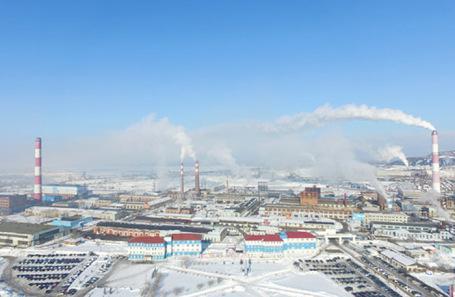
On 6 July, Ukrainian drones attacked the oil refinery in Omsk – Russia’s largest oil refinery. The facility is located 2,500 km from the front line. Siberia’s geographical remoteness no longer guarantees the security of Russia’s critical infrastructure.
In brief:
- The Russian authorities have confirmed the attack on the Omsk oil refinery; the President of Ukraine stated that it was carried out using upgraded Fire Point drones.
- Omsk “produces one in every six litres of Russian petrol and one in every seven litres of aviation kerosene”, so even a partial shutdown of the plant will exacerbate the fuel crisis
- The likely next target for Ukrainian drones is the refinery in Irkutsk, the only one of the oil giants that Ukraine has not yet attacked
- Strikes on Russia’s oil refining infrastructure have led to a rise in petrol prices: in the last week alone, prices have risen by 1.7 per cent, marking one of the sharpest weekly increases
Vitaly Khotsenko, Governor of the Omsk Region, acknowledged that the Omsk oil refinery was the target of a Ukrainian attack on 6 July. The official stated that the Russian Ministry of Defence “destroyed most of the drones that were flying towards it”. There were no fatalities or injuries, he said.
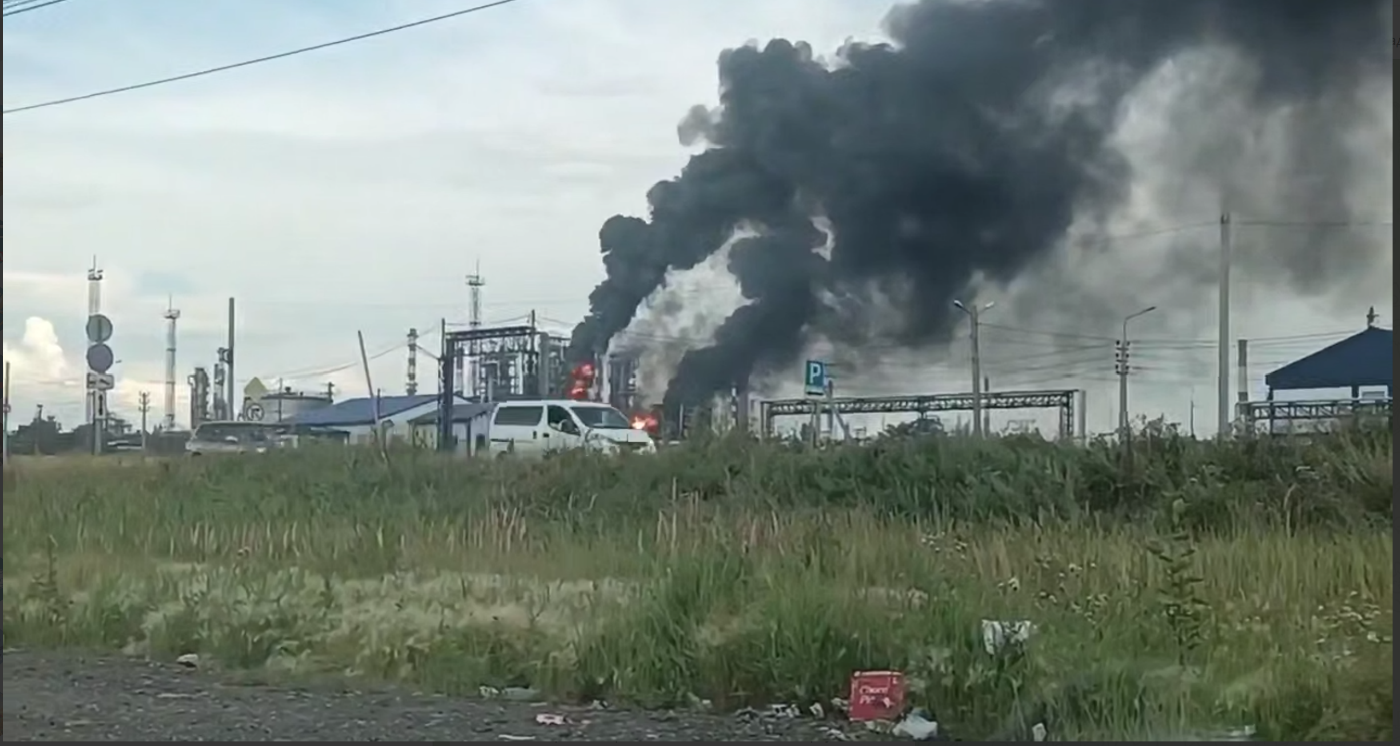
Ukrainian President Volodymyr Zelenskyy provided details of the attack on the oil refinery: the plant in Omsk was struck by upgraded Fire Point drones.
“Siberia is now also within reach of Ukrainian precision,” he emphasised.
Russia’s largest oil refinery
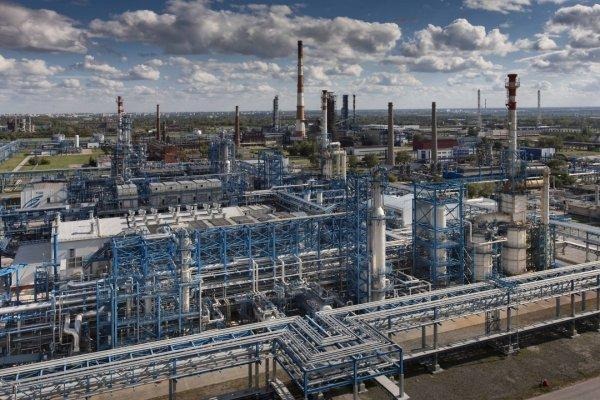
The oil refinery in Omsk, owned by Gazprom Neft, is the largest in Russia. Based on its design capacity, it can process around 22 million tonnes of crude oil annually – this accounts for around 10 per cent of Russia’s total oil refining capacity.
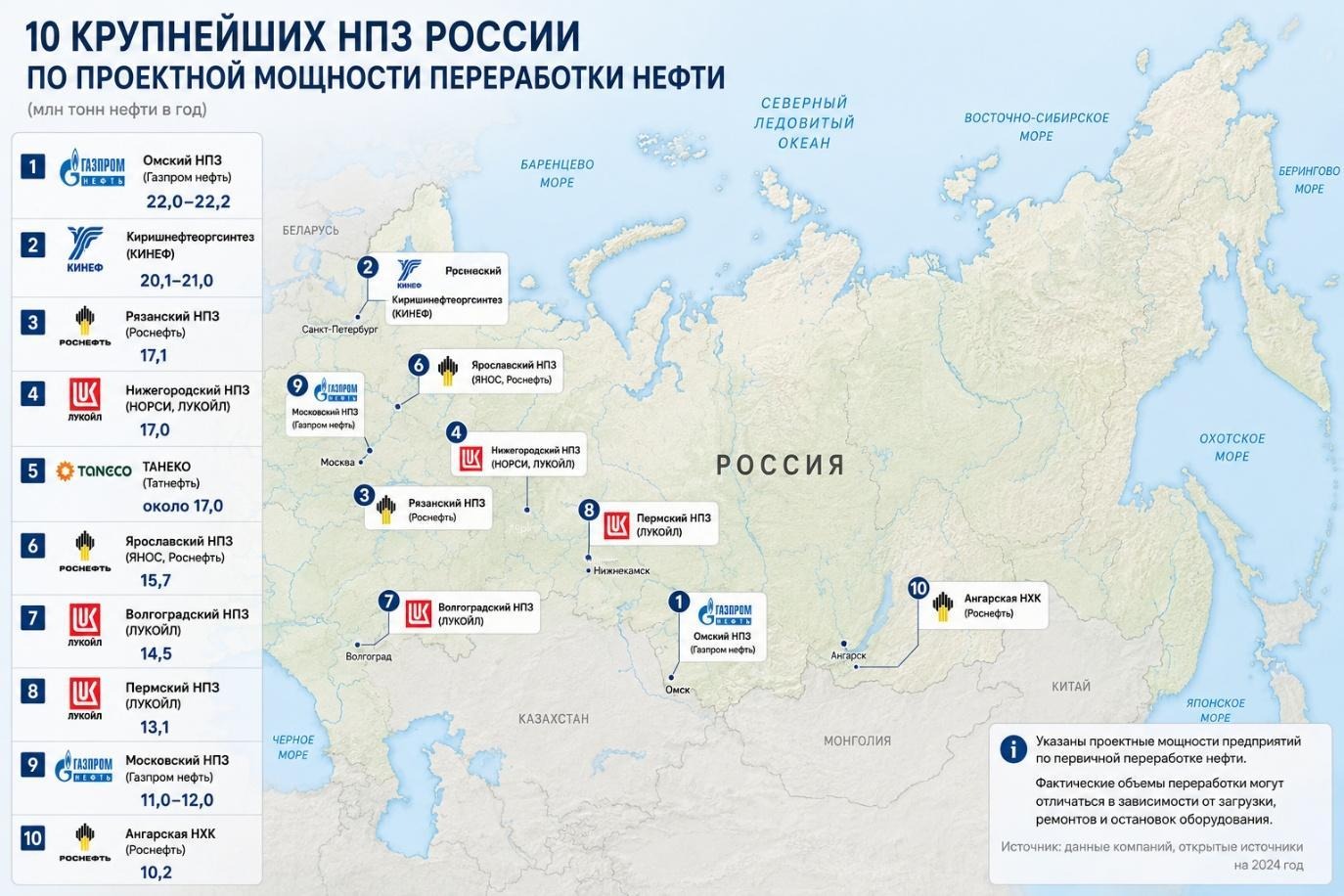
As Russia classified its oil refining statistics in 2024, the latest official information on the refinery’s operations is only available for 2023. At that time, it accounted for 11.5 per cent of Russian petrol production, 9.2 per cent of diesel production and 15 per cent of aviation kerosene production.
The company’s website states that the plant “produces one in every six litres of Russian petrol and one in every seven litres of aviation kerosene”.
The refinery plays a key role in supplying fuel to Siberia, the Urals and the Far East, and from there supplies are also sent to Kyrgyzstan, which is 90 per cent dependent on Russian fuel imports.
The authorities have not specified the extent of the damage caused by the attack on 6 July, but OSINT sources claim that the drones struck the AVT-11 primary oil refining unit, which has a capacity of 8.4 million tonnes per year (accounting for around 40 per cent of the plant’s capacity).
For Russia today, even a partial shutdown of this facility is not merely critical but catastrophic, given that petrol production in the country had already fallen by 25 per cent in June.
The shortfall – amounting to some 14,000 tonnes of petrol per day – will be difficult to make up with imports, as rapid fuel deliveries can currently only be organised from Belarus. Belarusian volumes – around 140,000 tonnes per month – are clearly insufficient to cover the shortfall, which is currently estimated in Russia at 20,000 tonnes per day.
Furthermore, the Omsk Refinery is the only Russian facility producing cracking catalysts – a critically important component on which the secondary oil refining process at other refineries directly depends.
Not the first incident at the Omsk Refinery
The AVT-11 primary oil refining unit in Omsk, which may have been affected this time, had previously broken down. It was at this very unit that an explosion occurred on 26 August 2024, followed by a major fire. Several employees were injured.
The official cause of the explosion was cited as a production accident, the circumstances of which were investigated by a special commission from Rostekhnadzor. The commission’s findings were not made publicly available.
Following the fire, analysts had expected a prolonged loss of capacity at the Omsk Oil Refinery; however, the recovery took place much faster than anticipated: by 25 September 2024, repairs to AVT-11 had been completed.
Geography is no longer a safeguard
The distancefrom Omsk to the border with Ukraine is more than 2,500 kilometres. Ukrainian drones have not yet flown that far.
Last October, the Tyumen Oil Refinery, situated 2,000 km from the border, came under attack, and in early 2026, the Ukhta Oil Refinery (1,750 km away).
Of the top ten largest Russian oil refineries, Ukrainian drones have struck virtually all facilities in the European part of the country, the Volga region and the Urals. The refineries have sustained damage and are at various stages of repair.
Following the disruption of operations at the Omsk refinery, only one key player remains on the list of undamaged giant refineries: the Angarsk Refinery in the Irkutsk Region. It is likely to be the next target for Ukrainian drones.
Investigations are currently underway in Russia to determine how this attack was made possible. Speculation has already emerged on some Telegram channels that some of the drones may have been launched from Kazakhstan, and the Russian authorities are reportedly gathering evidence at present. No official accusations have been levelled at Astana.
Rising prices
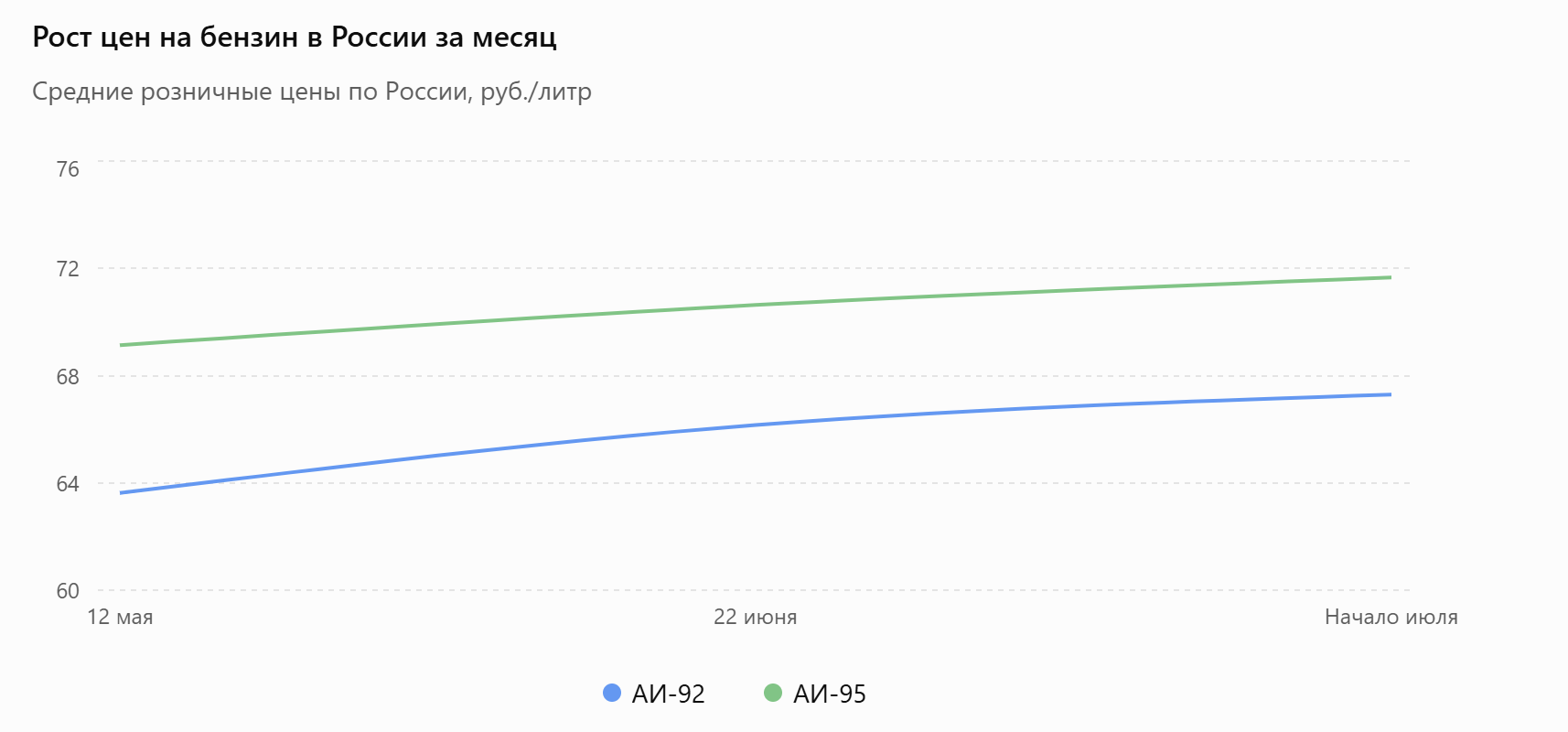
Against the backdrop of the fuel crisis, the rise in retail petrol prices in Russia has accelerated significantly. Whilst the average price per litre of AI-92 stood at 63.63 roubles in mid-May 2026, by early July it had risen to 67.31 roubles. The price of AI-95 increased over the same period from 69.12 to 71.65 roubles per litre.
In the last week of June alone, the average price of petrol rose by 1.7 per cent, marking one of the sharpest weekly increases in recent years. This significantly exceeds the usual seasonal fluctuations in fuel prices. Moreover, the peak demand period, which traditionally falls in August–September, has not yet begun.
However, even at these prices, it is difficult to purchase fuel in Russia: restrictions on petrol sales are in place to a greater or lesser extent across almost the entire country – typically, these take the form of a limit on the amount of fuel that can be purchased by a single person and a ban on filling jerry cans.
Author: Olga Semashko
Official Russian and Belarusian sources cited in this text are for informational purposes only. Content from these sources may constitute disinformation or propaganda.